Every facility manager knows the call: a unit is down, and the problem might be electrical, mechanical, or plumbing. Three trades, three dispatches, and a tenant waiting while people hand off a ticket. Cross-training is one of the few labor shortage strategies you control directly, because it grows capability inside your existing team. This guide lays out a practical matrix, a training sequence, and a pay structure, along with how maintenance management software keeps the new skills documented and used.
Facility Cross-Training Matrix: One Tech, Three Trades
Build technicians who can diagnose and complete common HVAC, electrical, and plumbing work safely and within licensing limits. Reduce handoffs, cut vendor callouts, and make a thin labor market work harder for you.
The Handoff Problem Cross-Training Solves
Consider a simple call about a unit that is not cooling. The cause might be a failed contactor, a clogged condensate line, or a stuck valve. Under single-trade staffing, the diagnosis itself can take three visits.
Single-trade dispatch
- HVAC tech finds a control voltage issue and stops
- Electrician is scheduled for the next available slot
- Plumber is called when a condensate drain is also blocked
- Ticket reopens and the tenant follows up twice
Cross-trained dispatch
- One tech diagnoses across all three systems
- Routine electrical and drain work is completed on the visit
- Only truly licensed or specialized work escalates
- One work order, one history, one closure
Why the labor market makes this urgent
Experienced technicians are hard to hire and harder to keep. Cross-training gives current staff a development path and a reason to stay, while reducing the number of specialists you must find.
- Fewer open requisitions to fill with scarce single-trade hires
- Less dependence on outside vendors for routine mixed-trade calls
- Better coverage on nights, weekends, and vacation weeks
- A clear career ladder that supports retention
Set the Boundaries Before You Build the Matrix
Cross-training does not mean every technician does everything. It means each person is trained, verified, and authorized for a defined scope, with clear lines where a licensed professional must step in.
Programs such as ASHE for healthcare engineering and IFMA credentials for facility professionals offer useful competency frameworks to borrow from.
The Cross-Training Competency Matrix
Rate every skill on one shared scale, so a supervisor can see at a glance who can do what, and where the gaps are.
Target level after 12 months, by starting trade
| Skill | HVAC-origin tech | Electrical-origin tech | Plumbing-origin tech |
|---|---|---|---|
| Filter, belt, and coil service | Own | Assist | Assist |
| Refrigerant circuit diagnosis | Own | Aware | Aware |
| Contactors, relays, and starters | Perform | Own | Assist |
| VFD basic troubleshooting | Perform | Own | Aware |
| Lighting and driver replacement | Assist | Own | Assist |
| Fixture and flush valve repair | Assist | Assist | Own |
| Condensate and drain clearing | Perform | Assist | Own |
| Pumps, seals, and isolation valves | Perform | Assist | Perform |
| Safe isolation and lockout/tagout | Perform | Own | Perform |
| Basic control points and thermostats | Own | Perform | Aware |
Treat these levels as a starting template. Adjust the rows to match your building types, equipment age, and local licensing rules.
The Training Sequence: Anchor, Adjacent, Then Third
Sequence matters more than speed. Build outward from the trade each technician already knows, choosing the neighboring trade that overlaps most.
Natural pairings by starting trade
- HVAC technicians usually add electrical first, since they already work with controls and motors
- Electricians often add HVAC controls and motor-driven equipment before plumbing
- Plumbers frequently add pumps and hydronic systems, then basic HVAC
The Pay Adjustment Ladder
If you ask people to learn more, the pay must visibly follow. Tie increases to verified competency, never to hours spent in a classroom.
Rules that keep the structure credible
- Publish the criteria so every tech knows exactly what earns each step
- Benchmark against local wages, since the right amounts depend on your market
- Fund the program from the savings in vendor callouts, repeat visits, and overtime
- Review annually, and never reduce pay for skills already certified
Make Every New Skill Count on the Work Order
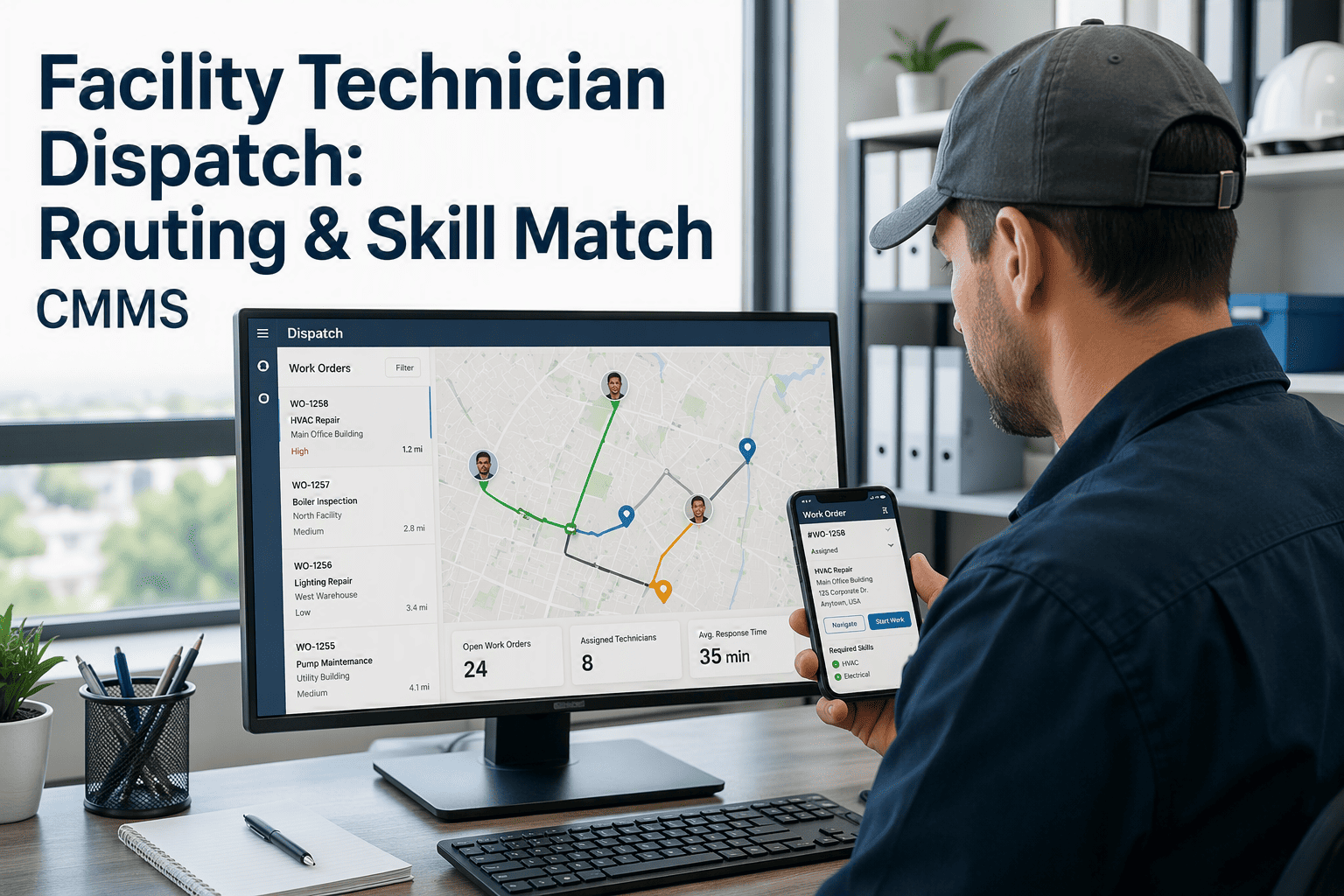
Training only pays off when the right technician gets the right job, with the right procedure in hand. Oxmaint helps you assign, standardize, and record multi-trade work.
Verifying Skills: What Counts as a Sign-Off
A matrix is only as honest as its verification. Define in advance what evidence moves a technician from one level to the next.
Where Oxmaint supports the program
- Work orders are assigned by technician and trade, with full completion history
- Preventive maintenance checklists standardize the steps for unfamiliar tasks
- Mobile workflows put procedures and asset history in the technician's hand
- Inspections capture readings and photos as evidence for sign-offs
- Reporting shows repeat work orders, completion times, and backlog by trade
Metrics That Prove the Program Works
Measure before you start, then track the same indicators every quarter. Expect improvement to build gradually, not overnight.
Mistakes that sink cross-training programs
- Training without pay changes, which signals that the effort is not valued
- Skipping licensing review and creating legal exposure
- Trying to train all three trades at once instead of in sequence
- Letting the matrix go stale instead of updating it as people qualify
- Assigning newly trained techs to hard jobs with no support
Cross-Training FAQs
Can unlicensed techs do electrical or plumbing work?
It depends on jurisdiction and task. Confirm local rules first and keep licensed work with licensed people.
How long does a three-trade program take?
Plan on roughly 18 months or more of staged training. Speed depends on starting skill and how often tasks come up.
Should we cross-train everyone?
No. Start with willing, reliable techs, and keep specialists where depth matters most, such as chillers or high-voltage work.
How do we track who is qualified for what?
Keep the matrix and sign-off evidence tied to work orders. You can set up assignments and checklists in minutes.
Can Oxmaint help us pilot this on one site?
Yes. A pilot needs standard checklists, clear assignments, and reporting, so schedule a walkthrough to scope one.
Grow Your Team's Skills. Keep Every Job on Record.
Launch your cross-training pilot with structured work orders, trade-aware assignments, and clear completion history, all in one maintenance platform.