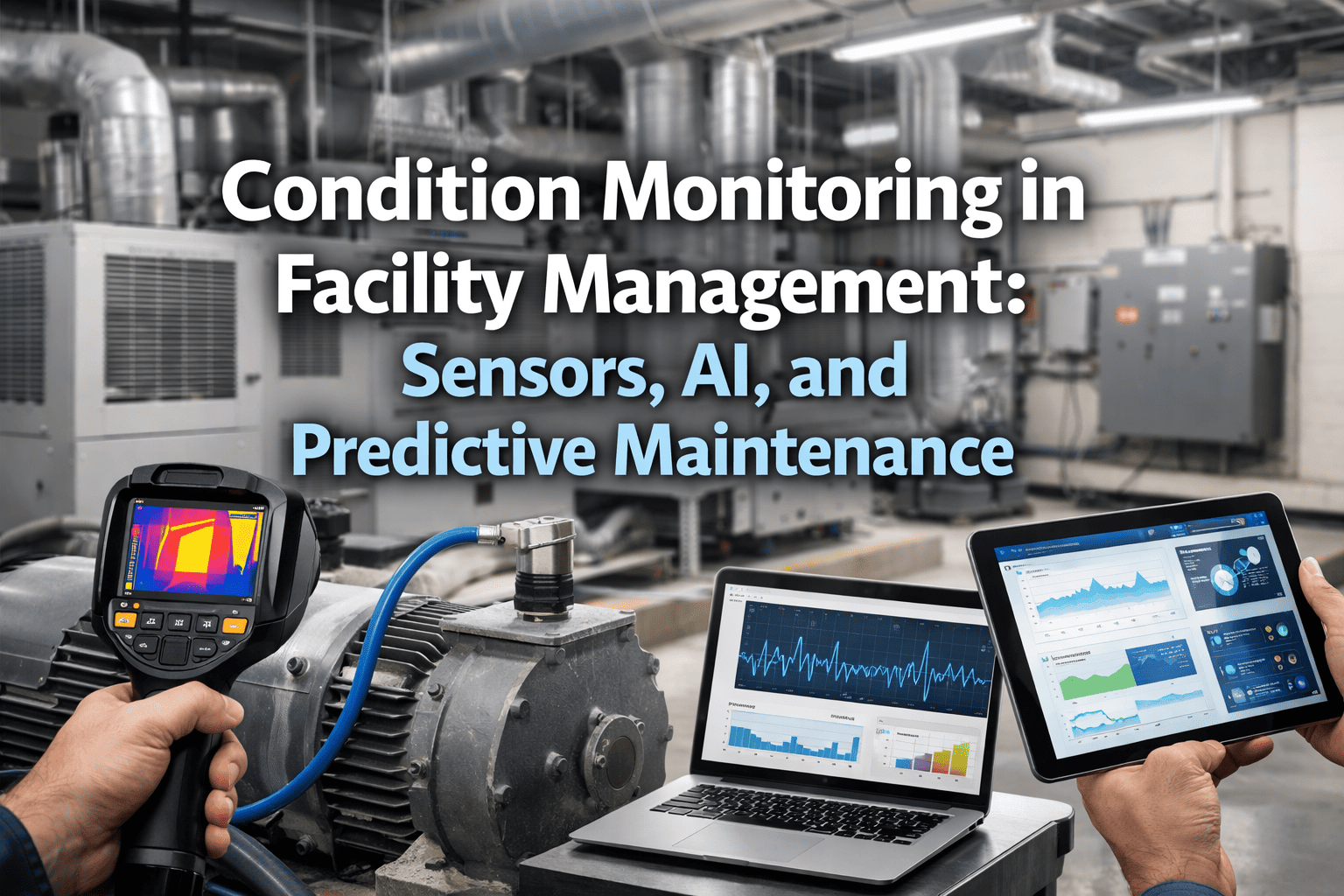
Predictive maintenance tools only pay off when the people holding them can read what the data is saying. Sensors, handheld analyzers, and dashboards raise questions that a traditional wrench-turning role was never trained to answer. This guide lays out a retraining curriculum for facility technicians, the certification path built on ISO 18436 and SMRP programs, and how pay bands can follow demonstrated skill. It also shows how teams can record training, tasks, and results inside maintenance management software so the new skills stay visible.
Predictive maintenance workforce
Facility PdM Skills: Retraining Techs for a Predictive World
The technician who fixes what broke and the technician who reads what is about to break need different skills. Close that gap deliberately, tier by tier, and the tools you already own start to earn their cost.
Tier 4 · Program lead: strategy, standards, review
Tier 3 · Analyst: diagnosis, root cause, recommendations
Tier 2 · Condition technician: route data, alarms, basic faults
Tier 1 · Core technician: rounds, readings, clean data entry
The skill gap behind stalled predictive programs
Many facility PdM rollouts stall for the same reason. The tool was bought, but the work around it was never redesigned.
Data without interpretation
Alarms arrive but nobody is trained to tell a real fault from a changed operating condition.
Readings without discipline
Handheld readings taken at inconsistent points or loads cannot be trended.
Findings without action
Reports sit in an inbox because no one owns turning a finding into a work order.
Skills without recognition
Technicians who learn analysis are paid the same as before, so they leave or stop.
Retraining is not only a classroom problem. It is a job design problem, a data problem, and a pay structure problem at the same time.
What the standards say about competence levels
Condition monitoring personnel are certified against ISO 18436, which separates the competencies by technique and by level. Certification bodies such as Mobius Institute offer training aligned to those levels.
Category I
Collect good data
Takes measurements correctly, follows routes, recognizes obvious alarms, and records what was found.
Category II
Diagnose common faults
Interprets spectra and trends to identify typical faults such as imbalance, misalignment, and bearing defects, and sets alarm limits.
Category III
Advanced diagnosis
Handles complex problems such as resonance and phase analysis, specifies corrections, and guides lower categories.
Category IV
Program expert
Master-level knowledge used for program design, difficult cases, and training of the wider team.
ISO 18436 also covers other techniques, including thermography, lubricant analysis, acoustic emission, and ultrasound, so a facility can certify across several tools.
The retraining curriculum, module by module
A facility team rarely needs every module for every person. Match modules to the tier each technician is growing into.
| Module | Core topics | Tier | Practice on the job |
|---|---|---|---|
| Maintenance fundamentals | Failure modes, P-F curve, proactive versus reactive work | 1 to 2 | Review the last ten corrective work orders as a group |
| Data discipline | Measurement points, load conditions, naming, clean work order notes | 1 | Standard route with fixed measurement locations |
| Vibration basics | Machine dynamics, spectra, overall levels, bearing signs | 1 to 3 | Monthly route on air handlers, pumps, and fans |
| Thermography | Heat transfer, emissivity, load effects, electrical scans | 1 to 3 | Annual panel scan with documented findings |
| Ultrasound | Airborne and structure-borne sound, leaks, lubrication | 1 to 2 | Bearing greasing by condition instead of calendar |
| Lubrication and oil analysis | Contamination control, sampling, interpreting reports | 2 | Sample plan for central plant equipment |
| Electrical condition checks | Current, insulation, power quality basics | 2 to 3 | Motor current trend on critical motors |
| BMS and trend analysis | Reading trends, setpoint drift, alarm tuning | 2 to 3 | Weekly review of analog trends for key systems |
| Root cause and reporting | Failure analysis, writing recommendations, cost framing | 3 to 4 | Write one failure report per quarter |
Give new skills a place to show up in daily work
Build inspection routes, record readings, and track technician tasks in one system so every new skill produces visible results.
A 12-month retraining timeline
Spread learning across a year so technicians apply each skill before the next one arrives.
Months 1 to 2
Baseline and select
Assess current skills, pick pilot assets, and choose which techniques to start with based on your dominant failure modes.
Months 3 to 4
Data discipline and fundamentals
Train the whole team on measurement points, clean notes, and the logic of condition-based work.
Months 5 to 7
Technique training
Send selected technicians to vibration, thermography, or ultrasound courses and begin supervised routes.
Months 8 to 10
Supervised diagnosis
Pair new analysts with experienced mentors, review every finding, and track which calls were correct.
Months 11 to 12
Certify and expand
Sit certification exams, move the program to more assets, and update pay bands to match proven skill.
Certification path: choosing the right credential
Different credentials prove different things. Use technique certifications for hands-on analysts and a reliability credential for leads.
Technique certification
ISO 18436 categories for vibration and related techniques. Proves a person can measure and diagnose using a defined body of knowledge.
Best for analysts and condition techniciansCMRP
The Certified Maintenance and Reliability Professional credential from SMRP. Covers business, reliability, equipment, and work management.
Best for planners, supervisors, and program leadsVendor and tool training
Product-specific courses on analyzers, cameras, and sensors. Useful for operating tools, but not a substitute for standards-based competence.
Best as a supplementAsk whether a course leads to an accredited exam or only to a certificate of attendance. Employers and auditors treat them very differently.
What each technique actually finds in a facility
Technicians learn faster when each tool is tied to the equipment and faults they see every week. Start with the technique that matches your most common failure modes.
| Technique | Typical facility assets | Faults it tends to reveal | Skill demanded |
|---|---|---|---|
| Vibration analysis | Fans, pumps, motors, compressors, cooling tower drives | Imbalance, misalignment, looseness, bearing wear | Spectrum reading and baseline comparison |
| Infrared thermography | Switchgear, panels, motor terminals, steam traps | Loose connections, overloaded circuits, blocked flow | Understanding load and emissivity effects |
| Ultrasound | Bearings, valves, compressed air, steam systems | Early bearing friction, leaks, poor lubrication | Listening, trending decibel levels |
| Oil and fluid analysis | Gearboxes, chillers, hydraulic units, generators | Wear metals, contamination, degraded lubricant | Sampling discipline and report interpretation |
| Motor current checks | Pumps, AHU motors, elevator and escalator drives | Overload, phase imbalance, winding trends | Basic electrical safety and trend review |
| BMS trend review | Air handlers, chillers, boilers, VAV systems | Valve hunting, sensor drift, setpoint creep | Reading trend graphs and linking to equipment state |
No facility needs every technique on day one. Choose one or two that address the failures you already log most often.
Assess skills before you train anyone
A short baseline assessment prevents wasted course fees and shows who already has hidden strengths. Score each item as none, basic, working, or expert.
- Can the technician explain the difference between a defect, a degradation, and a functional failure
- Does the technician take readings at the same point and under the same load every time
- Can they describe what a rising trend means for a specific machine they know well
- Are work order notes specific enough that another person could act on them
- Does the technician understand electrical safety limits for the tools they will use
- Can they build a simple recommendation, including urgency and the parts needed
Use the results to group people into tiers and to pick mentors from within the team, not only from outside courses.
A mentoring model that makes training stick
Courses teach theory. Mentoring turns it into judgment. Pair each trainee with a more experienced analyst for at least two quarters.
Observe
Ride along on routes
The trainee watches how the mentor places sensors, chooses test points, and reads the first screen.
Assist
Take readings together
The trainee collects data while the mentor corrects technique and explains what to look for.
Lead
Diagnose with review
The trainee proposes a diagnosis and recommendation, and the mentor challenges the reasoning before sign-off.
Own
Work independently
The trainee handles routes alone, and the mentor audits a sample of findings each month.
Common objections and honest answers
Resistance is normal. Address it directly instead of hoping it fades.
| What technicians say | What is behind it | A practical response |
|---|---|---|
| This is just more paperwork | Past tools added steps without value | Keep forms short and show findings that came from the data |
| I can hear a bad bearing already | Pride in experience | Use experienced technicians as mentors and show earlier detection |
| The sensors will replace us | Fear about job security | Explain that sensors find candidates and people still diagnose and repair |
| We do not have time to train | Reactive workload crowds out learning | Protect scheduled training hours and cover critical rounds temporarily |
| Why would I do extra if pay does not change | No career path attached | Publish pay bands and the evidence needed to move up |
The planner and supervisor role in a predictive program
Analysts find problems. Planners and supervisors decide when and how they get fixed. Without these roles, good findings still end up unresolved.
- Review new findings each week and decide whether to repair now, schedule, or keep watching
- Bundle work into planned access windows so tenants see less disruption
- Confirm that parts and tools are ready before the technician arrives
- Close the loop by checking that the repair removed the condition that triggered it
- Feed repeated findings back into preventive tasks and the failure mode list
What the training investment really includes
Budget for the whole cost, not just the course fee. Leaving out these items is why programs lose momentum.
Course and exam fees
Tuition, materials, and certification exam charges for each technician.
Backfill and time
Hours away from scheduled work and the cost of covering critical rounds meanwhile.
Tools and licenses
Analyzers, cameras, software, and calibration needed to apply what was learned.
Renewal and refreshers
Recertification cycles and short refreshers so skills do not fade.
Compare this spend with your own cost of unplanned failures over a year. Your work order history is the best source for that comparison.
A day in the job: before and after retraining
The clearest way to explain the change to a technician is to show how a normal morning differs.
Before
- Work from a list of calendar-based tasks
- Grease every bearing on a fixed date
- Notice a noisy fan only when it is loud
- Write "checked, OK" on the work order
- Learn about failures from tenant calls
After
- Work from routes built on criticality and condition
- Lubricate based on ultrasound or measured need
- Spot a rising trend weeks before it is audible
- Record readings, photos, and the failure mode found
- Plan repairs into scheduled access windows
Pay bands that follow demonstrated skill
People repeat what the pay structure rewards. Tie progression to verified capability, not just tenure.
| Band | Typical evidence of readiness | Responsibility added |
|---|---|---|
| Core technician | Clean route data, consistent notes, trained on basic tools | Scheduled rounds and routine readings |
| Condition technician | Technique certification or equivalent, validated by a mentor | Alarm review and first-level fault calls |
| Reliability analyst | Advanced certification and a record of confirmed findings | Diagnosis, recommendations, and task tuning |
| Program lead | Reliability credential and program results | Strategy, standards, and training of others |
Set the bands with your HR team and local market data. This page does not suggest any specific pay figures.
How Oxmaint supports the retraining effort
New skills need structure around them. These capabilities help turn learning into repeatable work.
- Inspection routes and checklists that enforce the same measurement points every time
- Mobile work orders that capture readings, photos, and notes at the asset
- Condition-based and meter-based triggers that start work when a trend crosses a limit
- Asset records that hold history, so mentors can review findings over time
- Reports and dashboards that show planned versus reactive work as skills grow
- Compliance records that document who performed which test and when
Measuring whether retraining worked
Route completionShare of scheduled condition routes finished on time.
Data qualityReadings recorded at the correct point and condition.
Confirmed findingsFaults called by an analyst that were verified on inspection.
Planned work sharePlanned hours as a portion of all maintenance hours.
RetentionWhether trained technicians stay after certification.
Mistakes that undermine retraining
- Sending one person to training and expecting the whole program to follow
- Buying tools before deciding which failure modes they should catch
- Skipping mentoring, so new analysts guess alone
- Measuring attendance rather than findings and outcomes
- Leaving pay unchanged after certification
- Ignoring the planner role, who must turn findings into scheduled work
Facility PdM skills: frequently asked questions
What skills do PdM technicians need?
Clean data collection, technique knowledge such as vibration or thermography, trend reading, and clear reporting that leads to a work order.
What do ISO 18436 categories mean?
They define four competence levels, from collecting data to program-level expertise, so a category means the same thing across employers.
Is CMRP right for technicians?
CMRP suits planners, supervisors, and leads more than hands-on analysts. Technicians usually start with technique certifications.
How can I track training and tasks?
Schedule routes and record readings in mobile maintenance software so each skill leaves a measurable trail.
Can you help design a program?
Yes. A short demo shows how teams organize routes, triggers, and reporting.
Build a team that can read the data you already collect
Pair retraining with the right workflow and your predictive tools will turn from dashboards into prevented failures.