Ten years ago, facility managers fixed things when they broke. Today, the top-performing ones sit in boardrooms presenting energy savings data, capital planning forecasts, and ESG compliance roadmaps to executive leadership. The facility management industry — valued at $1.5 trillion in 2025 and projected to exceed $2 trillion by 2034 — is undergoing its most significant professional transformation in decades. Facility managers who understand this shift are advancing into strategic leadership roles. Those who don't are being replaced by those who do. Sign up for Oxmaint to access the analytics platform that turns maintenance data into boardroom-ready insights.
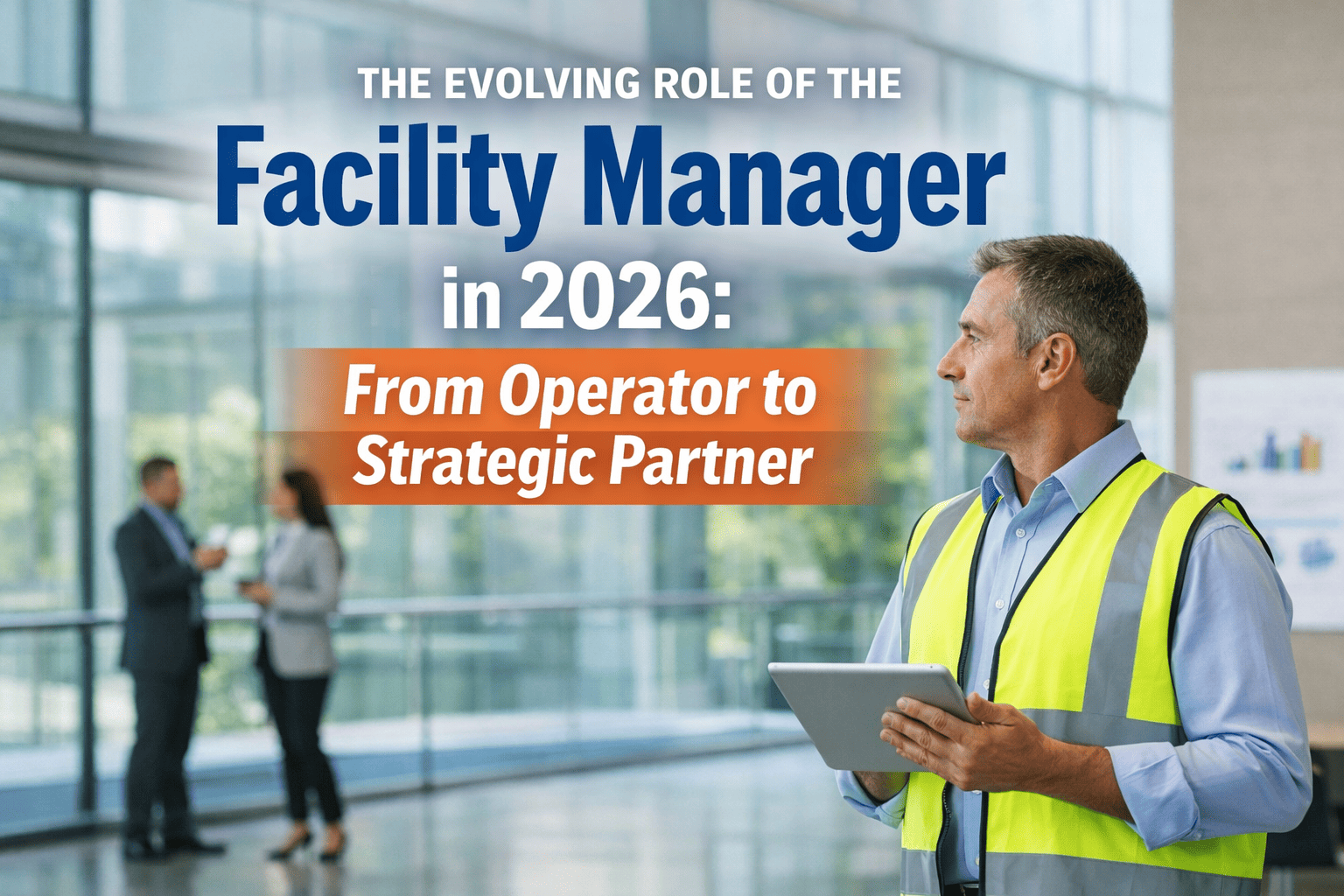
The Evolving Role of the Facility Manager in 2026: From Operator to Strategic Partner
How data literacy, AI integration, and sustainability mandates are transforming facility management from a reactive cost center into a strategic business function.
The Role Has Fundamentally Changed
Facility management has shifted from a back-office maintenance function to a strategic enabler of organizational performance. The professionals who thrive in 2026 aren't just managing buildings — they're driving measurable business outcomes across energy, compliance, space utilization, and employee experience.
Traditional FM (Pre-2020)
Strategic FM (2026)
Ready to Lead the Transition?
Oxmaint gives facility managers the data platform to move from reactive operations to strategic leadership — with analytics dashboards, automated compliance tracking, and executive-ready reporting.
Five Strategic Shifts Defining the 2026 Facility Manager
Industry research from IFMA, Facilities Dive, and multiple global FM analysts confirms these five shifts are reshaping what organizations expect from facility management professionals.
Data Analyst, Not Just Operator
Facility managers in 2026 are expected to manage and extract insights from IoT sensors, building management systems, and CMMS analytics. Advanced sensing for temperature, humidity, and occupancy transforms FMs from operational overseers into data-driven decision-makers. Organizations need FMs who can translate building performance data into capital planning recommendations. Sign up for Oxmaint to start building your analytics capability.
Sustainability Champion
Buildings produce 39% of global carbon emissions. Facility managers are now directly responsible for energy reduction targets, ESG reporting metrics, and green building certifications. In 2026, embodied carbon strategies, circular material flows, and adaptive reuse of existing building stock are becoming core FM competencies — not optional extras.
AI and Automation Integrator
Multi-agent AI is now orchestrating end-to-end workflows — from automated work order generation to predictive maintenance scheduling. At Kent State University, AI monitors 1,000 input variables and makes 150 control decisions every 15 minutes, saving $470,000 in annual utility costs. FMs who deploy these tools multiply their team's output. Book a demo to see AI-powered maintenance analytics in action.
Workplace Experience Designer
Hybrid work has permanently changed space utilization patterns. Facility managers now design flexible environments that support both remote and in-office work — using occupancy sensors, hot-desking systems, and utilization analytics to optimize every square foot. The role has expanded from maintaining buildings to curating productive workplace experiences.
Capital Planning Strategist
Leadership teams want clear visibility into operating costs, facility condition, and energy performance across every site. Facility managers are becoming key contributors to portfolio-level decisions because they hold the operational data needed to evaluate each location's true value. Maintenance data now drives long-range capital investment planning.
Skills the 2026 Facility Manager Needs
The competency profile has expanded well beyond mechanical and operational knowledge. Today's FM leaders need a blend of technical, analytical, and strategic skills to deliver on expanded expectations.
Data Analytics
CMMS reporting, energy dashboards, occupancy trend analysis, and KPI visualization for executive presentations.
ESG and Sustainability
Carbon accounting, energy auditing, green certification programs, and circular economy principles for facility operations.
Technology Integration
IoT platforms, building automation systems, CMMS administration, and AI-driven predictive maintenance tools.
Strategic Communication
Cross-departmental stakeholder engagement with IT, HR, finance, and C-suite leadership on facility performance and investment priorities.
Financial Acumen
Capital budgeting, lifecycle cost analysis, total cost of ownership modeling, and ROI justification for technology investments.
Risk and Resilience
Business continuity planning, emergency preparedness, cybersecurity awareness for building systems, and regulatory compliance management.
Career Growth: FM Role Evolution by Experience Level
The expanded scope of facility management has created new career pathways that didn't exist five years ago. Each level now carries strategic responsibilities alongside traditional operational duties.
| Career Stage | Traditional Focus | 2026 Strategic Addition | Salary Range (US) |
|---|---|---|---|
| Entry-Level FM | Work order execution, vendor coordination | Mobile CMMS proficiency, data entry accuracy | $31K – $52K |
| FM Coordinator | Schedule management, PM compliance | Dashboard reporting, sustainability data collection | $48K – $68K |
| Facility Manager | Operations oversight, budget management | Analytics interpretation, ESG metric ownership | $65K – $95K |
| Senior FM / Director | Multi-site management, capital projects | AI strategy, portfolio optimization, C-suite reporting | $90K – $135K |
| VP / Head of Facilities | Corporate real estate oversight | Board-level ESG reporting, strategic workforce planning | $120K – $180K+ |
Build Your Strategic FM Toolkit
Oxmaint equips facility managers with AI-powered analytics, automated compliance tracking, and executive-ready dashboards — the tools that separate strategic leaders from reactive operators.
How Oxmaint Powers the Strategic Facility Manager
Analytics Dashboard
Real-time KPIs for PM completion rates, energy consumption, cost trends, and compliance status across your entire portfolio — ready for executive review.
Predictive Scheduling
AI-driven PM scheduling that adapts to equipment condition data, usage patterns, and manufacturer recommendations — preventing failures before they disrupt operations.
ESG Reporting
Automated energy and emissions tracking with exportable sustainability reports aligned to corporate ESG frameworks and green building certification requirements.
Compliance Automation
Regulatory requirement tracking with automated inspection scheduling, documentation generation, and audit-ready record keeping for any regulatory framework.
Frequently Asked Questions
Lead the Next Era of Facility Management
The facility managers who succeed in 2026 aren't waiting for the industry to change around them — they're building strategic capabilities today with the right tools.