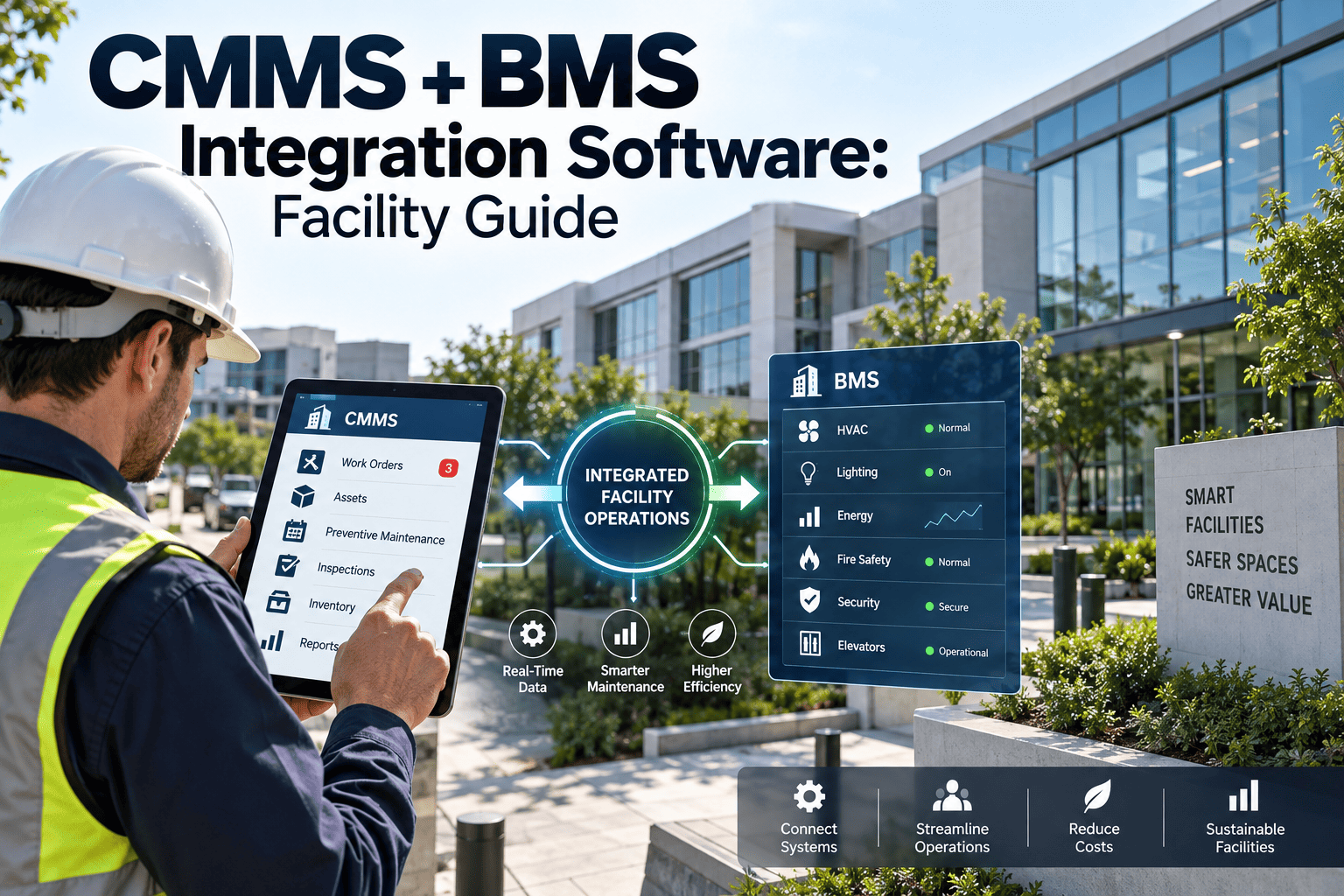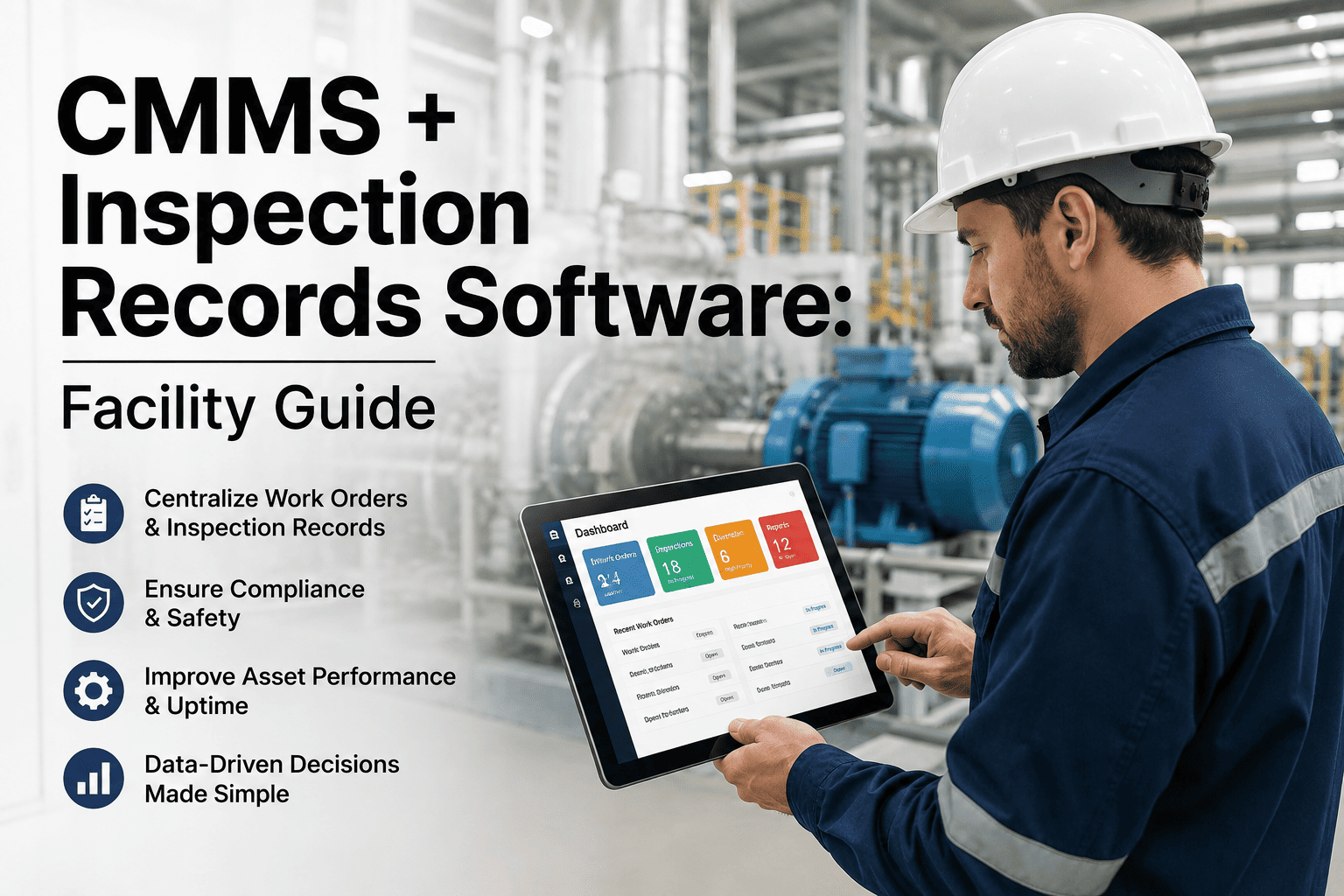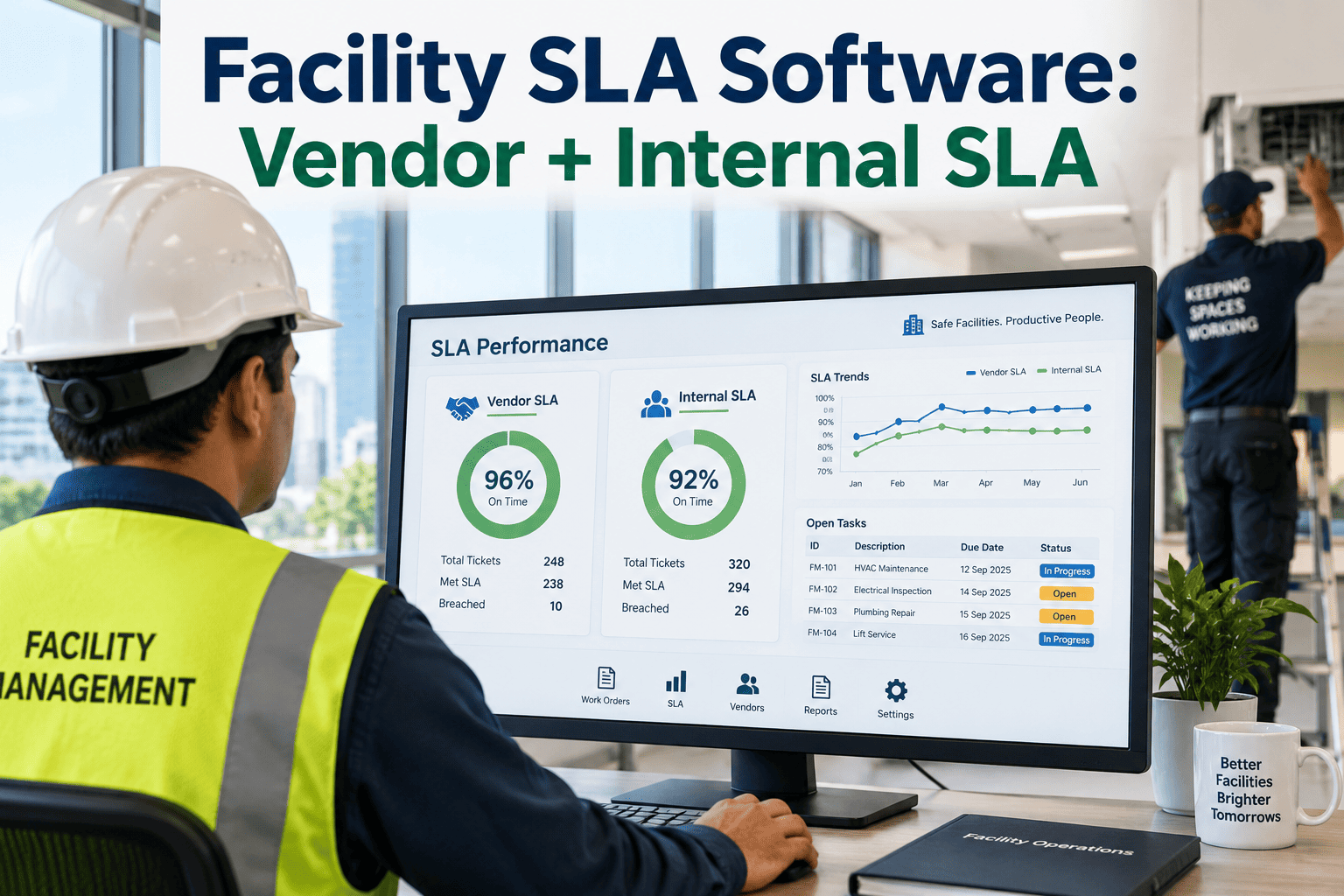
Ask a facility manager how many service level agreements their team is currently accountable for, and most will admit they are not entirely sure. Vendor contracts promise a four-hour response window, tenant leases promise a same-day repair on critical systems, and internal reliability targets promise a preventive maintenance completion rate nobody is actually tracking in real time. When every one of these commitments lives in a different document, missed SLAs get discovered after the fact, usually in an angry email rather than a dashboard. See how Oxmaint tracks every SLA in one place, from vendor penalties to internal reliability goals.
Two Kinds of SLA, One Blind Spot
Facility teams juggle two very different categories of service commitment, and most software only handles one of them well. Vendor SLAs govern what contractors and suppliers owe your facility. Internal SLAs govern what your own maintenance team owes the business, tenants, or production line. Missing either one carries a real cost, and tracking them separately means nobody ever sees the full picture. Most facility management platforms were built around one category or the other, forcing teams to run two disconnected systems and manually reconcile the results at the end of every month.
The Real Cost of an Untracked SLA
When SLA data lives in scattered spreadsheets and email threads, penalties and missed commitments pile up quietly. A vendor breach that should trigger a contract penalty often goes unclaimed simply because nobody logged the response time. An internal target that is slipping goes unnoticed until a tenant complaint or a production stoppage forces the issue into the open. By the time anyone reviews the numbers manually, the evidence needed to hold a vendor accountable has usually already gone stale, and the pattern behind an internal miss has already repeated itself several more times.
What a Complete SLA Tracking System Needs
Not every maintenance platform tracks SLAs the same way. Some only log response time for vendor work; others only track internal preventive completion rates. A facility that manages both tenant leases and vendor contracts needs a system built around all five of the following capabilities, applied consistently across every asset and every contract in the portfolio.
The Disputes That Cost Facility Teams the Most Money
Even with a signed contract in hand, SLA disputes with vendors are common, and they almost always come down to a disagreement about timing. Without a neutral, automatically logged timestamp, both sides are left arguing from memory, and the facility usually loses that argument by default because the contractor has more incentive to remember events favorably.
What to Look for When Evaluating SLA Software
Not all maintenance platforms that claim SLA support actually deliver the same depth of tracking. Many only offer a single response-time field on a work order, with no way to differentiate between a vendor contract threshold and an internal target, and no automatic escalation when a deadline is approaching. Before committing to a platform, facility teams should confirm it can apply different thresholds per vendor and per asset type, generate a vendor scorecard without manual export and formatting, and surface internal SLA performance with the same visibility given to vendor contracts rather than treating internal targets as a secondary feature bolted on afterward as an addition nobody asked for.
It is also worth checking whether the platform supports mobile logging in the field, since a system that only captures data from a desktop dispatcher misses the reality of how most facility teams actually operate day to day. Technicians closing tickets from a phone or tablet on the floor need the same automatic timestamp capture as a dispatcher working from an office, or the SLA data will always have gaps that undermine its credibility during a dispute.
Common SLA Reporting Formats Facility Teams Need
Vendor SLA vs Internal SLA: How Oxmaint Tracks Both
| Capability | Vendor SLA | Internal SLA |
|---|---|---|
| Automatic response timer | Starts on ticket assignment to contractor | Starts on internal work order creation |
| Threshold source | Pulled from the signed service contract | Set by facility or reliability leadership |
| Breach consequence | Contract penalty or credit | Escalation to facility director |
| Reporting cadence | Monthly vendor scorecard | Weekly internal performance review |
| Renewal impact | Feeds directly into contract negotiation | Feeds into staffing and budget planning |
From Missed Deadlines to Measurable Accountability
Why Facility Directors Are Moving Off Spreadsheets
A spreadsheet can technically hold SLA data, but it cannot enforce it. Nobody gets an alert when a cell goes red, contractors rarely see the same numbers the facility team is tracking, and reconstructing a breach for a contract dispute means digging through email threads from months earlier and hoping the right message was never deleted. Facility directors adopting dedicated SLA tracking software report faster vendor accountability, cleaner audit trails, and internal teams that finally have visibility into their own performance against targets they previously only heard about during a bad quarter review.
The shift also changes how vendor negotiations happen. Instead of a contractor disputing a penalty because nobody can produce a timestamp, the facility team pulls up a scorecard built from automatically logged data that both sides already trust. Renewal conversations move faster, and underperforming vendors have a much harder time arguing their way out of accountability. Facility teams that have made the switch also describe a cultural shift internally: technicians start treating SLA windows as a real deadline rather than a soft guideline, simply because the clock is visible to everyone and nobody wants to be the reason a scorecard slips.
Who Relies on This Kind of SLA Program
Facility directors use vendor scorecards to decide which contractors get renewed and which get replaced, turning a subjective annual review into a decision backed by a full year of logged performance data. Property managers overseeing tenant leases use internal SLA tracking to prove repair turnaround commitments were met, which matters considerably during lease renewal conversations and tenant satisfaction reviews. Reliability engineers use internal preventive maintenance targets to catch a slipping completion rate before it turns into an unplanned failure, since a missed preventive window is itself a leading indicator worth tracking as closely as any vendor contract. Procurement teams use the same vendor scorecards during the bidding process for new contracts, giving incoming vendors a clear benchmark for the performance level expected of them from day one, and giving the facility a defensible record if a new vendor underperforms early.
Building Your SLA Program in Oxmaint
That same team used the scorecard data six months later during a contract renewal, replacing what had previously been a tense negotiation built on competing recollections with a straightforward review of twelve months of logged performance both sides already agreed on.