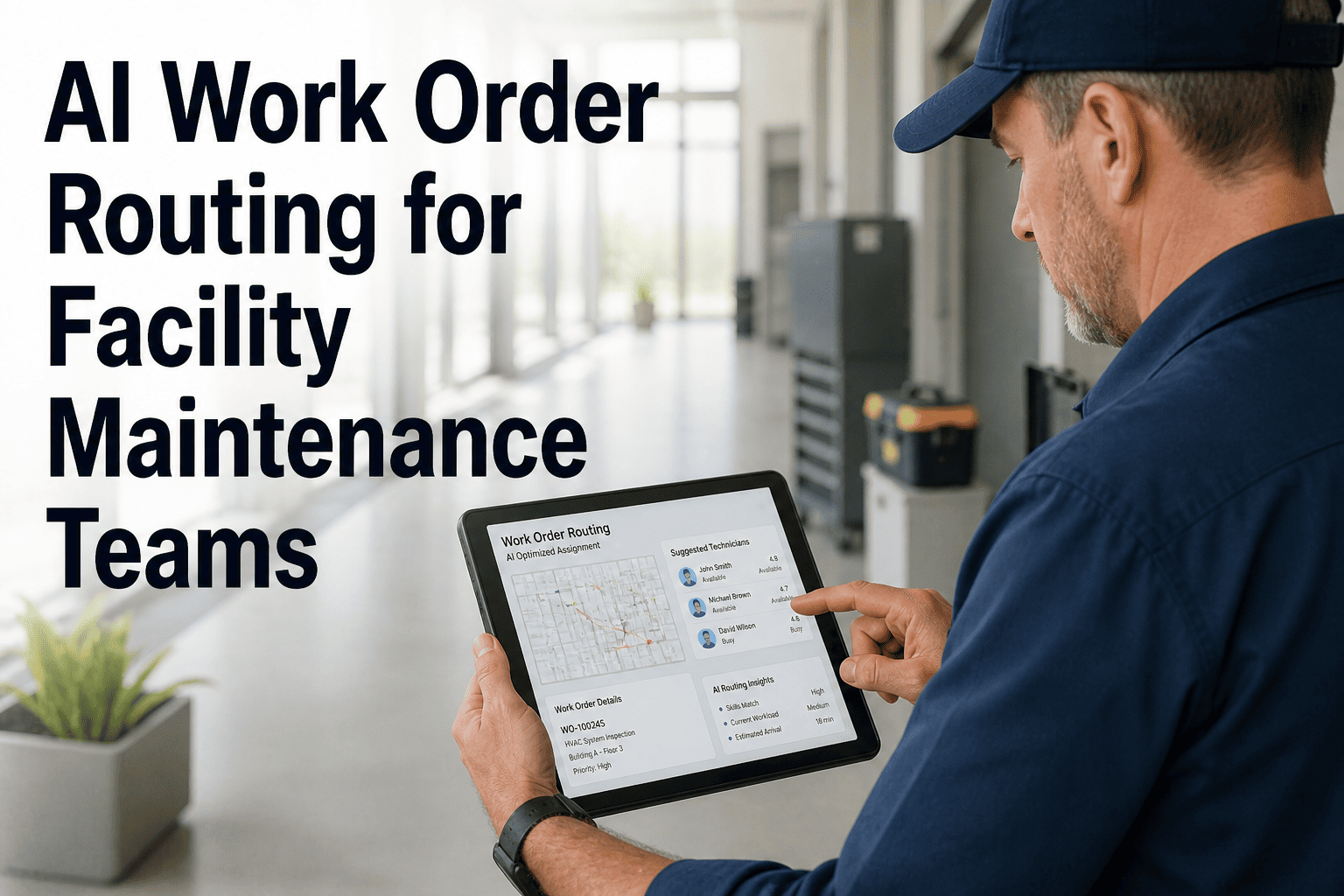
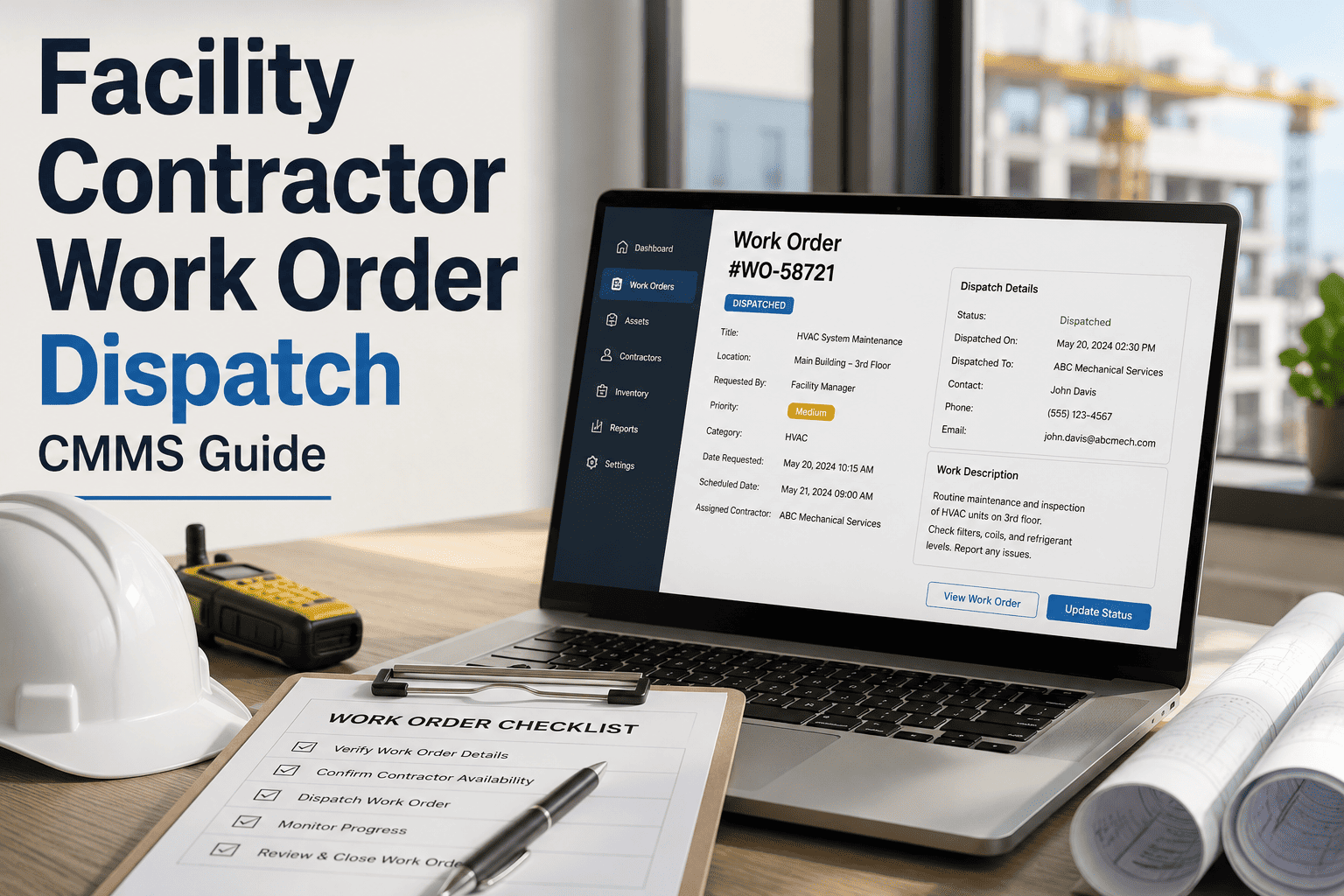
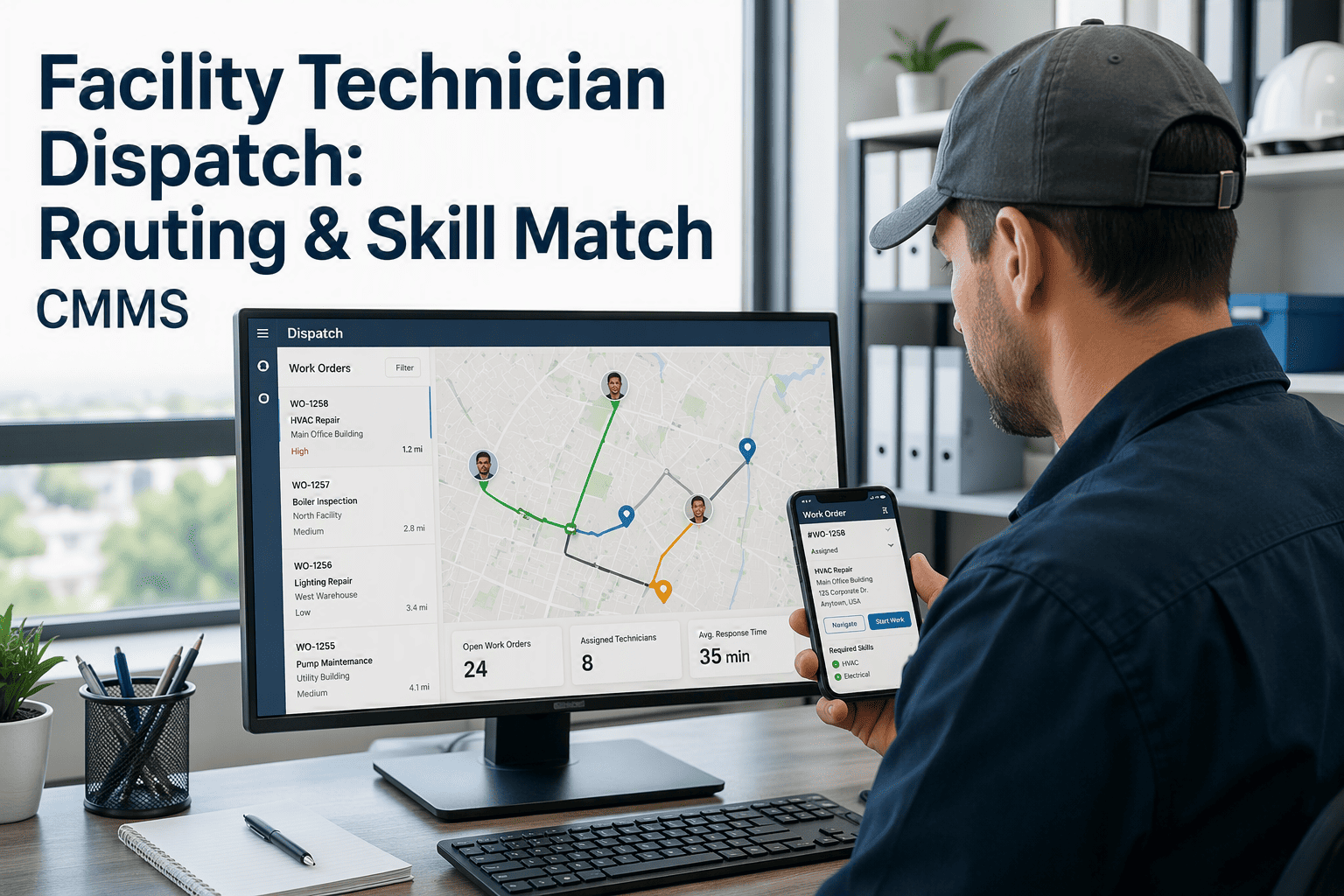
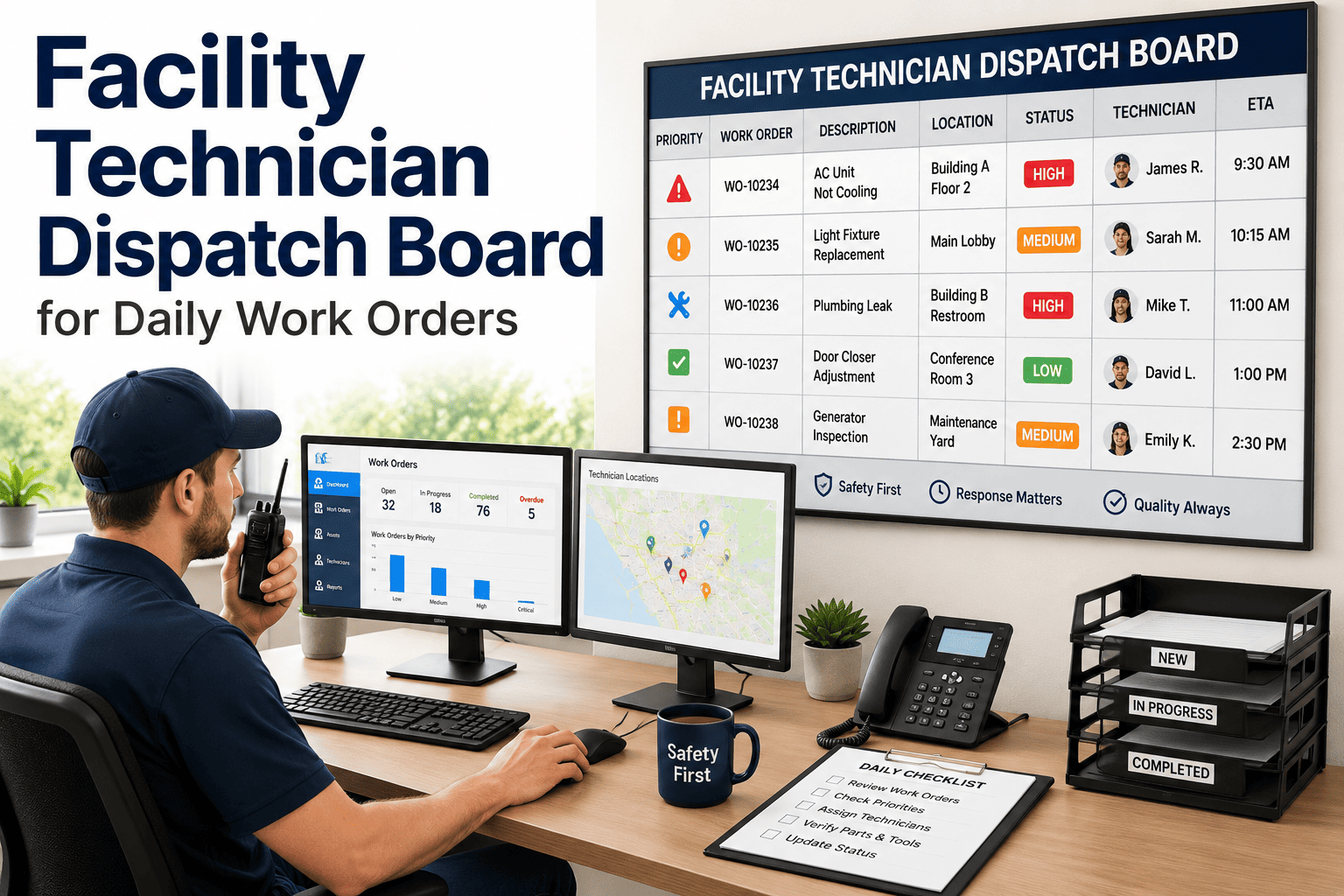
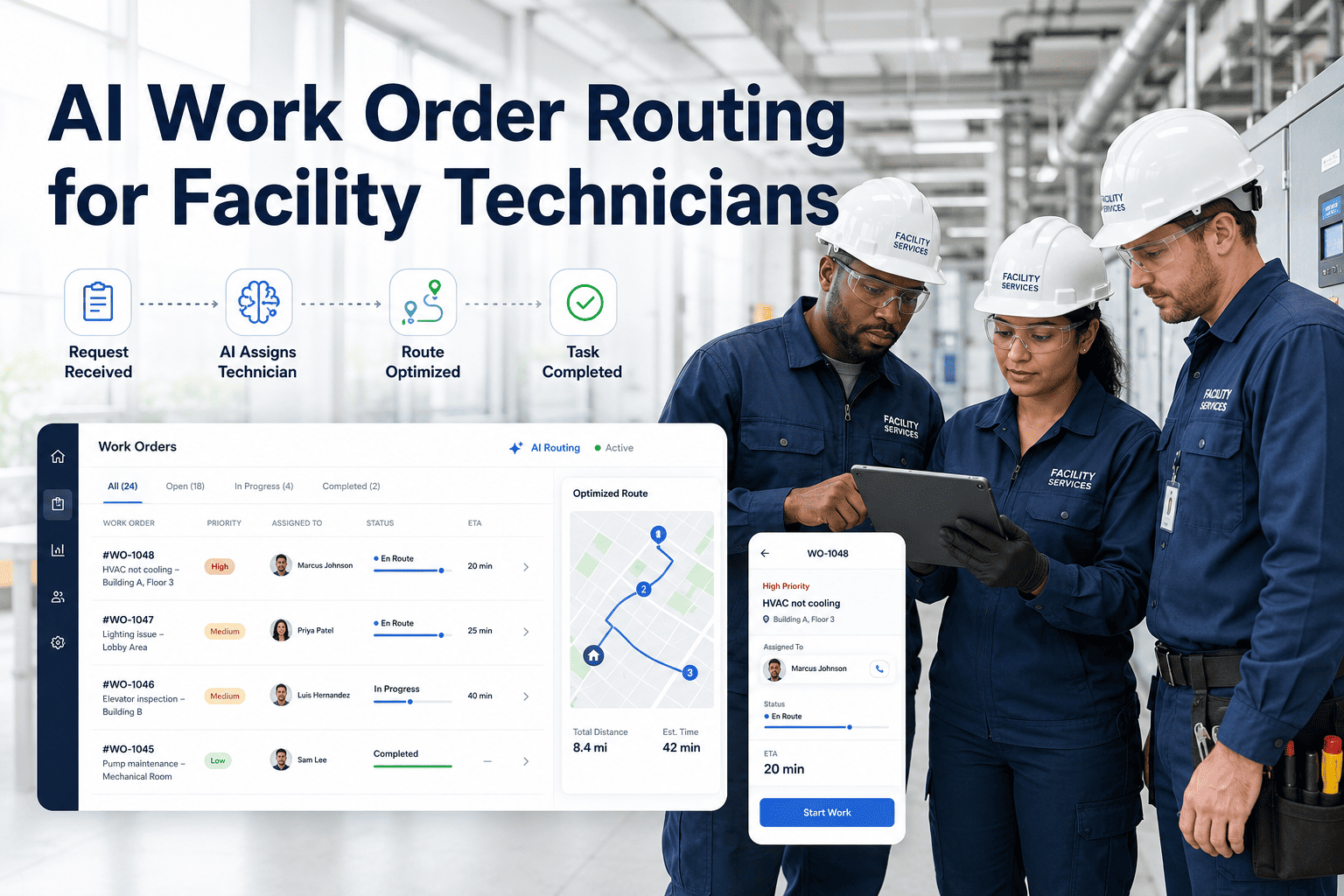
Every time a facility supervisor manually decides which technician gets which work order, they are making a judgment call with incomplete data — who is closest, who has the right skills, whether the required parts are in stock, and how the assignment affects 12 other open work orders simultaneously. That cognitive load adds up to 27% of productive hours lost to administrative overhead before a wrench touches a single asset. AI work order routing eliminates that overhead entirely — analyzing asset criticality, technician skills, inventory availability, and SLA windows in under 2 seconds, then dispatching without supervisor input in 73% of routine cases on OxMaint-deployed facility teams. The result: 50%+ faster response times within the first quarter, and technicians who spend their day on actual maintenance rather than waiting for the next assignment.
Work Order Management · Operations & Workflow · AI Automation
AI Work Order Routing for Facility Maintenance Teams
AI routing replaces the manual dispatcher — analyzing 6 variables simultaneously, routing to the right technician in 2 seconds, and escalating overdue work orders automatically. No supervisor intervention required for 73% of routine work orders.
Start Free Trial
Book a Demo
OxMaint AI Routing — Verified Results
Work orders auto-assigned without dispatcher
73%
First-visit completion with AI inventory pre-check
84%
PM schedule compliance within 6 months
92%
Reduction in rework from incorrect assignments
44%
Reduction in emergency reactive repair costs
61%
The Routing Engine
6 Variables OxMaint AI Evaluates Before Every Work Order Assignment
Manual dispatchers typically consider 2–3 factors when assigning work orders. OxMaint's AI routing engine evaluates six simultaneously — producing better assignments in a fraction of the time with no cognitive overhead.
1
Asset Criticality Score
Assets are ranked by their impact on operations — a chiller serving a data center gets higher priority routing than a parking lot light. AI automatically escalates routing speed for critical-tier assets regardless of request channel.
2
Technician Skill Match
Work orders requiring HVAC, electrical, or confined-space-entry certification are only routed to technicians with the relevant license on file. Skill-matched routing cuts rework from incorrect assignments by 44% and eliminates compliance exposure.
3
Current Queue Load
AI balances workload across the team — a technician with 8 open work orders will not receive a new assignment if a qualified colleague has 2. Queue balancing improves on-time completion rates without increasing team size.
4
Inventory Pre-Check
Before dispatch, AI verifies required parts are in stock. If parts are missing, a procurement request fires automatically while the technician is routed to a different task. First-visit completion rises from 51% to 84% with this single check.
5
SLA Window Status
Work orders approaching 80% of their SLA window receive automatic priority escalation — routed to the next available qualified technician regardless of queue position. SLA breaches are eliminated before they happen, not reported after.
6
Location Proximity
Among equally qualified, available technicians, AI selects the closest to the asset location — reducing travel time and improving response speed. For multi-building portfolios, proximity routing cuts average response time by 30–40%.
Routing Comparison
Manual Dispatch vs. AI Routing — By the Numbers
| Metric |
Manual Dispatch |
OxMaint AI Routing |
Improvement |
| Time to assign work order |
5–20 minutes |
Under 2 seconds |
99% faster |
| First-visit completion rate |
51% |
84% |
+33 percentage points |
| PM compliance rate |
51% (manual average) |
92% |
+41 percentage points |
| SLA breach rate |
18–25% |
Under 5% |
75%+ reduction |
| Rework from wrong assignments |
Baseline |
44% reduction |
Skills-matched routing |
| Supervisor dispatch hours |
2–3 hrs/day |
Under 30 min/day |
Freed for strategic work |
| Emergency reactive cost |
Baseline |
61% reduction |
Predicted before failure |
How It Works
The AI Routing Workflow — From Request to Closed Work Order
OxMaint's AI routing pipeline handles the entire work order lifecycle automatically — from the moment a request enters the system to the moment the work order is closed and the compliance record is generated.
1
Request Intake
Request arrives via mobile app, QR code scan, email, or IoT sensor trigger. AI parses the request, identifies the asset and fault type, and classifies priority in under 2 seconds — no manual triage needed.
0–2 seconds
2
AI Priority Scoring
Asset criticality, fault severity, SLA requirements, and operational impact are combined into a priority score. The score determines routing speed — critical assets bypass the standard queue entirely.
2–5 seconds
3
Technician Selection
AI evaluates all available technicians against skill requirements, queue load, location, and certification status simultaneously. The optimal assignment is selected and dispatched without supervisor review in 73% of cases.
5–10 seconds
4
Mobile Dispatch
Technician receives the work order on mobile with asset location, fault description, required tools, parts availability status, and relevant SOPs pre-attached. No callbacks to the office required.
10–30 seconds
5
SLA Monitoring & Escalation
OxMaint monitors every open work order continuously. At 80% of SLA window, an escalation notification fires. At 100%, the work order auto-escalates to supervisor review and is flagged on the command center dashboard.
Continuous
6
Close & Compliance Record
Technician closes the work order on mobile — photos, notes, parts used, and time logged. Compliance record generates automatically. Failure pattern data feeds back into the AI model to improve future routing decisions.
Field closure
Deploy AI Work Order Routing Across Your Entire Team — Live in 14 Days
OxMaint's AI routing engine goes live with your existing technician roster and asset data — no implementation project, no custom development, no new hardware. Your first AI-routed work order dispatches within 14 days of signup.
"
The two metrics that transformed our facilities team after deploying AI routing were first-visit completion rate and supervisor dispatch hours. First-visit rate going from 54% to 88% means technicians stop making two trips for every repair — the wasted travel time and second-visit overhead was costing us the equivalent of two full-time positions. And when our supervisors stopped spending 2 hours a day manually assigning work orders, they started doing the job we actually needed them to do: identifying failure patterns, coaching technicians, and planning maintenance programs. AI routing did not replace our supervisors. It made them effective for the first time.
Facilities Operations Manager
Commercial real estate portfolio, 22 buildings, 380,000 sq ft — OxMaint AI routing deployed across 34 technicians
FAQs
AI Work Order Routing — Common Questions
Does AI routing replace the facility maintenance supervisor?
AI routing eliminates the repetitive dispatch decisions that consume 2–3 hours of supervisor time daily — but it does not replace the strategic functions that make supervisors valuable. Once routine assignment is automated, supervisors shift from queue management to work that creates more value: identifying recurring failure patterns, coaching technician performance, planning maintenance programs, and managing vendor relationships. Facilities that deploy AI routing typically see supervisor satisfaction scores improve, because the role becomes more strategic and less reactive. OxMaint's AI handles 73% of routine assignments autonomously; the remaining 27% that involve complex judgment calls, new asset types, or unusual circumstances still route to supervisor review with AI-generated context.
Start your free OxMaint trial and model your supervisor time savings.
How does AI routing handle work orders that require specialized certifications?
OxMaint maintains a certification profile for each technician — recording active HVAC licenses, electrical certifications, confined space entry authorization, forklift licenses, and any other credentials relevant to your facility's maintenance requirements. When a work order's asset type or fault classification requires a specific certification, the AI routing engine only evaluates certified technicians for that assignment. An uncertified technician will never receive a work order that exceeds their certification scope. This eliminates both the compliance exposure of incorrect assignments and the rework cost of sending the wrong technician to a job — the 44% reduction in rework events reported by OxMaint facility teams is driven almost entirely by this certification-aware routing logic.
Book a demo to configure certification-based routing for your team.
How long does it take to implement AI work order routing?
OxMaint AI routing goes live in 14 days for most facility teams. The implementation sequence covers three phases: asset data import and criticality classification (days 1–3), technician profile configuration including skills and certifications (days 4–7), and SLA rules, escalation chains, and routing threshold calibration (days 8–14). Facilities that have existing asset data in spreadsheet or legacy CMMS format can migrate that data directly. Facilities starting from scratch use OxMaint's QR code asset tagging workflow to build the registry during the first week. The first AI-routed work order dispatches within the first business day of configuration being complete — no waiting period for model training.
Can AI routing integrate with our existing vendor or contractor dispatch process?
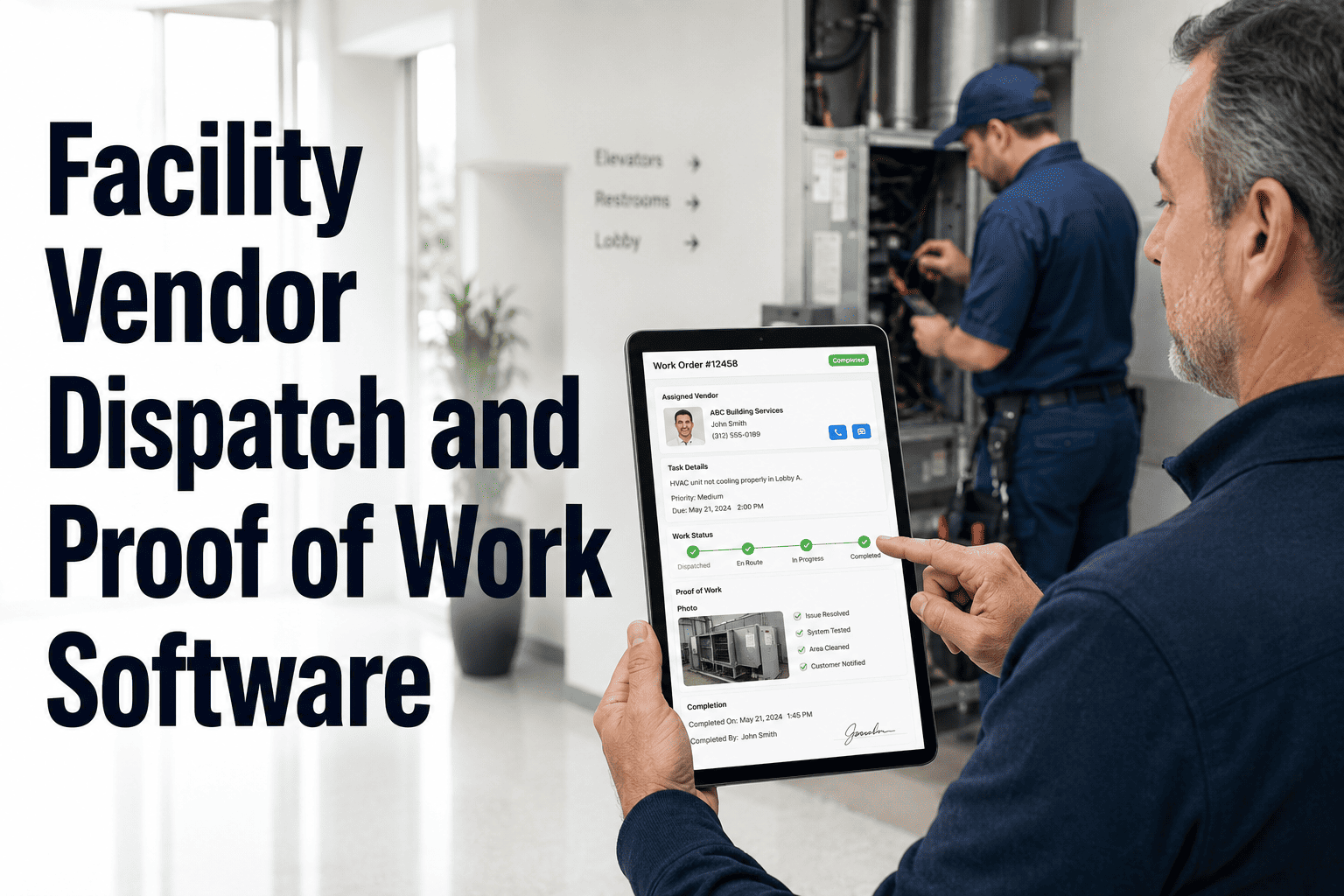
Yes — OxMaint's routing engine handles both internal technicians and external vendors as assignable resources. Vendor profiles include scope-of-work definitions, rate schedules, and availability windows so the AI can evaluate whether an internal technician or an external contractor is the correct assignment for a given work order. Vendor SLA compliance is tracked automatically alongside internal team performance. When a work order exceeds internal team scope, the AI can automatically generate a vendor dispatch request with the relevant asset details and SLA requirements pre-populated. Vendor performance data accumulates in OxMaint over time, enabling data-driven contract decisions at renewal.
Start your free trial and add your vendor roster to OxMaint today.
Deploy AI Work Order Routing Across Your Entire Team — Live in 14 Days
OxMaint's AI routing engine goes live with your existing technician roster and asset data — no implementation project, no custom development, no new hardware. Your first AI-routed work order dispatches within 14 days of signup.