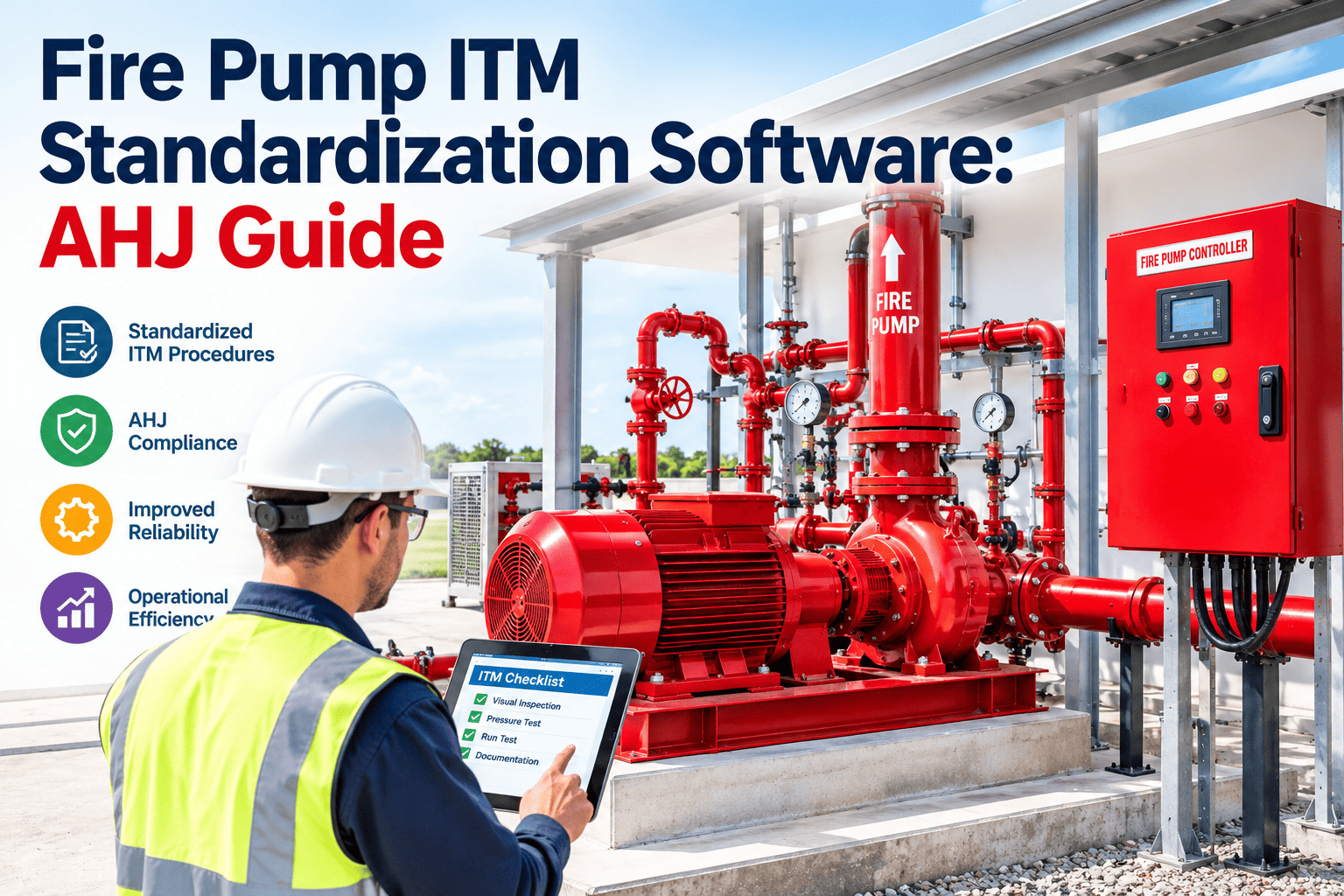
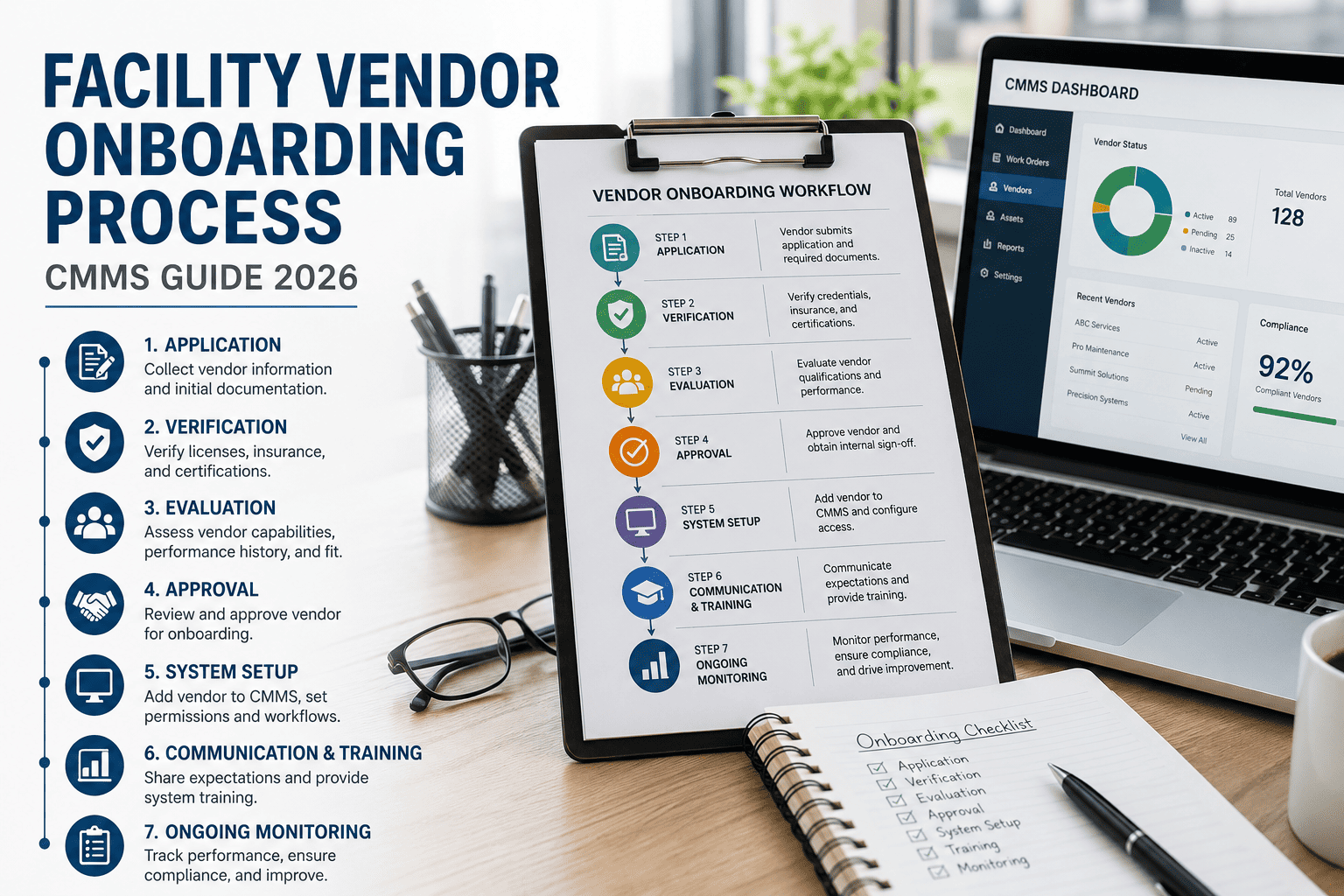
Most facility teams don't have a fire pump vendor problem — they have forty of them. A hospital campus calls one contractor for churn tests, another for annual flow tests, a third when the jockey pump short-cycles, and a fourth when an AHJ flags a deficiency nobody tracked. Every vendor uses a different report format, a different invoice structure, and a different definition of "compliant." When an insurance auditor or fire marshal asks for a single consolidated testing history across every pump on the property, most facility directors are stuck stitching together PDFs from a dozen inboxes. Book a demo to see how Oxmaint standardizes fire pump vendors into one accountable, audit-ready system.
40+
Average number of disconnected fire pump service vendors across a multi-site facility portfolio
31%
Of fire pump annual flow tests are logged as churn tests only, missing NFPA 25 §8.3.3 requirements
4.2x
Invoice cost variance for the same pump service task across unstandardized vendor contracts
$620K
Average insurance claim denial exposure from undocumented fire pump degradation history
Oxmaint gives facility directors one preferred vendor registry, one RFP scorecard, and one testing calendar spanning every fire pump on the property. Book a Free Demo or Start Free Trial to see your vendor consolidation plan built out.
What Is Fire Pump Vendor Standardization Software?
Fire pump vendor standardization software is the platform that consolidates a fragmented list of fire pump service contractors into a scored, ranked, and centrally tracked preferred vendor network — with every weekly churn test, monthly condition check, annual flow test, and three-year comprehensive test logged against one asset record instead of a dozen disconnected inboxes. Instead of every building or region choosing its own contractor with its own paperwork, a standardized program applies one RFP framework, one performance scorecard, and one compliance calendar across the entire pump fleet, cutting both cost variance and testing gaps at the same time.
Quick Answer
Fire pump vendor standardization software is a centralized platform that scores contractor performance, standardizes RFP and bid templates, tracks NFPA 25 weekly, monthly, annual, and three-year testing compliance per vendor, and consolidates a fragmented service network into a preferred vendor list of five to eight accountable contractors. Facilities using a standardized program report 90%+ testing compliance and consolidate vendor counts by roughly 70% within two testing cycles.
01
Vendor Performance Scorecard
Every completed work order rated on response time, first-time fix rate, documentation quality, and deficiency follow-up — rolled into a per-vendor score that determines which contractors stay on the preferred list at contract renewal.
02
RFP and Bid Standardization
One standardized scope-of-work template covering churn testing, flow testing, controller checks, and diesel engine maintenance — sent to every bidding contractor so line-item pricing can actually be compared instead of guessed at.
03
Centralized Testing and Service History
Weekly churn results, monthly condition checks, annual flow curves, and three-year comprehensive test data logged against each pump asset regardless of which vendor performed the work, producing one continuous performance trend line.
04
Compliance Documentation Registry
Certificates of fitness, technician qualifications, insurance certificates, and NFPA 25 test records stored per vendor and per pump — ready to produce the moment an AHJ, insurance underwriter, or corporate risk team requests it.
Why Fire Pump Vendor Fragmentation Creates Real Risk
Fire pumps are the single component standing between a building's sprinkler system and total failure during an active fire. NFPA 25 requires weekly churn tests for diesel-driven units, monthly checks for electric units, and a full annual flow test at shutoff, 100% rated capacity, and 150% rated capacity — every single year, without exception. When vendor coverage is fragmented across a dozen contractors with no shared record, gaps in that schedule become invisible until an insurance carrier, auditor, or AHJ asks a question the facility team cannot answer with documentation.
01
Churn Tests Logged as Annual Flow Tests
Contractors under time pressure sometimes log a no-flow churn check as if it satisfies the annual flow test requirement. That gap under NFPA 25 §8.3.3 goes undetected until an AHJ requests the flow curve data and none exists.
02
Undocumented Pump Curve Degradation
When flow test results show more than 5% degradation from the original acceptance curve, NFPA 25 requires investigation. Fragmented vendors rarely compare this year's results to last year's, so degradation trends across a three- to five-year window go unnoticed until pump failure.
03
Invoice Cost Variance Across Contracts
The same annual flow test task can be invoiced anywhere from $850 to $3,600 depending on which of a dozen vendors is assigned to a given site, with no standardized scope of work to compare against.
04
No Consolidated Insurance Documentation
Insurance carriers increasingly require a full testing history across a property's entire pump fleet before renewing coverage or paying a claim. Facilities with fragmented vendor records struggle to produce this in a single package.
How Oxmaint Standardizes Your Fire Pump Vendor Network
01
Build a Unified Fire Pump and Vendor Asset Registry
Every fire pump, jockey pump, controller, and diesel engine across every site gets registered in Oxmaint with make, model, rated capacity, and design curve — linked to every vendor that has ever serviced it. Facility teams see the full asset and vendor picture for the first time in one screen instead of scattered spreadsheets.
02
Score Every Vendor and Standardize the RFP Process
Oxmaint's vendor scorecard tracks response time, first-time fix rate, documentation completeness, and deficiency closure speed for every contractor. At renewal, facility directors send one standardized RFP template to competing vendors and compare actual line-item bids instead of vague quotes.
03
Automate NFPA 25 Testing Schedules Per Vendor Assignment
Weekly churn, monthly condition checks, annual flow tests, and three-year comprehensive tests generate as scheduled work orders assigned to the correct preferred vendor, with escalating reminders before deadlines lapse — so no pump falls through the gap between two contractors.
04
Export a Single Audit-Ready Compliance Package
Every test result, flow curve, technician certificate, and vendor invoice exports as one formatted compliance package — ready for AHJ review, insurance renewal, or corporate risk audits without a single email chase.
Oxmaint Platform Features for Fire Pump Vendor Programs
Vendor Performance Registry
A living scorecard for every contractor across response time, fix rate, and documentation quality, so renewal decisions are based on data rather than familiarity.
RFP and Scope-of-Work Templates
Standardized bid documents covering every NFPA 25 testing tier, so quotes from five different contractors are actually comparing the same scope of work.
NFPA 25 Compliance Scheduling
Weekly, monthly, annual, and three-year test cycles auto-generated per pump with vendor assignment, so testing tier confusion never becomes a compliance gap.
Flow Curve Trend Tracking
Every annual flow test result plotted against the original acceptance curve and prior-year results, flagging degradation past the 5% threshold automatically.
Invoice and Work Order Audit Trail
Every vendor invoice linked to its underlying work order and standardized scope, exposing cost variance across contractors before contracts renew.
Compliance Document Export
Certificates of fitness, insurance documentation, and full test histories exported in one package formatted for AHJ, insurer, or audit review.
Fire Pump Vendor Program KPI Scorecard
Vendor Consolidation Rate
34%
NFPA 25 Annual Flow Test Compliance
61%
Average Vendor Response Time
6.4 days
Invoice Cost Variance Rate
4.2x
Preferred Vendor Utilization
29%
Avg Days to Resolve Deficiency
19 days
Performance Outcomes — Oxmaint-Standardized Vendor Networks
NFPA 25 Annual Flow Test Compliance91%
Reduction in Vendor Count Per Portfolio72%
Reduction in Invoice Cost Variance58%
Preferred Vendor Utilization Rate85%
Faster Deficiency Resolution64%
Vendor Standardization Investment vs Return
| Program Element |
Annual Investment |
Annual Return / Avoidance |
Payback Period |
| Vendor Registry and RFP Standardization |
$5,500 per portfolio |
$180,000+ recovered from consolidated bid pricing per renewal cycle |
Under 4 weeks |
| NFPA 25 Compliance Scheduling |
$6,000 per portfolio |
$620,000+ in insurance claim denial exposure reduced per pump fleet |
First testing cycle |
| Invoice and Work Order Audit Trail |
$3,800 per portfolio |
$95,000+ in cost variance recovered per year across sites |
Under 6 weeks |
| Preferred Vendor Directory |
$4,200 per portfolio |
Faster deficiency resolution avoiding $250,000+ in emergency contractor premiums |
Under 5 weeks |
| Full Oxmaint Vendor Platform |
$19,500 per year |
$300,000+ in combined avoidance across compliance, invoicing, and vendor cost outcomes |
Under 6 weeks |
Frequently Asked Questions
How many fire pump vendors should a facility portfolio realistically use?
What NFPA 25 testing tiers should a vendor RFP require?
How does vendor standardization reduce insurance risk?
Can Oxmaint score vendors we already have contracts with?
How long does it take to consolidate a fragmented vendor network?
Oxmaint standardizes fire pump vendor networks — RFP templates, performance scorecards, NFPA 25 testing schedules, invoice audit trails, and audit-ready compliance exports — all from one platform built for facility teams managing pump fleets across multiple sites.