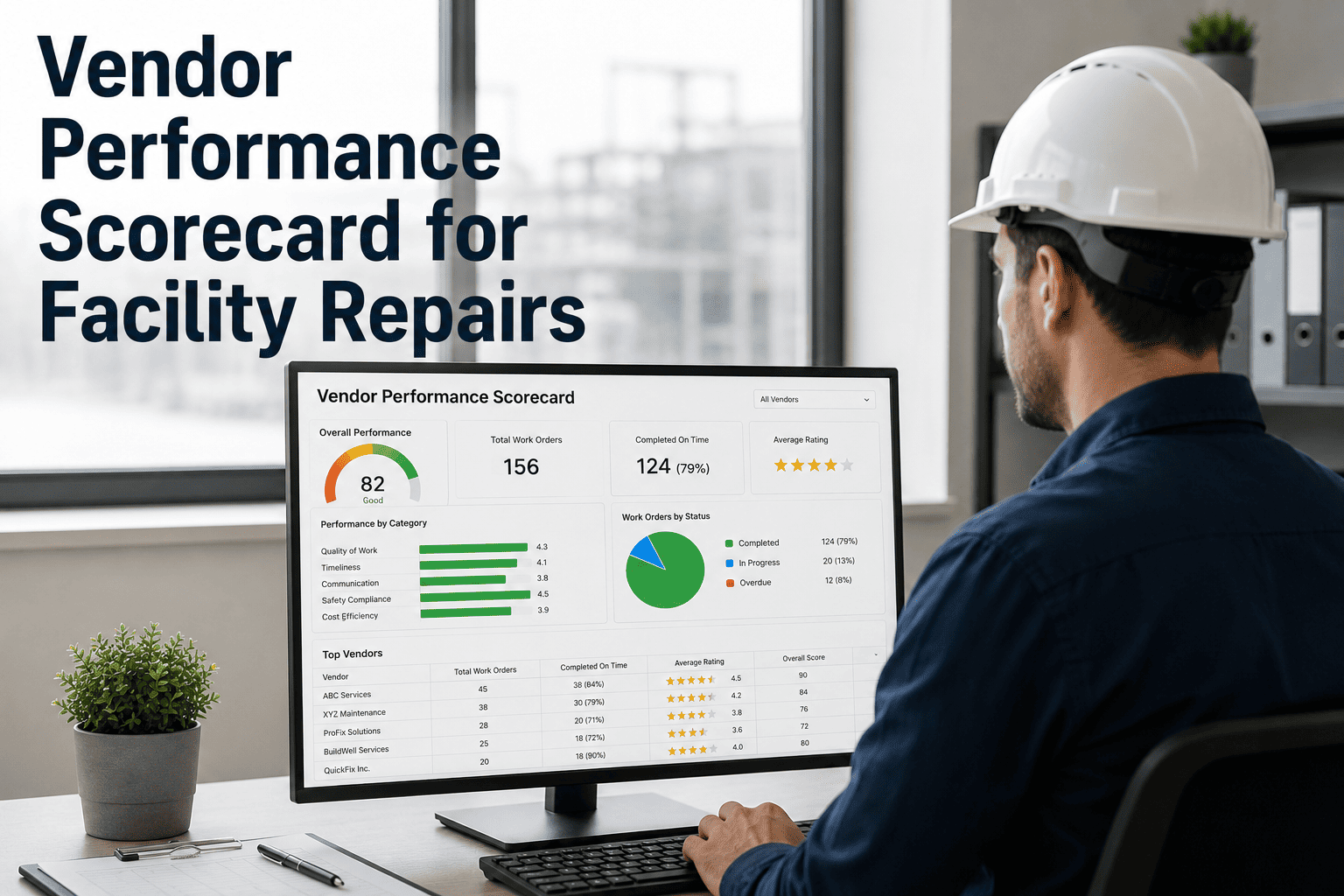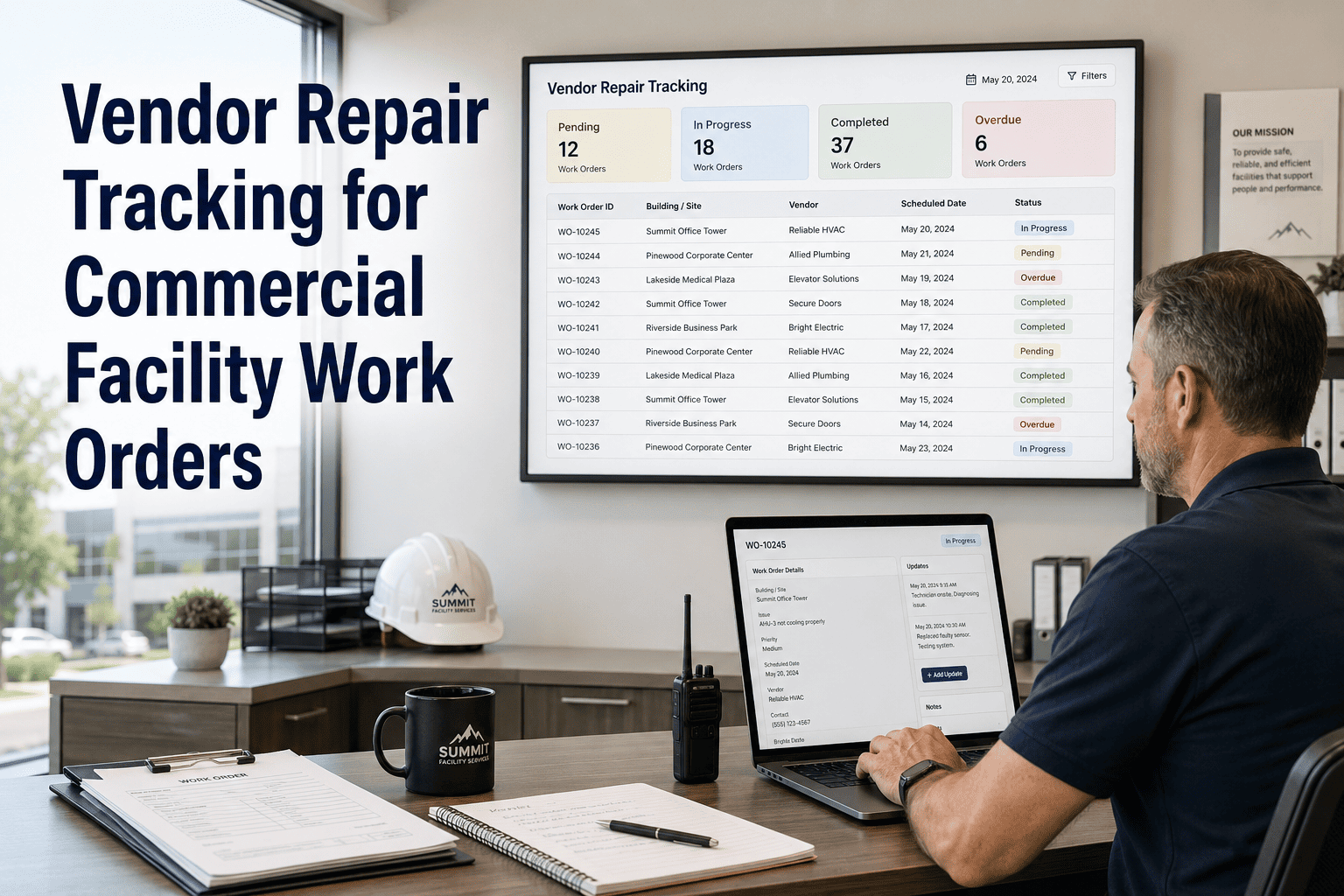
Many vendor business reviews follow the same script: a slide deck from the vendor, a few polite questions, and an hour that ends without a single dated commitment. The vendor’s own numbers go unchallenged, misses are explained rather than analyzed, and nobody records what happens next. A tight 90-minute structure forces data, accountability, and follow-through into the room, and vendor work order reports in a CMMS give the meeting facts to work from.
FM Vendor Quarterly Business Review: 90-Minute Template
A time-boxed agenda for KPIs, misses, roadmap, and commitments, built so every quarterly review ends with owners, dates, and evidence.
The total is 90 minutes. Each segment has one purpose and one output.
Five patterns that turn a QBR into a courtesy call
How reviews often run
- Vendor presents its own figures, unchecked
- Time is spent on updates, not decisions
- Misses are explained, then forgotten
- Roadmap discussion is vague and undated
- Meeting ends without a written action list
How a disciplined QBR runs
- Owner supplies the data from its own records
- Time is spent on gaps and decisions
- Every miss gets a cause and a fix
- Roadmap items have scope, owner, and date
- Meeting ends with a signed-off commitment list
Minute-by-minute plan for 90 minutes
| Time box | Segment | Purpose | Output |
|---|---|---|---|
| 0 to 5 min | Open and goals | Confirm attendees, objectives, and last quarter’s open actions | Agreed agenda, action status noted |
| 5 to 30 min | KPI review | Walk through trends against targets using owner-supplied data | Agreed facts, list of metrics needing explanation |
| 30 to 50 min | Misses and root cause | Examine the largest shortfalls and recurring failures | Cause statements and proposed fixes |
| 50 to 65 min | Roadmap | Review upcoming projects, risks, resourcing, and improvement ideas | Dated roadmap items with owners |
| 65 to 80 min | Commitments | Confirm every action, owner, deadline, and success test | Written commitment log |
| 80 to 90 min | Close | Summarize decisions, flag escalations, set next date | Distribution list and follow-up date |
The pre-read package that saves twenty minutes
Send the pack at least three working days ahead. If attendees must read during the meeting, the meeting has already failed.
Run reviews that end with commitments
Ground rules for the 25 minutes of data
- Owner data first
- Use figures from your own work order system. Vendor-supplied numbers can be compared, but disagreements are resolved against source records.
- Trend over snapshot
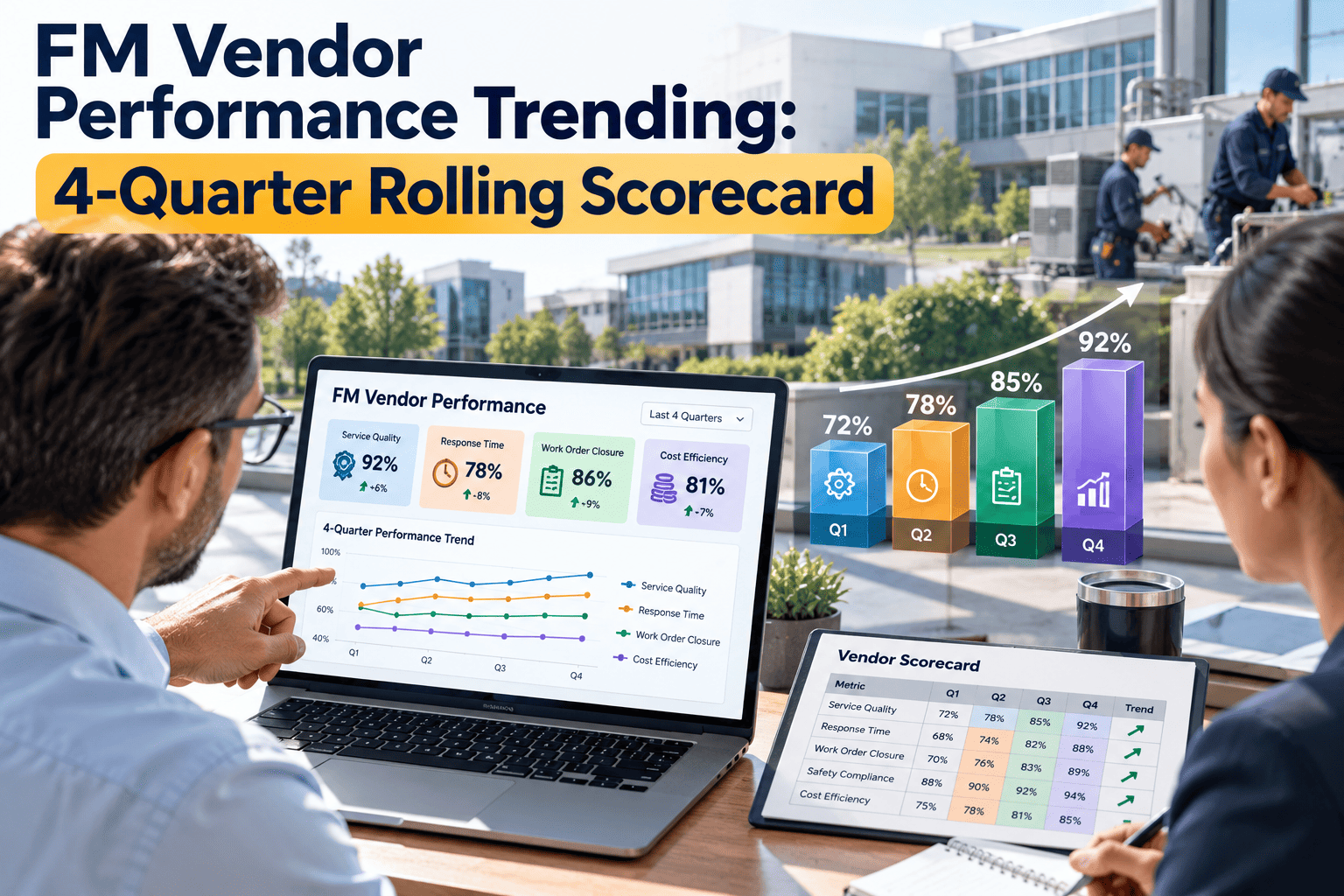
- Show at least four quarters so the room can see direction, not only the latest result.
- Exceptions only
- Skip metrics that are on target and stable. Spend the time on those that moved or missed.
- Context for volume
- Display counts next to percentages so small samples are not over-read.
- One discussion per metric
- Cap each at three minutes. Park longer topics for the misses segment.
A five-step method for the 20-minute shortfall discussion
State the miss factually
Confirm the scope
Find the cause
Agree the fix
Set the verification
Turning ideas into dated items
Roadmap time is not a wish list. Each item should either reduce risk, reduce cost, or improve service in a way you can measure.
| Roadmap item | Required detail | Weak version | Strong version |
|---|---|---|---|
| Equipment upgrade | Asset, reason, cost range, timing | “We should replace the pumps.” | Pump set at named plant room, failure history attached, proposed window and cost estimate |
| Process improvement | Current state, target state, owner | “Better response times.” | Priority 2 acknowledgment window reviewed, new target, trial dates |
| Training | Who, what, by when | “More training soon.” | Named team trained on system by a stated date, with sign-off |
| Risk item | Impact, likelihood, mitigation | “Aging chillers.” | Asset-specific risk with mitigation and review date |
What a usable action record contains
| Field | Description | Example format |
|---|---|---|
| Action reference | Unique identifier carried across quarters | QBR action number with quarter |
| Description | Specific deliverable in one sentence | Verb, object, and location |
| Owner | Named individual, not a department | Vendor account manager or owner’s lead |
| Due date | Calendar date | Single date, not “next quarter” |
| Success test | How completion will be checked | Report, inspection, or sign-off |
| Status | Open, in progress, complete, or overdue | Updated before the next review |
Rules that keep ninety minutes to ninety minutes
Name a timekeeper
Use a parking list
Keep the right people
No new data in the room
A 48-hour follow-up routine
Circulate the record
Confirm owners
Check progress
Verify evidence
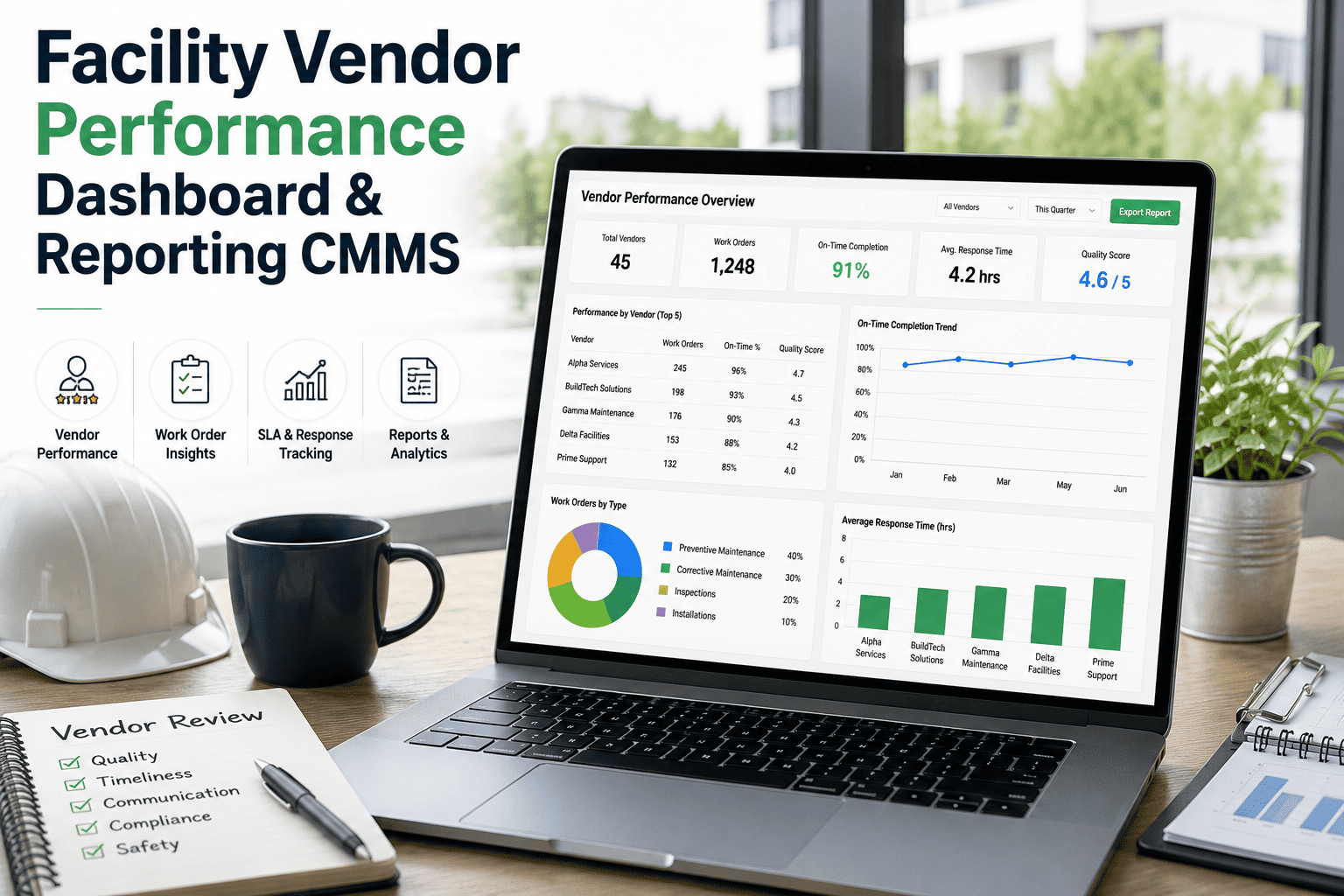
How Oxmaint supports a data-led QBR
- Preventive maintenance reports showing planned versus completed work.
- Asset history that links recurring failures to specific equipment.
- Inventory and parts records that support root cause discussions.
- Mobile completion with photos, giving the meeting evidence rather than recollection.
FM vendor QBR FAQ
Is 90 minutes enough for a large contract?
Usually yes with a strong pre-read. For very large contracts, hold separate site reviews and one summary QBR.
Who should attend?
The contract owner, operations lead, vendor account manager, and a finance or procurement voice when cost is on the agenda.
How do we handle a vendor that disputes the data?
Agree that source records decide. Book a demo to see how work order data is shared.
Can we run QBRs remotely?
Yes. Keep the same time boxes, share the pack ahead, and record actions in a shared log.
What if the quarter was mostly good?
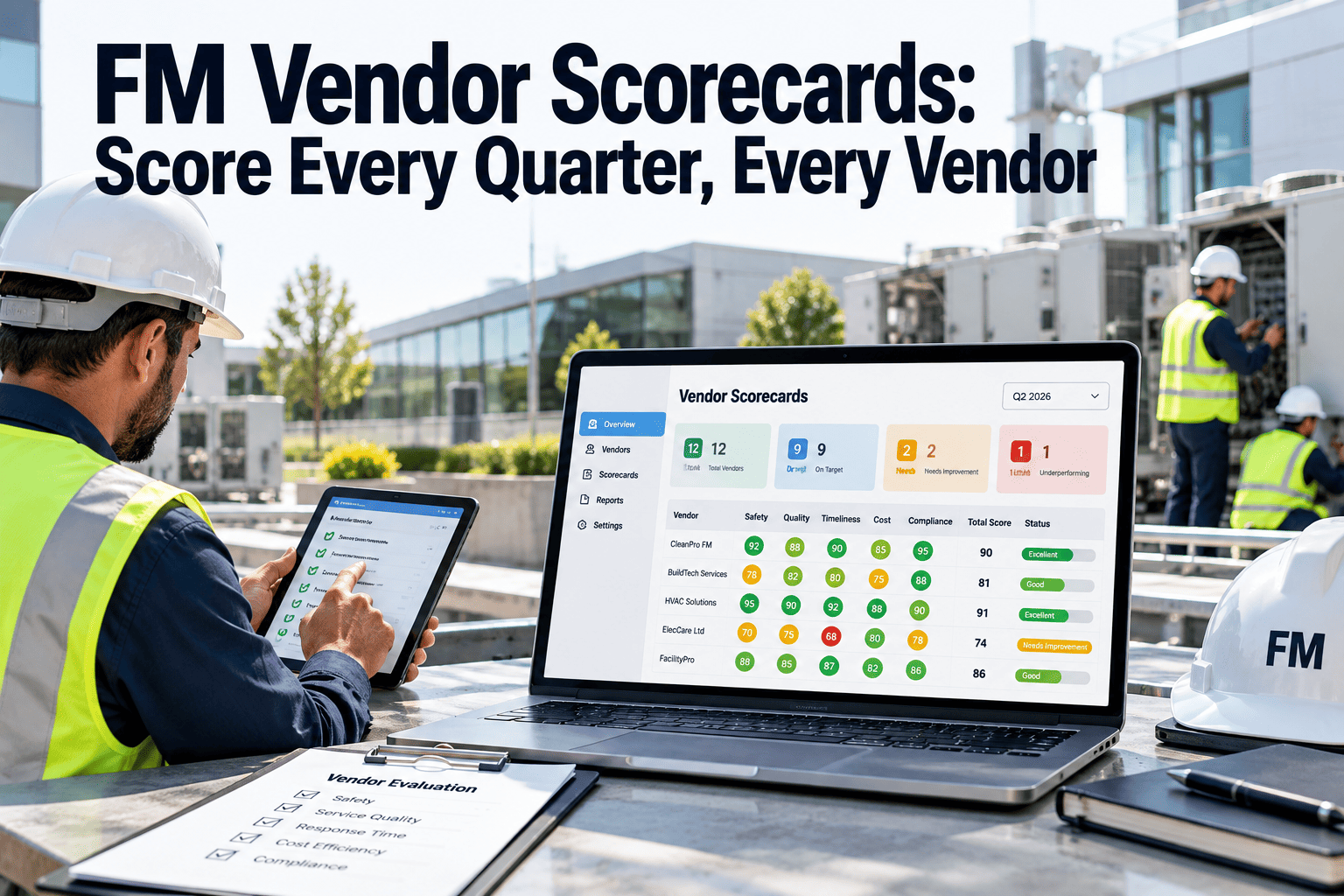
Shorten the KPI and miss segments, and spend more time on roadmap. Start free to build your first scorecard.
Who owns each segment
- Facilitator
- Usually the contract owner. Keeps time, protects the agenda, and ensures every segment produces its output.
- Data presenter
- Presents KPIs from the owner’s records and answers questions about definitions and sources.
- Vendor lead
- Responds to misses with causes and fixes, and commits to roadmap items on behalf of the vendor.
- Scribe
- Records decisions and actions in the commitment log in real time, and reads them back before close.
- Executive sponsor
- Attends only where escalation or investment decisions are likely, and joins the relevant segments.
A message to send with the invitation
A clear invitation sets expectations about preparation and data. Adapt the wording below to your own relationship with the vendor.
- State the date, time, and attendee list.
- Attach the pre-read package and the previous action log.
- Ask the vendor to send any dispute over data at least a day before the meeting.
Adjusting the template to what happened
Strong quarter
Mixed quarter
Poor quarter
Contract milestone quarter
When a commitment is missed
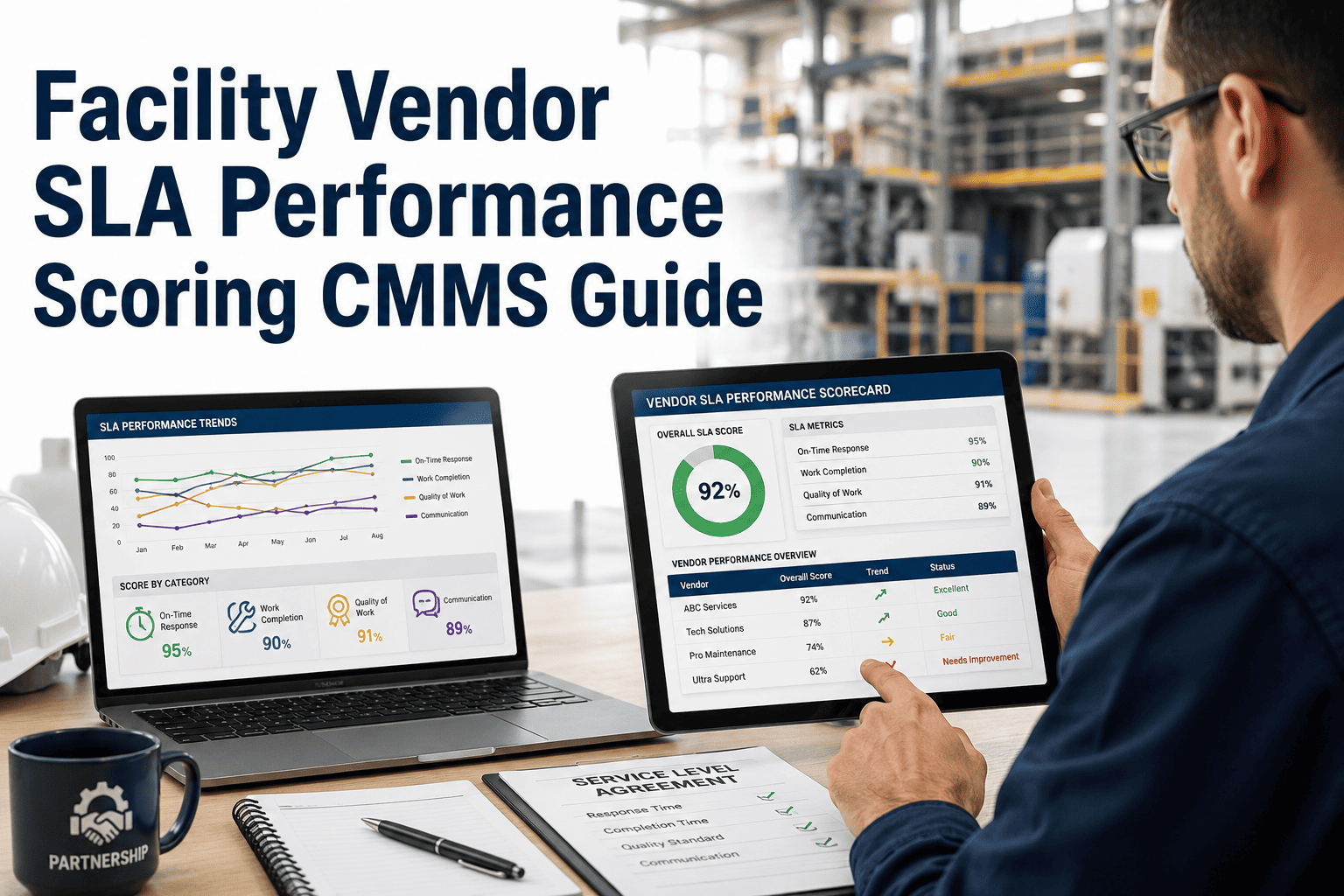
A commitment log is worthless without consequences for slippage. Agree the escalation route in advance, so a missed date triggers a response rather than a debate.
Reminder and reset
Senior conversation
Formal notice
Is the meeting itself working?
- Action completion rate
- Share of commitments closed by their due date. A low rate suggests unrealistic dates or weak follow-up.
- Overrun frequency
- How often the meeting exceeds ninety minutes. Regular overruns point to an overloaded agenda or a thin pre-read.
- Pre-read lead time
- Whether the pack reached attendees at least three working days ahead.
- Repeat misses
- Issues appearing in consecutive reviews. They indicate that the root cause was never addressed.
A shortened template for smaller vendors
Not every vendor justifies a ninety-minute meeting. Keep the same logic in a compressed form for lower-value contracts.
| Segment | Time box | Focus |
|---|---|---|
| Open and actions | 3 minutes | Status of previous commitments |
| KPIs | 10 minutes | Exceptions and trends only |
| Misses | 7 minutes | Top two issues with cause and fix |
| Commitments and close | 10 minutes | Owners, dates, and next review |
Responding to typical objections
- “Your data does not match ours.”
- Agree that source work order records are the reference, and ask the vendor to bring specific examples for review after the meeting.
- “That was outside our control.”
- Ask what could have been done differently, such as earlier escalation, spare parts planning, or subcontractor backup.
- “We need more budget to improve.”
- Request a costed proposal linked to a specific metric, and handle it through change control, not the QBR conversation.
- “We are already doing that.”
- Ask for the evidence in the next report and agree how the improvement will be verified.
Keeping a QBR archive that supports renewal
A consistent archive turns quarterly meetings into a contract history. Store each pack and log in the same place.
Building the pre-read quickly from live data
Preparation should take hours, not days. A few repeatable reports remove most of the effort.
Save the report set
Export on a set date
Add context notes
Send with the agenda
What a good QBR cycle looks like after a year
- Fewer repeat issues
- Items discussed in one review rarely reappear in the next without new causes.
- Faster closure
- Actions close on time more often, and slipped actions are escalated promptly.
- Better data trust
- Disputes about figures fall because both sides use the same source records.
- Clearer renewals
- Contract discussions rely on four quarters of documented performance, not impressions.
Three habits that protect the format
- Start on time and end on time, even when attendance is incomplete.
- Never close without a named owner and a date for every action.
- Keep the pre-read mandatory, and postpone the meeting if the pack is not ready.