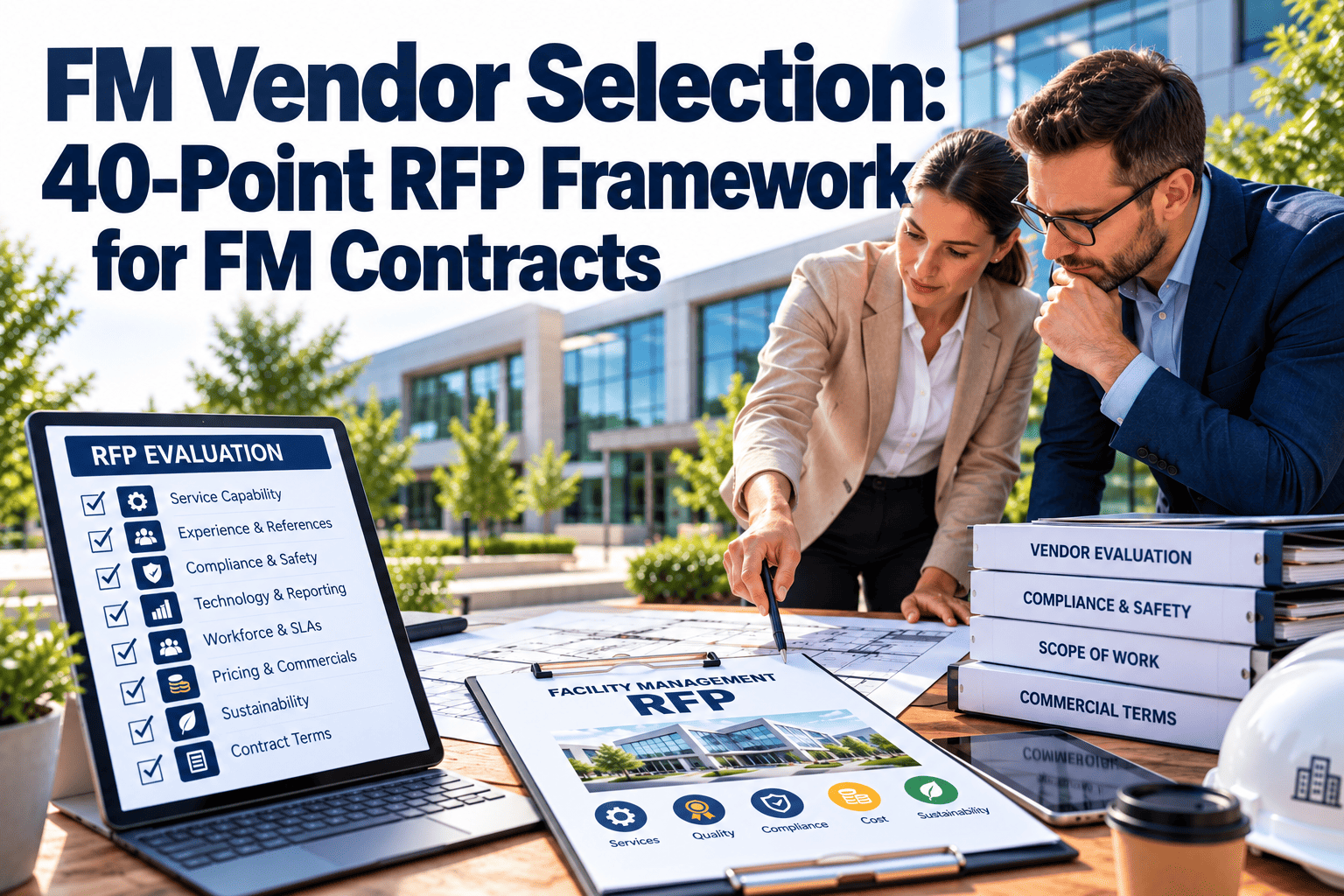
A polished proposal deck proves that a facility management vendor can sell. It does not prove that the vendor can keep your chillers running, your compliance records current, and your tenants comfortable for three years. Most FM contract regrets trace back to an RFP that rewarded presentation and headline price. This 40-point framework gives procurement, facilities, and finance one shared scorecard covering pass/fail gates, capability, technology, risk, price, and cultural fit, so the decision rests on evidence. Teams that want contract performance tracked from day one can pair it with an FM work order and SLA platform.
FM Vendor Selection: 40-Point RFP Framework for FM Contracts
Separate real service providers from marketing decks. Five pass/fail gates, then thirty-five scored points across seven weighted categories.
Why FM RFPs Go Wrong
An FM contract runs for years and touches safety, compliance, and tenant experience. Yet many evaluations compare little more than the annual fee.
Weak RFP
- Price dominates the decision
- Criteria written after proposals arrive
- Claims accepted without evidence
- Mandatory items buried in scores
- No plan to measure performance
Framework RFP
- Price weighted, not decisive
- Criteria and weights published first
- Evidence required for every score
- Pass/fail gates kept separate
- SLAs and KPIs agreed before signing
Principles behind the framework
- Write criteria before questions. Decide what good looks like, then ask for it.
- Keep gates separate. If something is mandatory, do not let a high score elsewhere cover for a failure.
- Publish the scoring approach. Vendors respond better when they know how they will be judged.
- Require evidence. A score needs a reference, a document, a sample report, or a site visit behind it.
- Score independently first. Evaluators score alone, then compare, so the loudest voice does not set the result.
How the 40 Points Are Organised
The weights above are a starting point. Adjust them to your portfolio, but fix them before proposals are opened and apply them to every bidder.
Step 0: Pass or Fail Gates (Points 1 to 5)
Any vendor that fails a gate is removed before scoring. These items are not traded against price.
Category A: Scope Understanding (Points 6 to 10, weight 10%)
A vendor that understands your sites writes a specific proposal. A vendor that does not sends a template.
Category B: Capability and Workforce (Points 11 to 15, weight 20%)
This is where the service is delivered. Look for named people, not company brochures.
Hold Vendors to the Scorecard After You Sign
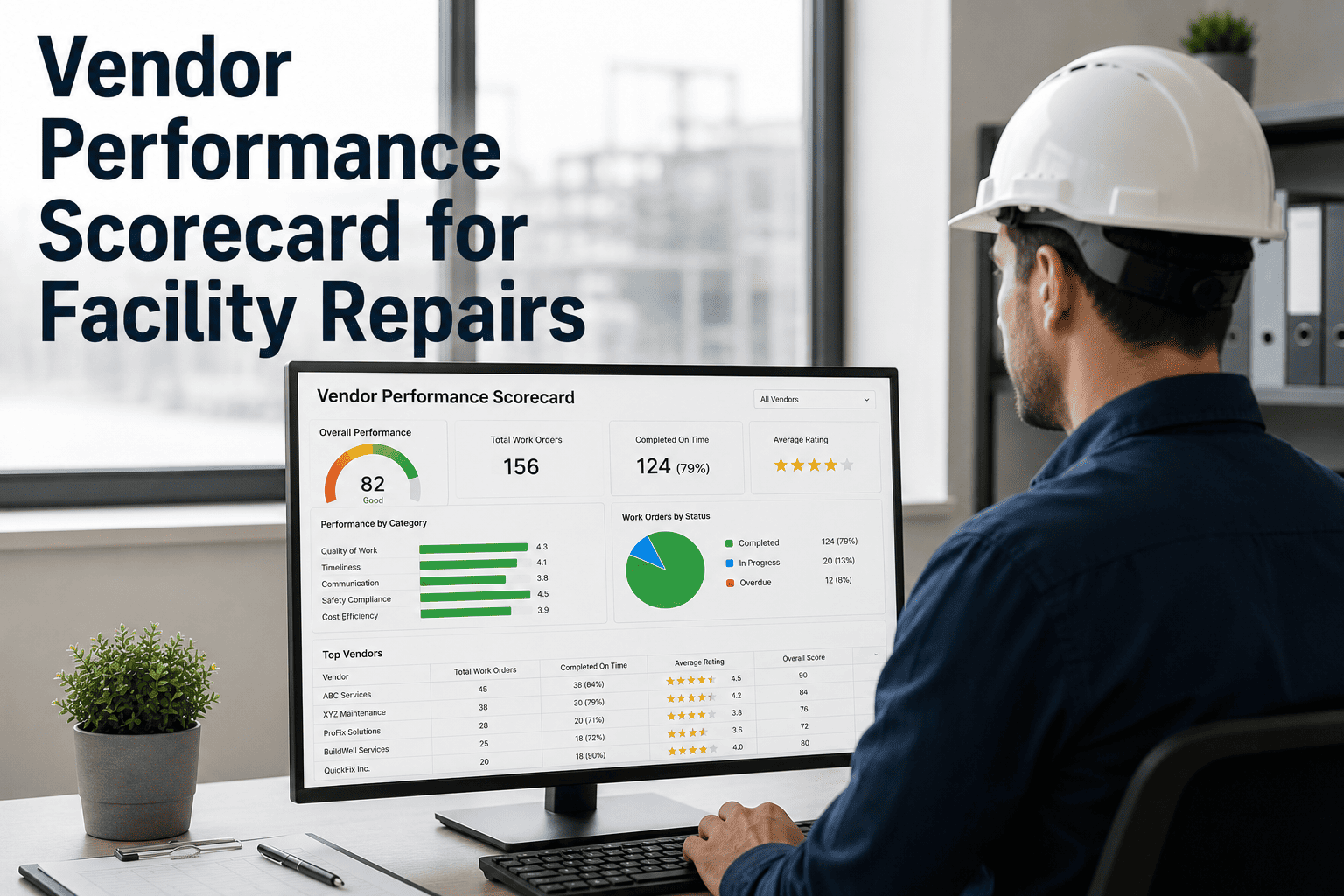
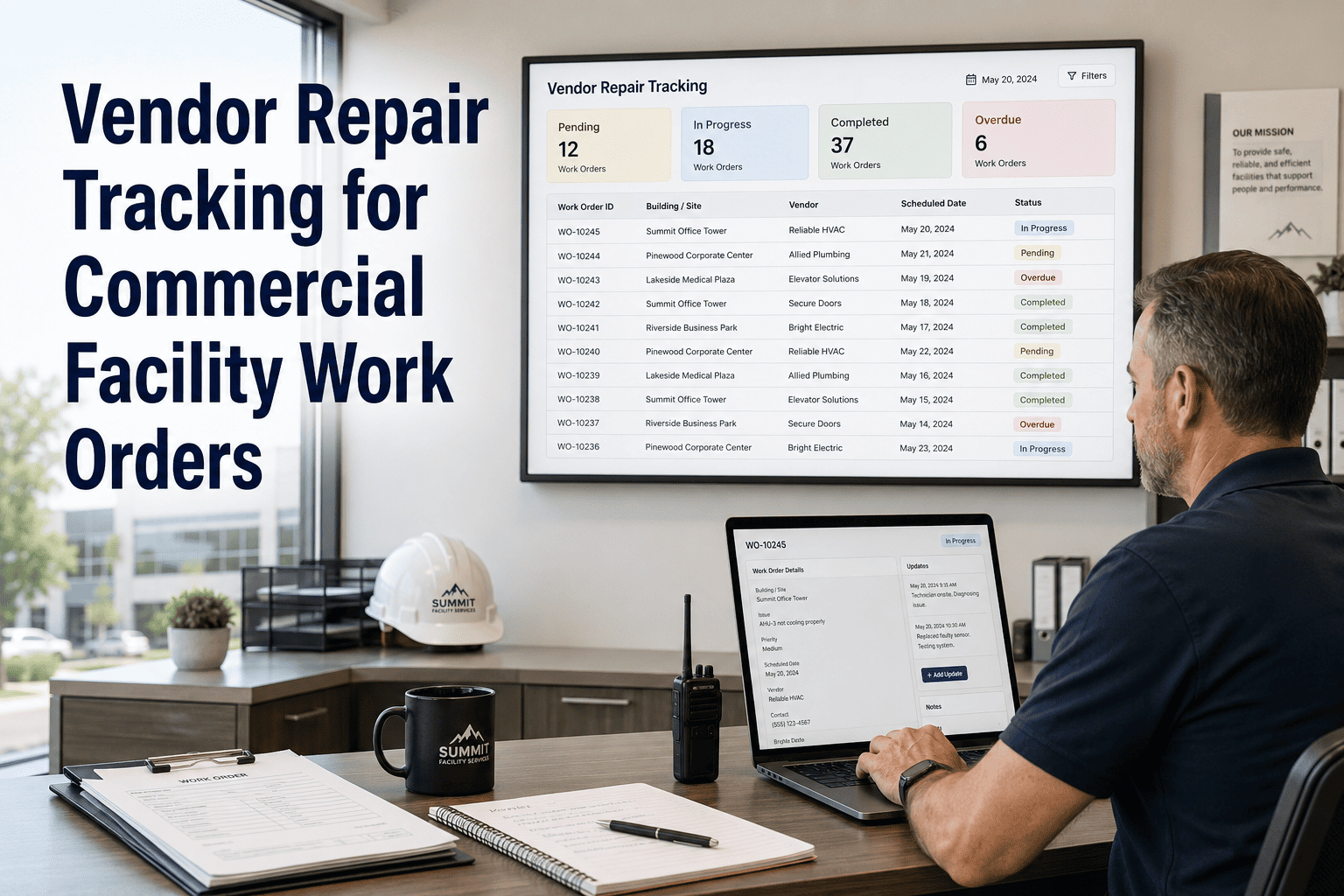
The best RFP still fails if performance goes unmeasured. Track response times, completion rates, and compliance records against the SLAs you negotiated.
Category C: Technology and Reporting (Points 16 to 20, weight 15%)
Modern FM contracts run on data. Make sure you can see it and keep it.
Category D: Compliance, Safety, and Risk (Points 21 to 25, weight 10%)
Category E: Price and Commercial Terms (Points 26 to 30, weight 20%)
Price matters, but it should be one input. Compare total cost over the contract, not the first invoice.
Category F: Contract, SLA, and Governance (Points 31 to 35, weight 10%)
Category G: Transition and Cultural Fit (Points 36 to 40, weight 15%)
The first ninety days set the tone. Judge how the vendor behaves before they are paid.
Readiness Checklist Before You Issue the RFP
Vendors can only price what you describe. Complete these items first so proposals are comparable.
Questions to Ask on Reference Calls
Reference calls are the cheapest way to test points 11 to 40. Ask open questions and listen for specifics.
- What went wrong in the first six months, and how did the vendor respond?
- How accurate and timely are the monthly reports compared with what you see in the system?
- How many times has the account manager or site lead changed?
- Were there change orders you did not expect, and how were they resolved?
- Would you award them the contract again today, and what would you change in the contract?
Scoring Scale for Every Point
Use one scale for all evaluators and define it before proposals arrive.
| Score | Meaning | Evidence needed |
|---|---|---|
| 0 | No response or unacceptable | None |
| 1 | Weak, generic, or unsupported | Claim only |
| 2 | Partly meets the requirement | Some documents |
| 3 | Meets the requirement | Documents or demonstration |
| 4 | Meets it with added value | Documents and verified reference |
| 5 | Clearly exceeds it, proven elsewhere | Verified reference and site evidence |
Worked example of weighted scoring
If a category weighs 20% and a vendor averages 4 out of 5 on its five points, the vendor earns 16 of the 20 weighted points. Add all seven categories for a total out of 100.
RFP Timeline From Brief to Contract
- Define scope and criteria. Agree the scope, gates, categories, weights, and scale before anything is released.
- Issue the RFP. Share the documents, the scoring approach, the data room, and the question deadline with every bidder.
- Clarify and visit. Run a site walk and publish all questions and answers to all bidders.
- Evaluate independently. Apply gates, then score each point alone before a moderation meeting.
- Shortlist and verify. Hold demonstrations, reference calls, and a site visit for the finalists.
- Negotiate and agree SLAs. Finalise service levels, credits, and reporting before signature.
Timelines depend on contract size and approval rules, so set dates that fit your own governance.
Red Flags During Evaluation
| Red flag | What it may mean | How to test it |
|---|---|---|
| Price far below other bids | Scope gaps, thin staffing, or later change orders | Ask for a staffing plan and assumptions |
| Generic, copy-paste answers | Template response with no site knowledge | Ask a site-specific follow-up question |
| Reluctance to share references | Limited or unhappy client base | Request three recent clients of similar size |
| No data export terms | Lock-in at contract end | Ask for the export format in writing |
| Different people in the pitch and the delivery team | Senior staff will not run your account | Require named key personnel |
How Oxmaint Supports the Contract After Award
- Work orders: track requests, response times, and completion against each SLA.
- Asset management: keep one asset register that survives any change of vendor.
- Preventive maintenance: schedule contracted PM and confirm it was completed.
- Compliance records: store inspection certificates and statutory checks in one place.
- Reports and dashboards: compare vendor performance across sites and review periods.
FM Vendor Selection FAQs
How much should price count in an FM RFP?
Many teams keep price near one fifth of the score so quality and risk still matter. Set the weight before bids arrive.
Why separate pass/fail gates from scores?
A strong price should never offset missing insurance or a poor safety record. Gates remove those vendors first.
Who should score the proposals?
Use a small cross-functional panel from facilities, procurement, finance, and operations. Each member scores alone first.
Can a maintenance system help evaluate vendors?
Yes. Your own work order data gives a baseline for the SLAs you ask vendors to meet, and you can start tracking it now.
Should we consider keeping FM in-house?
Compare the same scorecard against an in-house cost and capability case, and talk through your data if you need help building it.
Choose the Vendor the Evidence Supports
Score every bidder on the same 40 points, then keep the winner accountable with live work order and SLA data from the first day.