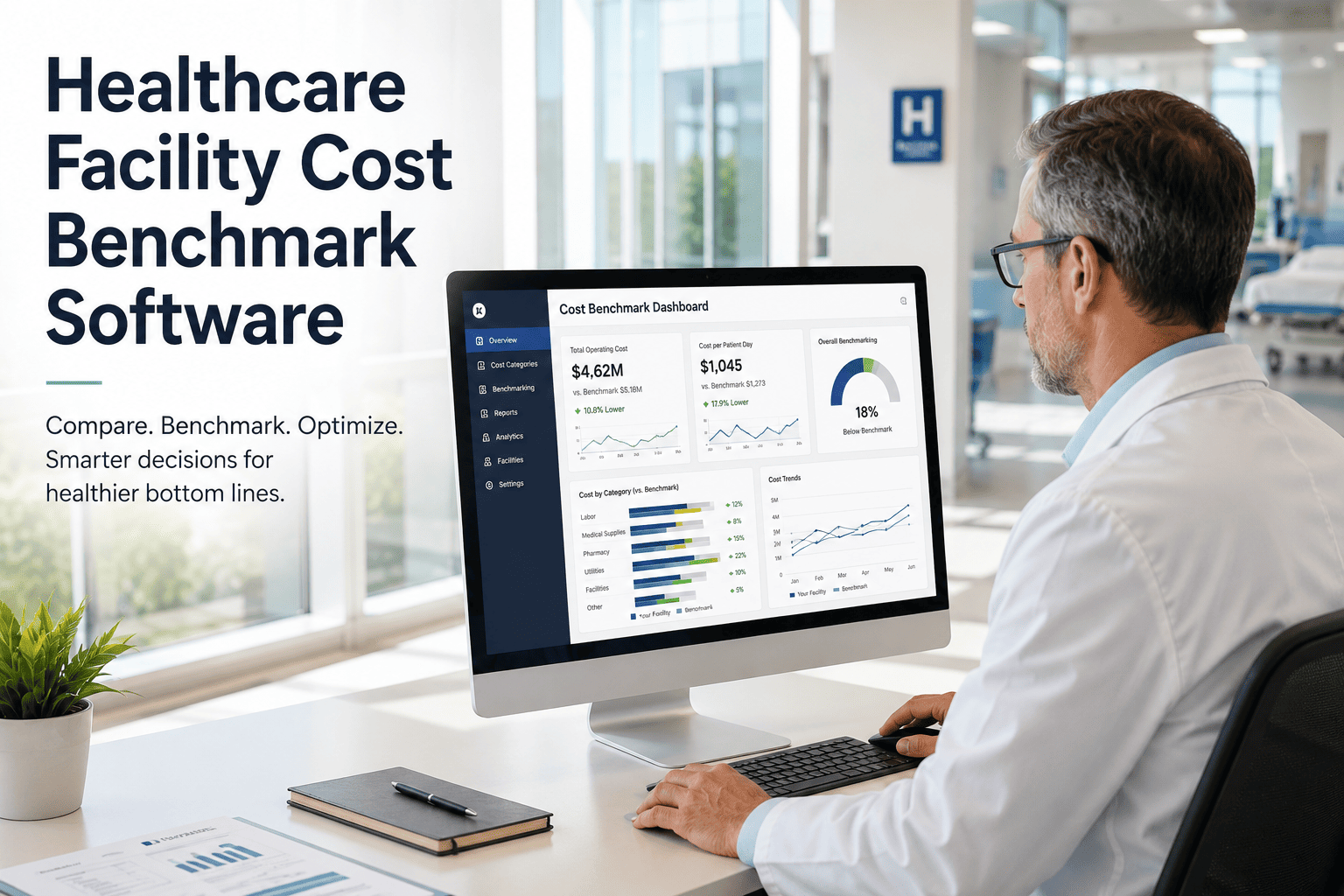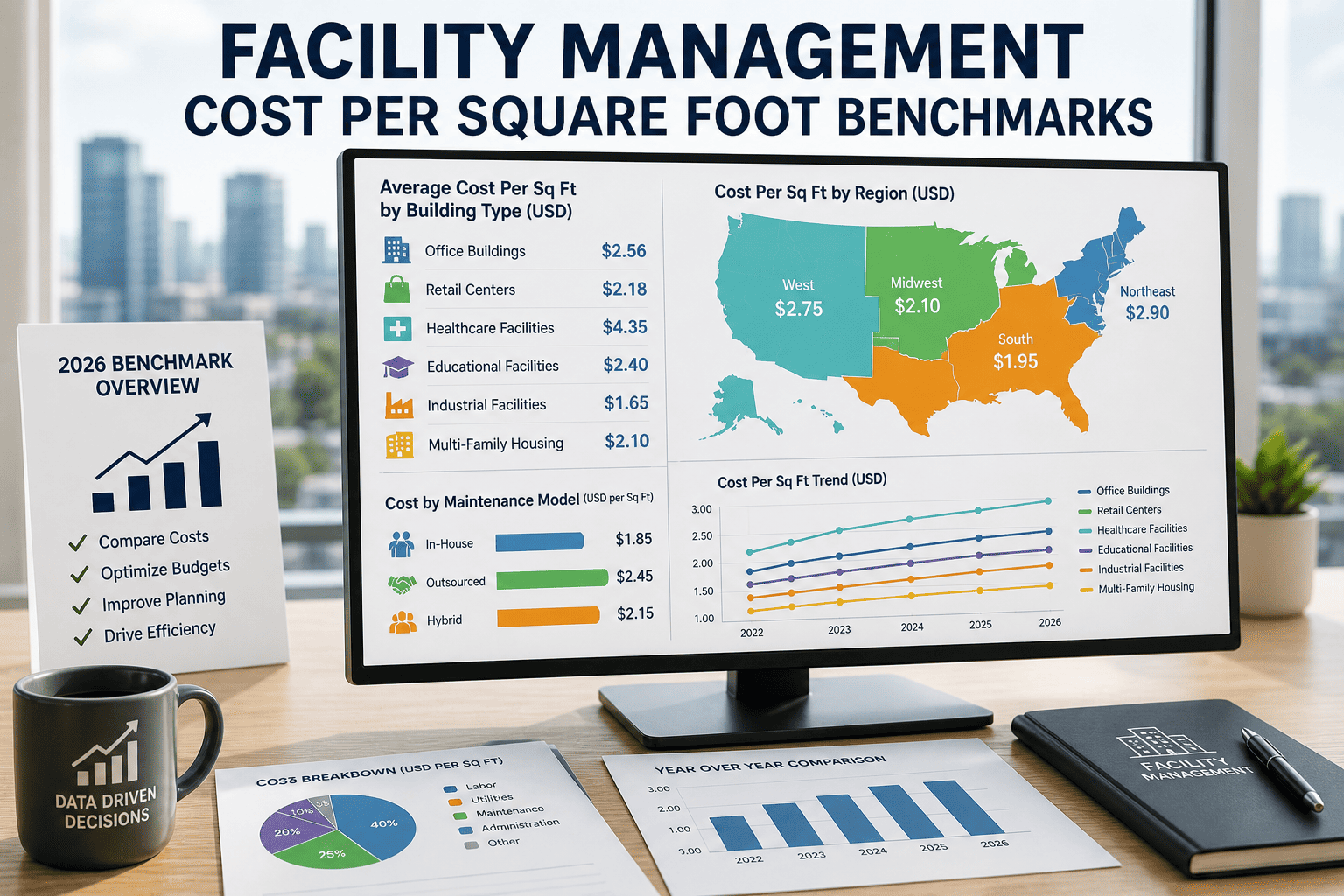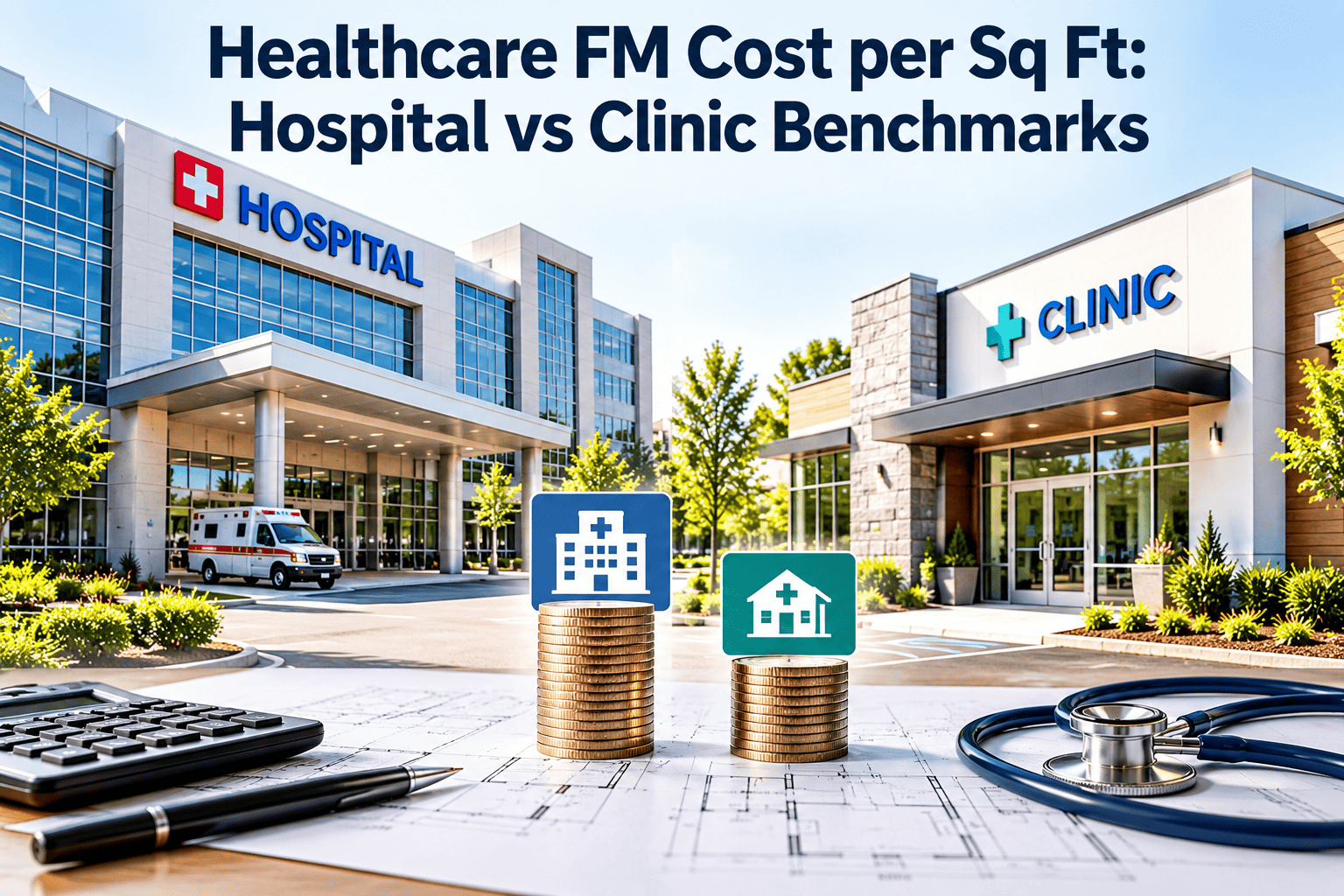
Facility management cost per square foot is the first number a healthcare finance team asks for and the least comparable one. A 300-bed hospital with operating rooms, central plant, and 24-hour occupancy cannot be measured against an outpatient clinic with weekday hours. Commonly cited planning ranges put hospitals at roughly $15 to $25 per square foot and clinics at roughly $6 to $12, but the useful question is why. This guide breaks down the cost drivers by facility type, shows how compliance affects spend, and explains how maintenance management software helps you build a defensible internal benchmark.
Hospital versus clinic FM cost per square foot, and what drives the gap
Planning ranges, cost drivers, and compliance factors for healthcare facility managers building a budget.
Five structural drivers behind the gap
| Driver | Hospital | Clinic |
|---|---|---|
| Operating hours | 24/7 with continuous HVAC and power | Typically business hours |
| Critical systems | Emergency power, medical gas, pressure-controlled rooms, central plant | Standard HVAC, limited medical gas or none |
| Space types | Operating rooms, imaging, labs, pharmacy, isolation | Exam rooms, small procedure areas |
| Regulatory scope | Extensive life safety and environment-of-care programs | Narrower, depends on services offered |
| Staffing model | Dedicated engineering and trades teams | Small team or outsourced vendors |
What sits inside the FM number
How accreditation requirements shape spend
Joint Commission environment of care
Hospitals accredited by The Joint Commission must manage utility systems, life safety, medical equipment, and emergency power through documented programs. Each program creates inspection, testing, and record-keeping labor.NFPA references
Standards such as NFPA 99 for healthcare facilities and NFPA 101 for life safety shape testing frequencies and interim safety measures during construction or system outages.Cost of documentation gaps
Missing or incomplete test records lead to survey findings and rework. Digital records tied to assets reduce the time spent retrieving evidence.Build a benchmark from your own work order and asset data
Oxmaint helps healthcare teams track maintenance activity, inspections, and costs by asset and location.
Turning a published range into a usable internal number
Define the scope
Decide which cost lines count and which space is in the denominator, gross or net.Segment by space type
Separate clinical, administrative, and plant space, since cost per square foot varies widely among them.Normalize
Adjust for building age, climate zone, labor rates, and operating hours before comparing sites.Compare maintenance mix
Track the split between preventive and corrective work. High corrective share often signals deferred maintenance.Review quarterly
Trend your own figure and investigate outliers rather than chasing an external average.Where hospitals and clinics can realistically reduce spend
Hospital focus
- Central plant efficiency and controls tuning
- Air change schedules in unoccupied clinical spaces, where codes allow
- Condition-based maintenance on critical equipment
- Contract consolidation and performance review
- Planned compliance testing to avoid overtime
Clinic focus
- Vendor contract scope and rebid cycles
- Standardized preventive maintenance routes
- Lighting and HVAC scheduling aligned to hours
- Shared service model across multiple sites
- Tracking repeat service calls by site
Pitfalls in healthcare cost comparisons
- Mixing definitions: comparing a figure that includes utilities with one that excludes them.
- Ignoring space mix: a clinic with procedure rooms is not equal to a pure office clinic.
- Cutting preventive work: short-term savings that raise emergency repair spend and compliance exposure.
- Using averages as targets: a benchmark describes a range, not an obligation to match it.
Healthcare FM cost questions
Are the hospital and clinic ranges exact?
No. They are commonly cited planning ranges. Your cost depends on scope, region, age, and services provided.
Does the figure include utilities?
It depends on the source. Always confirm whether energy, cleaning, and capital items are included before comparing.
How does compliance change cost?
Accreditation and code programs add testing and documentation labor, especially for life safety and utility systems.
Can software lower FM cost per square foot?
It helps by exposing repeat failures, missed preventive work, and cost by asset. See it in a short demo.
Where should I start benchmarking?
Begin with one site, define scope, and collect costs by category in one maintenance system.
Know your true cost per square foot
Connect maintenance, compliance, and cost data so your budget conversations start from facts.