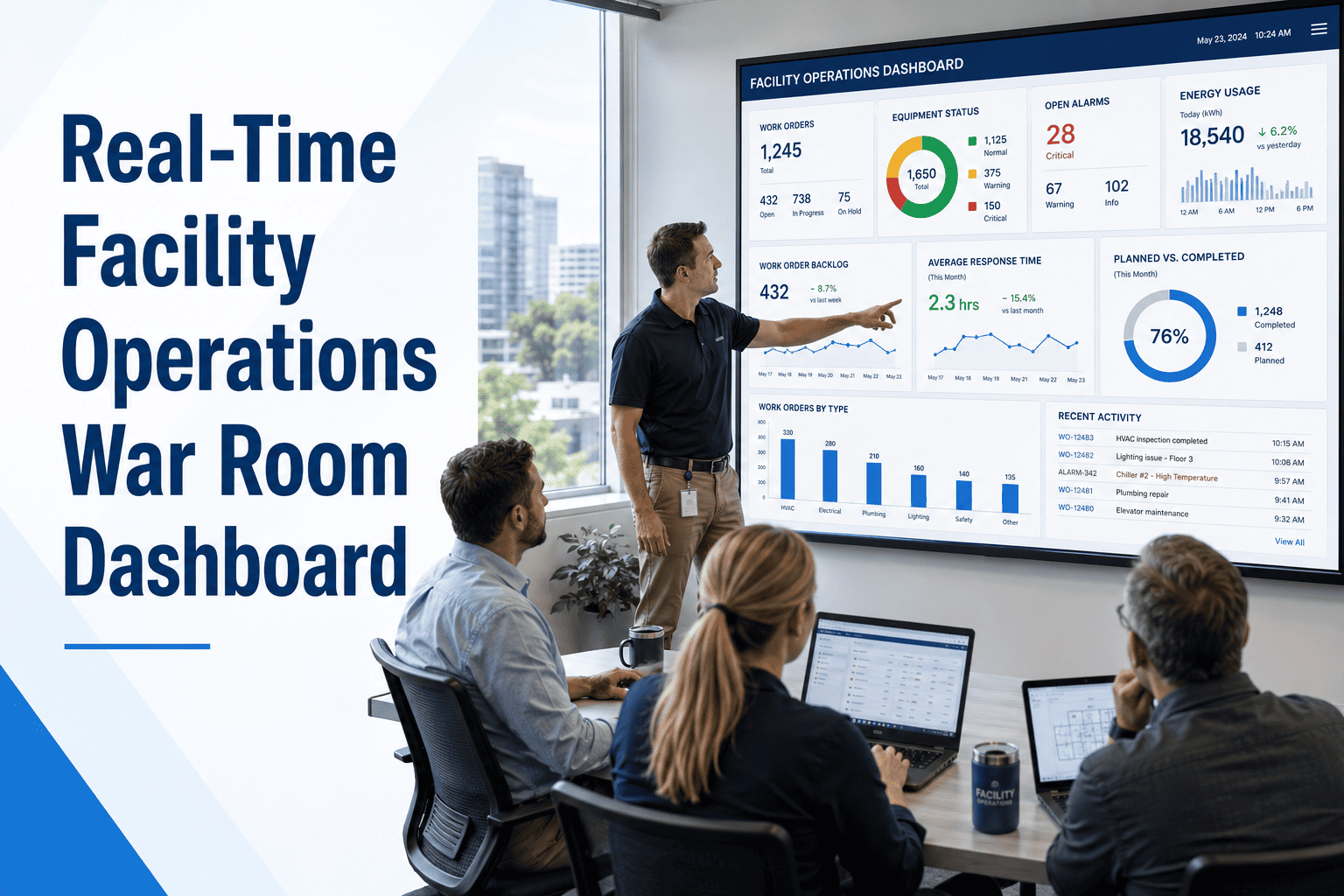
Facility managers face an unrelenting challenge: maintaining safe, compliant environments while juggling countless data streams from incident reports, inspections, permits, and regulatory requirements. Traditional approaches using spreadsheets and paper-based systems create dangerous blind spots, with critical safety issues slipping through the cracks until they become costly incidents. An EHS dashboard transforms this chaos into clarity, providing real-time visibility into every aspect of your facility's environmental, health and safety performance through a single, unified interface.
Ready to gain complete visibility into your facility's safety performance?
Sign up for Oxmaint and start building your EHS dashboard today — no credit card required, setup takes minutes.
What is an EHS Dashboard?
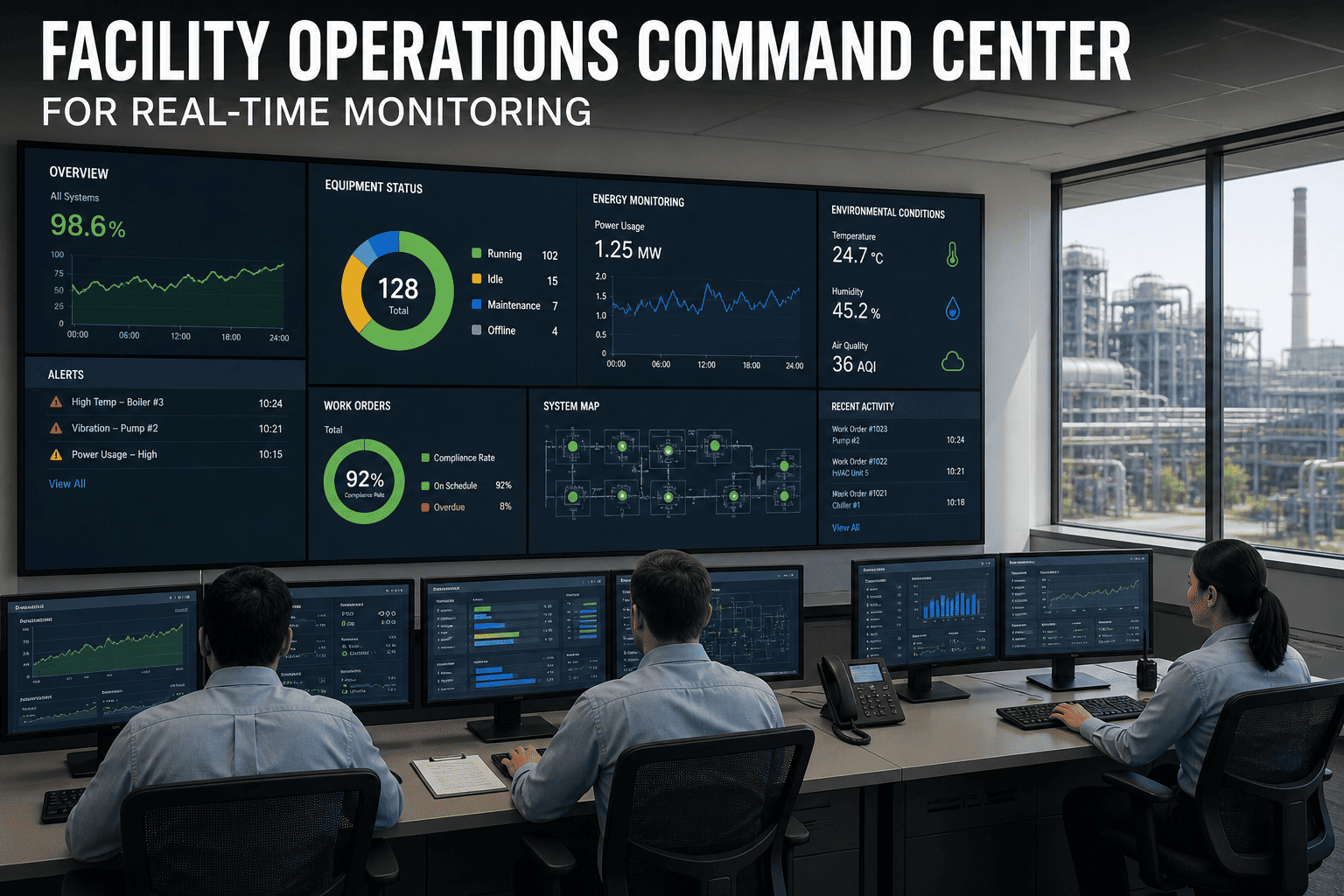
An EHS dashboard is a centralized digital platform that aggregates, visualizes, and analyzes environmental, health, and safety data from across your facility operations. Unlike static reports that provide yesterday's news, a well-designed dashboard delivers real-time insights into incident rates, compliance status, inspection findings, corrective actions, and risk assessments. It transforms scattered safety data into actionable intelligence that helps facility managers identify trends, spot emerging hazards, and demonstrate regulatory compliance at a moment's notice.
The power of an EHS dashboard lies in its ability to connect disparate data sources into a cohesive operational picture. When integrated with your Computerized Maintenance Management System (CMMS), the dashboard becomes the nerve center of your facility operations, linking equipment maintenance schedules with safety inspections, connecting work orders with permit-to-work requirements, and correlating asset performance with incident patterns.
Transform Scattered Safety Data into Actionable Insights
Oxmaint consolidates incident reports, inspection findings, compliance records, and risk assessments into a single real-time dashboard — giving your team the visibility they need to prevent hazards before they become incidents.
Essential KPIs for Your EHS Dashboard
Effective EHS dashboards track both leading and lagging indicators to provide a complete picture of safety performance. Lagging indicators reflect past events and outcomes, while leading indicators help predict and prevent future incidents before they occur. The combination of both creates a powerful framework for continuous safety improvement.
Track Every Safety KPI in Real-Time
See how Oxmaint automatically calculates TRIR, DART, LTIFR, and other critical metrics with zero manual effort. Set custom thresholds, receive instant alerts when metrics deviate from targets, and generate board-ready compliance reports in a single click.
Six Essential EHS Dashboards Every Facility Needs
A comprehensive EHS management system requires multiple dashboard views tailored to different operational needs. Each dashboard serves a specific purpose, from daily incident management to strategic compliance oversight. Here are the six dashboards that form the foundation of effective facility EHS management.
Track incidents by type, location, severity, and trend over time. Identify high-risk areas requiring immediate attention.
Monitor corrective and preventive actions from identification through completion with accountability tracking.
Schedule, track, and analyze inspection results across all facility areas with finding trend analysis.
Monitor certification status, track upcoming expirations, and ensure workforce competency requirements.
Centralize active permits by type and location with real-time status and expiration monitoring.
High-level KPI overview for leadership with performance benchmarks and strategic trend analysis.
Looking for a platform that delivers all six dashboards out of the box?
Book a demo to see Oxmaint's comprehensive EHS dashboard suite in action.
Step-by-Step Implementation Guide
Implementing an EHS dashboard requires thoughtful planning and systematic execution. The process involves defining objectives, selecting the right platform, migrating data, and driving user adoption across your facility teams. Follow this proven roadmap to ensure your EHS dashboard delivers maximum value from day one.
Define Objectives and Requirements
Data Migration and Configuration
Training and Pilot Launch
Full Rollout and Optimization
Fast-Track Your Implementation
Oxmaint's dedicated implementation specialists guide you through every step — from initial data migration and dashboard configuration to team training and go-live support. Most facilities are fully operational in under 3 weeks, not months.
CMMS Integration: The Foundation of Effective EHS
An EHS dashboard reaches its full potential when integrated with your Computerized Maintenance Management System. This connection creates a unified operational platform where safety and maintenance work together seamlessly. Work orders automatically trigger safety inspections, equipment failures link to incident investigations, and preventive maintenance schedules align with compliance requirements.
| Capability | Standalone EHS | CMMS-Integrated EHS | Impact |
|---|---|---|---|
| Work Order Safety Checks | Manual verification | Auto-enforced before start | Zero bypass |
| Incident-Equipment Link | Separate tracking | Automatic correlation | Root cause clarity |
| Permit-to-Work | Paper or separate system | Embedded in work orders | 100% compliance |
| Asset Safety History | Multiple lookups required | Single asset profile view | 80% faster |
| Compliance Reporting | Manual data compilation | One-click generation | Hours saved |
ROI Analysis: Manufacturing Facility Case
This cost-benefit analysis demonstrates the financial impact of implementing an integrated EHS dashboard for a mid-sized manufacturing facility with 200 employees conducting 2,400+ safety inspections annually.
Get a Customized ROI Analysis for Your Facility
Book a demo with our EHS specialists and receive your personalized ROI report within 24 hours.
Real-World Success Story
"The EHS dashboard has been transformative for our facility operations. By streamlining shift handovers, centralizing data, and integrating with our maintenance systems, we reduced downtime by 30% and saved significant costs annually. The system boosted visibility, improved communication, and increased safety incident reporting by 300%, fostering a culture of continuous improvement. We went from reactive crisis management to proactive safety leadership practically overnight."
Ready to Transform Your Facility's Safety Performance?
Join thousands of facility managers across manufacturing, energy, logistics, and healthcare who have modernized their EHS operations with Oxmaint. Move beyond reactive incident management and build a proactive safety culture powered by real-time data, intelligent automation, and seamless CMMS integration.
The Bottom Line
An EHS dashboard is no longer optional for facility operations seeking to maintain competitive safety performance and regulatory compliance. The technology transforms scattered data into strategic insight, enabling proactive hazard prevention rather than reactive incident response. When integrated with your CMMS platform like Oxmaint, the dashboard becomes the command center for unified operations management. With implementation payback measured in weeks rather than months, the only real risk is continuing to operate without the visibility your facility deserves.
Build Your EHS Dashboard Today
Start with Oxmaint and see how integrated EHS and maintenance management transforms facility operations. From incident tracking and compliance monitoring to real-time KPI dashboards and automated audit reports — get everything you need in one powerful platform.
Frequently Asked Questions
What is the difference between an EHS dashboard and a CMMS dashboard?
An EHS dashboard focuses specifically on environmental, health, and safety metrics like incident rates, compliance status, and risk assessments. A CMMS dashboard tracks maintenance operations including work orders, asset performance, and preventive maintenance schedules. The most effective approach integrates both systems so safety and maintenance data flow together, creating unified visibility into all facility operations.
How long does it take to implement an EHS dashboard?
Most organizations can implement a functional EHS dashboard within 4-8 weeks, depending on data complexity and integration requirements. With cloud-based platforms like Oxmaint, initial setup can be completed in days, with full rollout including training and optimization typically taking 6-8 weeks. The key success factors are data quality, stakeholder buy-in, and clear objectives.
What KPIs should be tracked on an EHS dashboard?
Essential EHS KPIs include both lagging indicators like Total Recordable Incident Rate (TRIR), DART rate, and lost time injuries, plus leading indicators such as near miss reports, inspection completion rates, training compliance, and corrective action closure rates. The specific mix should align with your industry requirements, regulatory obligations, and organizational safety goals.
Can an EHS dashboard integrate with existing facility management systems?
Yes. Modern EHS platforms are designed to integrate with CMMS, ERP, HR, and other business systems through APIs and pre-built connectors. This integration is critical for creating a unified data environment where safety information connects with maintenance schedules, training records, and operational workflows. Look for platforms that offer flexible integration options.
How does an EHS dashboard improve regulatory compliance?
EHS dashboards automate compliance tracking by monitoring permit expirations, training due dates, inspection schedules, and regulatory submission deadlines. Automated alerts prevent missed requirements, while centralized documentation ensures audit-ready records are always accessible. Many organizations report 90% faster audit preparation and significant reductions in compliance violations after implementation.