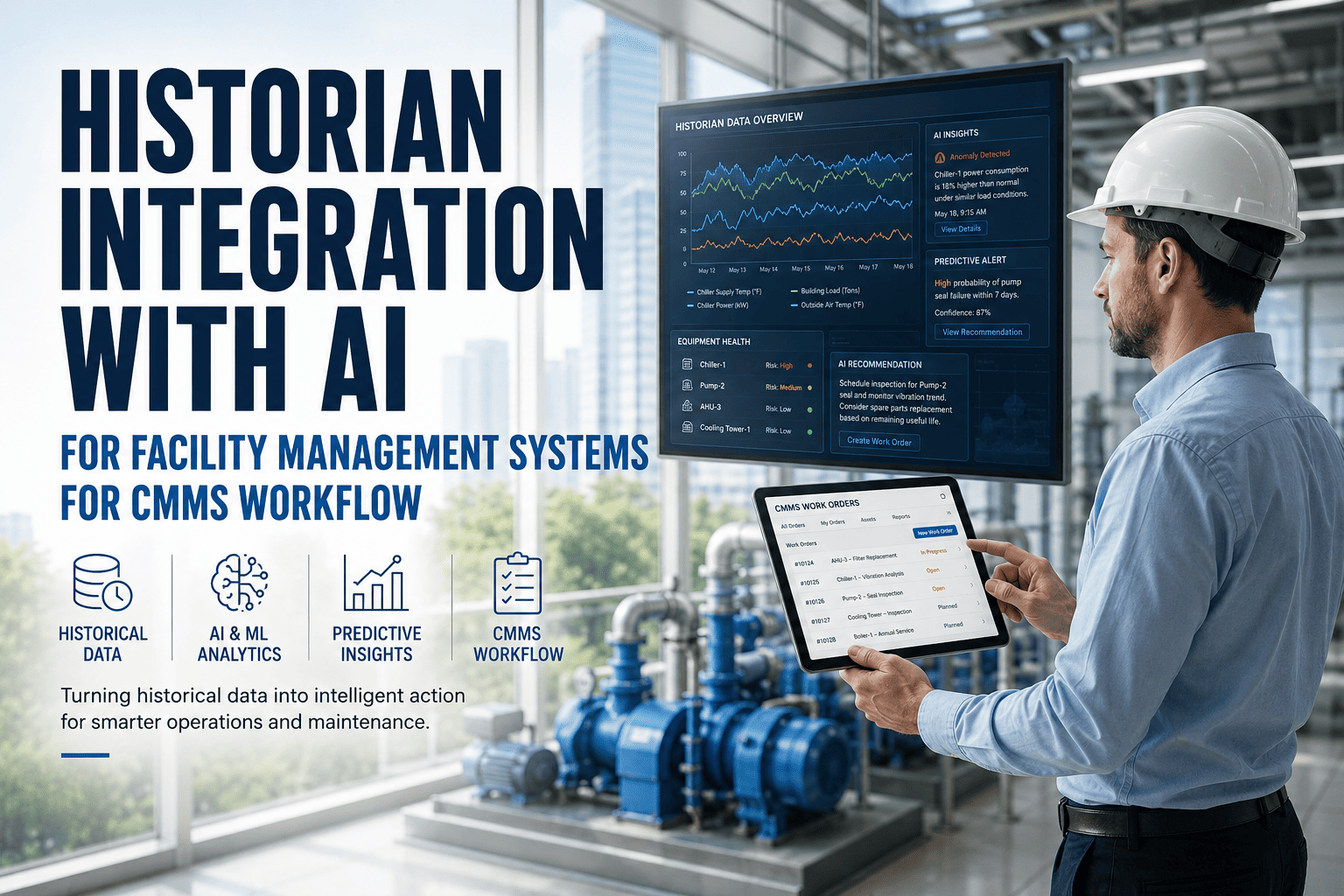
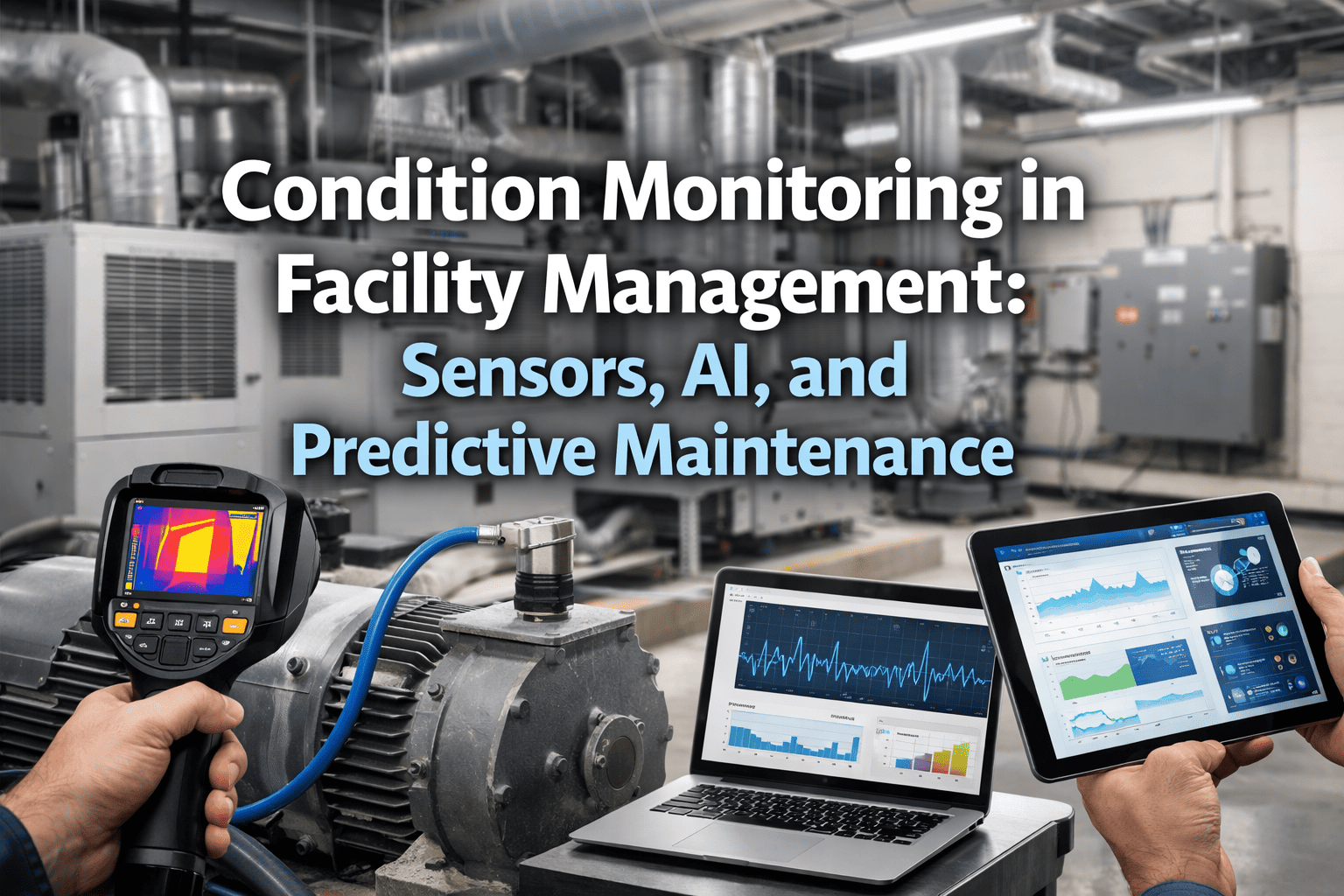
A failed chiller in a commercial building is not just a mechanical failure — it is a cascade event. Occupant comfort collapses, server room temperatures rise, production lines in industrial facilities halt, and emergency service calls arrive at 3x normal cost. Most chiller failures are not sudden. They develop over weeks through measurable patterns in compressor behavior, refrigerant pressure, water temperature differentials, and vibration signatures. OxMaint's Predictive Maintenance AI connects to your existing chiller instrumentation and detects these patterns early enough to schedule a repair — before the failure happens.
HVAC Chiller Predictive Maintenance Using IoT Sensors
How IoT sensor data, vibration trends, compressor analytics, and AI-powered CMMS alerts are transforming chiller reliability in commercial and industrial facilities.
How Chiller Failures Develop — and What IoT Sensors Detect
Chiller failures follow recognizable failure pathways. Each pathway has a distinct sensor signature that IoT monitoring can detect weeks before the failure manifests as a breakdown or alarm.
IoT Sensor Deployment Map for Chillers
A complete chiller predictive maintenance deployment uses a defined sensor set at each major subsystem. This table maps required sensors, measurement parameters, and the failure modes each sensor set detects.
| Chiller Subsystem | Sensor Type | Key Parameter | Failure Mode Detected | Alert Frequency |
|---|---|---|---|---|
| Compressor body | Tri-axial accelerometer | Vibration velocity (mm/s RMS) | Bearing wear, imbalance, misalignment | Every 15 min |
| Refrigerant circuit | Pressure transducers (suction + discharge) | Differential pressure ratio | Refrigerant leak, valve fault, liquid slugging | Continuous |
| Condenser water | RTD temperature sensors (in/out) | Approach temperature delta | Tube fouling, flow restriction, scaling | Every 5 min |
| Evaporator / CHW circuit | Flow meter + temperature sensors | LCHWS, ECHWS, flow rate | Freeze risk, heat exchanger fouling, pump fault | Continuous |
| Compressor motor | Current transformer (per phase) | Phase current imbalance, kW draw | Motor winding degradation, overload, efficiency loss | Every 5 min |
| Oil management system | Differential pressure + oil temp sensor | Oil pressure differential | Bearing lubrication failure, oil separator bypass | Every 15 min |
Connect Your Chiller Sensors to OxMaint AI
OxMaint integrates with standard IoT sensors and building automation systems — no proprietary hardware required. Book a 30-minute session and see how predictive alerts connect directly to PM work orders in your facility.
From Sensor Alert to Resolved Work Order — The OxMaint Workflow
Detecting an anomaly is only half the equation. The alert must trigger the right maintenance action, routed to the right technician, with the right asset context. Here is how OxMaint closes that loop.
Compressor vibration rises 42% above 30-day baseline at 02:14. OxMaint AI flags the anomaly and classifies it as bearing wear — HIGH priority.
A PM work order is created and assigned to the on-call HVAC technician with the asset's full maintenance history, sensor trend charts, and recommended repair procedure attached.
Technician receives mobile notification, reviews asset history, confirms bearing anomaly on arrival. Parts are checked against inventory. Repair is scheduled for the next maintenance window.
Bearing replaced during scheduled maintenance window. Chiller returns to operation. Vibration baseline resets. Work order closed with photos, parts log, and compliance record — all auto-filed.
Chiller Predictive vs Reactive: Cost Comparison
The financial case for predictive maintenance on chillers is documented across multiple facility benchmarks. This comparison uses data from ASHRAE, BOMA, and OxMaint customer deployments.
Expert Review
The economics of chiller predictive maintenance have become undeniable at the facility scale. A centrifugal chiller of 500 tons or above represents $400,000–$1.2M in capital value, and the operating cost of running a degraded chiller — in energy inefficiency alone — can exceed the cost of the repair that would have fixed the problem. What IoT-based predictive monitoring does well is close the awareness gap. Most facility managers do not know their chiller is running 18% above optimal energy consumption because condenser tubes haven't been cleaned to the right interval. The sensor data makes that visible. Integrating those alerts directly into CMMS work orders, as OxMaint does, eliminates the common failure mode where the data exists but nobody acts on it because it lives in a separate monitoring system that maintenance teams never check.
Frequently Asked Questions
Stop Waiting for Your Chiller to Tell You It Has Failed
Every week a chiller operates without IoT monitoring is a week where bearing wear, refrigerant loss, and condenser fouling accumulate silently. OxMaint gives facility teams the sensor intelligence and CMMS workflow to catch these issues weeks early — and fix them on their schedule, not the chiller's. Book a demo and see predictive chiller monitoring live.