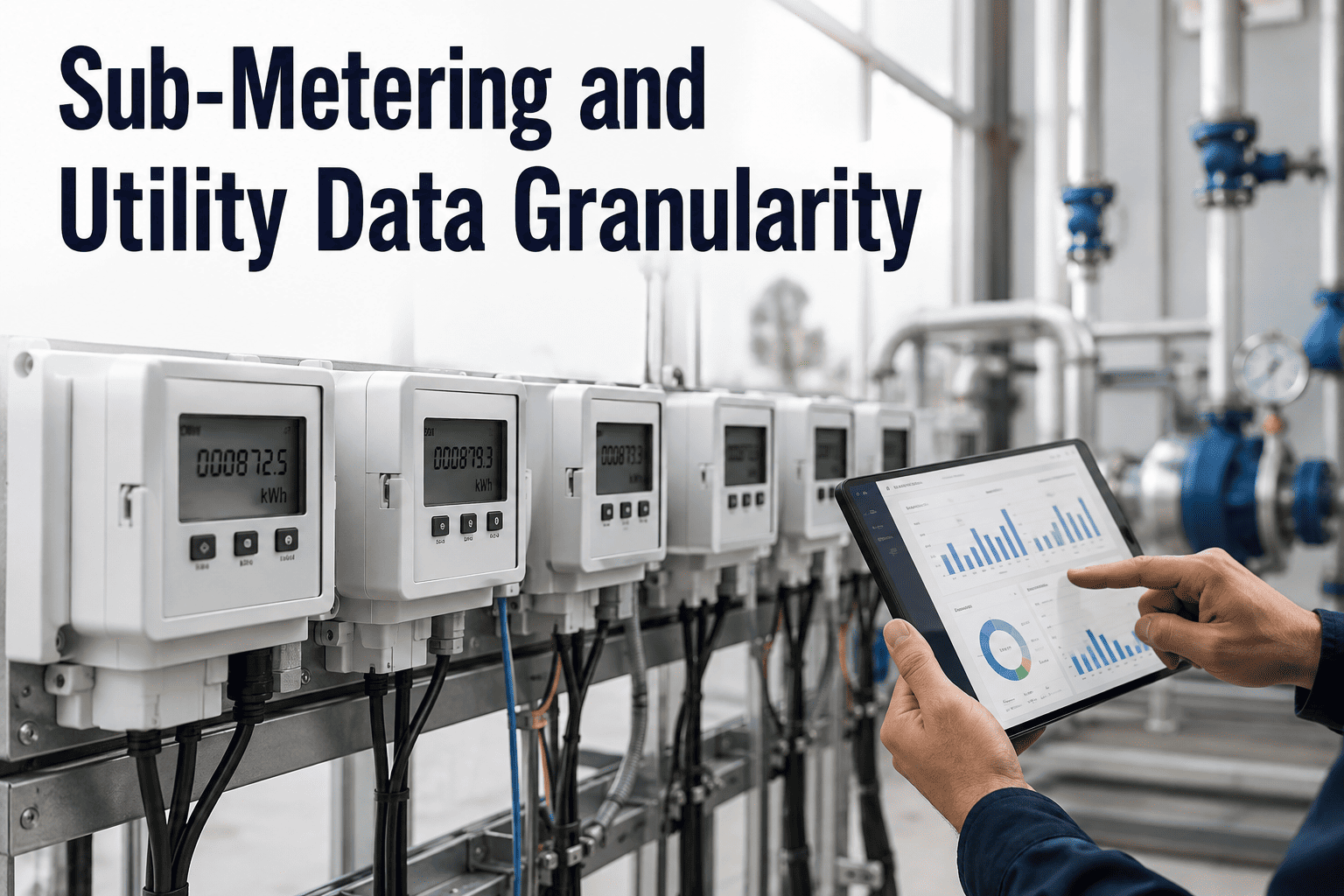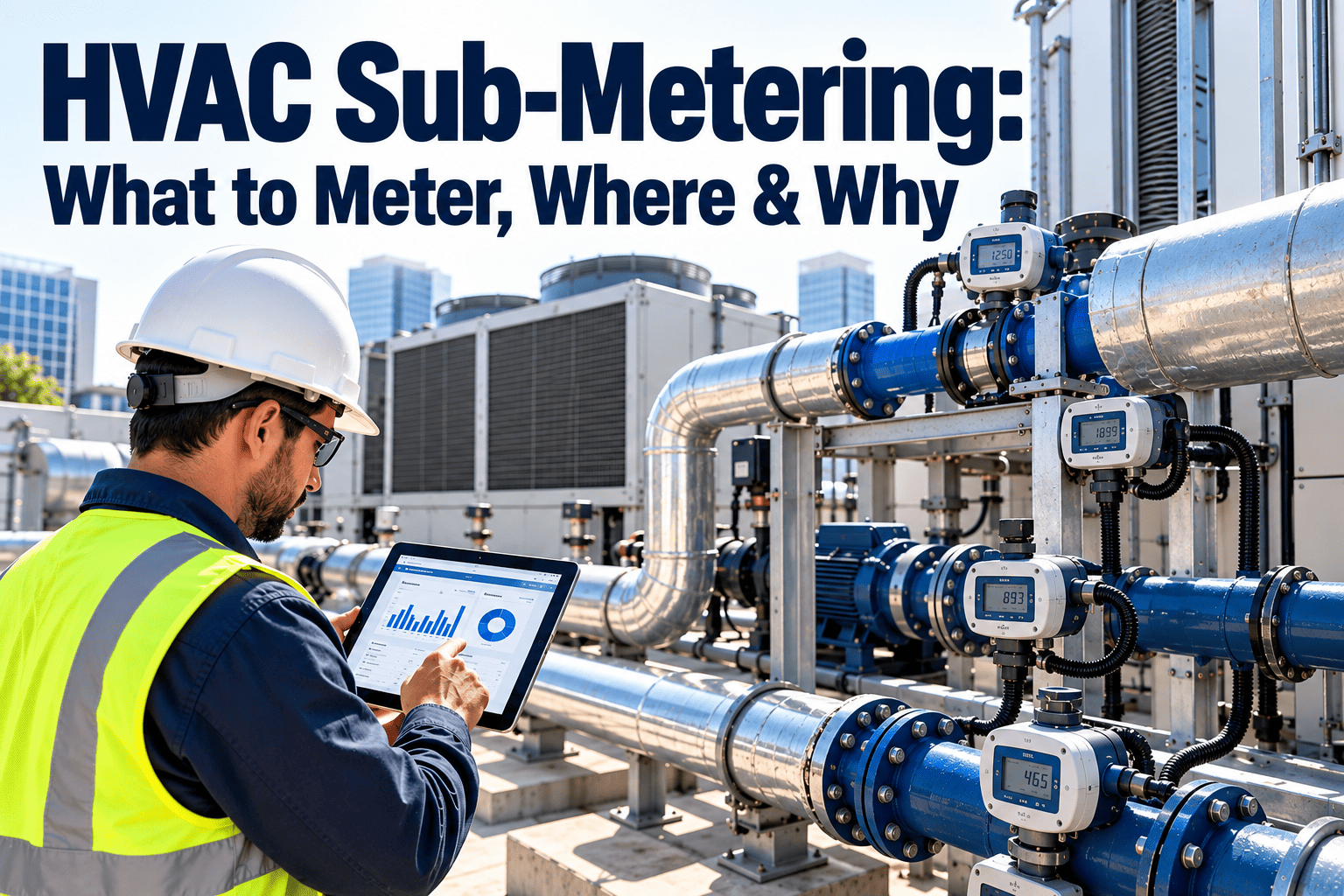
HVAC usually accounts for the largest share of a commercial building's energy use, yet most facilities see it as one number on a utility bill. That single figure cannot tell you whether a chiller is losing efficiency, an air handler is running overnight, or a tenant is driving after-hours load. Sub-metering splits the bill into systems you can act on. This guide covers what to meter, where to place each meter, how the readings expose faults, and how to connect the data to a maintenance management workflow so a drifting reading becomes a scheduled repair.
HVAC sub-metering: what to meter, where to place meters, and why it exposes faults
A building meter shows what you spent. HVAC sub-meters show where it went and when something changed. Place them on the plant, the loops and the air side, and faults stop hiding inside the total.
What a single building meter hides from your maintenance team
Whole-building metering only
- Monthly totals arrive after the problem has run for weeks
- HVAC cannot be separated from lighting, plug loads and process equipment
- Seasonal swings mask a chiller that is slowly losing efficiency
- Tenant disputes over after-hours cooling cannot be settled with data
- Maintenance spend is justified by opinion rather than measurement
HVAC sub-metered by system
- Interval data shows changes within hours or days
- Each plant item and air handler has its own consumption profile
- Efficiency is tracked against load, not against the calendar
- Allocation to tenants or departments rests on measured use
- Repairs and retrofits are backed by before and after readings
Four meter types that cover HVAC performance
Electrical power meters
Measure kW and kWh on chillers, pumps, fans and tower motors. Current transformers allow metering at a panel without rewiring the load.Thermal energy (BTU) meters
Combine a flow meter with paired supply and return temperature sensors to calculate heating or cooling delivered by a water loop.Gas meters
Track fuel use on boilers, heaters and makeup air units, so combustion efficiency can be judged against heat delivered.Water meters
Capture cooling tower makeup, blowdown and boiler feedwater, which reveal leaks, scaling and poor water treatment.A meter placement map for a typical commercial HVAC system
| Location | Measure | Why it matters | Priority |
|---|---|---|---|
| Chiller electrical feed | kW, kWh | Core input for plant efficiency calculations | High |
| Chilled water loop | Flow, supply and return temperature | Cooling delivered and loop temperature difference | High |
| Condenser water loop | Flow, temperatures | Heat rejection performance and tower health | Medium |
| Chilled and condenser pumps | kW, run status | Pump energy and over-pumping detection | Medium |
| Cooling tower fans | kW, run status | Staging and control behavior | Medium |
| Boiler gas supply | Gas volume | Fuel use against heat delivered | High |
| Hot water loop | Flow, supply and return temperature | Heating delivered and loop condition | High |
| Air handler supply fans | kW, status | Fan energy and off-hours operation | High on large units |
| Supply and return air | Temperature, optionally pressure | Coil performance and economizer behavior | Medium |
| Tower makeup water | Volume | Leaks, blowdown and water treatment issues | Medium |
| Tenant or zone branches | kWh, BTU | Fair allocation of HVAC cost | As needed |
Prioritize the highest-load equipment first. A handful of well-placed meters on the plant often delivers more insight than dozens on small terminal units.
From meter reading to fault: what the signals reveal
| Signal pattern | Likely fault | Maintenance response |
|---|---|---|
| Chiller kW per ton rising at similar load | Fouled condenser tubes, low refrigerant or control drift | Inspect tubes, check charge, review controls |
| Chilled water temperature difference shrinking | Coil fouling, valve leakage or overflowing pumps | Check coils, valves and pump speed |
| Fans running outside occupied hours | Schedule override or stuck controls | Correct schedule and verify sequence |
| Heating and cooling energy at the same time | Simultaneous heating and cooling, leaking valves | Test valves and review setpoints |
| Rising tower makeup water | Leak, excess blowdown or drift loss | Inspect basin, float and water treatment |
| Boiler gas high against heat delivered | Poor combustion or short cycling | Tune burner and review firing controls |
Turn HVAC meter readings into maintenance action
Readings only save money when someone acts on them. Oxmaint helps teams log meter data, set thresholds and create work orders, so faults reach a technician quickly.
ASHRAE 90.1 and metering requirements
Energy metering
Recent editions of ASHRAE 90.1 call for metering of building energy sources and major end uses, including HVAC, in larger buildings.Data recording
Requirements typically involve recording consumption at regular intervals and keeping the data available for a set period.Local adoption
The edition adopted, thresholds and exceptions vary by jurisdiction, so confirm the details with your local code authority.- Treat code minimums as a baseline, not the full metering plan
- Document meter locations and the loads each one covers
- Review the metering plan whenever major HVAC equipment is replaced or a tenant space is reconfigured
- Share summary reports with finance and property teams, so metering supports budget decisions as well as maintenance
- Keep calibration and commissioning records with the asset history
Reliable HVAC meter data starts with installation quality
- Install flow meters with the straight pipe runs the manufacturer specifies, so readings stay accurate
- Use matched, paired temperature sensors on BTU meters, since small errors in temperature difference create large energy errors
- Choose interval logging, commonly fifteen minutes or finer, so short events remain visible
- Synchronize meter clocks with the building system so events line up across data sources
- Use a consistent naming convention that ties each meter point to an asset record
- Verify new meters against a known reference during commissioning
- Schedule recalibration and inspection of sensors as recurring maintenance tasks
Using sub-meters to allocate HVAC cost fairly
Direct metering
- Measures actual use by tenant or department
- Suits spaces served by dedicated equipment or branches
- Requires meters at each tenant interface
Calculated allocation
- Distributes shared plant cost by area, hours or load factors
- Suits shared systems that cannot be split physically
- Needs clear, agreed rules and supporting data
After-hours HVAC requests are a common point of friction. Measured run hours and load turn a disagreement into a billing line.
A six-stage path from first meter to ongoing fault detection
Audit existing meters
Find what is already measured, and what is only estimated.Rank by load and risk
Start with chillers, boilers and the largest air handlers.Install and commission
Verify accuracy, communication and clock settings.Baseline performance
Capture normal behavior across seasons and load levels.Set alert thresholds
Define deviations that should create a work order.Review and refine
Compare alerts with findings, then tighten or loosen limits.What to look for in each part of the HVAC system
Chilled water plant
- Compare chiller electrical input with cooling delivered at similar load levels
- Watch for a falling loop temperature difference, which often points to coil or valve problems downstream
- Check pump energy against flow, since constant over-pumping wastes power and masks control faults
- Log tower fan and makeup water use so heat rejection issues appear early
- Track staging behavior, because a second chiller starting too early drives up energy without improving comfort
Hot water and boilers
- Compare gas input with heat delivered to the hot water loop
- Look for short cycling in interval data, which shortens burner and component life
- Check return water temperature, since high return temperatures can reduce condensing boiler efficiency
- Review summer operation, where a boiler firing in warm weather suggests a control or reheat problem
- Pair seasonal startup tasks with a comparison of this year against last year
Air side
- Meter fan motor power on larger air handlers to see speed control and schedule behavior
- Compare supply and return air temperature with outdoor conditions to judge economizer operation
- Look for fans at full speed during unoccupied hours
- Track filter pressure drop alongside fan energy, so filter changes are based on condition
- Investigate any air handler whose energy rises while comfort complaints also rise
Normalize for weather and occupancy before you raise an alarm
- Set the first alert limits wide, then tighten them as the team learns normal behavior
- Use a persistence rule, so a single odd reading does not create a work order
- Review every alert outcome and record whether a real fault was found
Commissioning checklist for new HVAC meters
- Confirm each meter measures the intended circuit, pipe or air stream, and record the physical location
- Verify scaling, units and current transformer ratios against the installation drawings
- Compare electrical readings with a handheld reference instrument under real load
- Confirm flow direction and sensor placement on every water loop meter
- Check that temperature sensors read correctly against a reference at the same point
- Verify communication, timestamps and data retention before handover
- Add every meter to the asset register with its calibration schedule
- Capture a short baseline trend screenshot or export at handover, so later comparisons have a documented starting point
- Train maintenance and operations staff to read the data, not only the energy manager
Retrofitting sub-meters without disrupting operations
- Use clamp-on ultrasonic flow meters and split-core current transformers where shutdowns are hard to schedule
- Meter at distribution panels or motor control centers, rather than at every individual load
- Combine installation with planned shutdowns, to avoid separate outages
- Start with a temporary pilot on one plant to prove the value before committing the full budget
- Use the findings from the first system to justify the next phase of metering
HVAC performance indicators worth tracking
How Oxmaint connects metering to maintenance work
- Asset records link each meter and sensor to the equipment it measures
- Meter-based preventive maintenance triggers tasks by run hours or consumption rather than the calendar alone
- Threshold breaches can create corrective work orders with the reading attached
- Mobile inspections capture manual readings where a meter is not integrated
- Dashboards and reports compare planned work, corrective work and HVAC trends by system
- Sensor calibration tasks are scheduled and documented alongside equipment maintenance
If you want to see how readings and work orders fit together, create your asset register and start with the largest HVAC equipment.
Common HVAC sub-metering mistakes
- Installing many small meters while leaving the chiller plant unmeasured
- Collecting data with no owner and no rule for what triggers action
- Ignoring weather and occupancy, which leads to false alarms
- Trusting uncommissioned meters, especially BTU calculations
- Failing to link meter points to asset records and maintenance history
- Setting thresholds once and never reviewing them against findings
- Metering only electricity and ignoring thermal energy, which hides whether the equipment is delivering useful heating or cooling
- Leaving meters out of the preventive maintenance plan, so sensors drift unnoticed and readings lose credibility
- Presenting raw data to technicians instead of clear, prioritized alerts with a recommended first check
- Skipping a baseline period, which leaves no reliable reference for judging whether a repair actually improved performance
- Treating the project as a one-time installation instead of an ongoing program with an owner, a review cycle and a budget
HVAC sub-metering: common questions
What should I sub-meter first in an HVAC system?
Start with chillers, boilers and large air handlers, then track results in your maintenance system.
What is a BTU meter and when do I need one?
It measures heating or cooling delivered by a water loop, using flow and paired temperature sensors. Use one on chilled and hot water loops.
How often should HVAC meter data be recorded?
Fifteen-minute intervals or finer are common, so short events and schedule problems stay visible.
Does ASHRAE 90.1 require HVAC metering?
Recent editions require metering of major end uses in larger buildings, but adoption varies by jurisdiction. Confirm locally.
Can sub-meter data trigger work orders?
Yes. Thresholds can create corrective tasks, and you can book a demo to see the workflow.
Make every HVAC kilowatt-hour tell you something
Combine sub-metering with a maintenance system that turns deviations into scheduled repairs. Set up your assets in Oxmaint, or walk through a plan for your plant with our team.