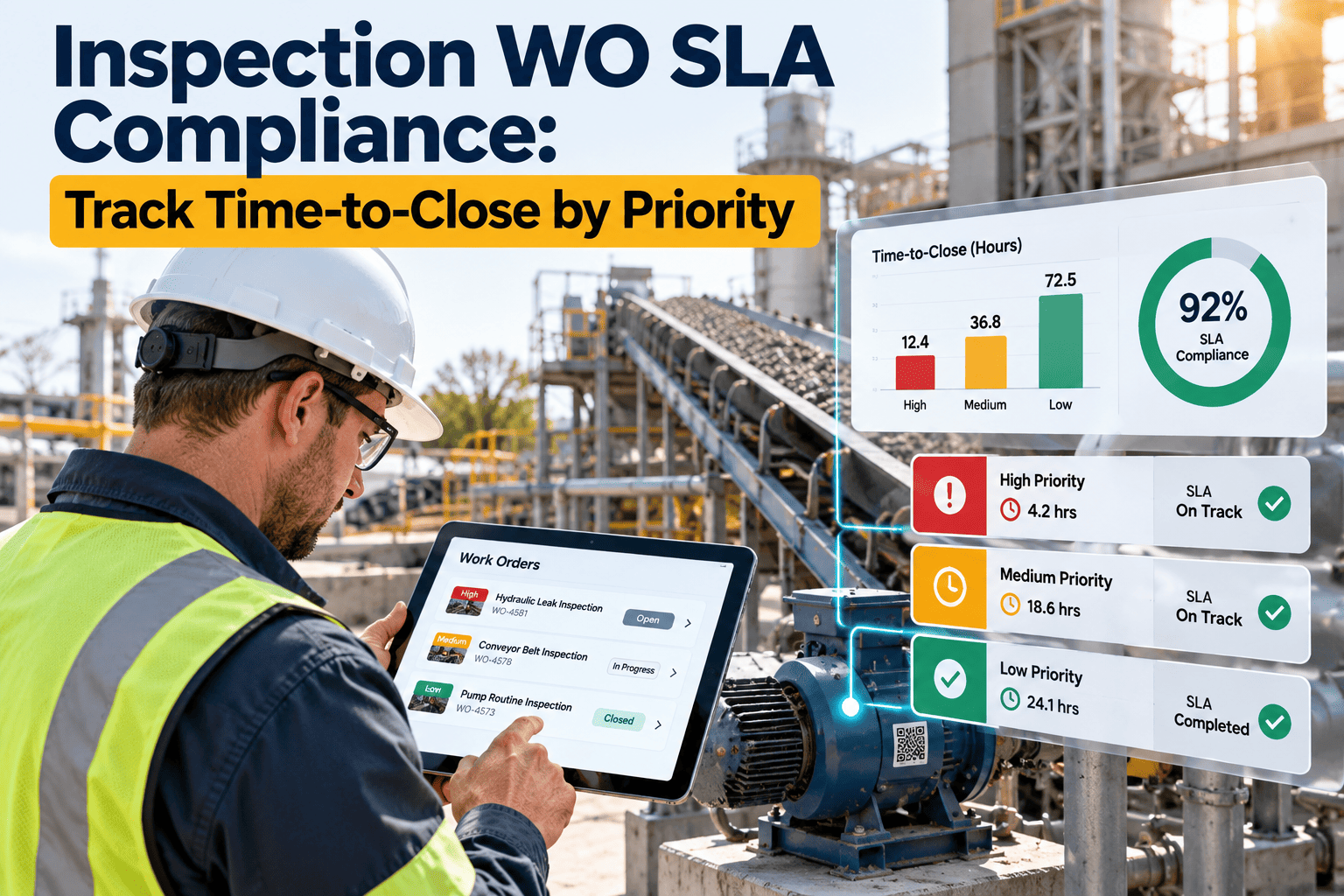
The moment an inspection records a deficiency, the clock starts. From that point, the date the problem was found and the date it was fixed become part of the building's record. Insurers, auditors, and sometimes opposing counsel read those two dates closely. Tracking time-to-close for inspection-generated work orders by priority tier shows whether findings turn into fixes fast enough, and inspection and work order management software makes those dates automatic instead of reconstructed after the fact.
Inspection work orders: track time-to-close by priority tier
Define SLA tiers, run the clock from the finding date, and report compliance in a form that holds up in renewal reviews and incident investigations.
Why inspection-generated work orders need their own SLA
A reactive breakdown call has an obvious urgency. An inspection finding does not, so it can sit quietly while the building changes around it.
A finding creates a dated record
Once a deficiency is documented, the organization can be shown to have known about it. How quickly it was addressed becomes visible.Findings compete with daily noise
Tenant calls and breakdowns crowd out inspection work orders unless they carry a clear tier and due date.Where SLA records tend to be examined
- Insurance renewals, where underwriters ask how identified hazards are managed.
- Incident and claims reviews, where the timeline between finding and fix matters.
- Lease, landlord, and client reporting that includes response commitments.
- Regulatory and third-party audits of life safety and building systems.
This page describes record keeping practice. For how your records may be used in a claim or dispute, consult your insurer and legal counsel.
Building a priority tier structure that people follow
Four tiers are usually enough. More than that and technicians stop distinguishing between them.
| Tier | Example criteria | Example acknowledge | Example close target |
|---|---|---|---|
| Emergency | Immediate danger to people or property, life safety impairment | Within 1 hour | Make safe the same day, permanent fix in days |
| Urgent | Likely to fail soon, tenant impact, compliance deadline near | Within 1 working day | 1 to 3 days |
| Standard | Functional defect without immediate risk | Within 2 working days | 2 to 3 weeks |
| Routine | Cosmetic or low-risk wear | Within 5 working days | 30 to 60 days or next planned shutdown |
These targets are examples. Set real values from your contracts, regulations, risk appetite, and crew capacity.
Rules that keep tiers honest
- Tier is assigned at the time of the finding, using written criteria.
- Only a supervisor can lower a tier, and the reason is recorded.
- Findings on life safety systems default to a higher tier until reviewed.
Anatomy of an SLA clock
A single close-time number hides where delays happen. Measuring each stage shows what to fix.
Three intervals worth reporting separately
- Time to acknowledge: from finding to accepted work order.
- Time to start: from acknowledgement to work beginning.
- Time to close: from finding to verified completion.
Calculating compliance
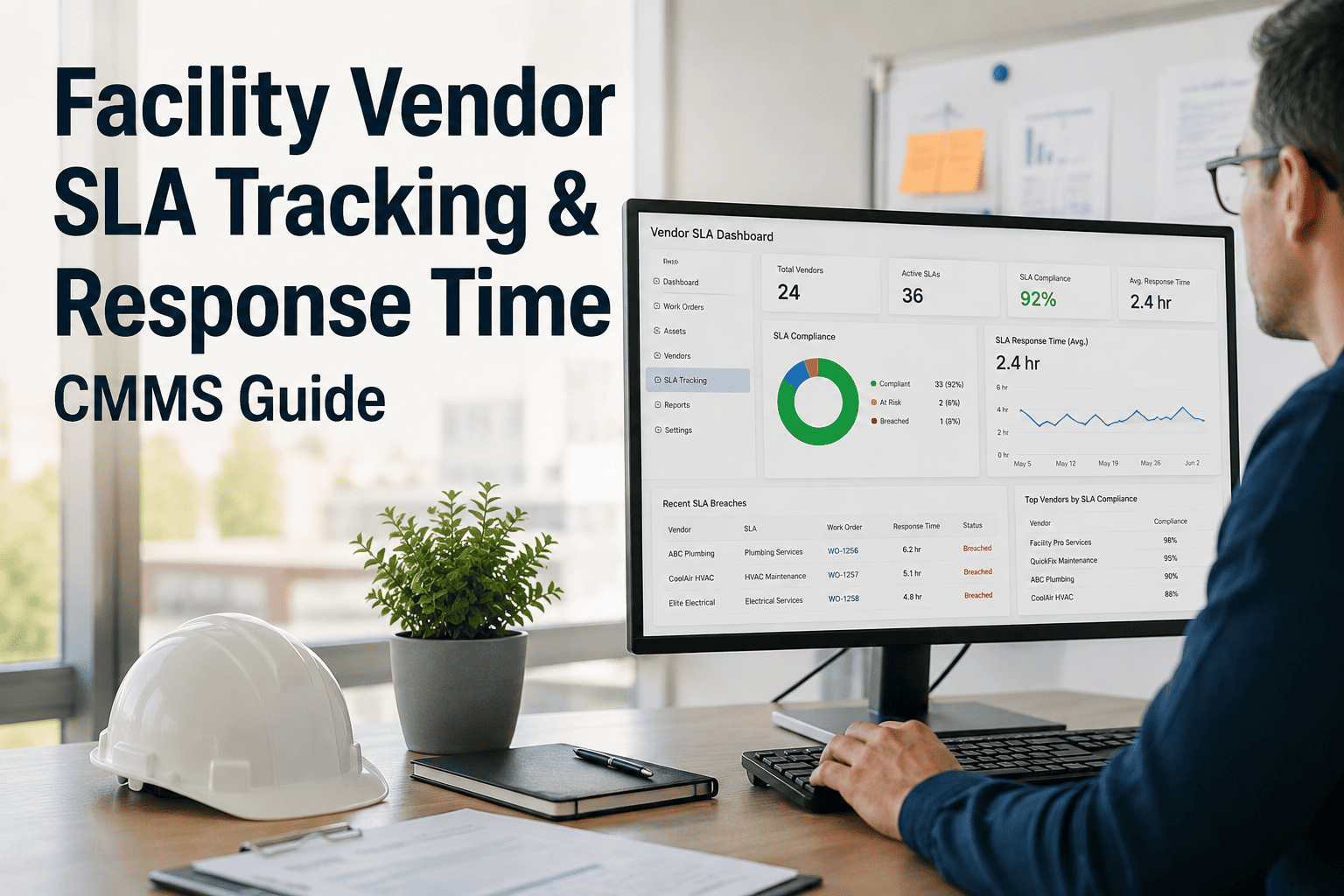
SLA compliance is the number of work orders closed within target divided by the total closed in the period. Report open overdue items beside it so late work cannot hide.
Put a clock on every inspection finding
Set tiers once, start the timer from the finding, and see compliance by priority, site, and team in one view.
When the clock may pause, and when it must escalate
Some delays are legitimate. Without rules, though, a pause becomes a way to hide overdue work.
Reasonable pause reasons
- Waiting on a long-lead part with a documented order date
- Tenant access refused after a recorded attempt
- Interim make-safe completed and permanent work scheduled
Pauses that should be questioned
- No reason entered
- Pause longer than a set number of days
- Repeated pauses on the same work order
A three-stage escalation path
The documentation pack behind a clean SLA record
Good numbers need good evidence. Each closed inspection work order should be able to tell its story without anyone explaining it.
- Original finding with date, time, inspector, and photos
- Assigned tier and the criteria used to choose it
- Acknowledgement, assignment, and start timestamps
- Parts, labor, and vendor details
- Completion notes and after-work photos
- Verification or re-inspection result
- Reason codes for any pause or missed target
Why SLAs get missed, and what to change
Late work orders usually trace back to a small number of process gaps rather than to individual effort.
| Symptom | Likely cause | Practical fix |
|---|---|---|
| Long time to acknowledge | Findings reach no one in particular | Route by site and system to a named supervisor |
| Long wait before work starts | Crew capacity or unclear priority | Use weekly planning and protect time for urgent tiers |
| Work done but not closed | Paperwork completed days later | Close from the mobile device on site |
| Frequent parts delays | No stocking of common spares | Track usage and set reorder points |
| Vendor jobs run late | No contractual response terms | Add SLA terms and track vendor compliance |
A compliance dashboard layout that managers can read
Keep the first screen simple: results first, then the detail that explains them.
Targets worth reviewing quarterly
Compare compliance, overdue age, and exception counts against your own history. Raise targets only when the process can sustain them.
How Oxmaint supports SLA tracking on inspection findings
- Inspection to work order: failed checklist items create prioritized work orders with timestamps.
- Priority and due dates: assign tiers and target dates so overdue work is visible.
- Mobile completion: technicians close jobs with notes and photos at the asset.
- Scheduling and assignment: route work to teams or vendors and track their progress.
- Reports: export compliance and aging views for insurers, auditors, and owners.
Setting SLA targets from your own data
Targets copied from another organization often fail because they ignore local crew size, contractor lead times, and building risk. Start with what actually happens today.
Why the median alone is not enough
- A good average can hide a small number of very late items.
- Looking at the slowest tenth of jobs shows where the real risk sits.
- Set targets that cover most jobs, then manage the exceptions individually.
Different finding sources need different SLA owners
Not every inspection finding is equal. The source often decides who sets the target and what evidence matters.
| Finding source | Who usually sets the target | Evidence to keep |
|---|---|---|
| Life safety and fire protection | Regulation and the authority having jurisdiction | Impairment notices, interim measures, test results |
| Lifts and pressure equipment | Statutory inspector and contractor agreement | Inspection reports, defect notices, sign-off |
| Tenant-facing comfort and cleanliness | Lease or service agreement | Request time, response time, tenant confirmation |
| Structural and building envelope | Engineer recommendation and internal risk policy | Assessment, photos, repair method, re-inspection |
| Routine condition items | Facility management policy | Standard work order record |
Document interim measures
When a permanent fix takes longer than the target, record the interim control, such as barriers, signage, or isolation. It shows that risk was managed while work was pending.
After hours, access limits, and multi-site complexity
Real buildings do not run on a neat nine-to-five schedule. SLA rules should reflect when work can actually happen.
- Business-hours clocks. Decide whether lower tiers count only working hours, while emergency tiers run around the clock.
- Tenant access windows. Record requested access times so delays caused by occupants are visible and not blamed on the team.
- Shutdown dependencies. Work needing a planned outage should link to the outage schedule and carry a justified due date.
- Multi-site rules. Use the same tier definitions across sites so results can be compared, but allow local contractor lead times.
- Holiday cover. Name an on-call owner for each period so emergency findings never wait for a person to return.
Extending SLA tracking to contractor work
A large share of inspection work orders end up with outside contractors. Their performance should be measured against the same clock.
Put in the contract
- Response and completion times by tier
- Reporting format with photos and notes
- Rework at no charge within a defined period
Review each quarter
- Compliance rate by vendor and tier
- Average delay on missed jobs and reasons
- Repeat visits on the same defect
A monthly SLA review that leads to decisions
The review is where numbers turn into action. Keep it short, fixed, and focused on exceptions.
- Open with compliance by tier and compare it with the previous month.
- Review every high-priority item that missed target, with the stated reason.
- Check the oldest open items and confirm each has an owner and a date.
- Review pauses longer than the allowed limit.
- Decide on changes, such as crew time, contractor changes, or stocked spares.
- Record actions and check them at the next meeting.
Reporting mistakes to avoid
- Measuring from the work order creation date instead of the finding date.
- Counting only closed items, which hides overdue ones.
- Combining all priorities into one average.
- Resetting the due date when a job is reassigned.
Closing the loop: verifying that the fix held
A work order marked complete is not the same as a resolved finding. Verification protects the quality of your SLA numbers.
- Re-inspect high and emergency tier items before final closure.
- Sample routine items, for example one in ten, to check closure quality.
- Reopen the original finding if the defect returns within a set period, and count it in recurrence metrics.
- Require after-work photos on any item that carried safety consequences.
Count verified closure, not only completed work
Reporting time to verified close gives a more honest picture than time to technician completion, especially for contractor work.
Using the dashboard to find the cause of missed SLAs
A compliance percentage is only the headline. Follow a short sequence to understand it.
Example of reading the trail
If urgent items miss target mostly at the start stage at one site, the issue is likely crew allocation there, not contractor performance. The fix is local scheduling, not a new contract.
Launching SLA tracking in four steps
You can introduce tiers and targets without disrupting the team. Start small and expand.
- Write the four tier definitions and share them with inspectors and supervisors.
- Measure last quarter's close times to set an honest baseline.
- Switch on due dates and overdue alerts for the highest two tiers first.
- Hold the first monthly review within four weeks and adjust targets based on what you learn.
Keep the first version simple
A small set of reliable metrics earns trust faster than a large dashboard nobody believes. Add detail once the basics are stable.
Inspection SLA compliance, answered
When should the SLA clock start?
Most teams start it when the finding is recorded, since that is the moment of documented knowledge.
What is a realistic compliance target?
It depends on crew size and tier. Measure your baseline in Oxmaint first, then improve step by step.
Should vendor work orders follow the same tiers?
Yes. Use the same tiers and write response terms into contracts so results are comparable.
How do we handle jobs that need capital funding?
Make the issue safe, log the interim action, and move the permanent fix to a tracked backlog item with an owner.
Can we see SLA reporting with our own tiers?
Yes. Schedule a demo and share your current tier policy.
Close findings faster and prove it
Build SLA tiers into every inspection work order so your records show what was found, when, and how quickly it was fixed.