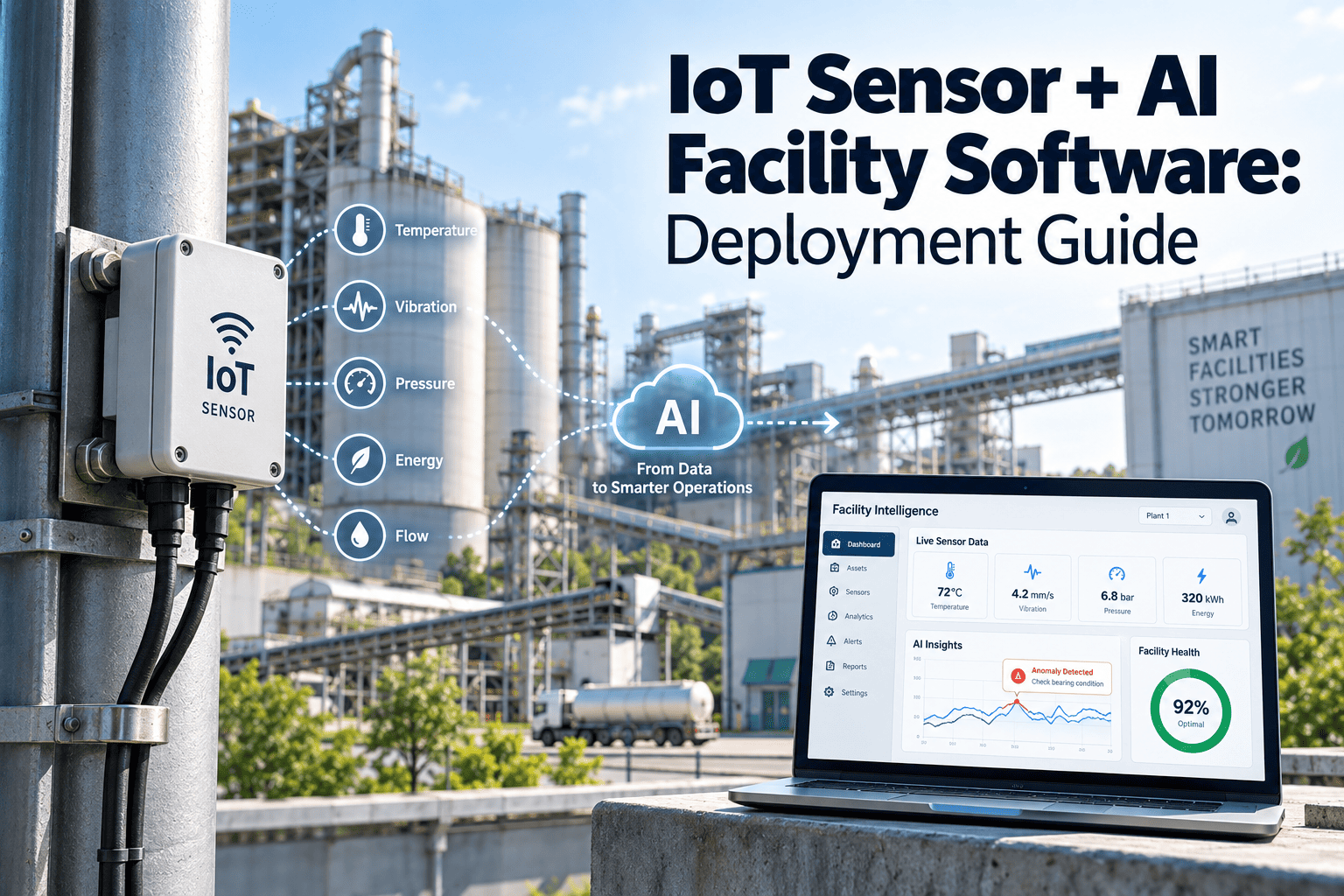
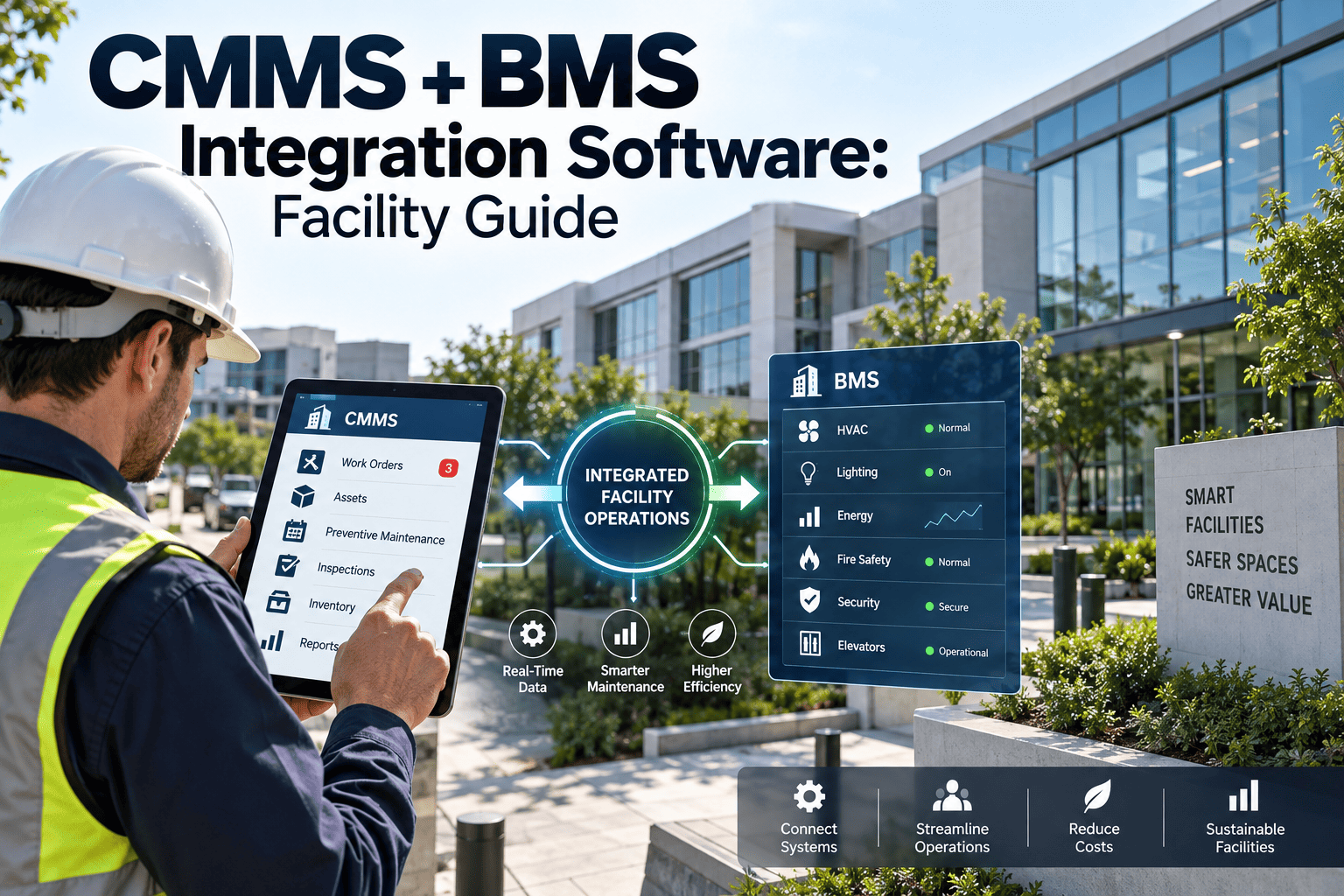
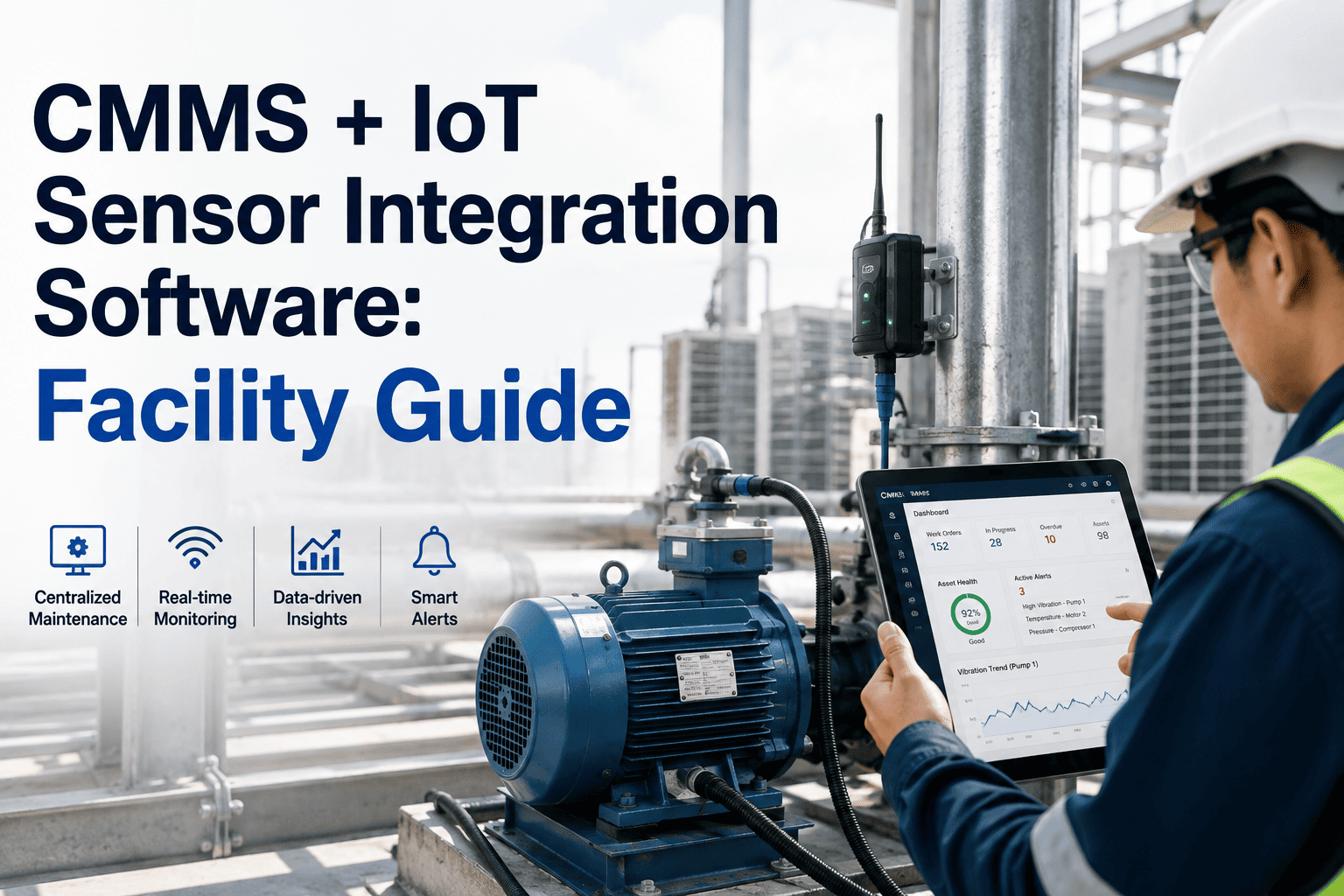
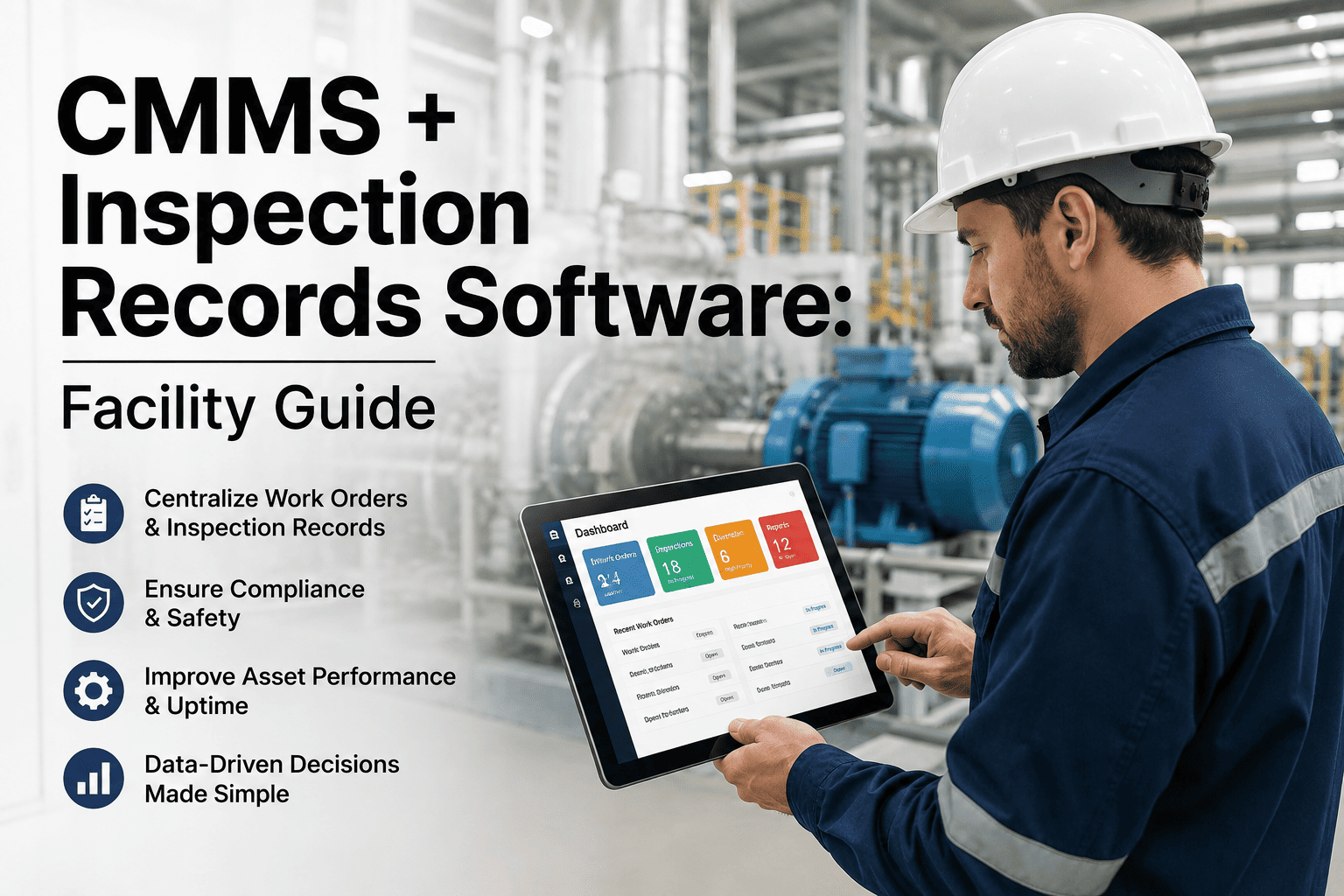
Most IoT predictive maintenance programs do not fail because the sensors stop working. They fail because the data has nowhere to go — a dashboard fills up with charts, an alert fires at 2 a.m., and nobody has defined what happens next. Facility teams end up watching graphs instead of preventing failures. OxMaint's IoT sensor and AI facility software closes that exact gap: sensor data flows in, edge AI flags the anomaly, and a CMMS work order is created automatically with the asset, the fault, and the technician assigned, all before a human ever has to notice the chart. Connect your first sensor to OxMaint free and see the full pipeline run end to end.
IoT Sensor + AI Facility Software
From Sensor Reading to Closed Work Order, Automatically
OxMaint connects wireless IoT sensors, edge AI anomaly detection, and CMMS work order automation into one pipeline, so predictive maintenance actually changes what your technicians do each morning.
The Pipeline
Three Layers That Turn Data Into Action
Layer 1
IoT Sensors
Wireless vibration, temperature, current, and ultrasonic sensors stream condition data continuously from priority assets like chillers, AHUs, and motors.
Layer 2
Edge AI Detection
Models trained on asset-specific failure history flag anomaly patterns that precede failure, calculating remaining useful life and a confidence score.
Layer 3
CMMS Work Order
A prioritized work order is created automatically with fault diagnosis, asset context, recommended action, parts list, and technician assignment.
Why the Pipeline Pays Off
What Connected Sensor-to-Work-Order Actually Delivers
80%
Reduction in time between fault detection and technician dispatch once sensor alerts connect directly to work order automation
60%
Of sensor alerts in disconnected deployments never generate a maintenance action, because nobody defined what to do when a threshold is crossed
10:1
To 30:1 typical ROI ratio reported within 18 months once predictive alerts are converted into prioritized, automated work orders
$50
Per node is now the typical cost of an industrial wireless sensor, making a 20-asset pilot deployment achievable for under $8,000
Core Sensor Types
What You Actually Deploy on the Asset
Vibration Accelerometers
Monitor bearing wear and rotating equipment health, catching mechanical degradation weeks before it becomes audible.
Temperature Monitors
Track thermal anomalies across motors, panels, and mechanical rooms where overheating precedes most electrical failures.
Current Sensors
Analyze motor load patterns to flag abnormal draw that signals bearing drag, misalignment, or an impending motor failure.
Ultrasonic Sensors
Detect early-stage friction and compressed air or refrigerant leaks long before they become visible or audible to a technician.
Deployment Timeline
A Phased Rollout, Not a Big-Bang Project
Most facilities identify actionable anomalies within the first 30 to 60 days of sensor deployment.
What Breaks Most Deployments
The Failure Patterns Worth Avoiding
Charts With No Action Defined
Data streams into a dashboard, but nobody decided what happens when a threshold is crossed, so alerts pile up unread.
Static Thresholds, Constant Noise
Fixed alert limits trigger constantly during normal variation, and technicians stop trusting the system within weeks.
Alerts Disconnected From Work Orders
Sensor alerts sit in a separate tool from the CMMS, so a real fault still depends on someone manually creating the ticket.
No Phased Rollout Plan
Trying to sensor every asset on day one delays go-live and makes it harder to prove ROI on the assets that matter most.
Watch the Pipeline Run on Your Own Asset Data
Bring readings from one chiller, AHU, or motor and we will show exactly how OxMaint turns an anomaly into a routed, ready-to-work work order.
Frequently Asked Questions
Questions on IoT and AI Deployment
How long does a full IoT and AI deployment take to go live?
A phased rollout typically runs 8 to 16 weeks, moving from sensor installation and baseline data collection through calibrated anomaly detection to full prediction-to-work-order automation.
Start your pilot free to see the first phase in action.
Which assets should get sensors first?
Priority assets are typically chillers, AHUs, motors above 15kW, and elevators, since these carry the highest downtime cost and the clearest vibration or temperature failure signatures.
Does OxMaint work with sensors and protocols we already use?
Yes. OxMaint connects via BACnet, Modbus, OPC-UA, MQTT, and REST API, and integrates with SCADA, MES, and ERP systems without custom development work.
How does OxMaint avoid flooding technicians with false alerts?
Anomaly thresholds are calibrated to site-specific operating conditions rather than fixed limits, and the first auto-generated work orders are reviewed by the FM manager before full autonomous operation is activated.
How quickly can facilities expect a return on the sensor investment?
Most facilities identify measurable savings within 30 to 60 days of monitoring, with typical ROI ratios of 10:1 to 30:1 reported within 18 months.
Book a demo to model ROI for your own asset list.
Stop Watching Charts. Start Closing Work Orders.
OxMaint turns every sensor anomaly into a prioritized, technician-ready work order automatically, so predictive maintenance actually changes what happens on the floor.