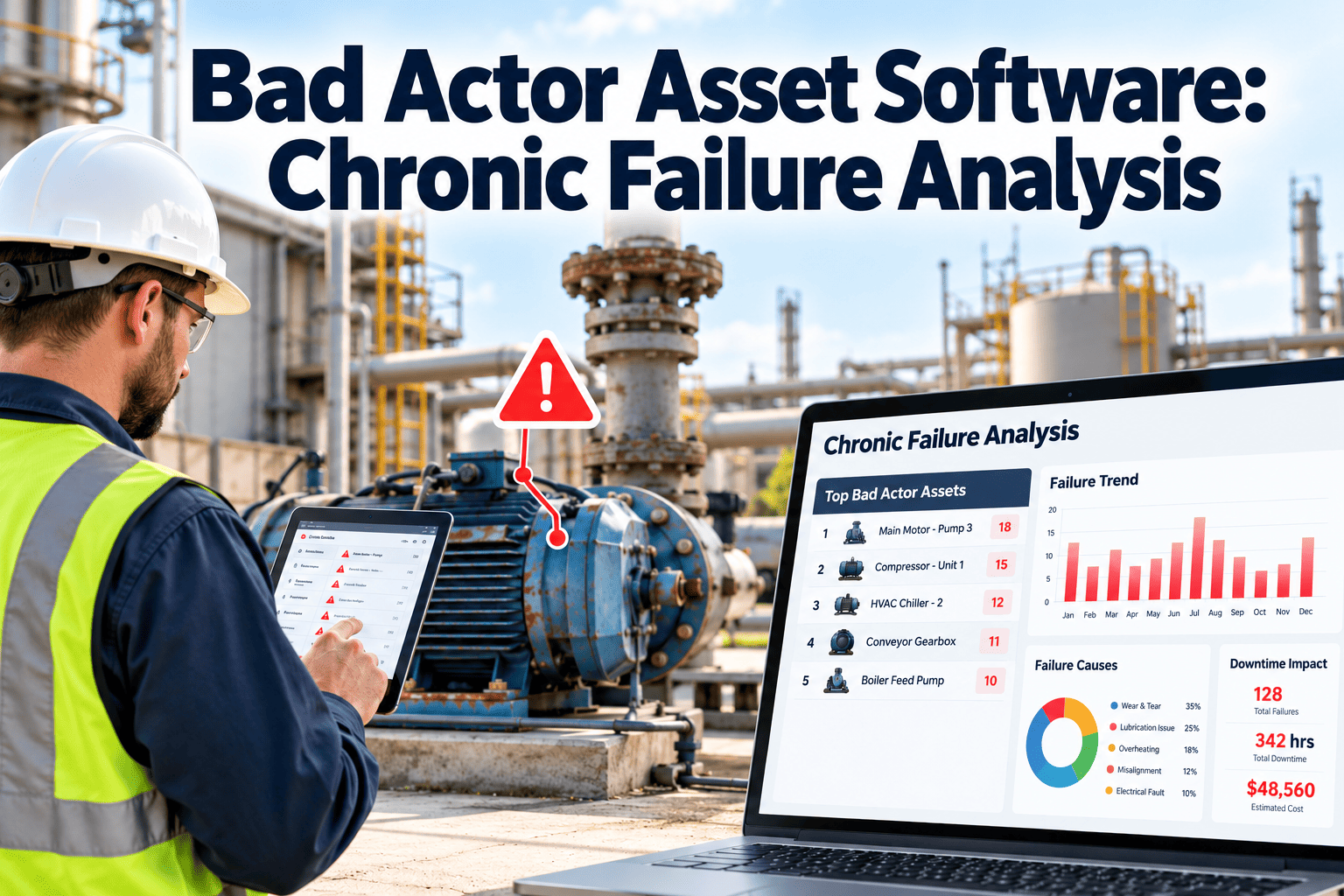
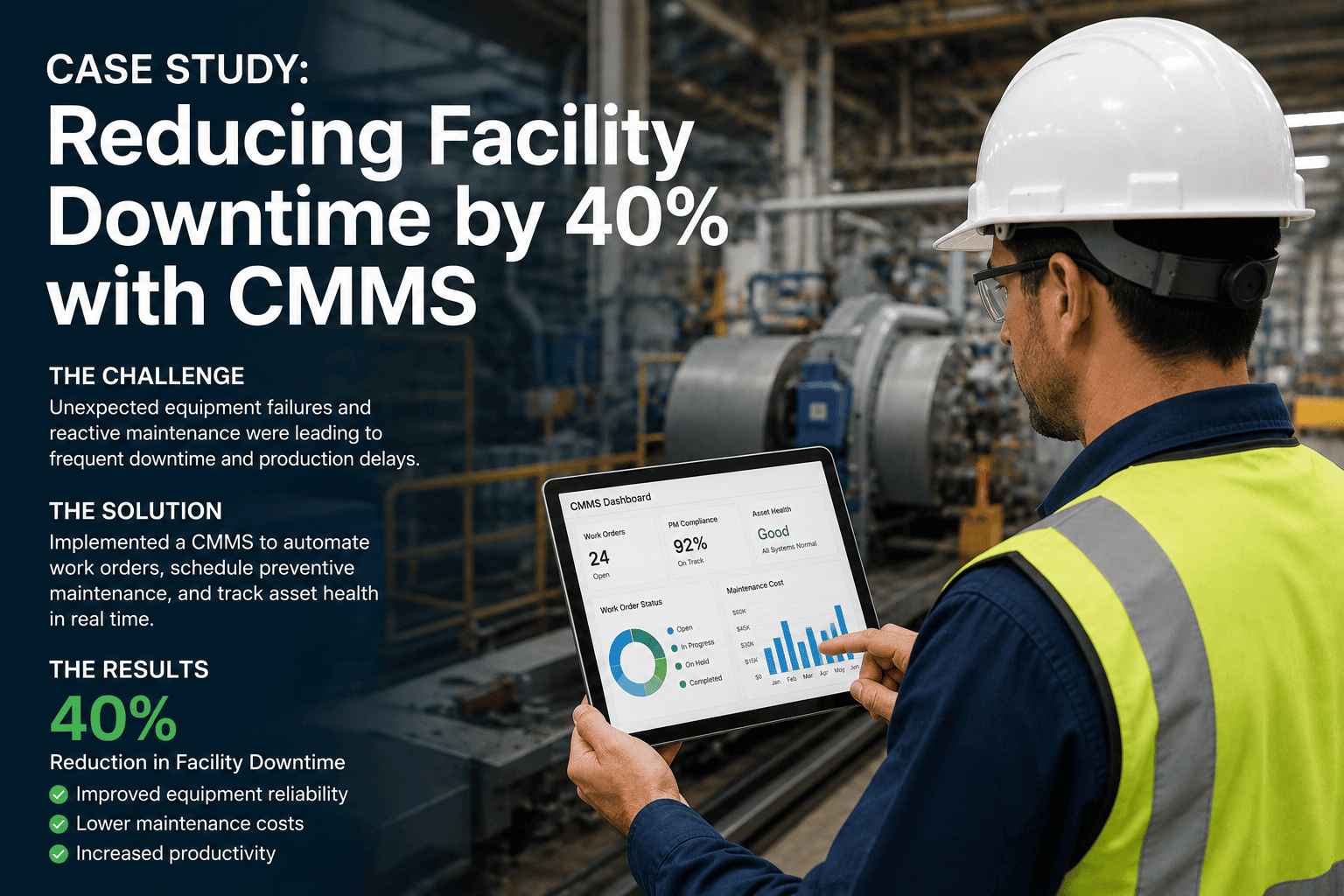
When a national logistics hub processing 84,000 packages per day across 14 conveyor lines experienced its fourth major belt drive failure in eleven months, the operations director did the calculation that most facilities wait too long to run: four unplanned shutdowns averaging 4.2 hours each, at a verified cost of $31,000 per downtime hour across all affected sortation lines, amounted to $520,800 in direct losses — before emergency contractor fees, SLA penalty payments to two anchor retail clients, and the cost of redeployment and overtime recovery. The conveyor system was not old. It was not undersized. It was being maintained on a fixed quarterly schedule that had no connection to actual equipment condition. OxMaint's AI predictive maintenance module was deployed across all 14 conveyor lines in an eight-week implementation, connecting vibration sensors, motor current monitors, and belt tracking sensors to an anomaly detection engine that generates predictive work orders 3–14 days before a failure threshold is crossed — converting the hub's maintenance operation from reactive chaos into a scheduled, measurable programme that eliminated unplanned conveyor downtime by 70% in the first year. Book a demo to see how OxMaint can transform your conveyor maintenance.
CASE STUDY · LOGISTICS & DISTRIBUTION
How a Logistics Hub Reduced Conveyor Downtime by 70% with Predictive Maintenance
A national distribution hub eliminated reactive maintenance chaos across 14 conveyor lines — recovering $1.4M in annual value through AI-driven anomaly detection, automated work orders, and condition-based servicing that acts 3–14 days before failure.
70%
Reduction in unplanned downtime — Year 1
$1.4MAnnual value recovered
14Conveyor lines on AI monitoring
8 wksImplementation to live alerts
3–14 daysAdvance warning window
Facility Profile
Facility TypeNational parcel sortation and fulfilment hub — multi-carrier, B2B and B2C
Daily Volume84,000 packages/day across 3 shifts — peak season 110,000+
Conveyor Fleet14 conveyor lines — induction, sortation, merge, divert, and despatch
Prior MaintenanceQuarterly fixed-interval PM — no condition monitoring, paper logs
Deployment Time8 weeks from sensor installation to live predictive alerts
The Problem — Before OxMaint
$520K
Direct losses from 4 belt drive failures in 11 months
0%
Predictive alerts in place — all failures discovered at breakdown
Quarterly
Fixed PM interval — no connection to actual equipment condition
01
Belt Drive Bearing Failures — 4 Events
The hub's four major failures in eleven months were all bearing-origin failures. Vibration signatures preceding each failure were detectable 8–12 days before seizure — but without sensors, no one saw them. Each failure caused a 4.2-hour average shutdown. Total direct cost per event: $130K+.
02
Belt Mis-Tracking — Recurring
Maintenance responded to belt mis-tracking events twice per week — consuming 18–22 technician hours weekly that were invisible in any report, with several events leading to belt damage requiring emergency replacements at $4,200–$8,400 each.
03
Motor Thermal Degradation
Three drive motors showed progressive winding insulation degradation not detectable by visual inspection. Two failed within the study period; the third was identified by OxMaint post-implementation and replaced on a planned basis. Emergency motor replacement: $12,000–$18,000 per event.
04
No Failure Pattern Visibility
With paper logs and no CMMS, the team had no visibility into failure clustering. The fourth belt drive failure was on the same line as the first — a fact not identified until post-incident review. Pattern visibility would have prevented at least two failures.
Phase 1 · Weeks 1–2
Sensor Installation and Asset Registration
Wireless vibration sensors installed at all drive motor bearings and head/tail pulley bearings across all 14 conveyor lines — 186 sensor points in total. Motor current transducers fitted at MCC panels for all 28 drive motors. All 14 conveyor lines registered in OxMaint as individual assets with sensor topology and criticality classification.
Phase 2 · Weeks 3–5
Baseline Learning and Historical Backfill
OxMaint's AI engine collected live sensor data across three weeks of normal operations — building load-stratified baselines capturing normal vibration, temperature, and current envelopes at different throughput levels. Paper maintenance logs were digitised to provide failure history context for the model.
Phase 3 · Weeks 6–7
Alert Rule Configuration and Tuning
Alert rules configured: vibration deviation thresholds at 2.2× baseline, sustained duration of 35 minutes before alert fires, and rate-of-change rules for accelerating degradation signatures. Parallel run validated a 75% true-positive rate before go-live.
Phase 4 · Week 8 onwards
Live Operations — Predictive Work Orders
Predictive alerts auto-generated work orders pre-populated with asset ID, anomaly description, sensor trend data, predicted failure window, and recommended action. Condition-based work orders outnumbered scheduled PM work orders 3:1 within the first month.
See How OxMaint Deployed Predictive Maintenance Across 14 Conveyor Lines in 8 Weeks
From sensor topology design to live predictive alerts — OxMaint's implementation team has deployed condition monitoring programmes across logistics hubs of all scales. See the deployment process for your facility type.
Year 1 Results — $1.4M Documented Value Recovery
Direct value recovery from avoided failures and emergency spend: $899,600. Including throughput recovery value (recovered 14.7 hrs of sortation capacity at $31K/hr) and OEE improvement from eliminated minor stoppages: total Year 1 value: $1.4M against OxMaint programme cost including sensors, software, and implementation.
KPIs Tracked — Before and After OxMaint Deployment
Unplanned Downtime Events
↓ 75% reduction
Average MTBF — Critical Lines
2,100 hrsPre
6,800 hrsYear 1
↑ 3.2× improvement
Average MTTR — Critical Lines
↓ 79% reduction
Predictive Alert True Positive Rate
Above 80% target
Emergency Maintenance Spend
↓ 85% reduction
Planned vs Reactive Ratio
32% plannedPre
88% plannedYear 1
From reactive to predictive-led
"The moment that changed how I thought about predictive maintenance for conveyor operations wasn't a number — it was a conversation. Six weeks into the OxMaint deployment, one of my technicians came to me and said 'I got an alert on Line 7 last night, went and checked it this morning, and I think I found the bearing that failed in October.' He was right. The same failure mode, on the same drive position, showing the same vibration signature eight days before it would have failed. We replaced the bearing on a planned basis in a 40-minute scheduled window. Before OxMaint, that bearing would have failed mid-shift, taken the line down for four-plus hours, and cost us $130,000. The total cost of the planned replacement was $240 in parts and 40 minutes of labour. That's the ROI calculation that tells you everything you need to know."
Ryan Castellano — Head of Engineering and Facilities, National Logistics Hub
14 Years Warehouse Engineering and Maintenance Management · Responsible for 84,000-package-per-day operation across 14 conveyor lines
Frequently Asked Questions
How long does OxMaint take to generate reliable predictive alerts on new conveyor assets?
OxMaint establishes reliable anomaly baselines within 3–5 weeks of live sensor data collection for most conveyor drive and bearing applications. For facilities with existing historian data from a BMS or SCADA system, that window can be compressed to 1–2 weeks through historical backfill. The baseline learning period captures normal operating envelopes under different throughput loads — a critical step for logistics operations where conveyor load profiles vary significantly between standard, peak, and overnight shifts.
Start a free trial to begin asset baseline configuration for your conveyor fleet.
What sensors are required to start predictive maintenance on conveyor lines?
The minimum viable sensor set for conveyor predictive maintenance is vibration sensors on drive motor bearings and head/tail pulley bearings — these two sensor types cover the failure modes responsible for the majority of unplanned conveyor downtime (bearing degradation and drive train wear). Motor current transducers at the MCC panel add motor winding and electrical fault detection at low additional cost. Belt tracking sensors and thermal cameras add value on high-criticality sortation lines where belt mis-tracking causes secondary damage. OxMaint works with the sensor data you already have — if your conveyor OEM provides motor current data through the PLC, that feeds the model without additional hardware.
Book a demo to see the sensor topology recommendation for your specific conveyor fleet.
How does OxMaint's predictive maintenance connect to work order management and scheduling?
OxMaint's predictive alerts generate work orders automatically — pre-populated with asset ID, anomaly type, sensor trend data, predicted failure window, and recommended corrective action from the job plan library. The work order is assigned to the appropriate craft with priority based on alert severity and predicted failure window. Predictive work orders are scheduled into available maintenance windows before the predicted failure date. Parts can be reserved against the work order when the alert fires, eliminating the "parts not available" failure on the day of repair that inflates MTTR.
Sign in to see the predictive alert-to-work-order workflow in your facility environment.
Can OxMaint manage predictive maintenance alongside existing scheduled PM programmes?
Yes — OxMaint runs predictive and scheduled PM work orders in the same system, with the planned maintenance ratio visible on the dashboard. Most logistics facilities implement a hybrid model: predictive condition-based work orders for drive motors, bearings, and belt systems where sensors provide reliable signals; scheduled PM for lubrication, belt tension, and cleaning tasks where calendar intervals are appropriate. Over time, the predictive programme typically replaces 60–70% of scheduled PM work orders as the sensor data proves more reliable than fixed intervals. The hub in this case study moved from 32% planned to 88% planned maintenance within 12 months.
Book a demo to see how OxMaint manages both programme types in a single dashboard.
What is a realistic ROI timeline for predictive maintenance deployment on a logistics conveyor fleet?
Industry data from predictive maintenance deployments across logistics facilities shows ROI achieved within 12–18 months as a typical range — though many facilities see payback within the first avoided major failure event, which alone can offset 6–12 months of programme cost. The hub in this case study recovered $899,600 in direct value in Year 1 against a programme cost including sensors, software, and implementation of under $180,000 — a 5× first-year return. Facilities with higher downtime cost rates (e-commerce fulfilment, multi-carrier sortation, peak-sensitive operations) typically see faster payback because the value of a single avoided shift failure is larger.
Start your free trial to build an ROI projection for your specific facility and fleet size.
FROM REACTIVE TO PREDICTIVE — LOGISTICS AND DISTRIBUTION
Your Conveyor Failures Are Already in the Sensor Data. OxMaint Finds Them Before the Shift Does.
OxMaint deploys AI-driven condition monitoring on your conveyor fleet — establishing asset baselines, detecting anomalies 3–14 days before failure, generating predictive work orders automatically, and tracking the MTBF and MTTR improvements that demonstrate programme value to operations leadership. From a 5-line distribution centre to a 50-line fulfilment hub — the same platform, the same implementation process, the same outcome.