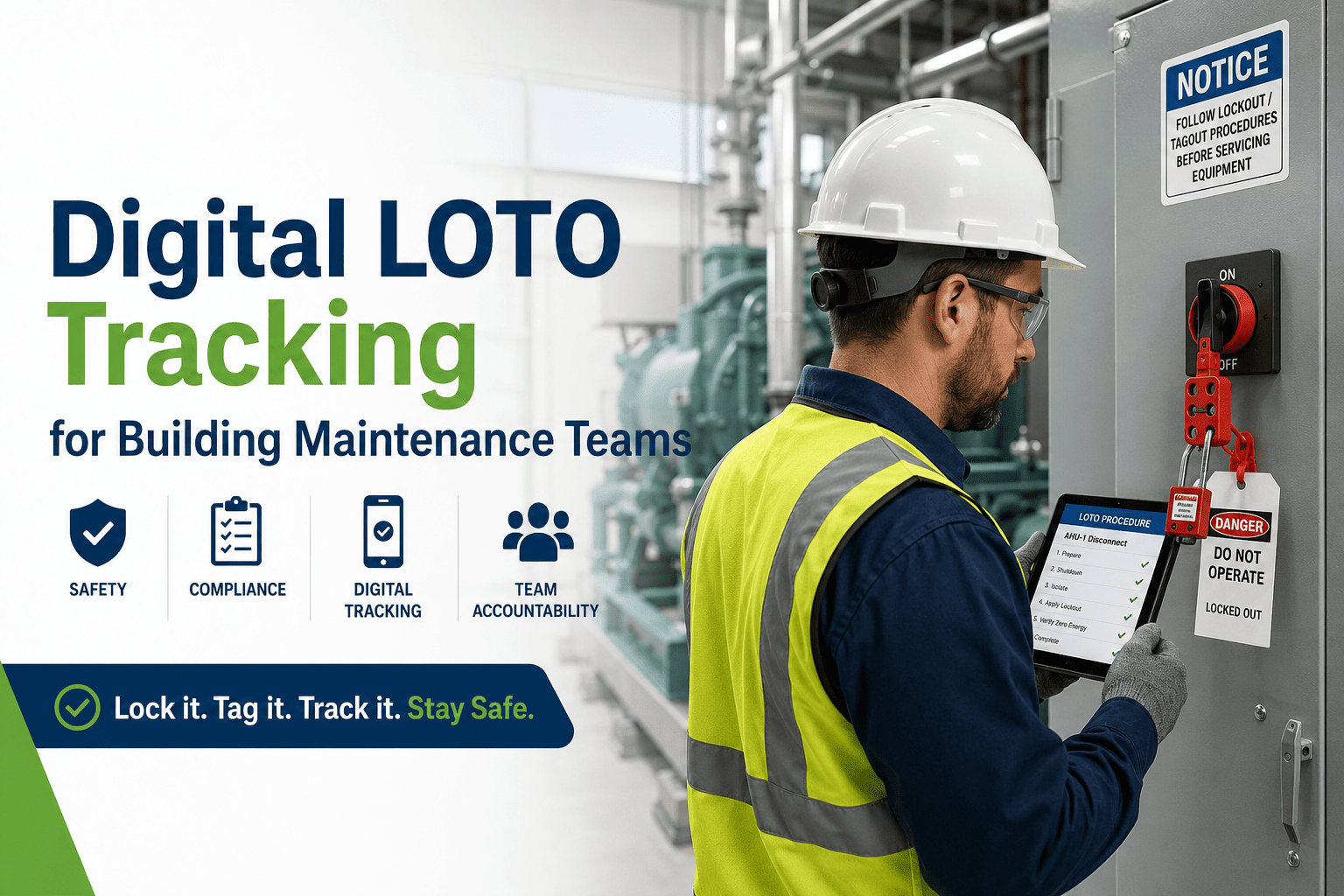
Every year, failure to properly control hazardous energy during equipment maintenance results in approximately 50,000 preventable injuries and 120 fatalities across industrial workplaces. The LOTOTO (Lockout, Tagout, Tryout) procedure represents the modern gold standard in energy isolation safety, going beyond traditional LOTO by adding a critical verification step that confirms machinery is completely de-energized before work begins. With OSHA's Control of Hazardous Energy standard consistently ranking among the top 10 most cited violations, implementing a robust LOTOTO program isn't just about compliance—it is about protecting your most valuable asset: your people.
Managing LOTOTO procedures manually leads to compliance gaps and safety risks.Oxmaint's maintenance management platform digitizes your entire energy control program, ensuring every lockout is documented, verified, and audit-ready.
What is LOTOTO?
LOTOTO stands for Lockout, Tagout, Tryout—an enhanced safety procedure that builds upon traditional LOTO protocols by incorporating a critical verification step. While standard lockout tagout focuses on isolating and securing energy sources, LOTOTO adds the "tryout" phase to physically confirm that machinery cannot be restarted before maintenance begins.
Lockout
Physical devices like padlocks are applied to energy-isolating equipment to hold switches, valves, and circuit breakers in the safe "off" position, preventing accidental re-energization.
Tagout
Warning tags are attached to locked devices displaying the authorized worker's identity, date, reason for lockout, and contact information to communicate safety status.
Tryout
The critical verification step—attempting to start the equipment to confirm complete de-energization before any maintenance work begins. This eliminates assumptions about safety.
Ready to Digitize Your LOTOTO Procedures?
Eliminate paper-based compliance gaps and automate your energy control program with Oxmaint's digital LOTOTO workflows — ensuring every lockout is documented, verified, and audit-ready from any device.
The 8 Steps of LOTOTO Procedure
A comprehensive LOTOTO procedure follows eight sequential steps designed to systematically eliminate hazardous energy risks. Each step builds upon the previous one to create multiple layers of protection for maintenance personnel.
Preparation
Identify all energy sources (electrical, mechanical, hydraulic, pneumatic, thermal, chemical) associated with the equipment. Review machine-specific procedures and gather necessary lockout devices.
Notification
Inform all affected employees that equipment will be shut down and locked out. Communicate expected duration and provide contact information for the authorized worker.
Equipment Shutdown
Follow the manufacturer's recommended shutdown sequence to bring machinery to a complete stop. Ensure all moving parts have ceased operation before proceeding.
Energy Isolation
Physically disconnect all energy sources by opening circuit breakers, closing valves, blocking mechanical motion, and disconnecting power supplies at each isolation point.
Lockout/Tagout Application
Apply individual locks and tags to each energy isolation device. Each authorized worker must apply their own lock—only they hold the key to remove it.
Stored Energy Release
Dissipate or restrain any residual energy. Bleed hydraulic/pneumatic pressure, discharge capacitors, release spring tension, and block elevated components.
Tryout Verification
Attempt to start the equipment using normal controls to verify complete de-energization. The machinery should not respond. This critical step confirms zero-energy state.
Perform Maintenance
With verification complete, authorized workers can safely perform maintenance, repair, or servicing activities on the fully de-energized equipment.
Types of Hazardous Energy
Effective LOTOTO implementation requires identifying and controlling all forms of hazardous energy that could harm workers during maintenance. Understanding each energy type is fundamental to creating comprehensive isolation procedures.
Found in live wires, circuits, capacitors, and control panels. Can cause electrocution, burns, and arc flash injuries if not properly isolated.
Risk: Electrocution, burns, arc flashPresent in rotating equipment, flywheels, gears, belts, and moving components. Can cause crushing, pinching, and laceration injuries.
Risk: Crushing, amputation, lacerationsGenerated by pressurized fluids in hydraulic systems. High-pressure fluid injection can cause severe tissue damage requiring immediate medical attention.
Risk: Injection injuries, crushingStored in compressed air systems and pressurized vessels. Can cause air embolisms, eye damage, and hearing loss from pressure surges.
Risk: Air embolism, impact injuriesHeat stored in equipment, fluids, steam systems, or cryogenic processes. Can cause severe burns or cold-related injuries.
Risk: Burns, thermal shockStored in elevated loads, compressed springs, or tensioned components. Can cause crushing or impact injuries if unexpectedly released.
Risk: Crushing, impact, falling objectsCentralize Your LOTOTO Documentation
Oxmaint stores all energy isolation procedures, training records, and audit trails in one secure platform accessible from any device — so your team always has the right procedure at the right time.
LOTOTO vs Traditional LOTO
While traditional LOTO procedures provide essential protection, LOTOTO adds a critical verification layer that eliminates assumptions about energy isolation effectiveness. This comparison highlights why the tryout step has become the modern industry standard.
| Aspect | Traditional LOTO | LOTOTO (Enhanced) | Impact |
|---|---|---|---|
| Verification Method | Assumed isolation | Physical tryout confirmation | Eliminates assumptions |
| Stored Energy Detection | Visual inspection only | Active testing reveals residual energy | Catches hidden hazards |
| Human Error Protection | Relies on procedure compliance | Built-in fail-safe verification | Additional safety layer |
| Compliance Confidence | Documentation-based | Verified zero-energy state | Audit-ready proof |
| Industry Recognition | Minimum standard | Best practice standard | Modern gold standard |
Common LOTOTO Mistakes to Avoid
Even well-intentioned LOTOTO programs can fail due to common implementation errors. Understanding these pitfalls helps organizations strengthen their energy control procedures and prevent incidents.
The most dangerous oversight. Many facilities stop at lockout and tagout, assuming isolation is complete without physically verifying zero-energy state.
Machinery often has auxiliary power feeds, backup batteries, hydraulic accumulators, or pneumatic reservoirs that can cause unexpected movement.
One-size-fits-all LOTOTO procedures fail to address machine-specific isolation points, energy sources, and verification requirements.
Workers may understand the concept but lack hands-on experience with specific equipment isolation and tryout techniques.
Eliminate procedure gaps with digital work order management that automatically includes machine-specific LOTOTO instructions with every maintenance task.
OSHA Compliance Requirements
OSHA's Control of Hazardous Energy standard (29 CFR 1910.147) establishes mandatory requirements for lockout tagout programs. Understanding these requirements is essential for avoiding citations and protecting workers.
Written Energy Control Procedures
Machine-specific procedures documenting scope, purpose, authorization, rules, and techniques for controlling hazardous energy
Lockout/Tagout Devices
Durable, standardized, substantial, and identifiable devices that indicate who applied them and cannot be removed without keys
Employee Training
Comprehensive training for authorized employees, affected employees, and other workers on procedures and responsibilities
Periodic Inspections
Annual audits of each energy control procedure to verify effectiveness and identify necessary updates
Hardware Requirements
Appropriate locks, tags, hasps, and other isolation devices specific to equipment energy sources
Documentation & Records
Complete records of procedures, training, inspections, and any incidents or near-misses
Digital LOTOTO Management with CMMS
Computerized Maintenance Management Systems transform LOTOTO from a paper-based compliance burden into an integrated, automated safety workflow. Digital solutions eliminate common failure points while creating complete audit trails.
Centralized Procedure Storage
All equipment-specific LOTOTO procedures stored in one accessible location, eliminating outdated paper binders and version confusion
Automatic Work Order Integration
LOTOTO instructions automatically attached to relevant work orders, ensuring technicians always have current procedures
Training & Certification Tracking
Monitor employee certifications, schedule refresher training, and ensure only authorized personnel perform LOTOTO
Real-Time Status Visibility
Live dashboards show which equipment is currently locked out, by whom, and for how long—preventing confusion
Automate Your LOTOTO Compliance
Oxmaint integrates LOTOTO procedures directly into maintenance workflows, ensuring every lockout is documented and verified — with real-time dashboards, automated training alerts, and one-click audit reports built in.
LOTOTO Implementation Roadmap
Successfully implementing or upgrading a LOTOTO program requires systematic planning. This 12-week roadmap provides a proven framework for transitioning to comprehensive energy control procedures.
Assessment & Planning
Procedure Development
Training & Pilot
Full Deployment
Key Performance Indicators
Track these metrics monthly to ensure your LOTOTO program delivers expected safety outcomes and maintains OSHA compliance. Digital CMMS platforms provide real-time dashboards for continuous monitoring.
The Bottom Line
LOTOTO represents the evolution of hazardous energy control from a compliance checkbox to a comprehensive safety system. The tryout verification step eliminates dangerous assumptions, provides documented proof of zero-energy state, and creates defensible audit trails. With OSHA citing lockout tagout violations among its top 10 every year and penalties reaching $16,131 per occurrence, implementing a robust LOTOTO program isn't optional—it's essential. Digital CMMS platforms like Oxmaint transform LOTOTO from administrative burden to automated workflow, ensuring every lockout is documented, verified, and audit-ready.
Frequently Asked Questions
What is the difference between LOTO and LOTOTO?
Traditional LOTO (Lockout/Tagout) focuses on isolating and securing energy sources with locks and warning tags. LOTOTO adds the critical "Tryout" step—physically attempting to start equipment after lockout to verify complete de-energization. This verification eliminates assumptions and confirms zero-energy state before maintenance begins.
Who is considered an authorized employee for LOTOTO?
Authorized employees are workers trained and designated to perform LOTOTO procedures. They understand how to identify energy sources, apply lockout devices, and verify isolation. Only authorized employees should possess keys to their own locks, and each worker performing maintenance must apply their individual lock—no sharing.
How often must LOTOTO procedures be inspected?
OSHA requires annual inspections of each energy control procedure. These audits must verify that procedures match current equipment configurations, all energy sources are correctly identified, and workers follow proper protocols. Documentation of inspections must be maintained for compliance verification.
What are the OSHA penalties for LOTOTO violations?
As of 2024, OSHA penalties for serious LOTO violations can reach $16,131 per occurrence. Willful or repeat violations can exceed $161,323 per violation. Beyond fines, inadequate LOTOTO programs expose workers to life-threatening hazards and create significant liability for employers.
Can a CMMS help with LOTOTO compliance?
Yes. Computerized Maintenance Management Systems like Oxmaint store all LOTOTO procedures, automatically attach them to work orders, track employee training certifications, provide real-time lockout status visibility, and maintain complete audit trails—transforming compliance from paperwork burden to automated workflow.