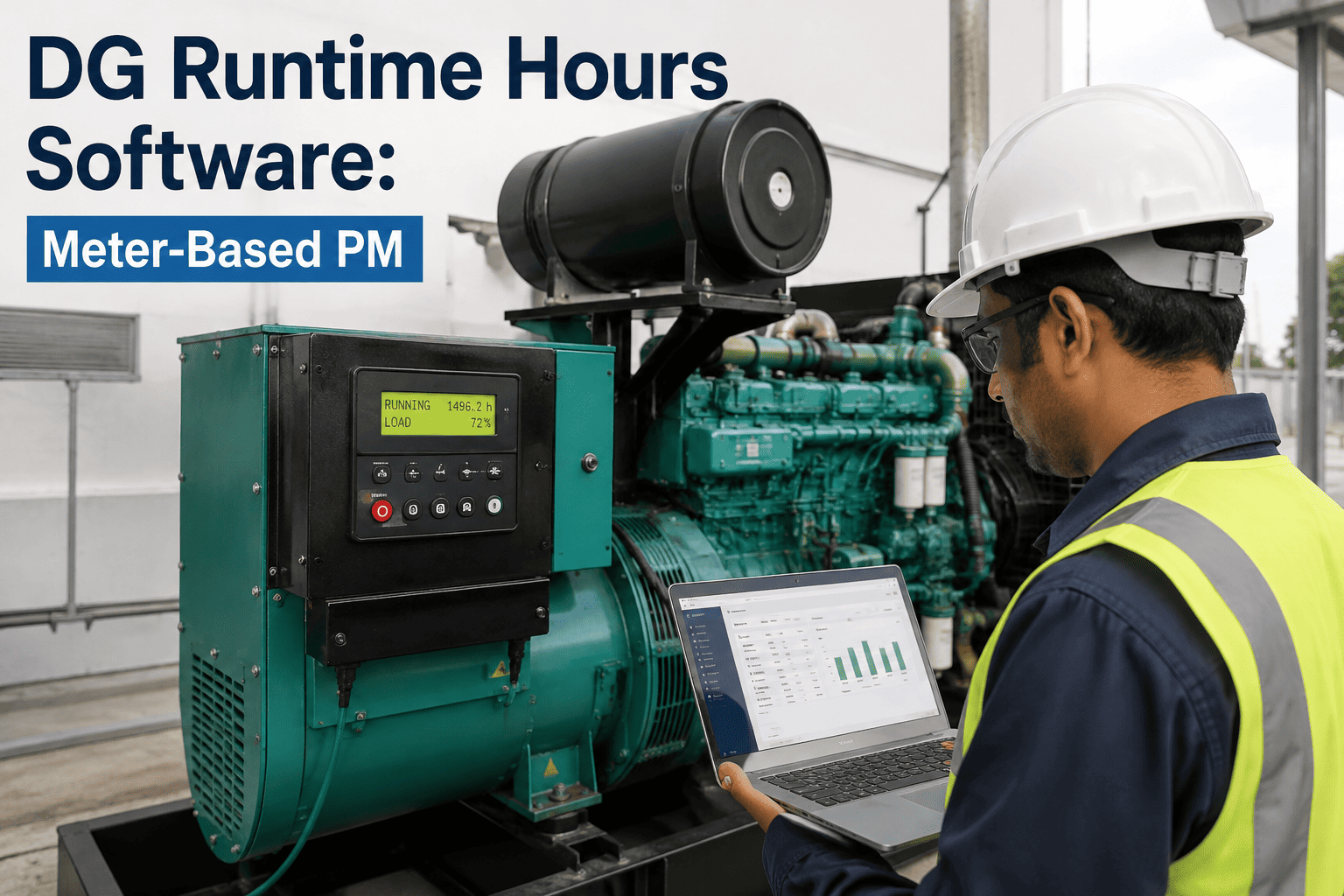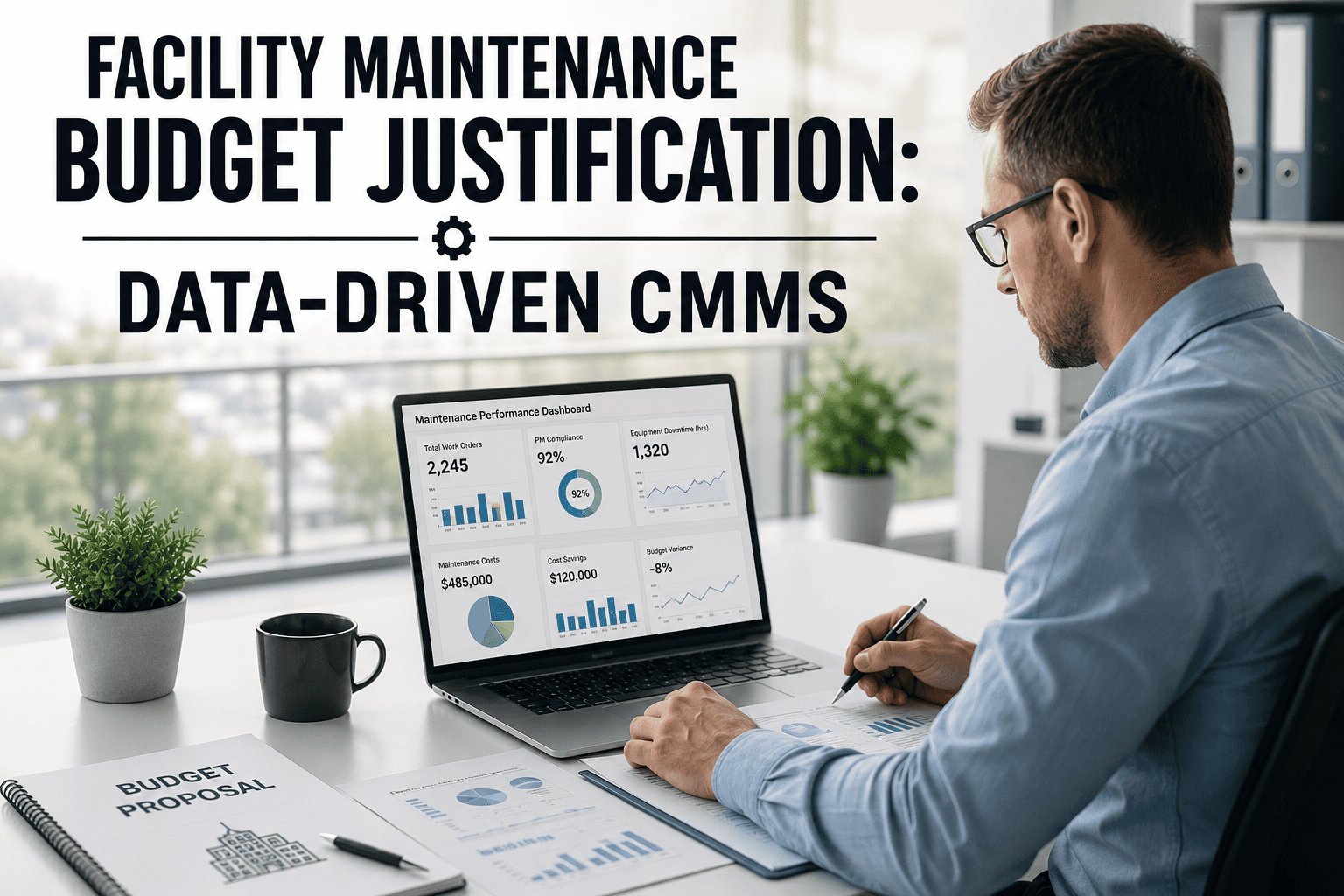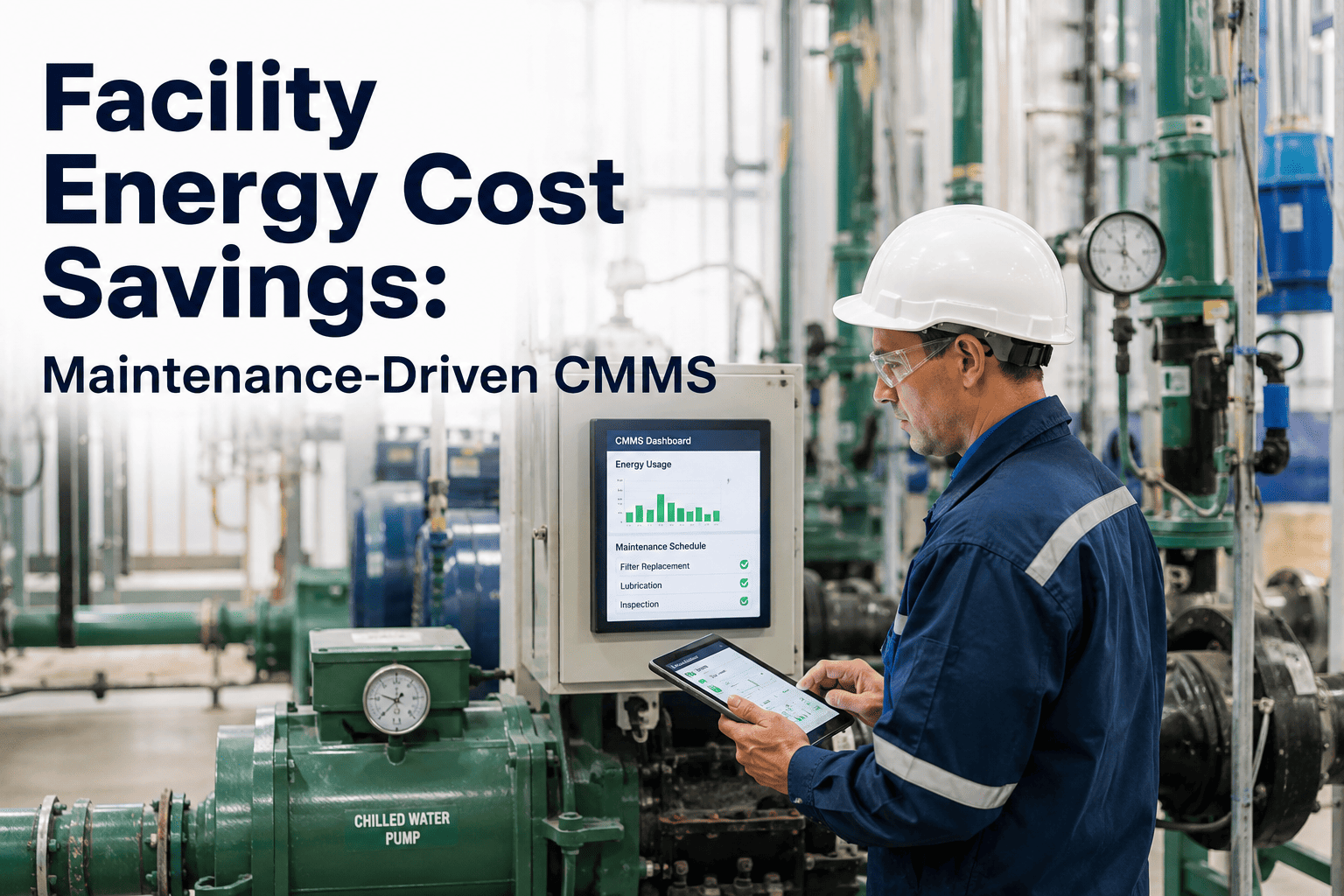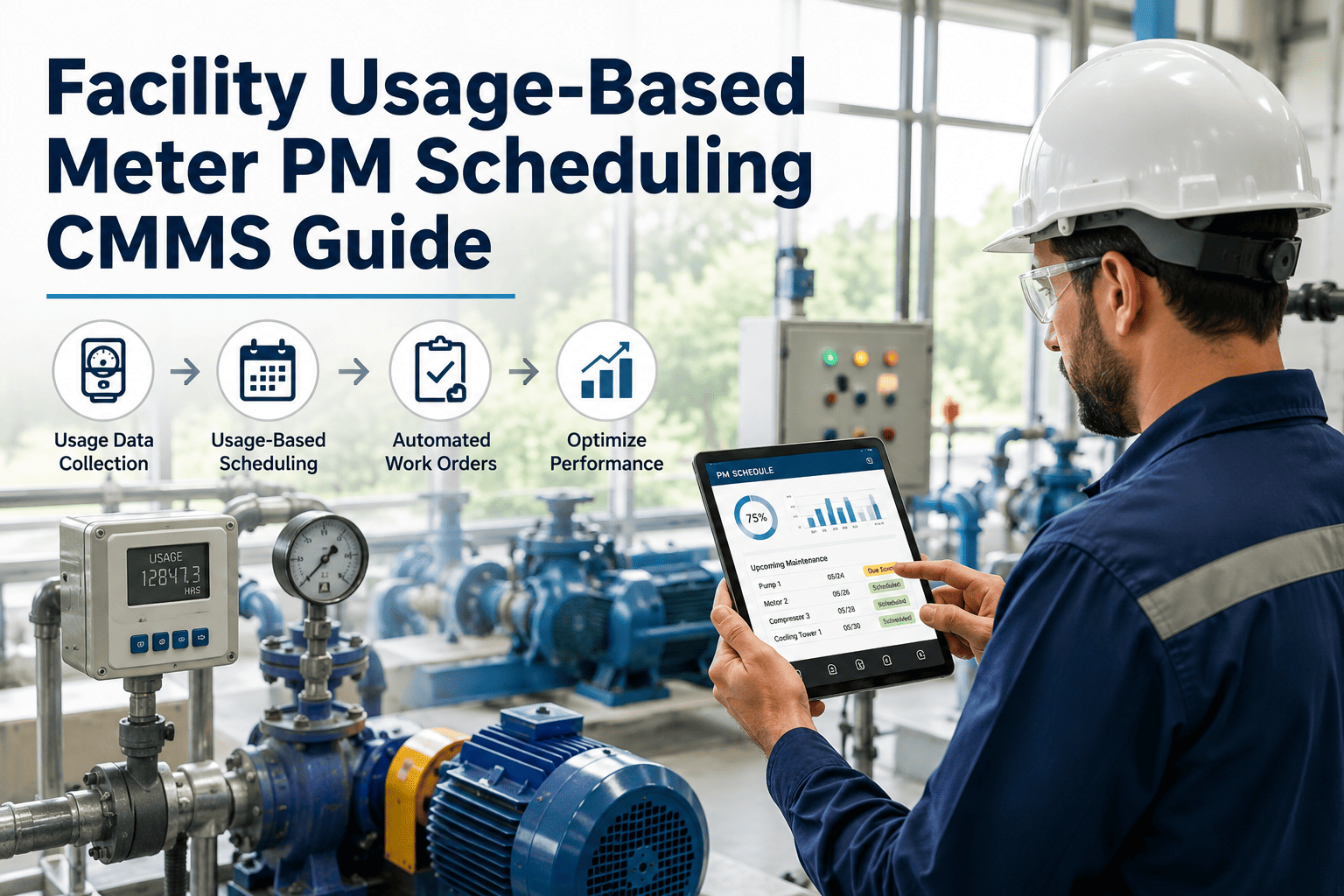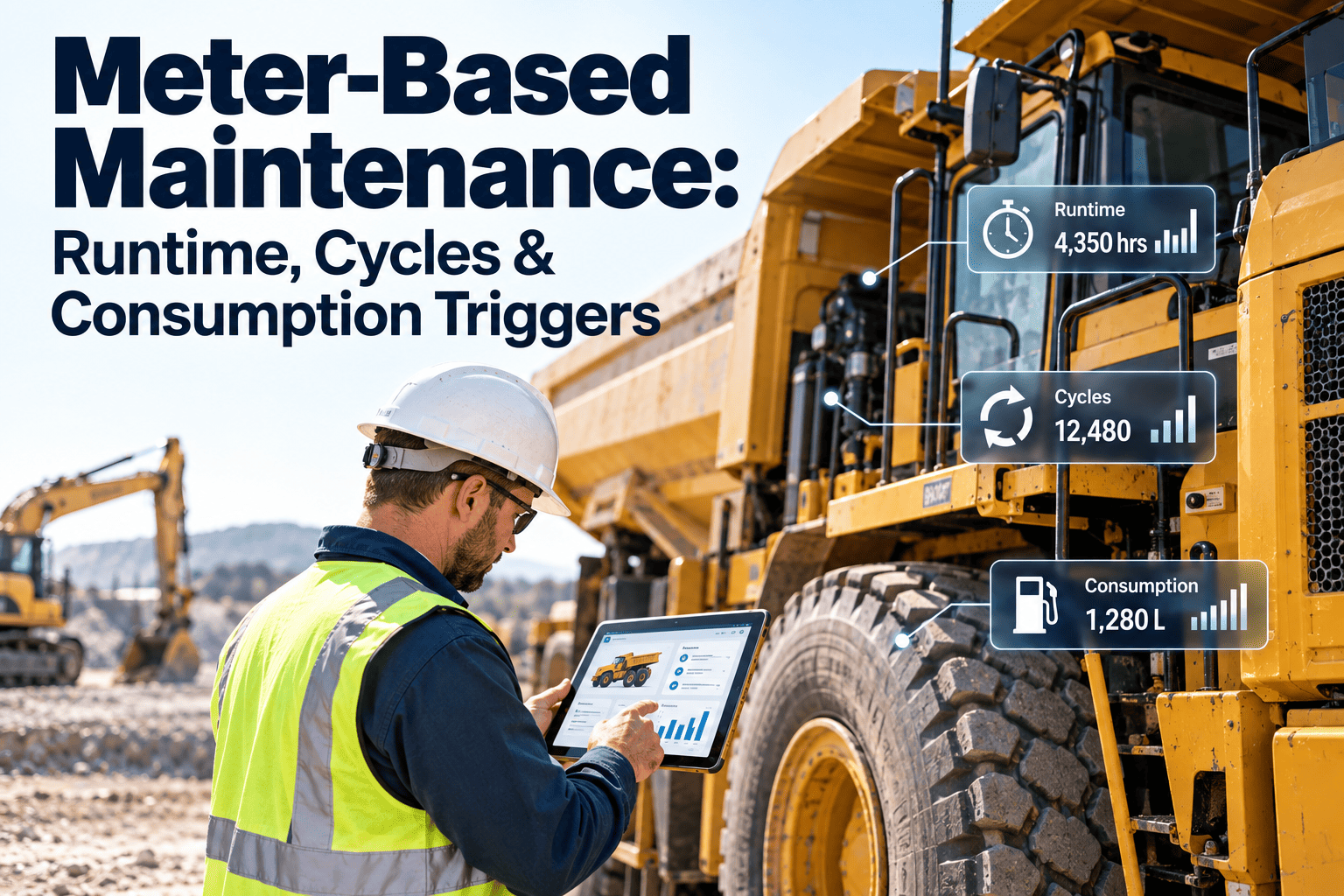
A rooftop unit that runs 14 hours a day and one that runs 4 hours a day both get a filter change every 90 days on most facility calendars. One is overserviced, the other is likely fine, and neither schedule reflects the wear that actually happened. Meter-based maintenance fixes this by triggering work from runtime hours, start cycles, or consumption instead of the date on the wall. This guide explains how facility teams choose meters, set thresholds, and keep the data trustworthy, with a look at how maintenance management software turns readings into work orders.
Meter-Based Maintenance: Runtime, Cycles and Consumption Triggers
Not every commercial asset ages on calendar time. Trigger preventive maintenance only when equipment has actually run, cycled, or consumed.
Why Calendar PM Misfires on Facility Assets
Calendar intervals are easy to schedule and easy to audit. They are also blind to how hard an asset is working.
Calendar-Based PM
- Every asset of a type gets the same interval regardless of load
- Seasonal equipment is serviced while sitting idle
- Heavily used units run past the point where wear demands service
- Labor hours are spent on inspections that find nothing
- Failure history cannot be tied back to usage
Meter-Based PM
- Interval follows the actual duty of each individual asset
- Idle equipment generates no unnecessary work orders
- Busy units are serviced sooner, before wear turns into failure
- Technician time shifts toward tasks that are actually due
- Every failure can be studied against hours, cycles, or volume
Where the gap shows up
The mismatch is largest in buildings with uneven occupancy: hotels with seasonal wings, campuses with term breaks, and offices with hybrid schedules. Equipment in those spaces can log very different usage from one year to the next while the calendar stays the same.
Three Meter Types and the Assets They Fit
The right meter is the one that best tracks the failure mechanism, not the one that is easiest to read.
| Meter Type | What It Measures | Typical Facility Assets | Wear Mechanism It Tracks |
|---|---|---|---|
| Runtime hours | Time the motor or unit is energized | Pumps, fans, air handlers, boilers, generators, compressors | Bearing wear, lubricant breakdown, belt fatigue, filter loading |
| Start or cycle count | Number of starts, strokes, or door and lift operations | Elevators, escalators, automatic doors, motor starters, roll-up doors, hydraulic actuators | Contactor wear, thermal stress, mechanical fatigue from repeated motion |
| Consumption | Volume or energy passed through the asset | Water treatment cartridges, softeners, fuel tanks, gas meters, submeters, refrigerant charge | Media exhaustion, scaling, fouling, depletion |
| Condition reading | Pressure drop, temperature, or vibration crossing a limit | Filters, chillers, motors, cooling towers | Progressive degradation visible before failure |
Choosing between runtime and cycles
A generator that starts twice a month but is exercised for hours each time behaves differently from one that starts daily for short runs. Where starts stress the asset more than hours do, use cycles. Where continuous operation dominates, use hours. Some assets deserve both.
How a Meter Trigger Works, Step by Step
Capture the reading
A technician enters the hour meter on a round, or a building automation system, submeter, or controller feeds the value in automatically.
Compare to the threshold
The system checks the new reading against the interval set for that task, for example every 1,500 runtime hours for a bearing regrease.
Generate the work order
When the threshold is reached, a preventive work order is created with the task list, parts, and assigned team already attached.
Complete and reset
Closing the work order records the reading at service and restarts the counter, so the next interval is measured from real completion.
Review the interval
Findings from each visit show whether the threshold is too tight, too loose, or right. Adjust it using the asset history.
Setting Thresholds That Hold Up
Start from what you already know, then let history correct it.
Manufacturer baseline
Begin with the OEM interval expressed in hours or cycles, since many manuals already publish both.
Environment adjustment
Shorten intervals for dust, heat, humidity, salt air, or poor water quality. Lengthen only with evidence.
Failure history
If failures cluster before the interval ends, tighten it. If inspections keep finding no wear, extend it.
Criticality
Life-safety and revenue-critical assets warrant a safety margin ahead of the theoretical limit.
Use a dual trigger where it matters
Pair the meter with a calendar backstop, such as 1,500 hours or 12 months, whichever comes first. Time-based aging such as lubricant oxidation, seal drying, and corrosion continues even when a unit sits idle, and the backstop catches it.
Meter Data Risks and How to Contain Them
A trigger is only as reliable as the reading behind it. These are the common ways meter programs go wrong.
| Risk | Likelihood | Impact | Control |
|---|---|---|---|
| Missed or late readings | High | PM fires late, wear goes unchecked | Schedule reading rounds as recurring tasks with overdue alerts |
| Typing errors in manual entry | Medium | False triggers or missed triggers | Reject readings lower than the last value or far above expected usage |
| Meter replaced or reset | Medium | Runtime history breaks | Log meter swaps with the old final value and record the offset |
| Wrong meter assigned to task | Medium | Work tracked against the wrong wear driver | Confirm meter type during PM template setup and review annually |
| Sensor drift on automated feeds | Low | Gradual error accumulates | Spot-check against a physical meter each quarter |
Put Your Meters to Work
Set runtime, cycle, and consumption triggers on the assets that matter and stop servicing equipment on guesswork. Start with a handful of pumps or air handlers and expand from there.
Meter-Based PM by Asset Family
HVAC and air handling
Fan runtime hours drive belt, bearing, and filter tasks. Pair filter changes with differential pressure where sensors exist.
Pumps and boilers
Runtime governs seal, bearing, and coupling checks. Burner cycles drive ignition and combustion tasks.
Vertical transport and doors
Trip counts and door cycles are far better wear indicators than months. Service intervals here also usually carry regulatory expectations.
Standby power
Track run hours and starts separately. Load bank tests, fuel quality checks, and battery service follow different drivers.
Water and treatment
Gallons treated determine softener regeneration, cartridge replacement, and membrane cleaning better than the calendar does.
Refrigeration
Compressor hours and defrost cycles show real duty, especially in kitchens and cold storage that vary by season.
KPIs That Prove the Approach Is Working
Judge a meter program by outcomes, not by how many readings were entered.
Read the trends together
If findings per PM fall while failures stay flat, the interval may be safely extended. If findings rise before the threshold arrives, shorten it. Consistent hours-to-failure data makes these calls defensible.
Records, Standards and Audit Value
Usage-linked history is more useful than dates alone when someone asks why an asset failed.
Equipment structure
Standards such as ISO 14224 define how to organize equipment data and failure records so that reliability information is comparable across assets.
Usage at failure
Recording hours, cycles, or volume at each failure lets teams calculate reliability from operating exposure instead of elapsed time.
Inspection evidence
Timestamped completions with the meter value at service show insurers, auditors, and regulators that intervals were honored.
Warranty support
Manufacturers often tie warranty to service at stated hours. A reading logged on each work order documents compliance.
How Oxmaint Supports Meter-Driven Workflows
The software job is to make the reading, the trigger, and the history one connected record.
Rollout Checklist for the First 60 Days
Weeks 1 to 2
- Pick 10 to 20 assets with clear usage variation
- Confirm a working meter or feed on each
- Record baseline readings
Weeks 3 to 5
- Convert calendar PMs to hours or cycles
- Keep a calendar backstop on critical items
- Schedule recurring reading rounds
Weeks 6 to 8
- Review findings from each triggered visit
- Adjust thresholds using observed wear
- Extend to the next asset group
Frequently Asked Questions
What is meter-based maintenance?
Do I need sensors on every asset?
Should I drop calendar PM entirely?
Which assets should I convert first?
How do I see this on my own assets?
Service Equipment When It Has Earned It
Connect readings, thresholds, and work orders in one system, and build a usage-based history you can defend. Create your first meter-triggered PM today.