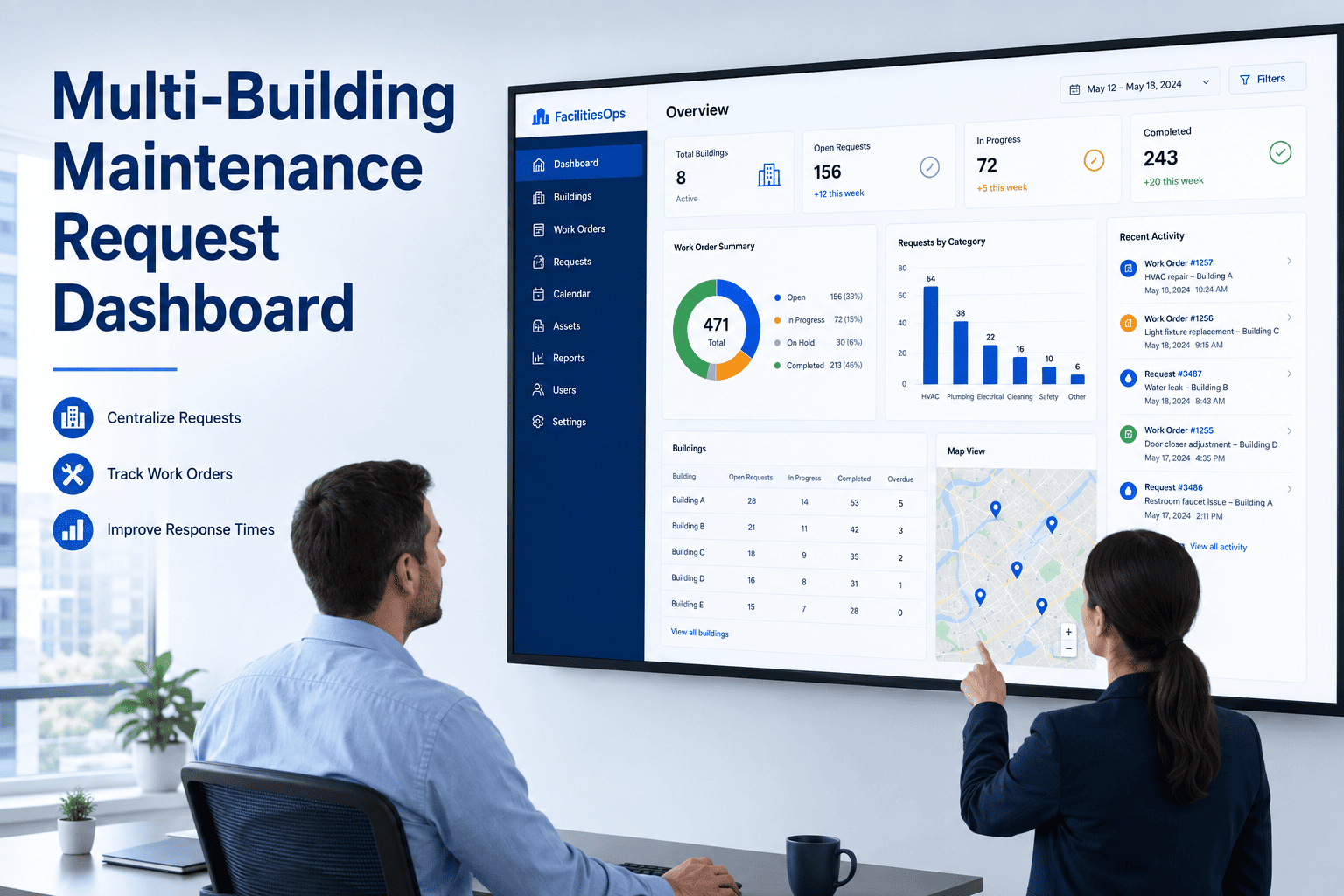
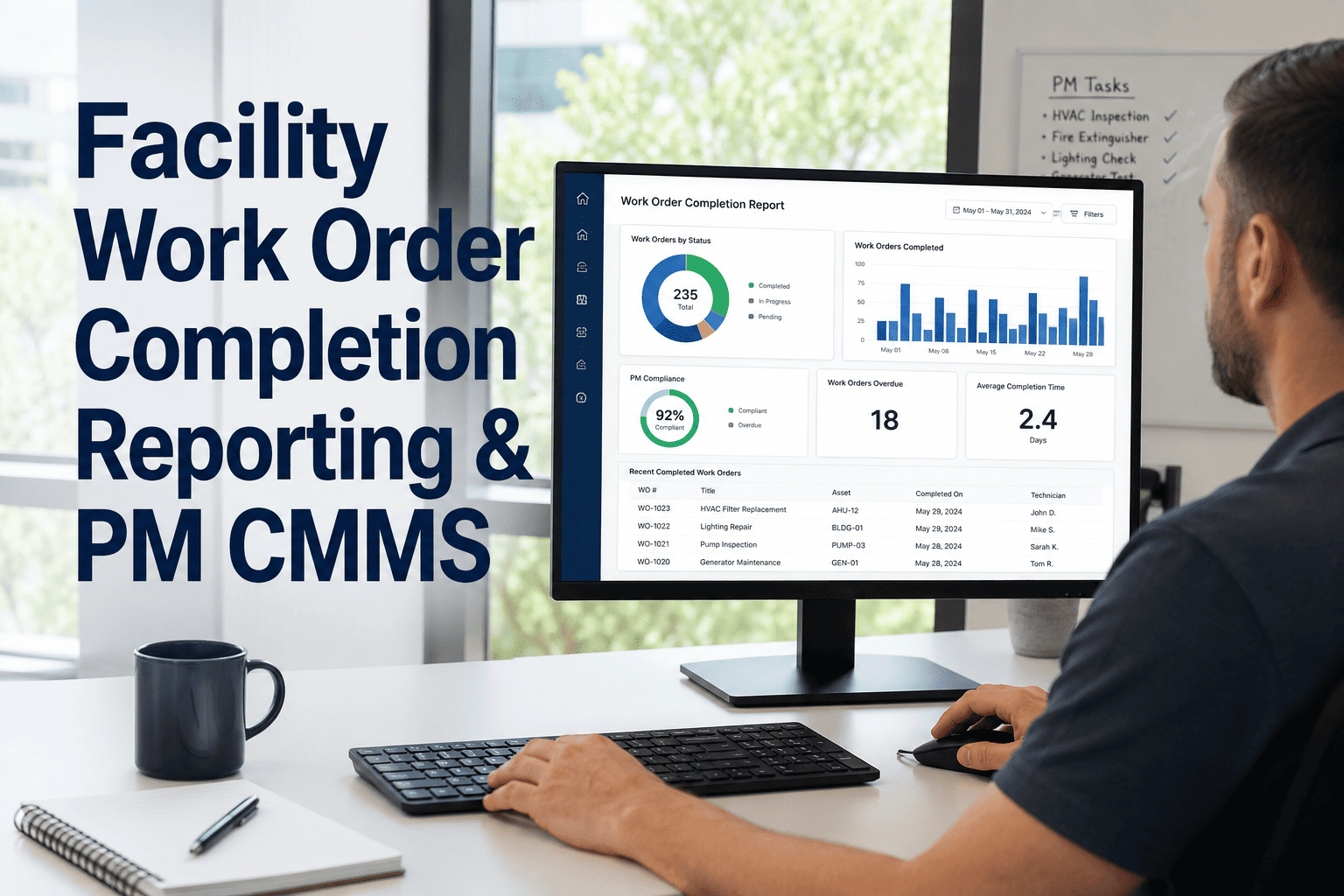
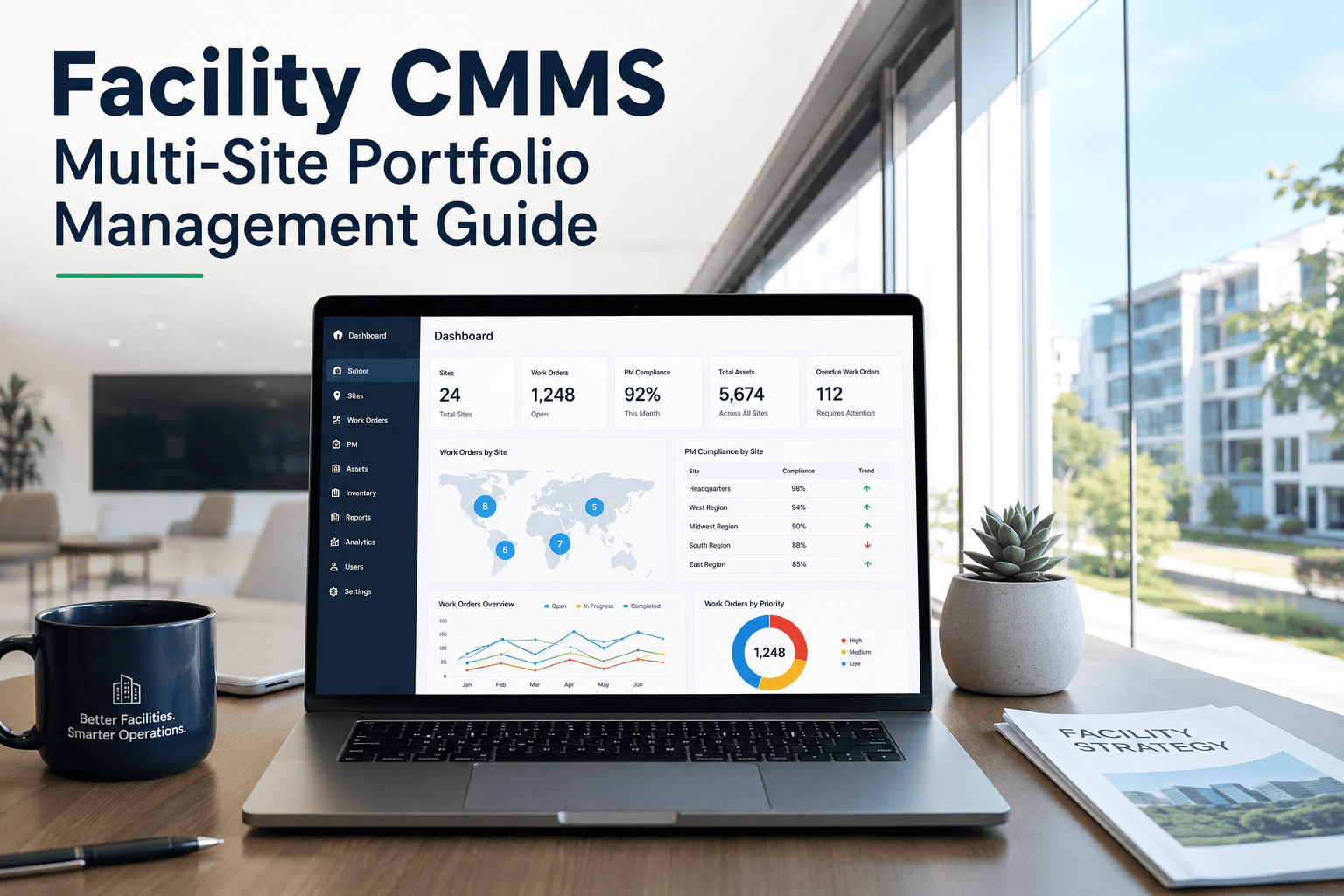
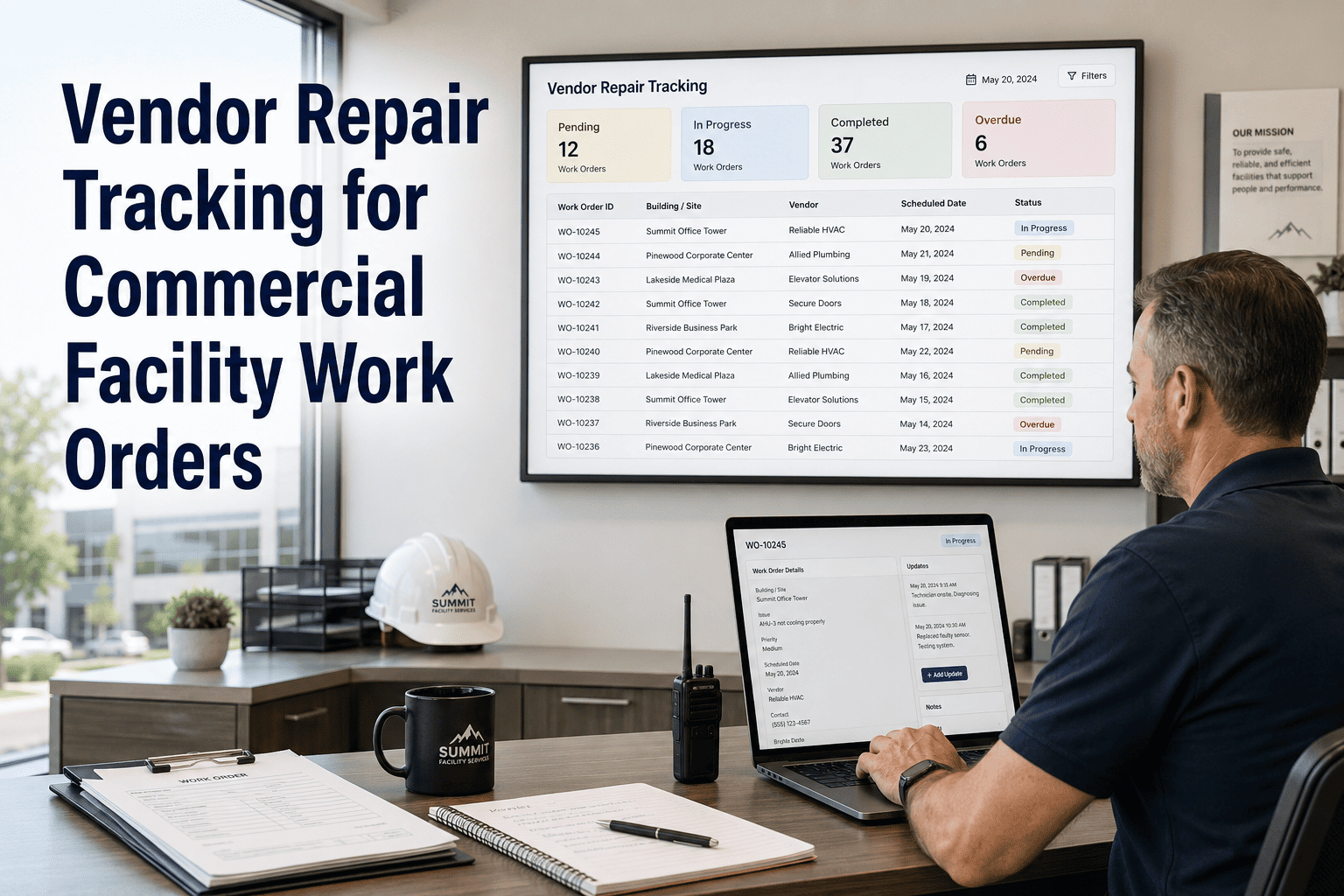
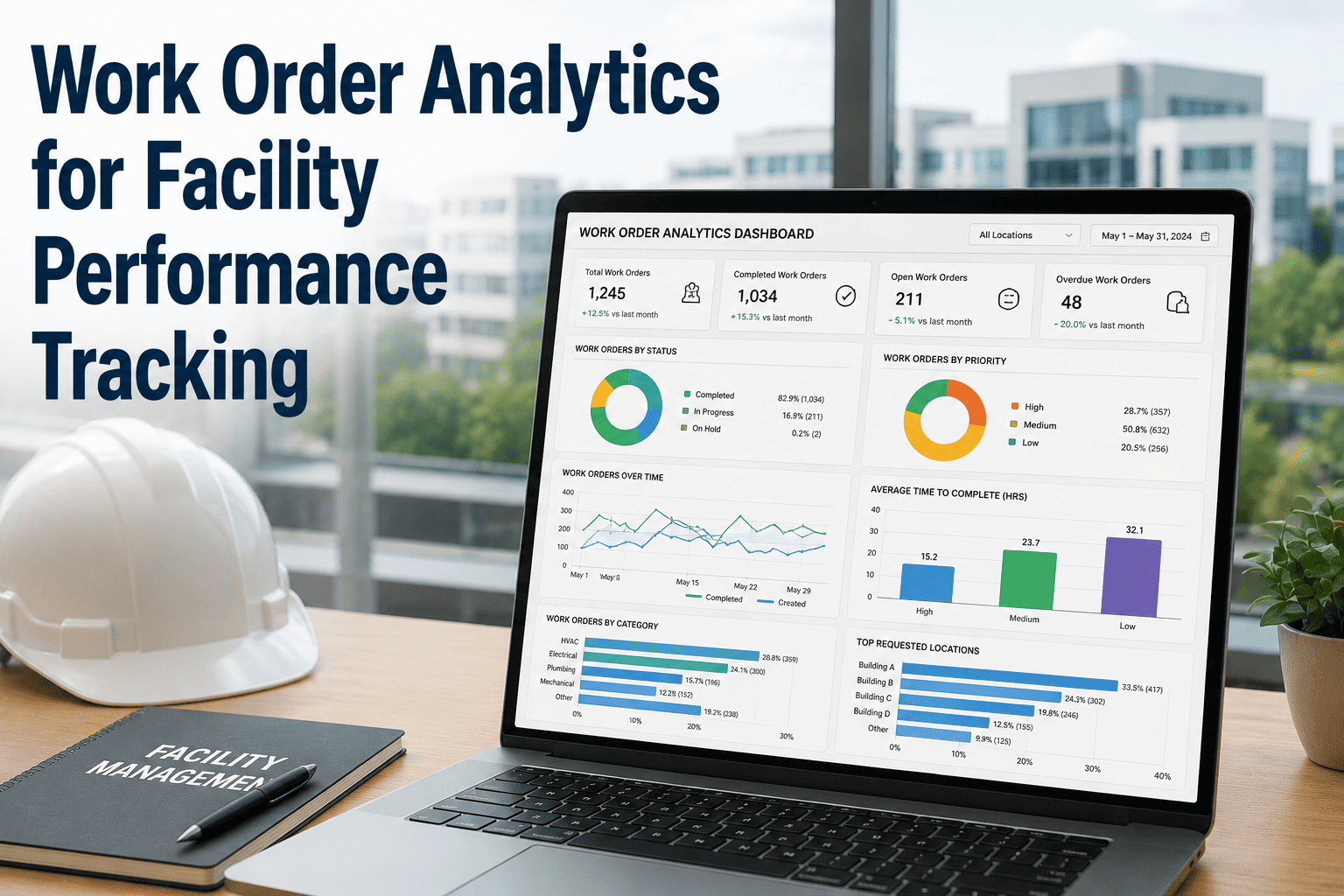
Managing maintenance requests across multiple buildings without a unified dashboard means your team is flying blind — open jobs pile up in different inboxes, response times vary wildly between sites, and the only way to spot a recurring problem is when a tenant complaint reaches the executive floor. OxMaint's Multi-Building Maintenance Dashboard brings every open request, active job, response time, and recurring issue across your entire portfolio into one live view — so facility directors can act on data instead of react to complaints.
Multi-Site CMMS · Portfolio Dashboard · Facility Analytics
One Dashboard. Every Building. All the Data That Matters.
Stop managing facility performance building by building. OxMaint gives multi-site teams a real-time operations view — requests, open jobs, response times, and recurring issues — across all locations from a single screen.
Why It Matters
The Cost of Managing Multi-Site Without a Unified View
5.2x
longer to identify a cross-site recurring issue when each building is managed in isolation
29%
of facility managers report they learn about critical site issues from tenants before their own team
3 hrs
average time to compile a manual portfolio status report vs instant with a live dashboard
Dashboard Capabilities
What the OxMaint Portfolio Dashboard Shows You
| Dashboard View |
What You See |
Decision It Enables |
| Open Request Queue |
All unassigned and in-progress requests across every building, filterable by site, category, or priority |
Identify which buildings need resource reallocation today |
| Response Time by Site |
Average and median response times per building, with SLA compliance rate and breach alerts |
Spot underperforming sites before tenants escalate |
| Recurring Issue Tracker |
Assets or zones generating repeated requests within configurable time windows |
Trigger PM reviews or capital replacement before next failure |
| Technician Utilization |
Open job count, completion rate, and response time per technician across all sites |
Balance workload and identify training or capacity gaps |
| Cost & Parts Usage |
Labor hours, parts consumed, and job cost per building and asset type |
Build defensible capital and maintenance budget proposals |
| Exportable Reports |
Full portfolio performance report exportable by date range, building, or issue type |
Deliver board-ready reporting or regulatory submission in minutes |
See your portfolio performance in one live view — not six separate reports.
Book a demo and walk through the OxMaint multi-building dashboard configured around your actual site count, team structure, and reporting needs.
Expert Review
What Portfolio Facility Leaders Say
"Multi-site visibility is the number one differentiator between reactive and proactive facility organizations. When a director has to contact each site individually to understand portfolio health, they are always behind the problem. Real-time dashboards don't just save time — they fundamentally change how leadership interacts with facility data. Decisions move from reactive and anecdotal to data-driven and defensible, which has direct impact on both operational outcomes and budget conversations."
68%
of multi-site FM teams spend more than 3 hours per week manually compiling cross-site status reports
instant
OxMaint portfolio reports are generated on demand — no assembly, no waiting, no manual data pull
FAQ
Questions About Multi-Building Dashboard Management
Can each building site have its own team and routing rules within OxMaint?
Yes. OxMaint is built for portfolio-level operations where each site operates semi-independently. Each building can have its own intake forms, request categories, technician assignments, SLA targets, and escalation protocols. Site managers see only their own building's queue and work orders, while portfolio directors have access to a consolidated dashboard that shows all sites simultaneously. This structure works equally well for centralized FM teams and distributed property management companies.
Start your multi-site free trial at OxMaint.ai.
How does OxMaint flag recurring issues across multiple buildings?
OxMaint's analytics engine tracks request frequency per asset, per zone, and per building category over configurable time windows. When an asset or location generates more than a threshold number of requests within a set period, a recurring issue flag is raised in the dashboard — visible to both site managers and portfolio directors. This enables preventive maintenance intervention before the next failure occurs, and the data provides defensible justification for capital replacement budget requests when recurring failures clearly outweigh repair economics.
What kind of reporting can we generate from the multi-building dashboard?
OxMaint generates exportable reports by building, date range, issue category, technician, or SLA compliance status. Portfolio directors can pull a full monthly performance summary for all sites in one export — including open rates, response times, resolution rates, cost per work order, and SLA breach incidents. These reports are designed for board-level presentations, property owner monthly reviews, and regulatory audit submissions.
Book a demo to see the reporting suite live.
Is there a limit to how many buildings or sites OxMaint can support?
OxMaint scales from single-building operations to portfolios of hundreds of sites with no architectural ceiling. Large real estate investment trusts, university facilities networks, and national retail chains use OxMaint to manage dozens to hundreds of locations under a unified dashboard. Role-based access ensures each user sees exactly the scope they need — from a single-site technician to a portfolio CFO pulling financial performance data across the entire estate.
Free Trial · Unlimited Buildings · Live from Day One
Every hour your team spends compiling cross-site reports manually is an hour not spent on the work that actually needs doing.
Connect your full building portfolio to OxMaint and get a live, exportable, actionable view of every open request, active job, and recurring issue — across all sites, right now.