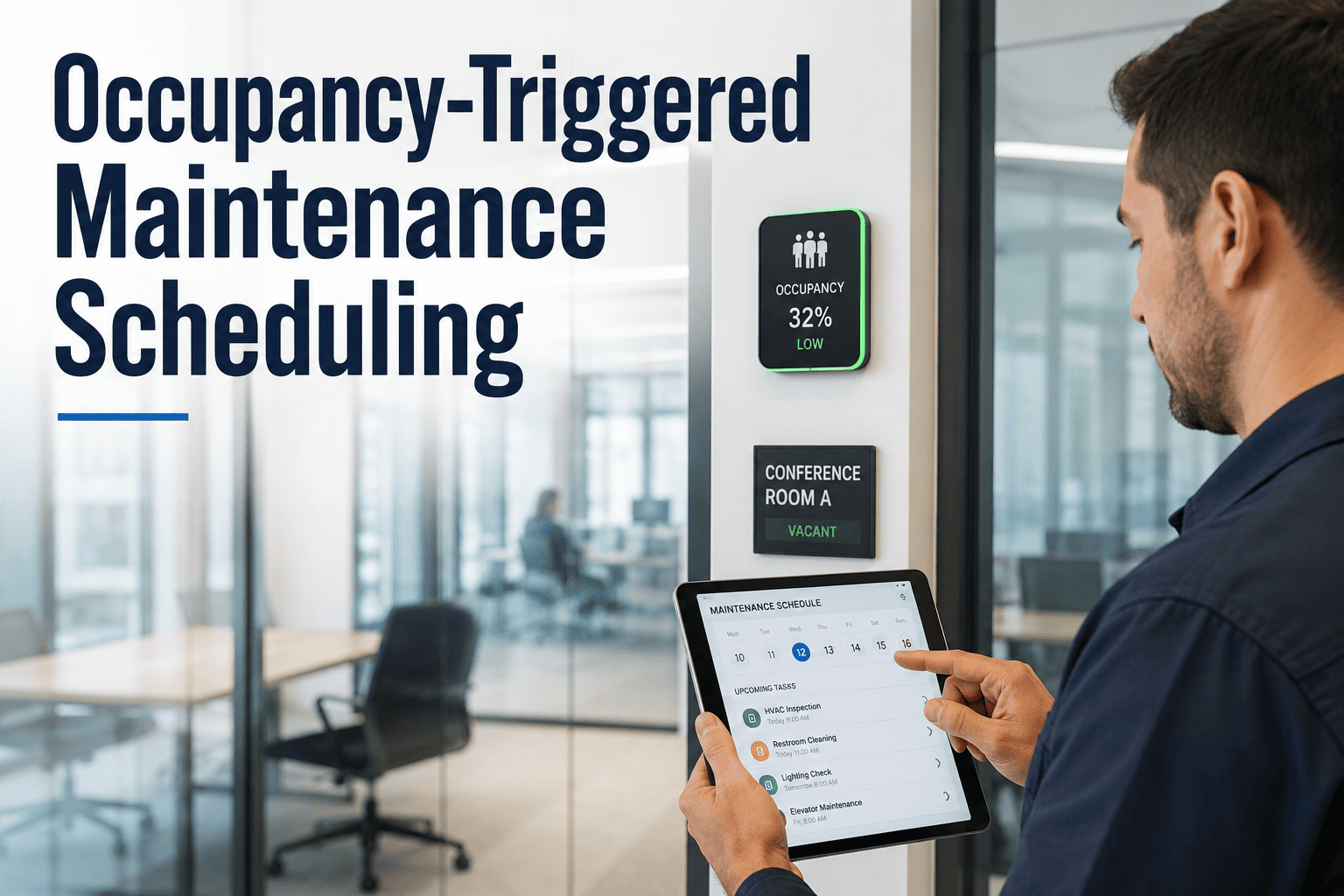
Occupancy-triggered maintenance scheduling aligns cleaning, HVAC servicing, and preventive maintenance tasks with real-time building utilization data instead of fixed calendar intervals. For facility teams managing hybrid workplaces, occupancy-based maintenance scheduling eliminates wasted labor on empty floors while ensuring high-traffic zones receive priority attention. Organizations implementing demand-based maintenance facility strategies typically cut per-seat facility costs by 18–32% without lowering service levels. By connecting occupancy sensor maintenance data directly to work order generation, modern teams shift from reactive guesswork to dynamic, utilization-driven facility scheduling that scales automatically with workplace demand. See how OxMaint makes the switch seamless when you Start Free Trial today.
Why clean and service empty floors when 60% of desks sit vacant?
Calendar-based cleaning and PM waste millions annually on unoccupied space. Occupancy-triggered maintenance matches service delivery to actual utilization — cutting per-seat facility costs 18–32% while improving service where it actually matters.
The hidden cost of calendar-based maintenance in hybrid workplaces
Most facility teams still schedule cleaning routes, HVAC flushes, restroom restocks, and preventive maintenance (PM) on fixed weekly or monthly cycles — designed for 100% daily occupancy. In a hybrid workplace where average attendance hovers near 40–55%, that means servicing empty conference rooms, policing vacant floors, and running air handlers at full load for ghost populations.
A 500K sq ft corporate campus spending $3.8M annually on janitorial and facility services can attribute roughly $1.2M to servicing zones that see fewer than 15 occupants per day.
Running mechanical systems and PM cycles for full occupancy when actual utilization is under 50% wastes an estimated 30–35% in energy andunnecessary equipment runtime.
Technicians spend an average of 10–12 hours per week traversing and servicing low-occupancy zones — capacity that could redirect to high-traffic restrooms, lobbies, and shared amenities.
Occupancy data maintenance flips the model: service is triggered by real foot traffic and space utilization, not a clipboard schedule. The result is lower cost, higher service density where people actually gather, and fewer wasted maintenance hours.
How occupancy-triggered maintenance scheduling works end to end
An occupancy-responsive maintenance system links four layers — sensor infrastructure, threshold logic, CMMS work-order generation, and field execution — into a closed loop that scales service automatically with demand.
Capture occupancy signals
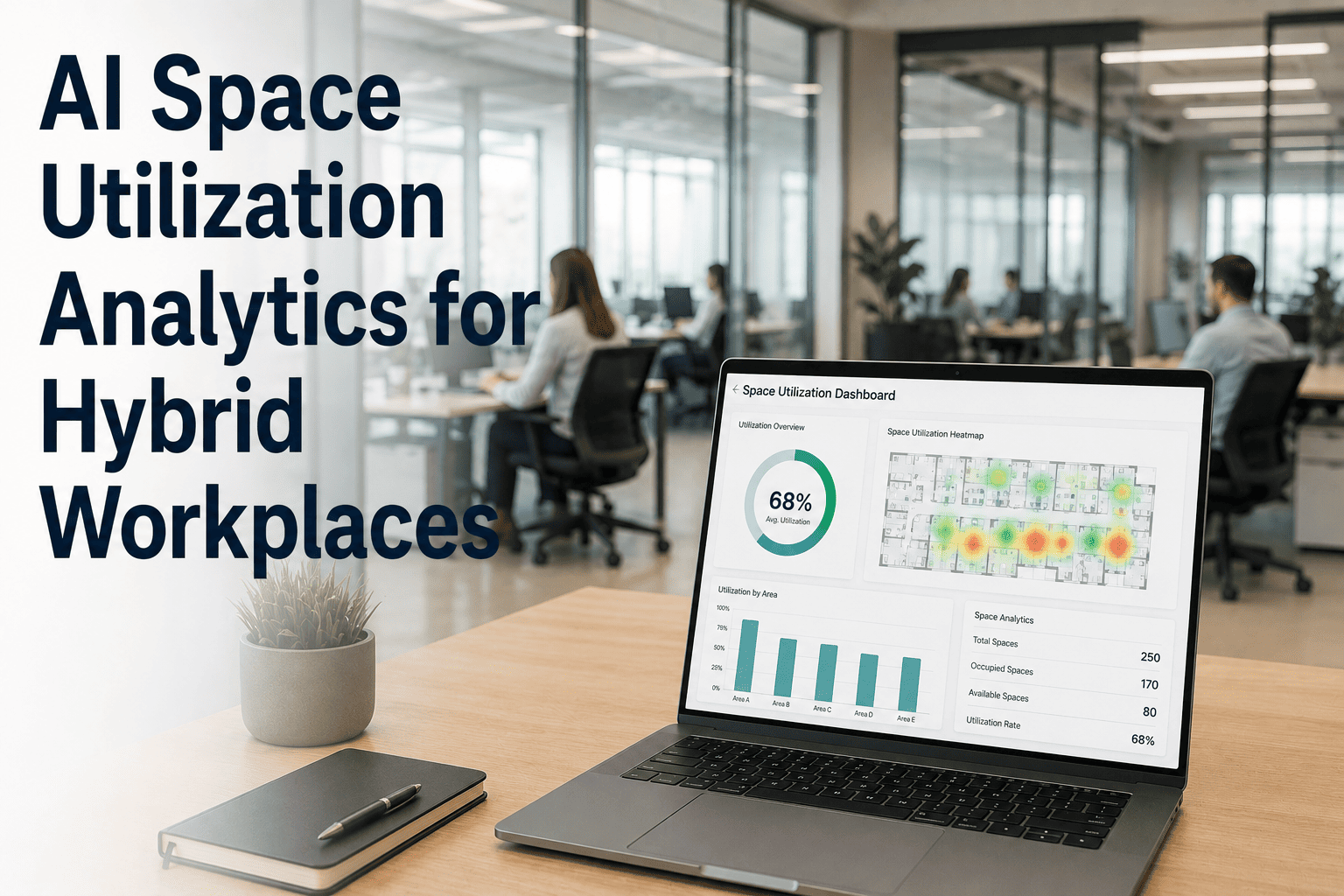
PIR motion sensors, under-desk occupancy sensors, badge-swipe data, Wi-Fi density analytics, and IoT camera counters feed zone-level utilization counts every 5–15 minutes.
Define trigger thresholds
Facility teams set rules — e.g., "Restroom on Floor 3: trigger cleaning at 150 visits or 4 hours, whichever comes first." HVAC filter PM triggers at 600 run-hours adjusted by zone occupancy density.
Auto-generate work orders
When a threshold is met, the CMMS automatically creates a prioritized work order, assigns it to the correct technician based on proximity and skill, and pushes it to the mobile app — no dispatcher required.
Execute, verify, and optimize
Technicians complete tasks, log time and materials, and close work orders on mobile. The system learns from completion patterns and adjusts thresholds seasonally to optimize the utilization-triggered maintenance loop.
Occupancy-based PM and cleaning triggers that actually save money
Designing effective occupancy-driven maintenance rules means choosing the right trigger type for each service category. Below is a reference framework for the most common facility service lines, with threshold examples drawn from real hybrid-workplace deployments.
| Service Category | Trigger Type | Example Threshold | vs. Calendar Default | Estimated Savings |
|---|---|---|---|---|
| Restroom cleaning & restock | Visit count + time cap | 150 visits or 4 hrs | Was: every 2 hrs fixed | 22–28% |
| Open-plan desk vacuuming | Occupancy density | Zone > 60% utilized for 3+ days | Was: nightly regardless | 30–40% |
| HVAC filter replacement | Run-hours × occupancy load | 600 run-hrs at > 40% zone load | Was: quarterly fixed | 15–20% |
| Conference room sanitation | Booking + actual presence | Post-meeting if > 4 occupants confirmed | Was: nightly all rooms | 35–45% |
| Elevator & lobby PM | Traffic volume | 10,000 door cycles | Was: monthly calendar | 12–18% |
| Parking lot lighting service | Dusk sensor + vehicle count | 2,000 vehicle entries | Was: bi-weekly inspection | 10–15% |
A 180-asset corporate facility spending $42K annually on janitorial and restroom supplies implemented occupancy-triggered cleaning and recovered $11,800 in the first year — a 28% reduction — while complaint tickets dropped 40% because high-traffic restrooms received attention sooner, not on a fixed rotation.
What is the ROI of occupancy-driven facility scheduling?
The financial case for occupancy-based facility services rests on three levers: labor reallocation, consumables reduction, and energy/equipment-life optimization. Most mid-to-large facilities achieve full payback within 8–14 months of deploying sensor-linked CMMS triggers.
Redirecting 12 technician-hrs/week from low-occupancy zones to priority tasks at a $52/hr burdened rate across a 500K sq ft portfolio.
Cutting over-servicing of vacant restrooms, meeting rooms, and break areas reduces paper goods, cleaners, and PPE spend by 20–30%.
Condition-based HVAC PM tied to actual occupancy load extends filter and belt life 15–20% and reduces after-hours runtime energy waste.
Including sensor procurement, CMMS integration, threshold calibration, and technician training for a typical 250K–500K sq ft facility.
How OxMaint powers occupancy-responsive maintenance
OxMaint is an AI-powered CMMS and EAM platform that connects directly to your occupancy sensor and BMS/IoT infrastructure to auto-generate, prioritize, and dispatch work orders based on real space utilization — turning raw occupancy data into maintenance action with zero manual dispatch.
Sensor-linked trigger engine
Ingest occupancy counts, door cycles, and run-hours via REST API or MQTT. Configure threshold rules per zone, asset, or service line — OxMaint auto-generates work orders the moment a trigger fires, eliminating manual scheduling.
Dynamic PM schedule adjustment
Occupancy-based PM automatically extends or compresses maintenance intervals based on actual asset utilization. Low-traffic zones stretch PM cycles safely; high-demand zones trigger service sooner — all within ISO 55000 compliance parameters.
Mobile execution & verification
Technicians receive occupancy-triggered work orders on mobile with zone maps, service history, and checklists. GPS-stamped completion with photo verification ensures service was delivered — closing the accountability loop for demand-based facility maintenance.
Utilization analytics & threshold tuning
OxMaint's analytics dashboard correlates occupancy patterns with maintenance cost, complaint volume, and asset performance — recommending threshold adjustments seasonally so your occupancy maintenance scheduling gets smarter over time.
See occupancy-triggered maintenance on your assets
Book a 30-minute demo and we'll map your facility's sensor data to OxMaint work-order triggers — live, on your floor plan.
Occupancy-triggered maintenance scheduling FAQs
What is occupancy-triggered maintenance scheduling?
Occupancy-triggered maintenance scheduling is a facility management strategy where cleaning, PM, and service tasks are initiated based on real-time space utilization data — such as sensor visit counts, occupancy density, or equipment run-hours — rather than fixed calendar intervals. This ensures maintenance resources are deployed where people actually are, reducing wasted service on vacant zones by 30–40%.
How do occupancy sensors connect to a CMMS for maintenance triggers?
Occupancy sensors connect to a CMMS like OxMaint via REST API, MQTT, or webhook integrations that stream zone-level utilization counts. When a defined threshold is reached (e.g., 150 restroom visits), the CMMS automatically generates and dispatches a prioritized work order to the nearest qualified technician. You can Book a Demo to see the integration architecture in detail.
How much can we save with occupancy-based maintenance scheduling?
Most mid-to-large facilities (250K–500K sq ft) reduce per-seat facility costs by 18–32% within the first year. Savings come from three sources: labor reallocation (redirecting 10–12 hrs/week from vacant zones), consumables reduction (20–30% less over-servicing), and energy/equipment-life optimization (15–20% fewer unnecessary PM cycles). Average payback including sensor costs is 8–14 months.
Does occupancy-triggered cleaning lower service quality?
No — it improves service quality where it matters most. Occupancy-triggered cleaning ensures high-traffic restrooms, lobbies, and break rooms receive attention based on actual usage, often sooner than a fixed schedule would allow. Low-traffic zones receive less frequent service, but because they have fewer occupants, complaint rates typically drop 35–40% as service density aligns with actual demand.
Can OxMaint integrate with our existing occupancy sensors and BMS?
Yes. OxMaint supports standard integration protocols including REST API, MQTT, webhooks, and BACnet — connecting to PIR sensors, badge access systems, Wi-Fi analytics platforms, and BMS/IoT infrastructure. Threshold rules are configured per zone or asset, and the system auto-generates work orders without manual dispatch. Start your Start Free Trial to test with your data.
Stop servicing empty floors. Start matching maintenance to real demand.
Join facility teams using OxMaint to cut per-seat costs 18–32% with occupancy-triggered work orders, dynamic PM, and utilization analytics — all in one AI-powered CMMS.
Free 14-day trial · No credit card