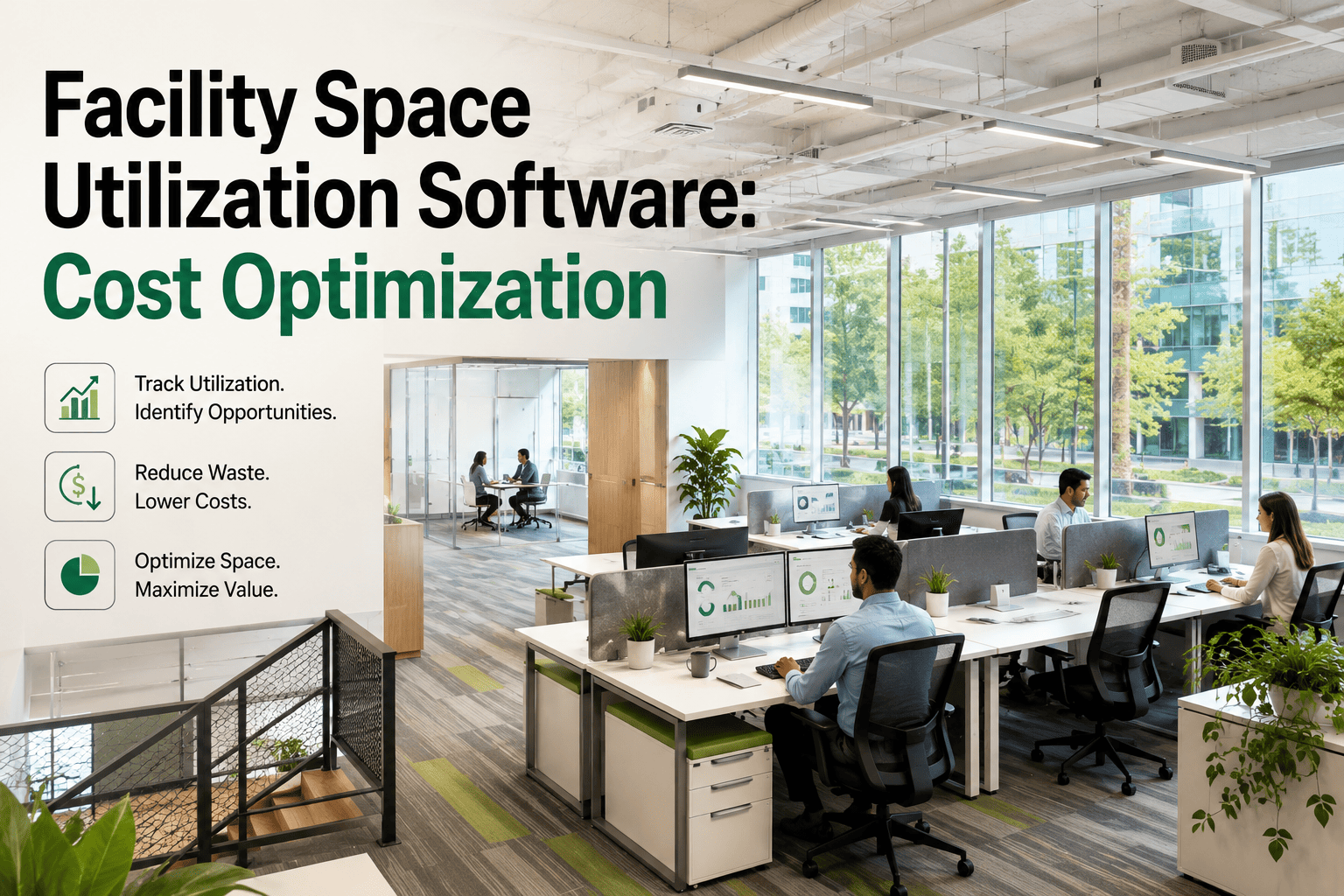
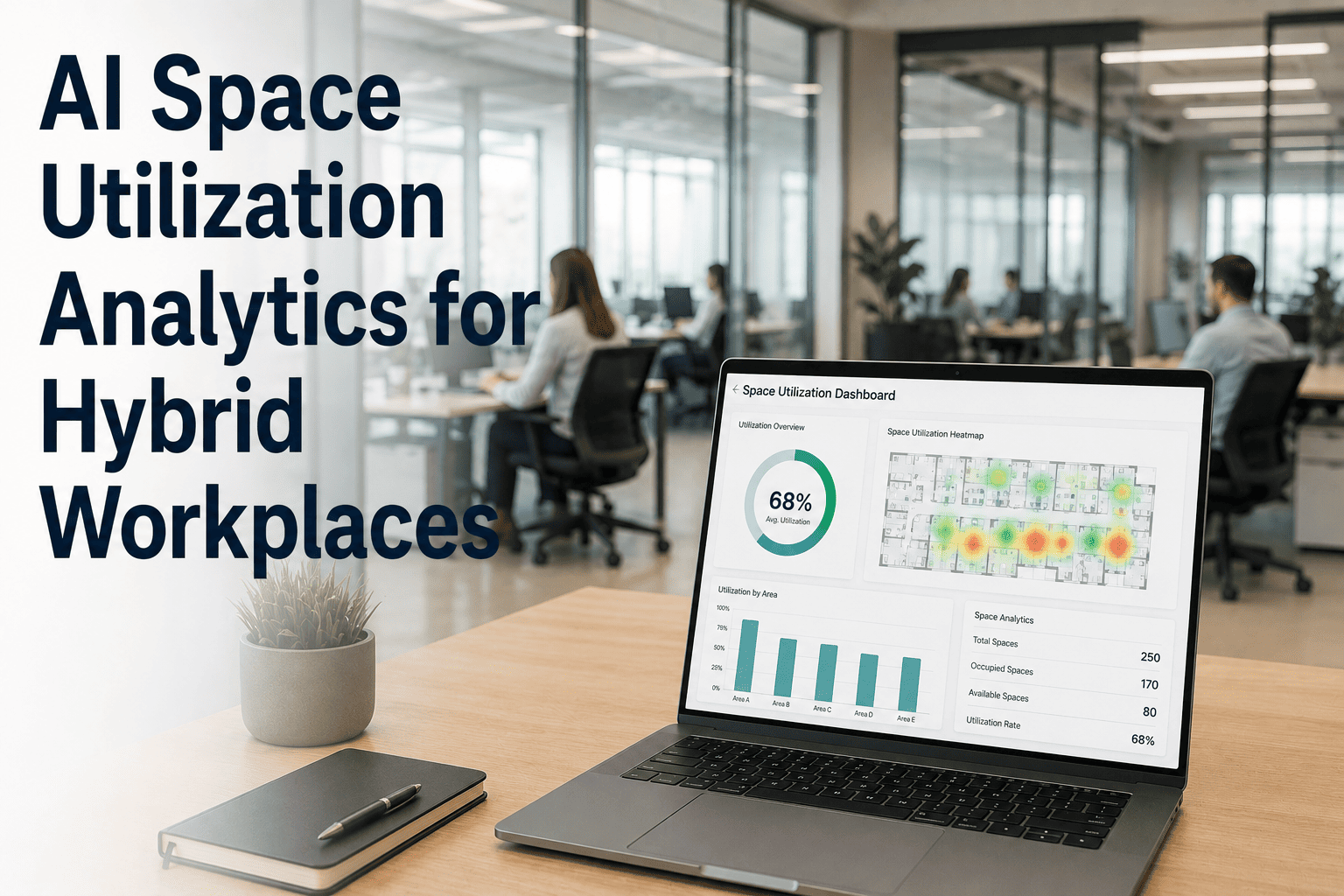
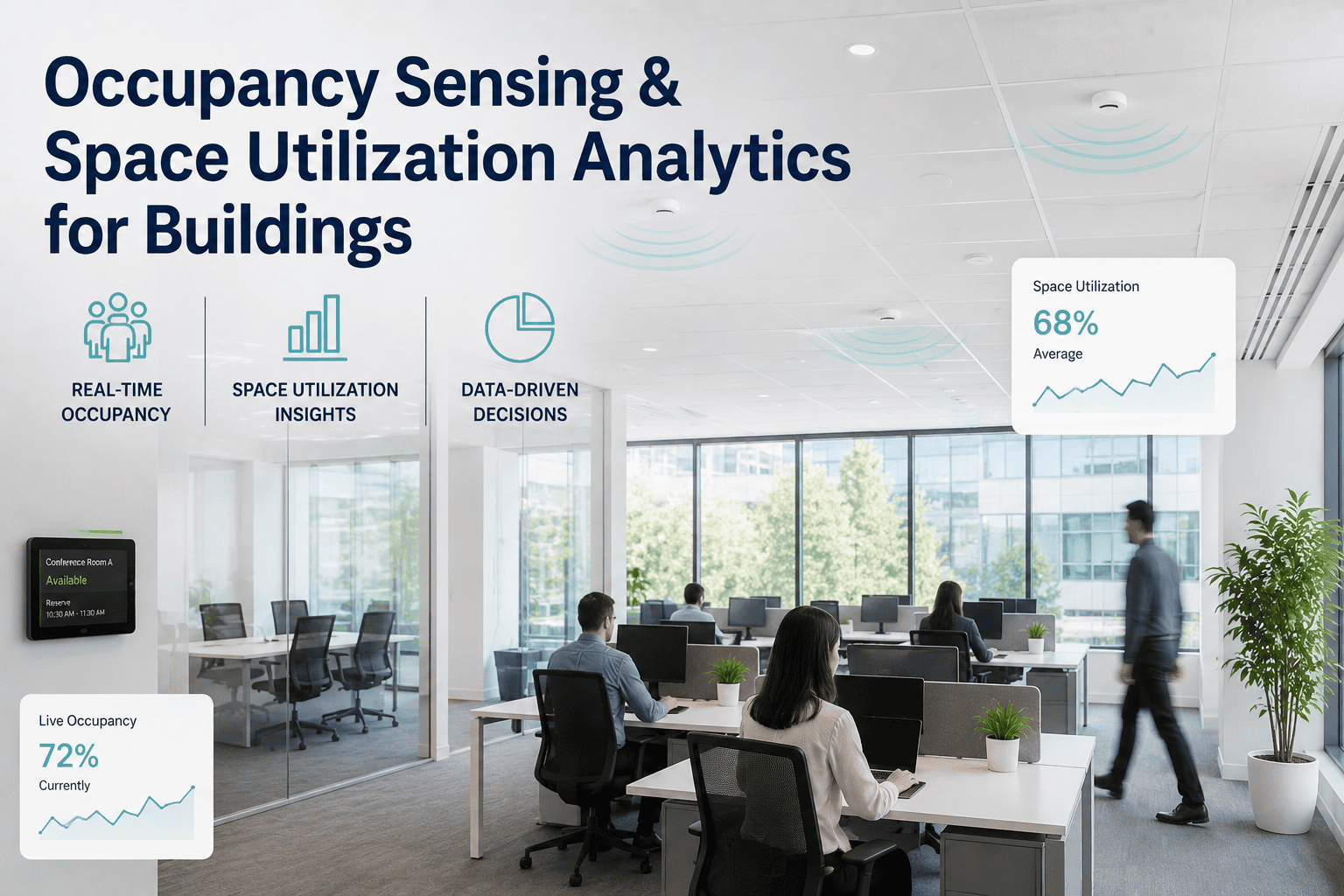
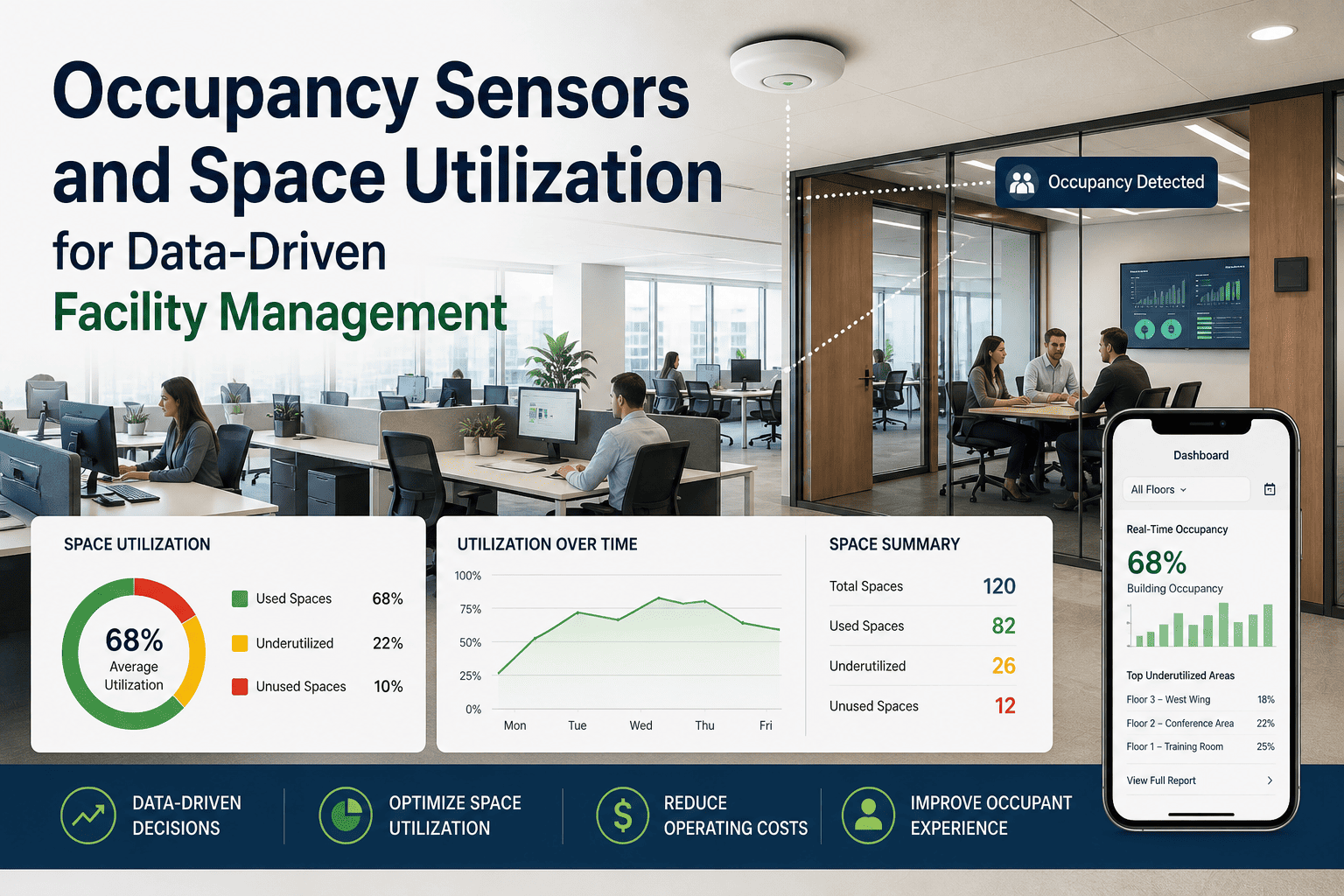
Hybrid work has not reduced facility costs by default. FM teams managing portfolios designed for 100% occupancy pay full operating costs for spaces averaging 40% to 55% utilisation on any given day. The gap between facility cost and productive use is now a boardroom-level problem. Occupancy data and CMMS-linked analytics close that gap. Book a demo to see how Oxmaint tracks space utilisation and PM schedules across your hybrid portfolio.
Article
Hybrid Workplace Facility Management: Optimizing Space for Flexible Work Models
Space and Workplace Management · P1 · 9 min read
42%
average peak occupancy in hybrid-model commercial offices globally in 2024, down from 85% pre-pandemic baseline
$14K
average annual cost per underutilised desk in a Grade A commercial office including rent, services, and FM cost
31%
average real estate cost reduction achieved by FM teams using occupancy data to right-size and reallocate space
2.4x
higher employee satisfaction scores in facilities that have adapted their space model to actual hybrid work patterns
Hybrid Space Management and PM Scheduling in One Platform
Oxmaint gives FM teams occupancy-linked asset records, PM schedules that flex with actual usage, and portfolio-level space reporting for right-sizing decisions. No spreadsheets. No manual consolidation. Book a demo to see the hybrid workspace management module.
What Is Hybrid Workplace Facility Management?
Hybrid workplace FM is the practice of managing physical space, assets, and services for a workforce that splits time between the office and remote locations on a variable and often unpredictable schedule. Unlike traditional office FM where headcount and occupancy are stable, hybrid FM requires dynamic space allocation, usage-triggered PM scheduling, and data-driven right-sizing decisions based on actual occupancy patterns rather than lease headcount assumptions.
The FM challenge in a hybrid environment is not simply having fewer people in the office. It is managing a facility whose demand fluctuates between 20% and 80% of capacity across the same week, where the cost base remains fixed but the utilisation pattern has fundamentally changed. FM teams that continue operating hybrid offices on pre-pandemic planning assumptions are systematically overspending on space, services, and maintenance that the actual occupancy level does not justify.
The Four Dimensions of Hybrid FM
Dimension 1
Space Utilisation Tracking
Occupancy sensors, badge access data, desk booking logs, and meeting room analytics provide the actual utilisation picture. FM teams need this data linked to asset records and PM schedules so that maintenance effort matches actual usage, not assumed headcount. Spaces used 20% of the time should not receive the same cleaning, HVAC runtime, and inspection frequency as spaces used 80% of the time.
Dimension 2
Hot-Desking and Flexible Zone Management
Hot-desking requires FM to manage desk inventory, sanitisation schedules, equipment condition per desk, and booking system integration. A floor with 60 desks serving 100 users on a 3:2 hybrid model has different PM requirements than a fixed-assigned floor. Desk allocation, fault reporting per desk, and cleaning frequency must be managed as individual asset records, not floor-level assumptions.
Dimension 3
Right-Sizing and CapEx Planning
Occupancy data that consistently shows 35% utilisation across a floor is the business case for lease surrender, subletting, or space repurposing. FM teams that can produce a 12-month occupancy trend report linked to operating cost per square metre are the ones making the CapEx and lease decisions. Without this data, right-sizing decisions are made on intuition, not evidence.
Dimension 4
Service Delivery in Variable Occupancy
Cleaning contracts, HVAC scheduling, catering, and security coverage all need to flex with actual occupancy. FM teams paying for fixed-level services against variable occupancy are overspending. Usage-linked service scheduling, based on actual booking data and sensor-confirmed occupancy, reduces service delivery cost by 18% to 28% without reducing quality in occupied zones.
Common Hybrid FM Pain Points
Fixed PM Schedules on Variable Occupancy
40% of PM tasks executed on unused space
Calendar-based PM schedules do not distinguish between a zone used 5 days per week and one used 1 day per week. FM teams run full inspection cycles on spaces that have had no occupancy, wasting technician time and budget that could be redeployed to higher-utilisation zones.
No Occupancy Data Linked to Asset Records
68% of FM teams have no CMMS-linked occupancy data
Occupancy sensor data sitting in a separate platform cannot drive maintenance scheduling. When the CMMS does not see occupancy data, it cannot adjust PM frequency, cleaning triggers, or HVAC runtime schedules. The data gap produces overmaintained empty space and undermaintained high-use zones simultaneously.
Hot-Desk Asset Tracking Gaps
Average 22% of hot desks have unreported faults at any time
Hot-desking removes the fixed-user relationship that traditionally surfaced desk faults. When no one owns a desk, no one reports faults until they affect multiple users. FM teams without individual asset records per desk and booking-linked inspection triggers have no visibility into hot-desk condition.
Right-Sizing Decisions Without Data
3.7x higher cost of reactive right-sizing vs planned
Lease decisions made without 12-month occupancy trend data produce suboptimal outcomes: spaces surrendered too early before hybrid patterns stabilise, or held too long after data clearly supports reduction. FM teams that can produce an occupancy trend report have a defensible CapEx case. Those that cannot make decisions on gut feel.
Service Level Misalignment
Average 24% overspend on FM services vs actual occupancy
Cleaning contracts, HVAC programmes, and security rosters negotiated pre-hybrid do not reflect current occupancy patterns. FM teams continuing to pay for pre-pandemic service levels against 42% average occupancy are delivering a 24% structural overspend that occupancy-linked service scheduling eliminates.
Meeting Room and Collaboration Space Waste
Meeting rooms are empty 56% of booked time on average
Meeting rooms show as booked but are frequently empty due to no-show bookings, last-minute cancellations, or smaller-than-booked group sizes. FM teams maintaining full AV, lighting, and HVAC in booked-but-empty rooms are the largest single source of avoidable hybrid FM cost.
How Oxmaint Supports Hybrid Workplace FM
OCC
Occupancy-Linked Asset Records
Every space zone in Oxmaint carries its occupancy data feed, asset inventory, and PM schedule. Occupancy-triggered work orders adjust cleaning frequency, HVAC runtime, and inspection cycles to actual usage, not calendar assumptions. Empty zones receive reduced service levels automatically.
DSK
Hot-Desk and Flex Zone Asset Management
Each hot desk is registered as an individual asset in Oxmaint with its own condition record, fault history, and inspection schedule. Booking system integration links desk usage to maintenance triggers. Unreported faults are surfaced through scheduled inspection rather than waiting for user reports.
REP
Utilisation Reporting for Right-Sizing
Oxmaint produces 12-month occupancy trend reports by zone, floor, and property with FM cost per square metre overlay. FM and real estate teams have the data needed to make defensible right-sizing, subletting, and lease renewal decisions based on actual usage evidence rather than assumptions.
CAP
CapEx Forecasting for Space Transitions
Right-sizing a hybrid office requires CapEx for fit-out changes, furniture reconfiguration, AV upgrades, and technology infrastructure. Oxmaint's rolling CapEx forecasting models the cost of space transitions across a 3 to 5 year horizon, giving ownership groups a realistic investment picture before decisions are made.
Hybrid FM: Before vs After Oxmaint Integration
ROI: What Occupancy-Linked FM Delivers
31%
Real estate cost reduction
FM teams using occupancy data to right-size and reallocate hybrid space portfolios
24%
FM service cost reduction
Occupancy-linked service scheduling vs fixed pre-hybrid service contracts
2.4x
Higher satisfaction scores
Facilities adapted to actual hybrid work patterns vs fixed pre-pandemic space models
40%
PM budget redeployment
Reduction in PM effort on low-occupancy zones reallocated to high-use areas needing more maintenance
Continue Reading: Space and Workplace Management
Tenant Experience in Commercial Facilities: Service Portals and Real-Time CommunicationService portals, real-time updates, and transparent SLA reporting that drive tenant retention and occupant satisfaction scores.
Read More
Space Planning and Office Layout Optimization Using Facility DataUtilisation heat maps, scenario modelling, and data-driven right-sizing for maximum office space efficiency.
Read More
Workplace Experience Technology: Smart Desks, Wellness Sensors and Comfort ControlsDesk booking, wellness sensors, air quality monitoring, and personalized environmental controls for modern workplaces.
Read More
Multi-Tenant Building Management: Coordinating Services Across Diverse OccupantsShared services, cost allocation, tenant portals, and SLA management for commercial multi-occupant property operations.
Read More
Frequently Asked Questions
QHow does Oxmaint integrate with occupancy sensors and desk booking systems?
Oxmaint integrates with occupancy sensor platforms and desk booking systems via API to feed real-time utilisation data into asset records. Threshold-based triggers automatically adjust PM schedules, cleaning frequencies, and HVAC runtime to actual occupancy rather than calendar schedules.
Book a demo to see the integration configured for your building management system.
QWhat occupancy data does an FM team need to make a right-sizing decision?
A minimum of 6 to 12 months of daily peak occupancy by zone, with FM cost per square metre overlay and lease cost attribution. This data produces the utilisation versus cost case for right-sizing, subletting, or repurposing decisions that ownership groups and finance teams can act on.
Start free trial to begin capturing occupancy data linked to FM cost records today.
QHow should FM teams adjust PM schedules for hybrid office environments?
PM frequency should be tiered by occupancy: high-use zones (above 70% average occupancy) maintain standard intervals; medium zones (40% to 70%) reduce to 70% of standard frequency; low-use zones (below 40%) reduce to minimum safe intervals. Oxmaint applies these tiers automatically based on live occupancy data per zone.
Book a demo to see occupancy-tiered PM scheduling in action.
QWhat is the typical FM cost saving from right-sizing a hybrid office portfolio?
FM teams using occupancy data to right-size achieve an average 31% reduction in real estate and FM cost combined. Service scheduling alignment alone typically reduces FM service spend by 18% to 28%. The payback period on occupancy analytics investment is typically under 6 months in a mid-size commercial portfolio.
Sign up free or
book a demo to model the saving for your portfolio.
Hybrid Space Management, PM Scheduling, and Right-Sizing Data in One Platform.
Oxmaint connects occupancy data, asset records, PM schedules, and CapEx forecasting across your entire hybrid portfolio. FM teams go live in under 14 days. No implementation project. No spreadsheets. Every space record updated in real time.