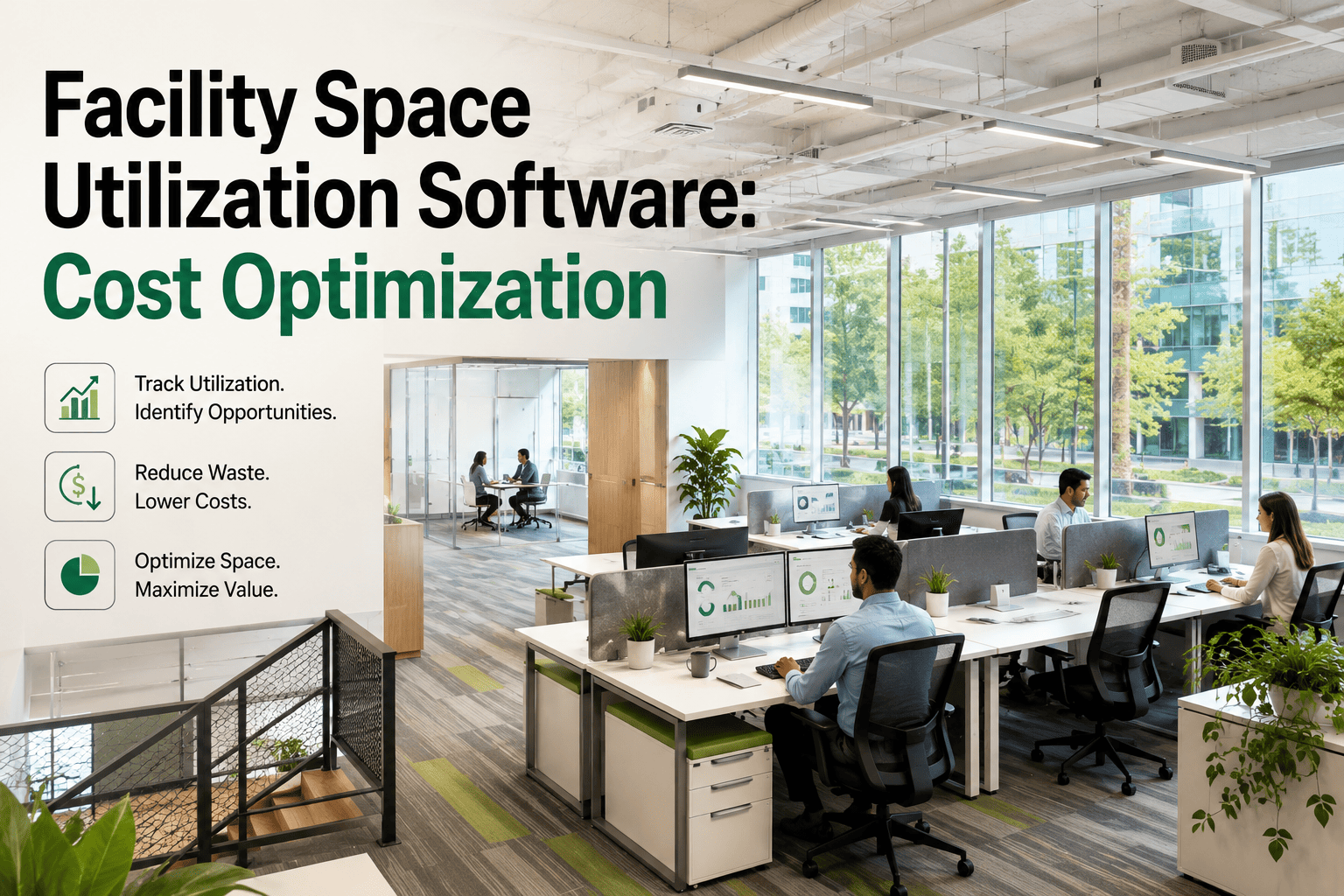
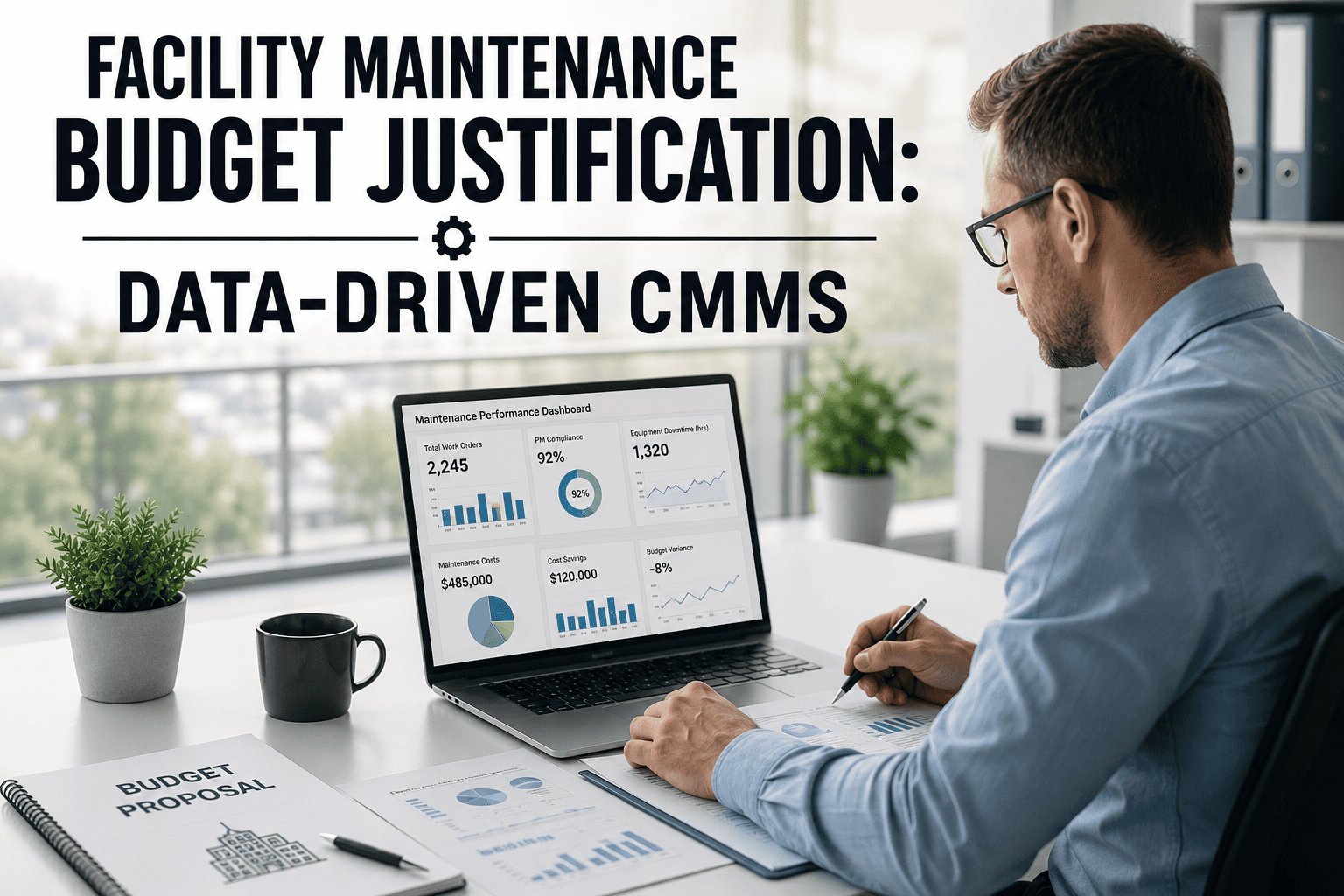
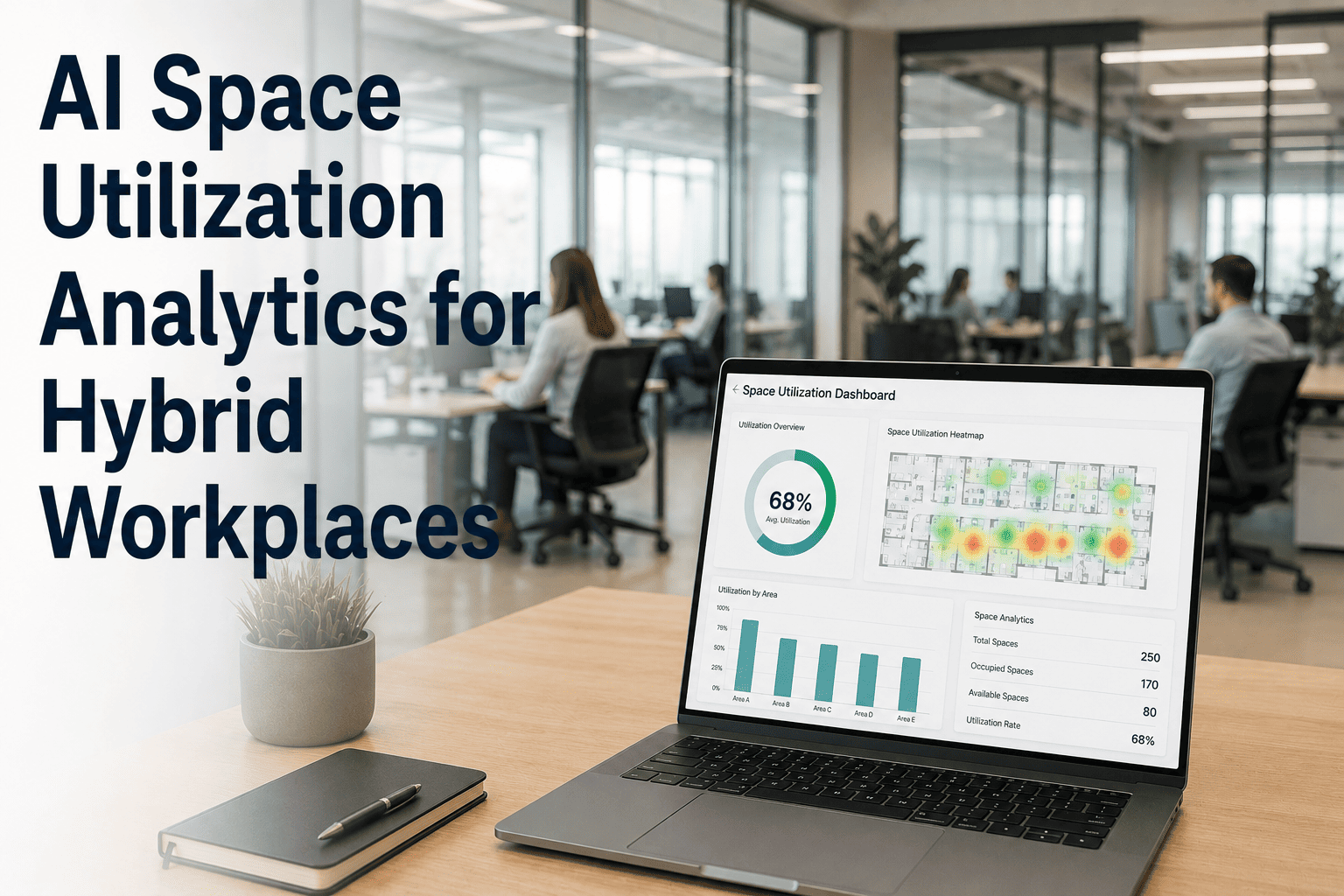
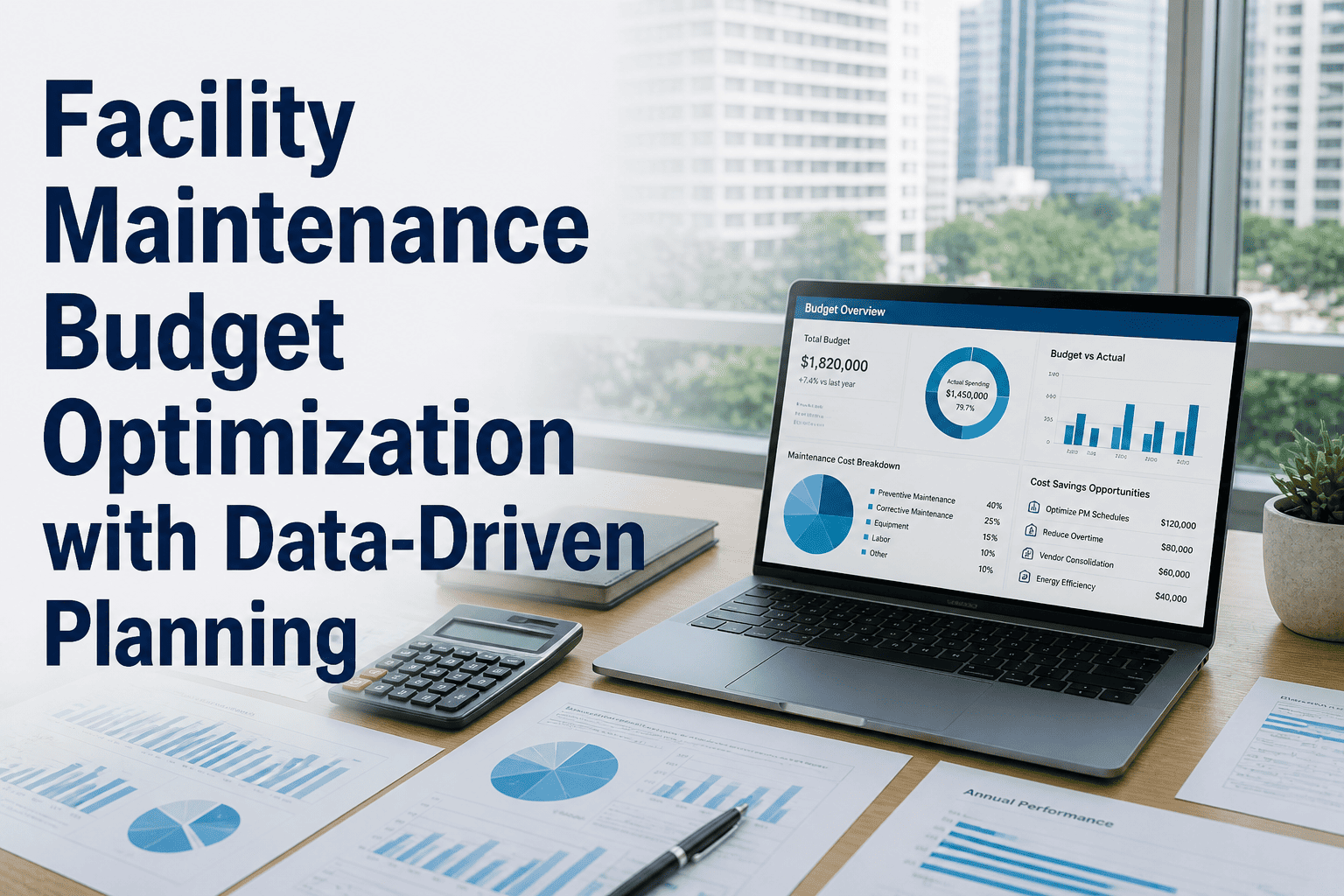
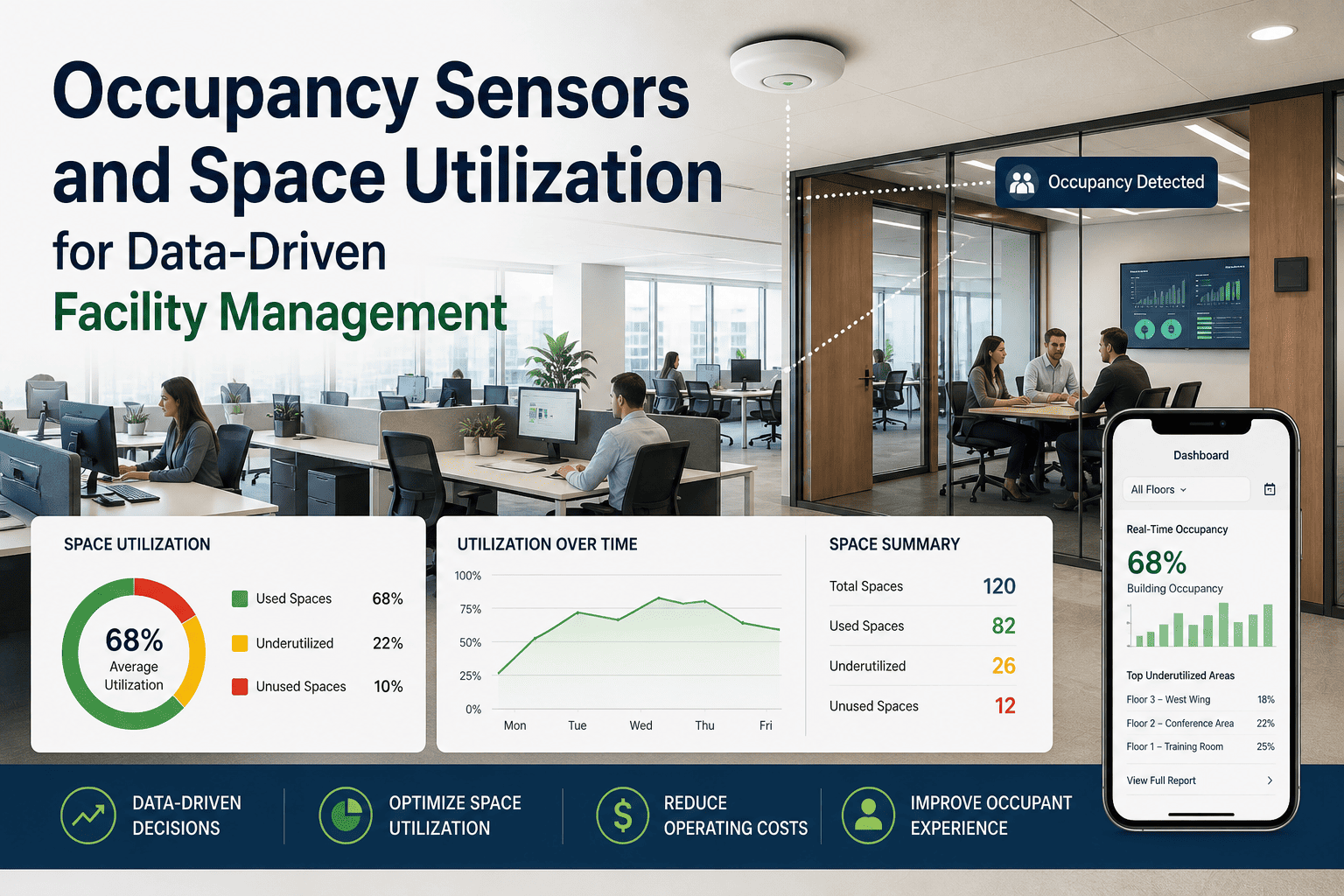
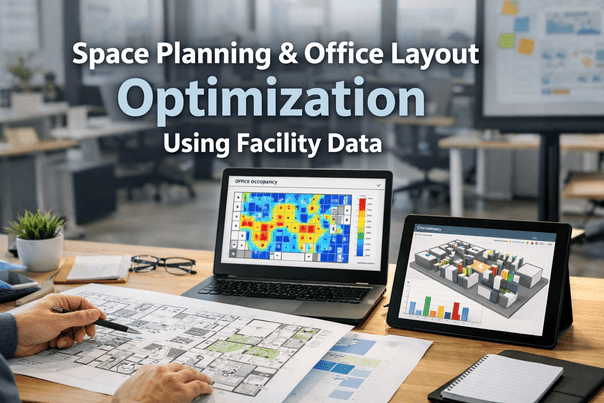
The average hybrid office sits at 42% occupancy on its busiest day — yet most companies continue paying for 100% of their real estate footprint. OxMaint's space management module turns occupancy sensor data into actionable consolidation plans, hot-desking analytics, and CMMS-integrated maintenance scheduling that cuts real estate costs without disrupting your workforce. Book a demo to see your facility's utilization data mapped live.
Blog | Workplace & Space
Space Optimization for Hybrid Workplaces: Data-Driven Facility Strategies
Average Hybrid Office Occupancy by Day
Source: JLL Hybrid Work Index 2024 — average across 500+ enterprise facilities
42%
Average weekly occupancy in hybrid offices
$18K
Annual cost per unused workstation (Class A office)
30%
Real estate cost reduction potential with data-driven consolidation
Why It Matters
The Cost of Ignoring Occupancy Data
Real estate is typically the second-largest operating cost for any organization. When occupancy patterns shift — as they have permanently with hybrid work — facilities that don't adjust their footprint continue paying a fixed cost for variable utilization. A 500-person company running at 42% average occupancy is effectively funding 290 unused workstations every day. At $18,000 per workstation per year in a Class A office, that is $5.2 million in wasted overhead.
01
Unused Workstations
Desks booked but unoccupied, or simply never assigned in hybrid models. Typically 35–55% of total capacity on any given day.
02
Empty Meeting Rooms
Meeting rooms are booked and abandoned at a 47% rate in hybrid offices. Each unused room costs $400–$800/month in real estate allocation.
03
Over-Conditioned Zones
HVAC and lighting run at full load in under-occupied zones. Facilities without occupancy-linked controls waste 25–35% of energy costs on empty spaces.
Data-Driven Strategies
Five Proven Space Optimization Strategies
1
Occupancy-Based Zone Consolidation
Use sensor data to identify consistently underutilized floors or wings. Consolidate to those zones on low-occupancy days and mothball the rest. Facilities using this approach cut conditioning costs by 28% on Mondays and Fridays alone.
2
Demand-Led Hot-Desking Ratios
Data shows most hybrid teams need a 0.6–0.7 desk-to-employee ratio, not 1:1. Correct ratios cut required footprint by 25–35% without impacting peak-day capacity.
3
Meeting Room Right-Sizing
Analytics consistently reveal that 80% of meetings have fewer than 5 attendees, yet most facilities have primarily large conference rooms. Convert unused large rooms to collaboration pods or focus booths.
4
Occupancy-Triggered Maintenance
CMMS-linked occupancy data schedules cleaning and HVAC service only after actual use — not on fixed calendars. Reduces janitorial costs by 22% and extends HVAC filter life by 30%.
5
Portfolio Benchmarking
Compare space utilization across multiple sites to identify consolidation candidates. Multi-site organizations save an average of $1.2M annually by eliminating the lowest-utilized location per 10-site portfolio.
Technology Stack
What OxMaint Adds to Your Space Strategy
| Capability |
Without OxMaint |
With OxMaint |
| Occupancy Data Collection |
Manual headcounts or annual surveys |
Live IoT sensor integration, real-time dashboard |
| Space Utilization Reporting |
Quarterly spreadsheet analysis |
Automated weekly reports by zone, floor, and building |
| Maintenance Scheduling |
Fixed calendar regardless of use |
Occupancy-triggered work orders — clean when used |
| Energy Management |
Zone HVAC runs on fixed schedules |
Linked to occupancy — auto-setback in empty zones |
| Consolidation Planning |
Gut feel and lease calendar |
Data-backed floor-by-floor utilization scoring |
| Compliance Documentation |
Manual headcount logs for fire safety |
Automated occupancy records with timestamp |
Find Out How Much Space You're Overpaying For
OxMaint maps your occupancy data to real estate costs and delivers a consolidation plan in your first 30 days. Book a live demo with your facility details.
Expert Review
What Space Strategy Research Shows
"Hybrid work has permanently altered the relationship between headcount and required floor area. Organizations that implement real-time occupancy analytics and adjust their portfolios accordingly are outperforming peers by 2–3× on facilities cost efficiency. The data is unambiguous: facilities without sensor-driven utilization measurement are making lease decisions blind, and paying a substantial premium for that blindness."
— JLL Future of Work Research, Hybrid Workplace Utilization Study, 2024
"The most significant untapped cost-reduction opportunity in commercial real estate today is space consolidation based on actual utilization data. Companies that have completed data-driven space rationalization programs report average annual savings of $1,800 to $2,400 per employee — achieved without measurable impact on employee experience or collaboration. The barrier is not willingness but the absence of the occupancy data infrastructure needed to act."
— CBRE Global Workplace Strategy Report, H2 2024
FAQs
Frequently Asked Questions
What sensors does OxMaint integrate with for occupancy tracking?
OxMaint integrates with all major occupancy sensor platforms including PIR motion sensors, Wi-Fi and Bluetooth proximity data, desk booking system APIs (such as Robin, Condeco, and Envoy), badge access reader data, and camera-based people-counting systems. If you already have any occupancy sensing infrastructure, OxMaint can ingest and analyze that data without requiring new hardware.
Start free and connect your first sensor data source today.
How does occupancy-triggered maintenance actually work in practice?
OxMaint monitors cumulative occupancy hours for each zone or room. When a zone reaches a configured usage threshold — for example, 40 person-hours of use — it automatically generates a cleaning work order for that space rather than running on a fixed Monday-Wednesday-Friday schedule. Similarly, HVAC filter maintenance work orders can be triggered by actual airflow hours rather than calendar dates, extending equipment life and reducing unnecessary service visits by 20–30%.
Can OxMaint help us decide which office locations to consolidate or exit?
Yes. OxMaint's space utilization reports score every floor and zone by average occupancy, peak utilization, cost per occupied workstation, and maintenance load. These metrics give real estate and facilities leadership the evidence needed to make data-backed consolidation decisions. For multi-site portfolios, a side-by-side comparison report identifies the lowest-performing locations relative to lease cost — typically the starting point for exit or downsizing decisions.
Book a demo to see a portfolio-level utilization report.
How long does it take to see meaningful occupancy data after deploying OxMaint?
If occupancy sensors or booking system data are already available, OxMaint can produce utilization dashboards within the first week of integration. Most facilities have statistically reliable baseline occupancy data — sufficient to make consolidation recommendations — within 30 days. A full 90-day dataset covering seasonal variation and day-of-week patterns is typically what leadership teams use before making lease or headcount decisions. The 30-day snapshot alone is enough to identify clear quick wins in cleaning schedules and energy management.
Space Optimization
Stop Paying for Space No One Uses
OxMaint turns your occupancy data into a real estate cost-reduction roadmap — identifying consolidation opportunities, optimizing maintenance schedules, and reducing energy spend on empty zones.