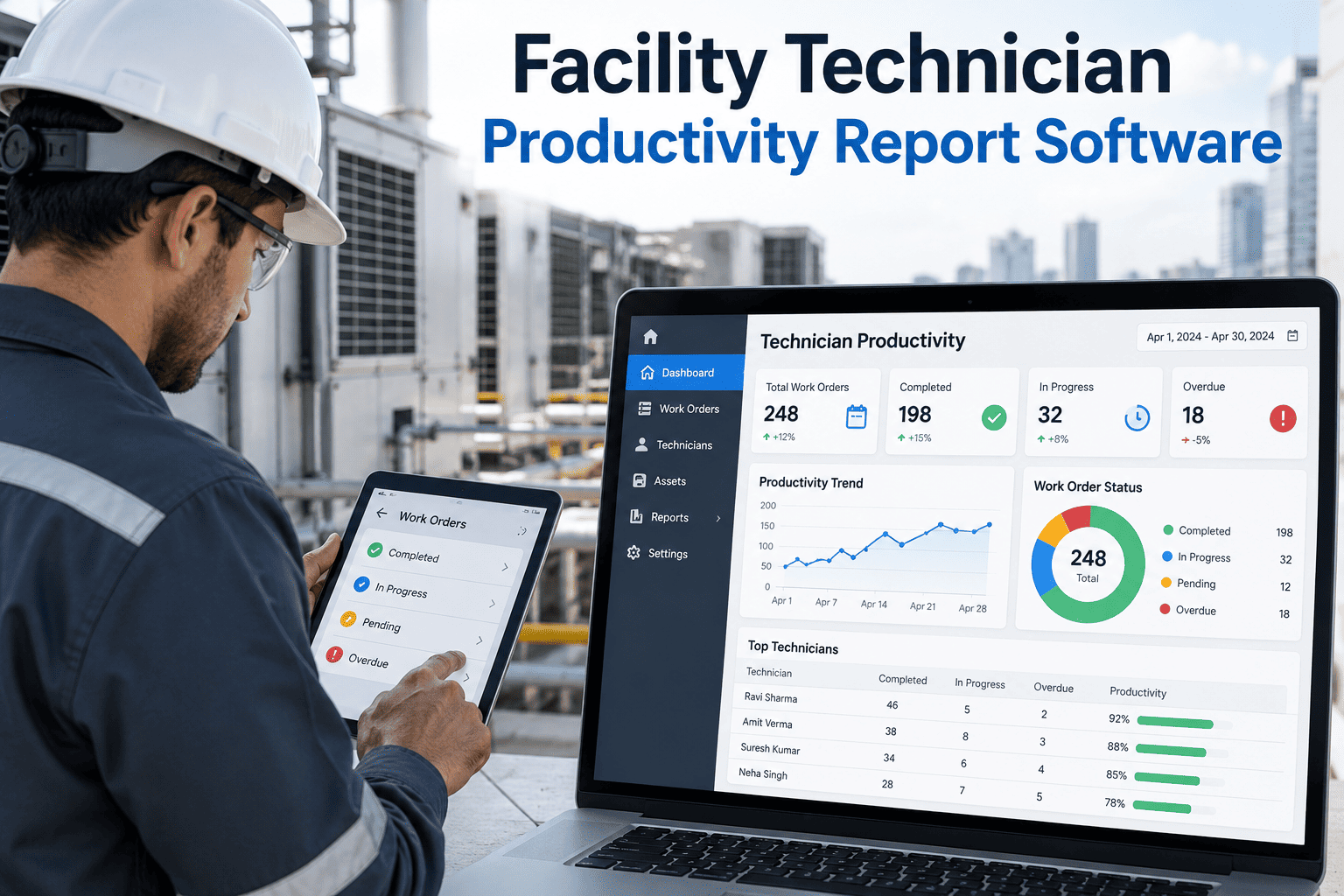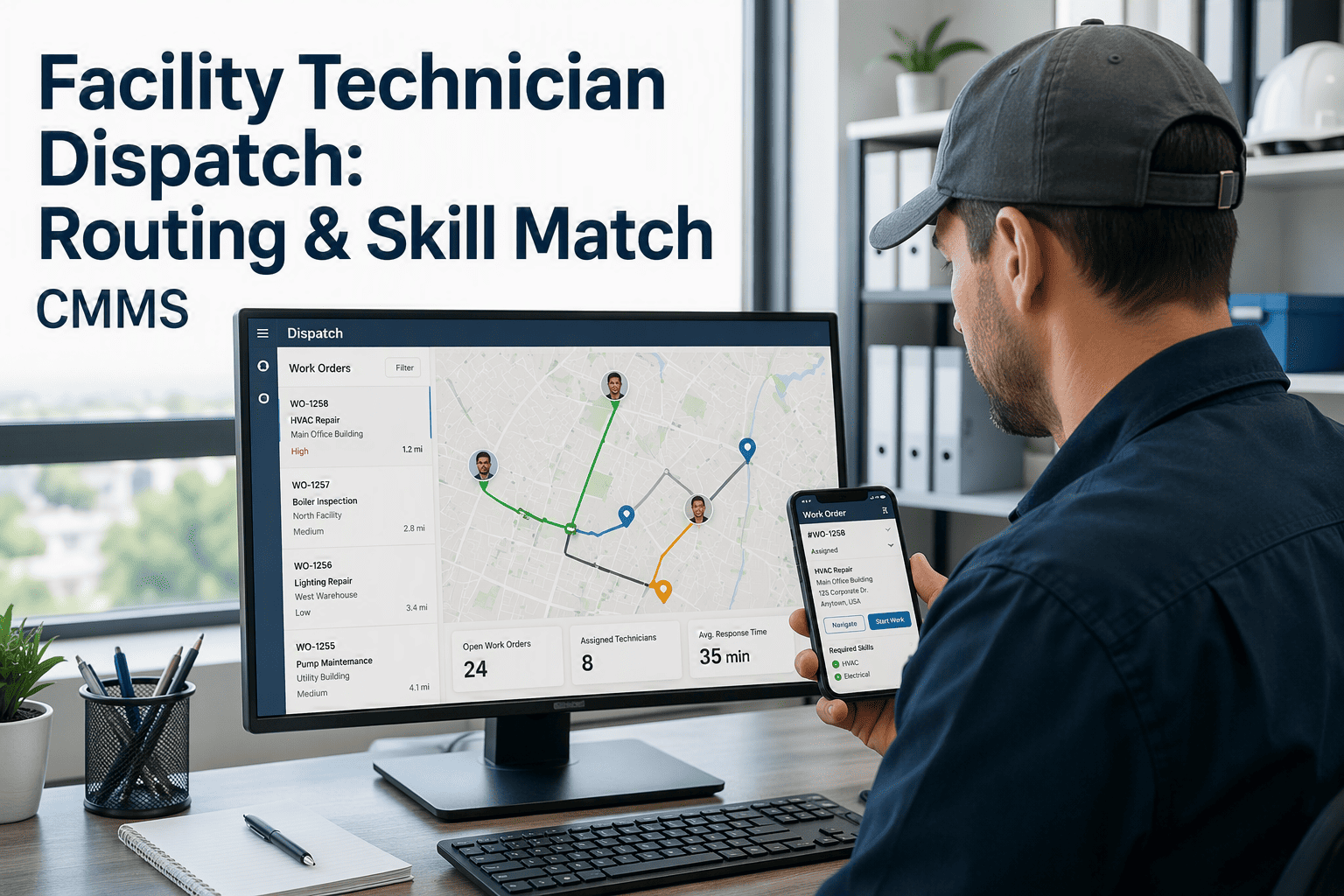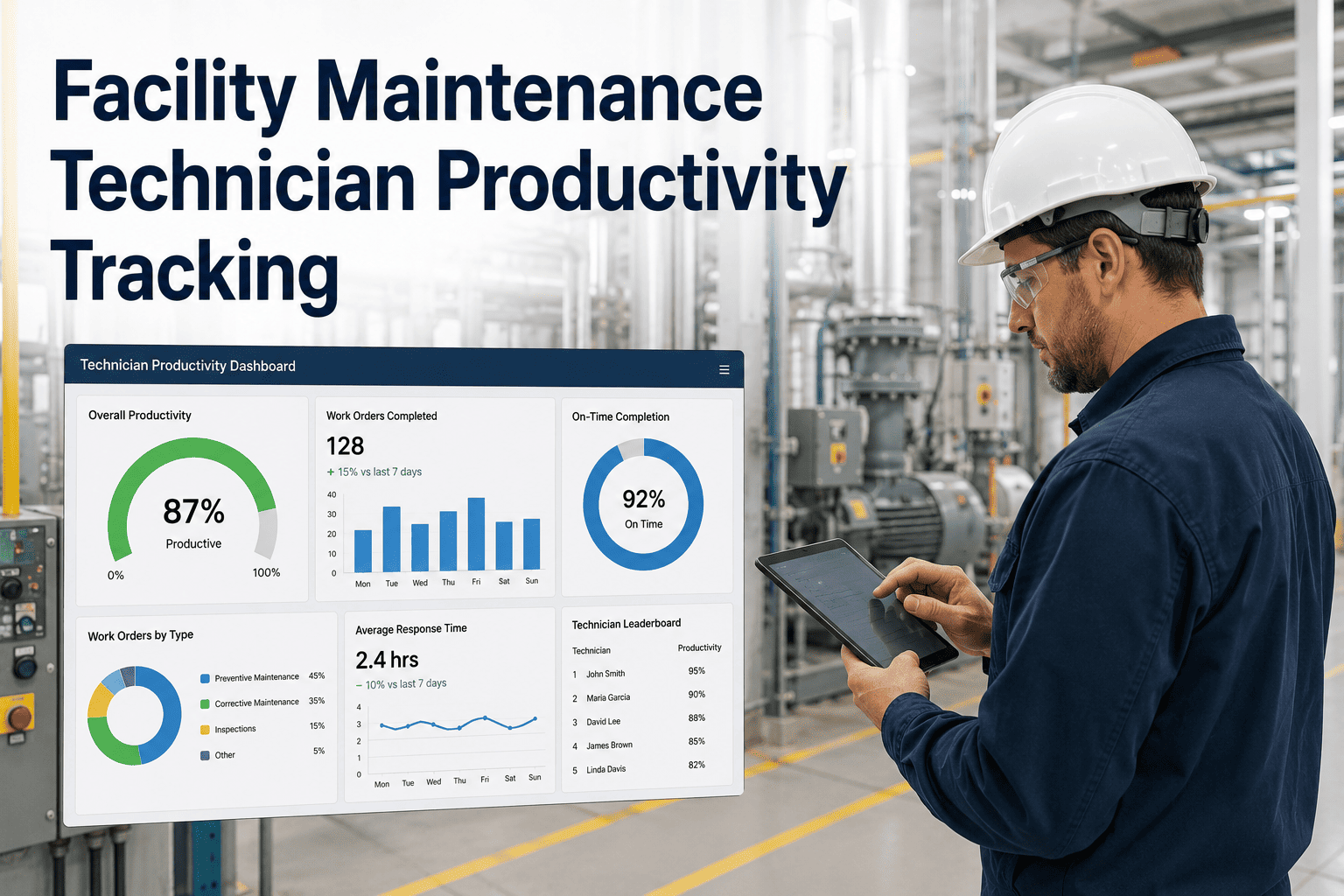
Maintenance technicians in most facility operations spend only 28–35% of their available hours on actual hands-on work. The rest goes to travel between locations, waiting for parts, administrative paperwork, and finding information that should have been in the work order. That means a 10-person maintenance team with 28% wrench time has the effective output of fewer than 3 fully productive technicians — while carrying the labour cost of all 10. OxMaint's Workforce Management module addresses every driver of lost wrench time: geographic dispatch optimisation, skill-to-task matching, parts availability pre-staging, and PM automation that eliminates reactive scramble. Book a demo to see technician utilisation analytics built from your facility's work order history.
Technician Utilization Optimization for Facility Management
How facility teams improve wrench time from 28% to 50%+ by fixing the four root causes of technician productivity loss — and why OxMaint's workforce analytics make those causes visible for the first time.
The 4 Root Causes of Low Technician Utilisation
Low wrench time is not a technician problem — it is a systems problem. The four causes below are structural: they exist because work orders don't carry the right information, schedules don't account for geography, and parts are not staged before the technician is dispatched. Fix the systems and the technician hours follow.
Excess Travel Time
In multi-building campuses and large facilities, dispatching technicians without geographic grouping of tasks means repeated cross-facility trips for work that could be batched by zone. A technician assigned five tasks spread across a 500,000 sq ft campus travels 4–6 miles per shift — eliminating 90 minutes of productive time daily.
Waiting for Parts
A technician dispatched to a repair without confirmed parts availability travels to the job, discovers the required part is out of stock, returns to the storeroom, waits for procurement, and attempts the repair hours later — or next shift. This sequence consumes 2–3 hours and produces zero completed work orders.
Skill-Task Mismatch
Dispatching a multi-skilled technician to low-complexity tasks while high-complexity work waits is a scheduling failure with a double cost: the high-value technician is underutilised and the complex work generates escalation or rework. First-time fix rate drops when the assigned technician lacks the certification or experience the task requires.
Administrative Overhead
Paper-based or desktop-only work orders force technicians to leave the job site to log completion, update status, or retrieve the next assignment. Each trip back to the office consumes 15–25 minutes. On a 10-task shift, this adds up to 150–250 minutes of non-productive time — before counting any other delays.
Wrench Time Improvement Pathway — What Good Looks Like
| Stage | Wrench Time Range | Characteristics | Primary OxMaint Intervention |
|---|---|---|---|
| Reactive Baseline | 20–30% | Paper or email work orders, reactive scheduling, no parts pre-staging, no geographic batching | Digital mobile work orders + parts availability check at creation |
| Structured Scheduling | 35–45% | Digital work orders active, PM schedule in place, some geographic batching by floor/building | Geographic dispatch + skill-matching rules + PM automation |
| Optimised Dispatch | 45–55% | All work orders digital, parts kitted pre-dispatch, technician queues by zone, skill-matched routing | Workload balancing analytics + capacity planning dashboard |
| World-Class | 55–65% | Predictive work orders pre-staged, full geographic optimisation, planner-to-technician ratio at 1:8–12 | Predictive PM triggers + workforce capacity vs. workload forecasting |
OxMaint Workforce Analytics — What Gets Measured and Why
Wrench Time Proxy Tracking
OxMaint measures wrench time through work order timestamps — job open time, first status update, job close time — compared with technician assignment and travel zone data. While not a perfect replacement for a formal work sampling study, timestamp analysis reveals patterns in travel-to-start delay, on-site duration, and administrative close time that direct process improvement.
Workload Balance by Technician
OxMaint's workload dashboard shows open work orders per technician, estimated hours vs. available capacity, and backlog age by assignee. Workload imbalance — one technician at 140% of capacity while another is at 60% — is one of the most common and least-tracked causes of missed PM schedules and growing corrective backlogs.
Skill Coverage Gap Analysis
Technician skill profiles in OxMaint map certifications, trade qualifications, and asset class experience to work order requirements. When a building's critical assets require skills that no assigned technician holds, OxMaint surfaces the gap before it becomes a missed PM or a delayed corrective — not after.
First-Time Fix Rate by Technician
First-time fix rate tracked per technician and asset class identifies where training investment produces the highest return. A technician with an 82% FTFR on electrical tasks and 95% on mechanical tasks is telling the analytics system where skill development will reduce rework and second truck rolls.
See Your Team's Utilisation in OxMaint
Wrench time proxies, workload balance, skill gap analysis, and first-time fix rate — built from your work order history, updated in real time with every closed task.
Expert Review
"Industry average wrench time is 28–35%. Top-quartile facilities achieve 50–55% through better scheduling and mobile work order tools. Best-in-class operations reach 60–65% through robust planning and full CMMS workflow implementation. A 10-percentage-point improvement in wrench time across a 20-person maintenance team means approximately 16 additional labour hours of productive maintenance work per shift. At that scale, the impact on maintenance cost, asset reliability, and backlog reduction is substantial — and it comes from fixing the systems around the technician, not the technician themselves."