A 240-room full-service hotel in the Southeast was losing what it could not see: HVAC failures blamed on "old equipment" that were really missed quarterly PM tasks, guest-reported maintenance issues sitting unassigned in a WhatsApp group for 6–18 hours, and a maintenance team spending 72% of their shift time firefighting instead of preventing. The general manager's instinct was to hire more technicians. The data — once they had it — told a different story. OxMaint's hotel maintenance platform gave them the data: within 90 days, guest maintenance complaints dropped 44%, emergency repair spend fell by 31%, and the team was running planned maintenance at 76% of total hours — up from 28%.
Hotels spend an average of 48% more on corrective maintenance than preventive maintenance — because reactive repairs cost 3–5× more than scheduled ones. The root cause is almost never the equipment. It is the absence of a system that tracks what was done, when, and what is due next.
For this hotel, the consequences were measurable: four HVAC failures in one quarter traced to overdue filter replacements, 23 guest-reported issues per week across 240 rooms, and a team so consumed by reactive calls that scheduled inspections were deferred indefinitely.
Every guestroom, HVAC unit, elevator, pool system, and kitchen asset was registered in OxMaint with nameplate data and service history from paper records. PM schedules were configured per asset class — HVAC filters on a 30/90-day cycle, elevator monthly, pool equipment weekly.
Front desk staff submitted guest maintenance requests directly into OxMaint via mobile. Each request became a timestamped work order, assigned to an available technician with a target response time. Response visibility replaced radio silence. Average response time dropped from 7.2 hours to 48 minutes.
Six service vendors onboarded to OxMaint with role-limited mobile access. Vendor completion times, invoice benchmarks, and first-time fix rates tracked automatically. Within 3 months, the HVAC contractor's average response time improved from 5.4 hours to 2.1 hours — visible in the dashboard, discussed at the next contract review.
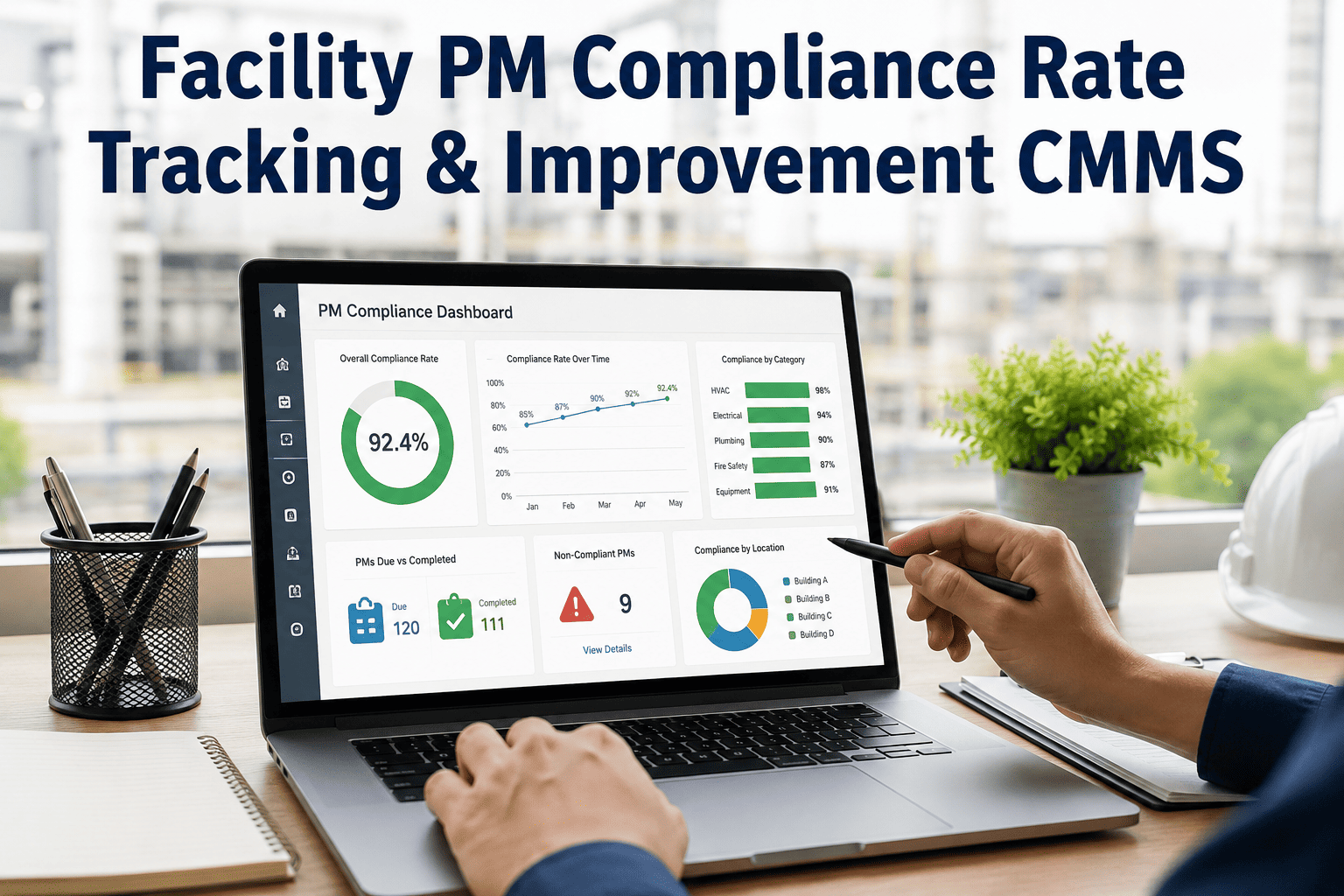
Auto-generated PM work orders fired on schedule. Technicians completed inspections on mobile with mandatory photo sign-off on critical items. PM completion rate reached 91% in Month 3 — up from an estimated 34% before OxMaint, when "completion" meant nobody could prove it wasn't done.
| Metric | Before OxMaint | After Year 1 | Change |
|---|---|---|---|
| Guest maintenance complaints / week | 23 | 13 | ↓ 44% |
| Avg. work order response time | 7.2 hrs | 48 min | ↓ 89% |
| PM compliance rate | ~34% | 91% | ↑ 57 pts |
| Emergency repair spend | $148K/yr | $102K/yr | ↓ 31% |
| Planned vs reactive work ratio | 28% planned | 76% planned | ↑ 48 pts |
| HVAC-related guest complaints | 4 failures in Q1 | 0 unplanned failures | ↓ 100% |
Hotel maintenance directors routinely underestimate what reactive operations cost them — not because they don't care, but because the cost is invisible when there's no system to measure it. Emergency HVAC calls, untracked parts spend, vendor invoices approved on trust because there's no benchmark — these amounts appear in different budget lines and nobody adds them up. When you implement a CMMS and track everything in one place, the number that surprises people most is not the emergency repair spend. It's the vendor cost variance. I've reviewed hotels where the same type of repair was being invoiced at 2.8× different amounts by different contractors, and nobody knew because there was no comparison. That 2.8× number becomes a data point in a contract negotiation within three months of going live on a CMMS. The ROI is rarely where people expect it — it's usually in the vendor accountability, not the PM compliance.