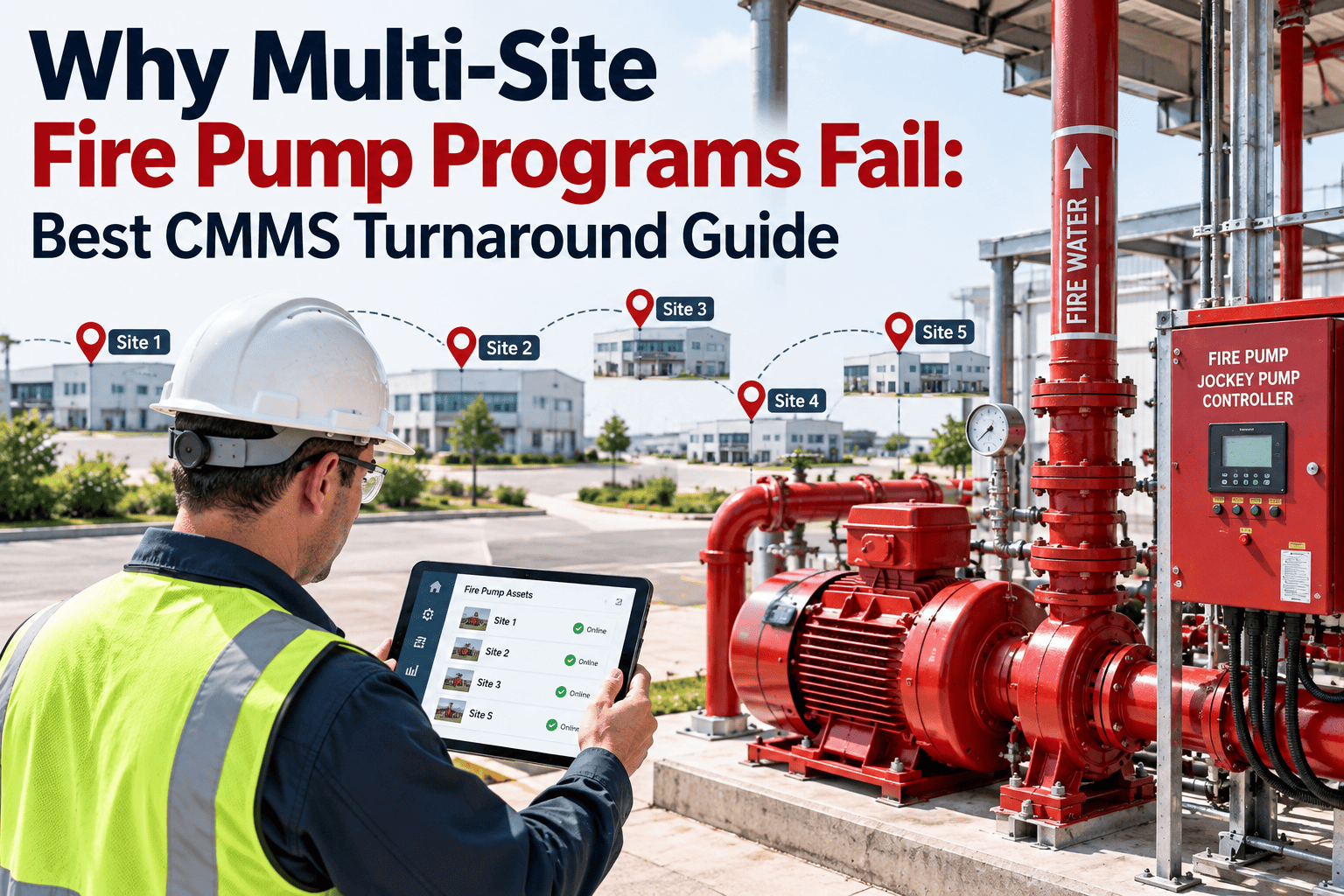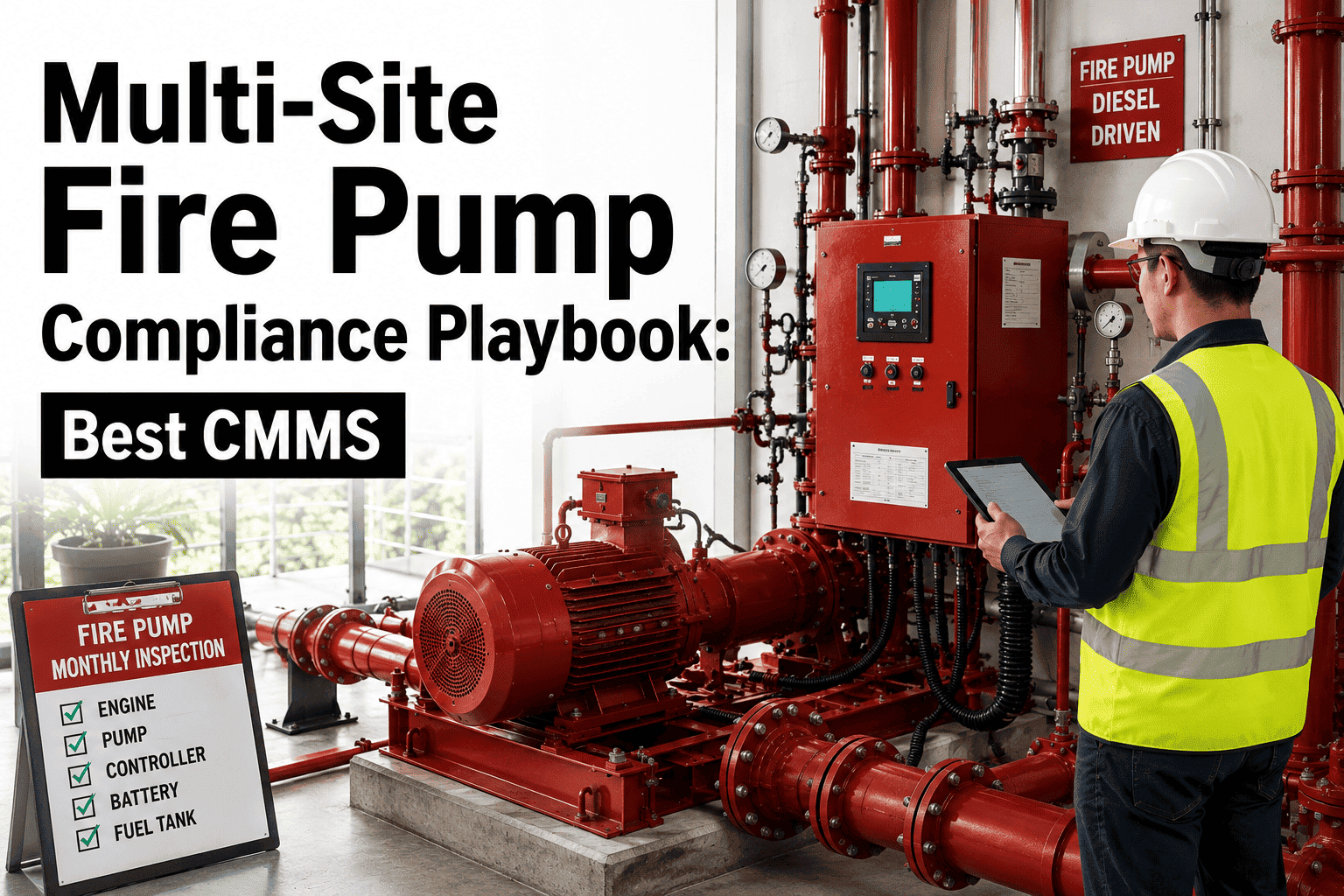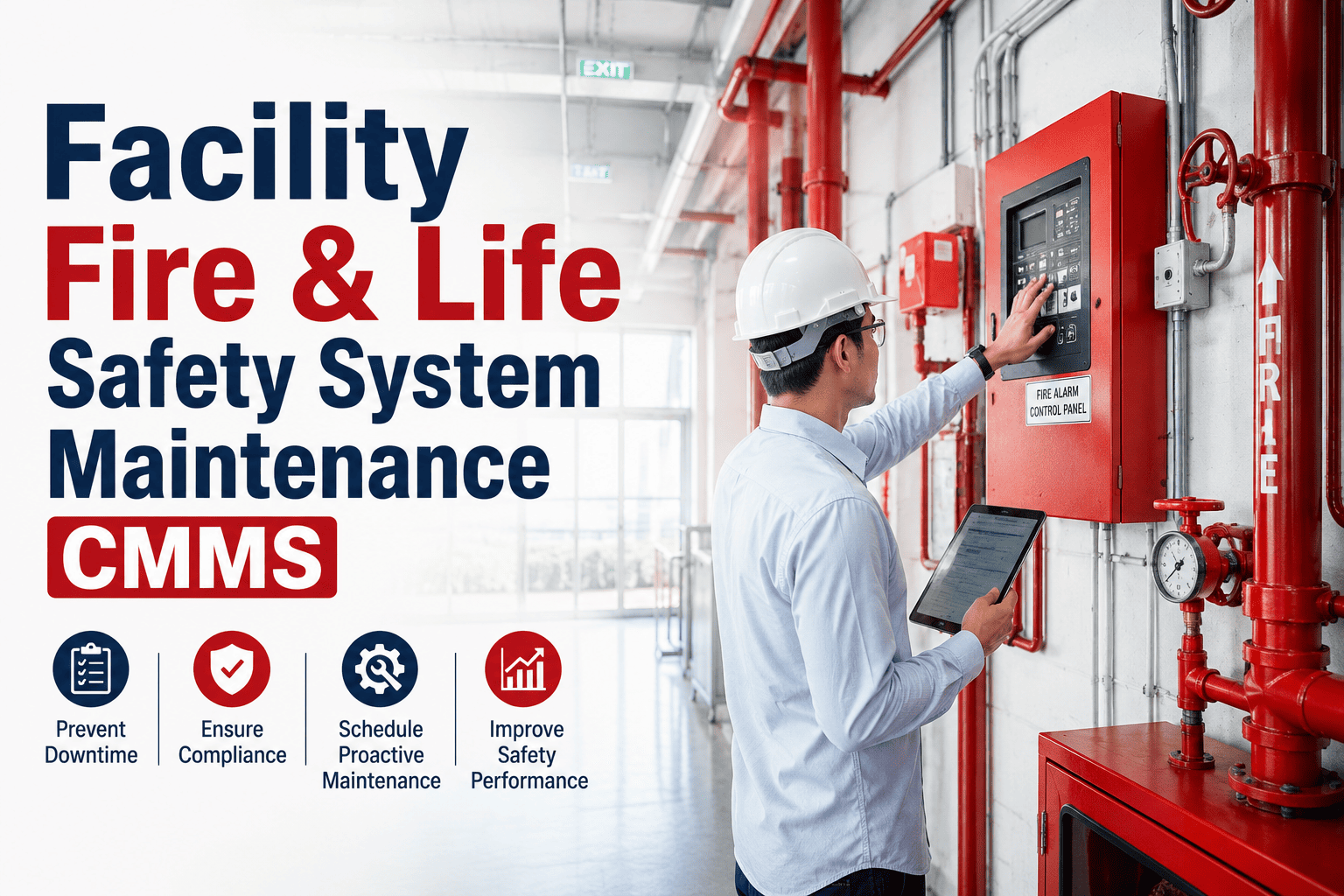
A fire alarm that goes into impairment during an AHJ walkthrough. A sprinkler control valve found closed after a shift change. A fire pump battery that fails its load test the same week the insurance auditor calls. None of these are equipment failures in the usual sense — they are maintenance schedule failures, and every one of them was preventable with a properly tracked inspection calendar. Facility teams that treat fire and life safety maintenance as a single annual event rather than a continuous compliance program are the ones living this story, and the gap between the two approaches is visible the moment you read OxMaint's fire safety CMMS module.
Facility Fire & Life Safety System Maintenance, Run on a Schedule Instead of a Scare
Sprinklers, fire alarms, fire pumps, and emergency lighting all run on different NFPA inspection clocks — weekly, monthly, quarterly, and annual. Miss one tier and the whole system is impaired. This guide breaks down every clock, every task, and the CMMS workflow that keeps them all ticking on time.
The Five Inspection Clocks Running in Every Building
Fire and life safety compliance is not one calendar — it is five overlapping ones, each governed by a different NFPA interval and, in most cases, a different set of hands. Miss the tier that applies to a specific device and the whole system can be logged as impaired, regardless of how well the other four tiers were kept.
Critical Fire & Life Safety Systems — What Fails and Why
The table below maps the systems most likely to trigger an AHJ impairment notice, what the maintenance task actually checks for, and how often it repeats. Every row is a candidate for a CMMS-driven recurring work order rather than a line on a spreadsheet someone forgets to open.
| System | Maintenance Task | Governing Standard | Frequency | Consequence of a Miss |
|---|---|---|---|---|
| Wet & Dry Sprinklers | Control valve position, gauge pressure, dry valve exterior, full flow test | NFPA 25 | Weekly to Annual | Zone-wide suppression failure during an actual fire event |
| Fire Alarm & Detection | Panel trouble signals, detector heads, notification appliances, battery load test | NFPA 72 | Weekly to Annual | Delayed occupant notification, AHJ impairment filing |
| Fire Pump | Churn test, annual flow performance test, controller and battery check | NFPA 25 / NFPA 20 | Weekly, Annual | Insufficient water pressure reaching sprinkler heads |
| Portable Extinguishers | Visual check, weight and pressure verification, six-year internal maintenance | NFPA 10 | Monthly, Annual, 6-Year | Failed first-response suppression, workplace safety citation |
| Emergency & Egress Lighting | 30-second function test, 90-minute battery duration test | NFPA 101 | Monthly, Annual | Blocked or unlit evacuation path during power loss |
| Fire Doors & Dampers | Latch and seal check, drop test, damper closure verification | NFPA 80 | Annual | Fire and smoke spread beyond the compartment of origin |
Building a Fire Safety Compliance Program in 4 Steps
List every sprinkler zone, alarm panel, fire pump, extinguisher, and emergency light with its install date, manufacturer, and governing NFPA standard. A system that is not in the register cannot be scheduled — and unscheduled systems are exactly what an AHJ finds first.
Match each asset to its weekly, monthly, quarterly, semiannual, or annual requirement. Note which tasks legally require a licensed technician versus which can be completed by trained facility staff, since mixing the two invalidates the record.
Set each inspection tier to generate its own work order on schedule inside a CMMS. A recurring task that fires itself removes the single biggest cause of missed inspections — someone forgetting to check the calendar.
Every failed check should convert into a corrective work order with a due date, not a note in a binder. OxMaint keeps the deficiency linked to the original inspection so the audit trail shows the problem and the fix in one record.
Nobody fails a fire inspection because they do not know the rules. They fail because the rules live in five different places — a binder for sprinklers, an email thread for the alarm vendor, a sticky note for extinguisher tags — and nobody owns the whole calendar. The fix is almost never more staff. It is one system that fires the work order on the correct day, every time, and will not let a technician close it without recording what they found. That single change is usually the difference between a clean AHJ visit and a fire watch.
Frequently Asked Questions
Can OxMaint schedule fire and life safety inspections automatically?
Yes. Each asset can be set to its own weekly, monthly, quarterly, or annual interval, and OxMaint generates the work order on schedule without a planner tracking it manually. Start a free trial to set up your first recurring fire safety schedule.
Who can perform fire safety inspections — facility staff or a licensed technician?
It depends on the task. Weekly and monthly visual checks are usually permitted for trained facility staff, while quarterly, semiannual, and annual functional tests generally require a licensed fire protection technician under NFPA 25 and NFPA 72.
What happens if a fire alarm or sprinkler inspection is missed?
A missed inspection can be logged as a system impairment, which may trigger an AHJ notification, a mandatory fire watch, insurance complications, and citations if the gap is discovered during an emergency or audit.
How does OxMaint handle deficiencies found during an inspection?
A failed check converts directly into a corrective work order linked to the original inspection record, so the deficiency and its resolution stay together in one auditable history. Book a demo to see the deficiency workflow in action.
Can a CMMS track fire safety compliance across multiple buildings?
Yes. OxMaint gives a portfolio-wide view of inspection status by building, so a facility director can see every overdue or upcoming fire safety task across every site from a single dashboard.
Five Inspection Clocks. One Missed Tier. Zero Margin for Error.
OxMaint schedules every NFPA-governed inspection automatically, routes deficiencies into corrective work orders, and keeps a single audit-ready record across your whole portfolio. Facilities that run fire safety on a system never meet the AHJ by surprise.