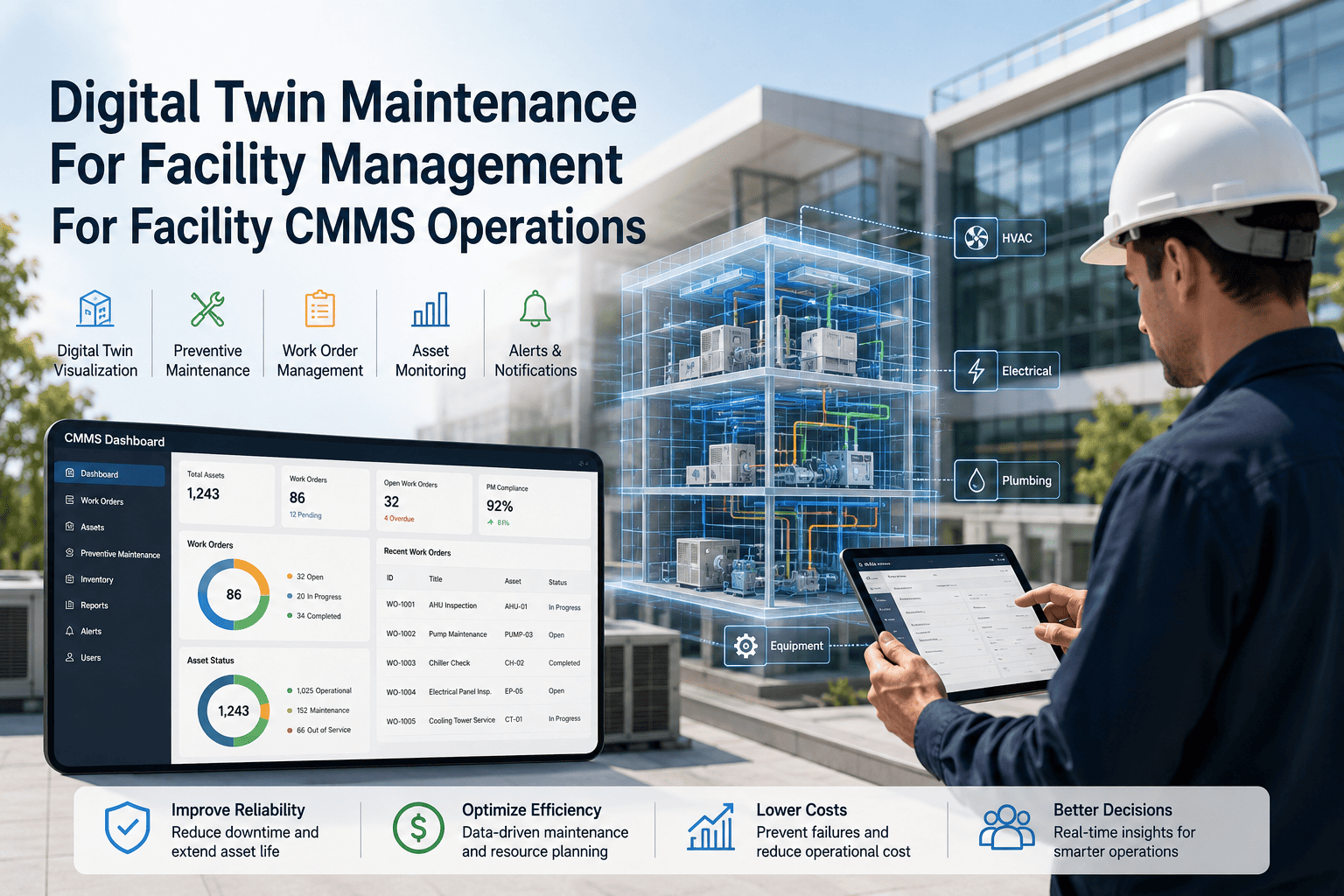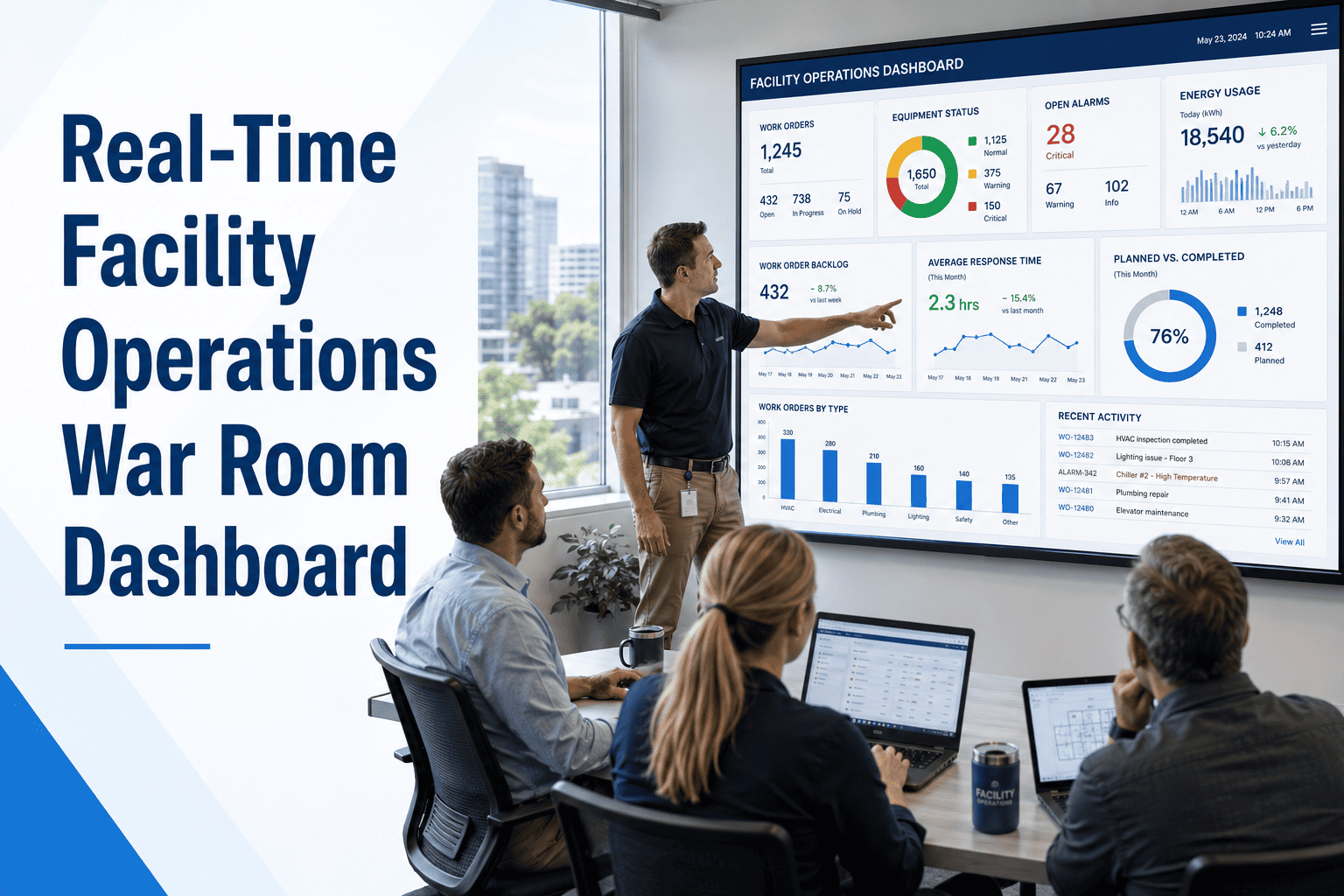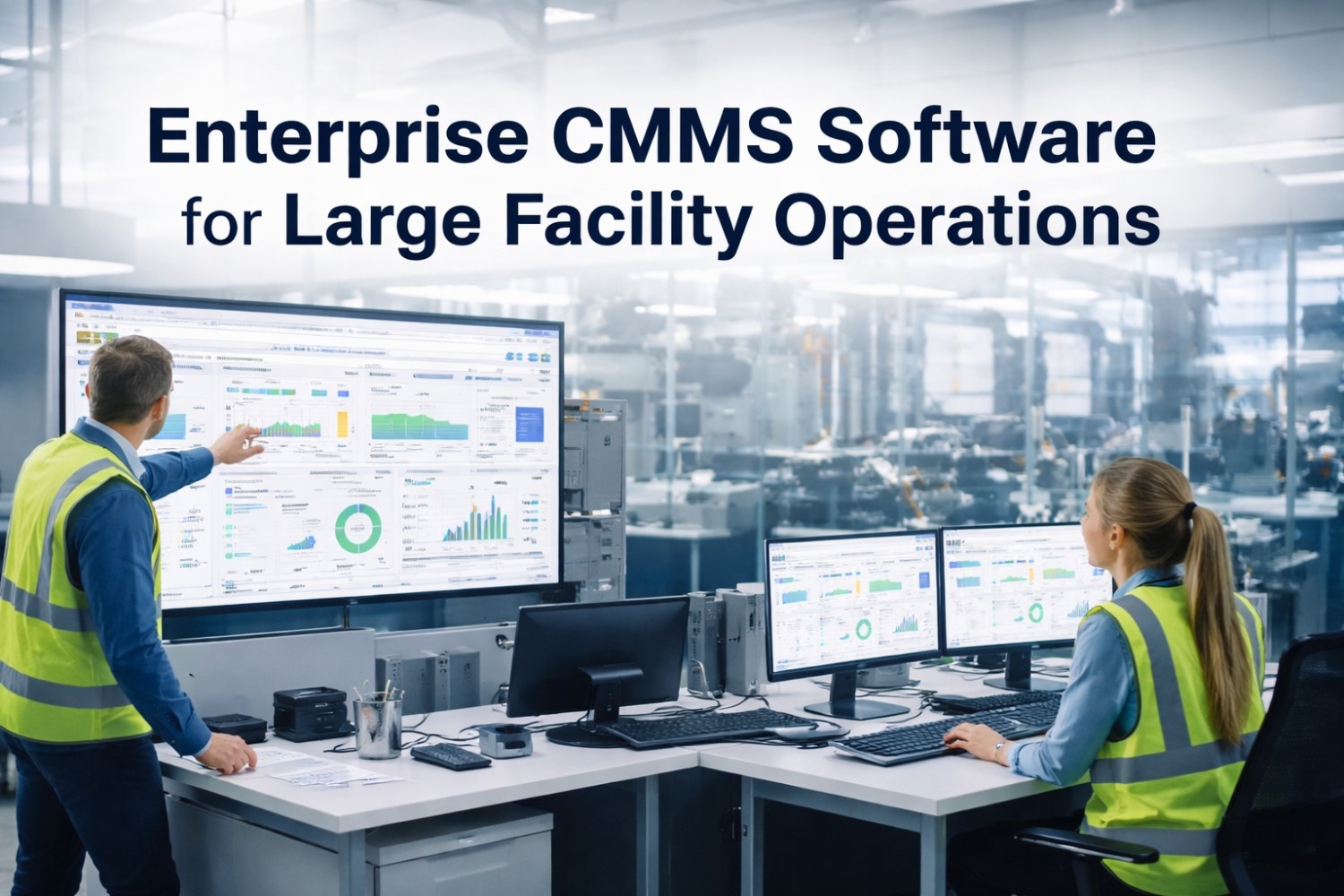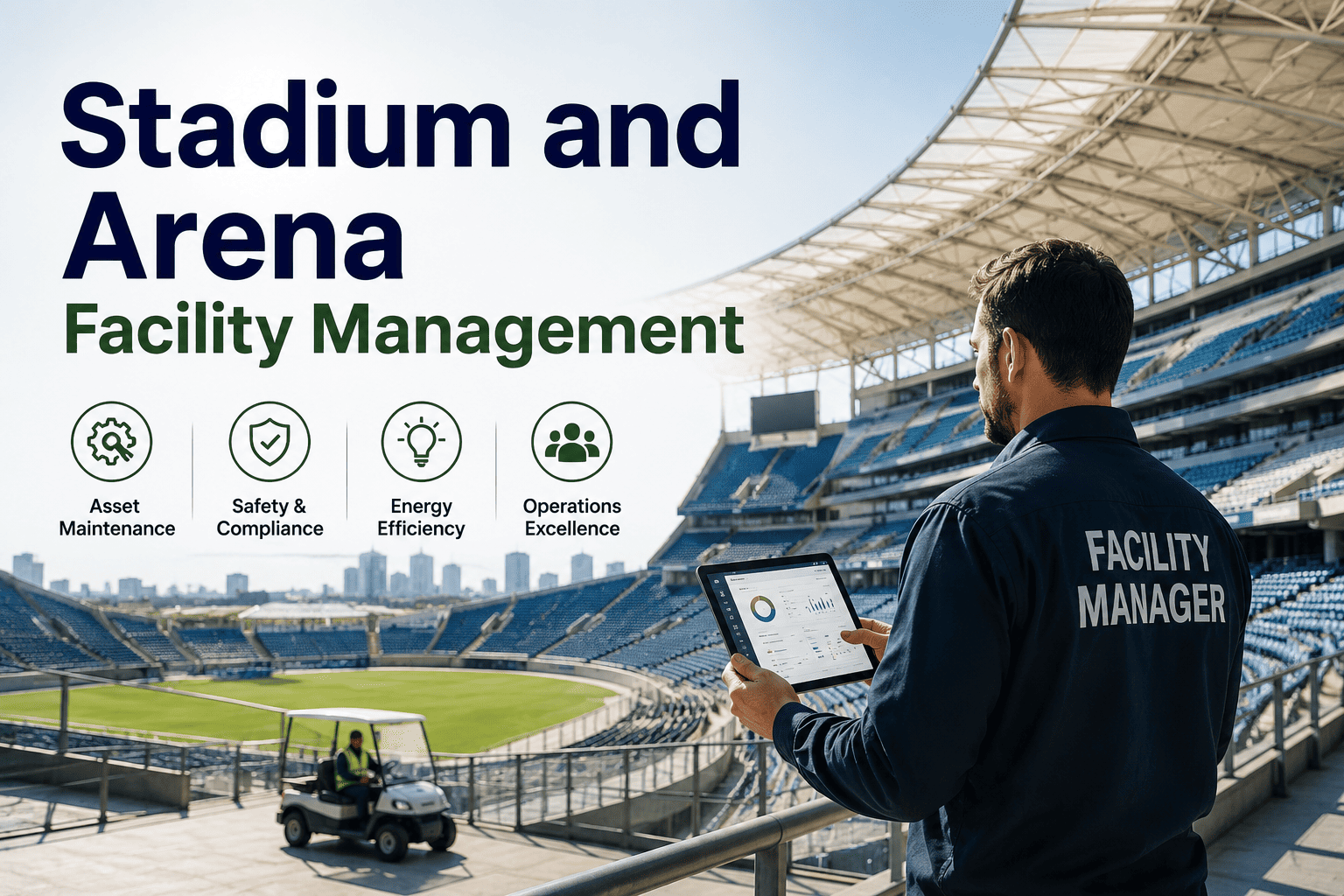
Stadium and arena facility management is the discipline of operating, maintaining and protecting massive entertainment venues that sit idle for days, then absorb 60,000 fans in under an hour. Every event day tests every system in the building — HVAC, lighting, plumbing, elevators, fire-life-safety, field infrastructure and concessions — under extreme, intermittent load with zero tolerance for failure. This guide breaks down the FM operational rhythm that high-performing venue teams use across pre-event, event-day and post-event cycles, and shows how modernizing your CMMS can transform arena operations from reactive chaos into predictable, audit-ready performance. If your team is still managing event venue facility management through spreadsheets and clipboards, explore how OxMaint replaces them — or simply Start Free Trial to see the platform on your own assets today.
Idle on Monday. 60,000 fans by Saturday. Is your venue ready?
Stadium facility management means running every building system at peak load for a few hours, then maintaining it across days of silence. One missed preventive task becomes a failed chiller, a flooded concourse, or a cancelled event. OxMaint gives venue FM teams the work-order engine, PM scheduling and predictive analytics to absorb extreme intermittent load — without the chaos.
The Three-Phase FM Cycle Every Stadium Operations Team Must Master
Arena facility management is not steady-state building maintenance — it is a repeating loop of preparation, peak-load delivery and rapid recovery. Teams that treat every day the same lose; teams that segment their work into these three phases win.
Pre-Event Readiness & PM Window
Between events, the venue drops to skeleton staff — but this is when 70% of preventive maintenance happens. HVAC chillers get serviced, fire-suppression valves get tested, field irrigation lines get flushed, and every concession point-of-sale terminal gets power-cycled and inspected. Miss one PM in this window and the failure surfaces at 8 PM on Saturday in front of a sold-out crowd.
High-Throughput Event-Day Operations
Doors open and the building absorbs tens of thousands of people in under an hour. Restroom traffic spikes 400%, concession equipment runs at maximum duty cycle, elevators cycle continuously and parking-lot lighting burns at full draw. Event-day FM is rapid-response: technicians staged by zone, work orders created and closed from mobile devices in under five minutes, and a central command dashboard tracking every open issue in real time.
Rapid Recovery & Closeout
The crowd leaves and the clock starts: the next event may be 48 hours away. Post-event FM is damage assessment, deep cleaning coordination, deferred-issue logging and immediate parts reordering. Every issue spotted during the event gets a work order; every part consumed gets restocked. The recovery window determines whether the next pre-event phase starts clean or starts already behind.
Critical Asset Categories in Sports Venue FM
A modern arena holds 12,000+ maintainable assets across a dozen specialized systems. Here is where the risk concentrates — and where a CMMS delivers the most uptime ROI.
HVAC & Climate Control
Chillers, AHUs, cooling towers and building automation systems maintaining 68-72°F across 800,000+ sq ft. A single chiller trip on event day can spike concourse temperatures 15°F in 30 minutes and trigger guest complaints, early exits and brand damage.
Fire-Life-Safety Systems
Sprinkler systems, fire pumps, smoke evacuation fans, emergency lighting and alarm panels. These assets carry strict code-mandated inspection intervals — NFPA 25 for water-based systems, NFPA 72 for alarms. A missed inspection is a compliance violation and a liability exposure.
Vertical Transportation
Elevators and escalators carrying thousands of fans per hour. A single escalator failure at gate entry creates bottlenecks, security risks and ADA non-compliance. Predictive vibration analysis on motors catches bearing wear weeks before failure.
Field & Playing Surface
Irrigation, turf heating, retractable roof mechanisms, field lighting banks and scoreboard rigging. These systems define the athlete and broadcast experience — a lighting bank failure during a nationally televised game is a six-figure revenue event.
Concessions & Plumbing
Grease traps, ice machines, refrigeration, beer lines and high-volume restroom plumbing. Health-code compliance is non-negotiable; a single failed health inspection at a concession stand can shut down food service for an entire event.
Power & Emergency Generation
Main switchgear, UPS systems and standby generators that must carry critical loads during any utility interruption. Life-safety systems must transfer to emergency power in under 10 seconds — testable only with a proper load-bank PM schedule.
The Real Cost of Reactive Stadium Operations: A 19,000-Seat Arena
Consider a mid-sized downtown arena hosting 120 events per year — 41 home games, 35 concerts, 44 family shows and community events. Their FM team manages 8,400 assets using spreadsheets and a legacy work-order system that went end-of-life in 2021.
The Hidden Cost of Spreadsheets
- $180K/yr in emergency repair premiums — parts expedited, overtime labor, vendor callouts
- 14 unplanned downtime events per year affecting guest experience (elevator outages, restroom closures, HVAC trips)
- 2 failed compliance audits in 18 months — NFPA 25 sprinkler documentation gaps
- $22K/yr in spoiled concession inventory from uncaught refrigeration temperature excursions
- 6 hours/week per technician spent on paperwork and work-order data entry
The Predictive Maintenance Payoff
- $54K/yr saved — emergency repair spend cut 30% via PM compliance and predictive alerts
- 4 unplanned events per year — vibration sensors and thermal imaging catch bearing failures before event day
- 100% audit readiness — every inspection, test and work order digitally logged and timestamped automatically
- $22K recovered — temperature monitoring with automated alerts saves concession inventory
- 0 hours of paperwork — technicians close work orders from mobile devices in the field in under 2 minutes
Preventive Maintenance Scheduling for Intermittent-Load Venues
Standard building PM calendars assume 5-day-a-week, steady-state operation. Stadiums and arenas need PM schedules that flex around the event calendar — heavy work in dark weeks, light-touch inspections during event clusters.
| PM Category | Frequency | Event-Window Strategy | Compliance Standard |
|---|---|---|---|
| Fire pump churn test | Weekly | Run during pre-event walkthrough; log pressure digitally | NFPA 25 |
| Emergency generator load-bank test | Monthly | Schedule in dark-week window; 2-hour minimum load | NFPA 110 |
| Chiller preventive maintenance | Quarterly + pre-season | Full service during off-season; filter changes between event clusters | ASHRAE 90.1 |
| Elevator/escalator inspection | Monthly + annual cert | Monthly visual during pre-event; annual cert in lowest-traffic month | ASME A17.1 |
| HVAC filter replacement | Every 90 days or MERV-rated | Stagger across zones; never during a 3-event week | ASHRAE 62.1 |
| Concession equipment sanitation audit | Per event + monthly deep | Quick-check pre-event; deep clean in post-event window | FDA Food Code |
| Retractable roof/field system | Pre/post each use | Inspect mechanism before deployment; log cycle count after | Manufacturer Spec |
How OxMaint Powers Stadium and Arena Facility Management
OxMaint is built for the extreme, intermittent load of venue FM. Four capabilities directly address the challenges that make stadium operations uniquely demanding.
Event-Calendar-Driven PM Scheduling
OxMaint ingests your event calendar and automatically schedules preventive maintenance into the available dark-week and pre-event windows. No more PMs landing on a sold-out Saturday. PM compliance rises from a typical 60% to 95%+ within the first quarter.
Mobile Work Orders for Event-Day Response
Technicians receive, accept and close work orders from mobile devices on the concourse. Photo attachments, parts consumption and time stamps are captured in real time. An issue spotted by a guest-services volunteer becomes a closed work order in under 5 minutes.
Predictive Analytics on Critical Assets
Vibration sensors, thermal imaging and SCADA integration feed into OxMaint's AI engine. The system predicts chiller compressor failures, elevator motor bearing wear and switchgear hot spots weeks before they happen — so repairs happen in the pre-event window, not during the national anthem.
Automated Compliance & Audit Trail
Every inspection, test, repair and parts replacement is automatically logged with technician identity, timestamp and digital signature. Generate a complete NFPA, OSHA or FDA compliance report in seconds — not the three days it takes to dig through paper binders.
"We switched from spreadsheets to OxMaint before our playoff run. The event-calendar PM scheduling alone saved us from two chiller failures that would have happened during sold-out games. Our audit prep went from a three-day binder hunt to a 10-minute export."
"The mobile work orders changed event-day operations for us. A restroom issue used to take 20 minutes to route through radio calls and paper slips. Now a guest-services volunteer logs it, a tech gets the push notification, and it's fixed in under 8 minutes."
See OxMaint on your venue's assets — book a 30-minute demo
Walk through event-calendar PM scheduling, mobile work orders and predictive analytics with a venue-FM specialist. See exactly how OxMaint fits your arena's operational rhythm.
Stadium and Arena Facility Management — Frequently Asked Questions
What makes stadium facility management different from standard commercial building FM?
Stadium FM is event-driven with extreme intermittent load — the building goes from near-zero occupancy to 60,000+ people in under an hour, then back to empty. This creates peak stress on HVAC, plumbing, power and life-safety systems that standard office buildings never experience. PM schedules must flex around the event calendar, and event-day response times are measured in minutes, not hours. Standard CMMS platforms built for steady-state facilities cannot handle this rhythm.
How does a CMMS improve event-day readiness for arenas?
A CMMS like OxMaint ensures every preventive maintenance task is completed during the pre-event window by scheduling work around the event calendar. It also provides mobile work-order management so event-day issues are routed to the nearest technician instantly, with photo documentation and real-time status tracking. Teams typically cut event-day issue resolution time by 60-75% and achieve 95%+ PM compliance, meaning fewer systems fail under peak load.
What compliance standards apply to sports venue facility management?
Stadium and arena FM teams must comply with NFPA 25 (water-based fire suppression), NFPA 72 (fire alarms), NFPA 110 (emergency generators), ASME A17.1 (elevators and escalators), ASHRAE 62.1 and 90.1 (ventilation and energy), FDA Food Code (concessions), and OSHA general industry standards. OxMaint automates the documentation for each — you can Book a Demo to see the compliance reporting module in action.
How much does stadium facility management software cost?
CMMS pricing for venue FM typically scales by asset count and number of technician seats. For a mid-sized arena with 8,000-12,000 assets and 15-25 technicians, annual software cost ranges from $15K to $45K. However, the ROI is concrete: most venue teams recover the cost within 3-5 months through reduced emergency repair spend, reclaimed labor hours, avoided compliance penalties and reduced inventory spoilage. OxMaint offers a free 14-day trial so you can validate the fit before committing.
Can OxMaint integrate with our existing building automation and ticketing systems?
Yes. OxMaint integrates with major building automation systems (BAS/BMS), SCADA platforms and IoT sensor networks via open APIs. This allows real-time asset health data — chiller pressures, elevator motor vibration, refrigeration temperatures — to flow directly into work-order triggers. The event calendar integration can also connect to your booking or ticketing platform so PM schedules automatically adjust when a new event is added or a date changes.
Stop managing your venue with spreadsheets. Start with OxMaint.
Join the arena and stadium FM teams using OxMaint to cut unplanned downtime 30-50%, achieve 95%+ PM compliance and deliver flawless event-day experiences. Your next sold-out event deserves infrastructure that does not fail.
Free 14-day trial · No credit card