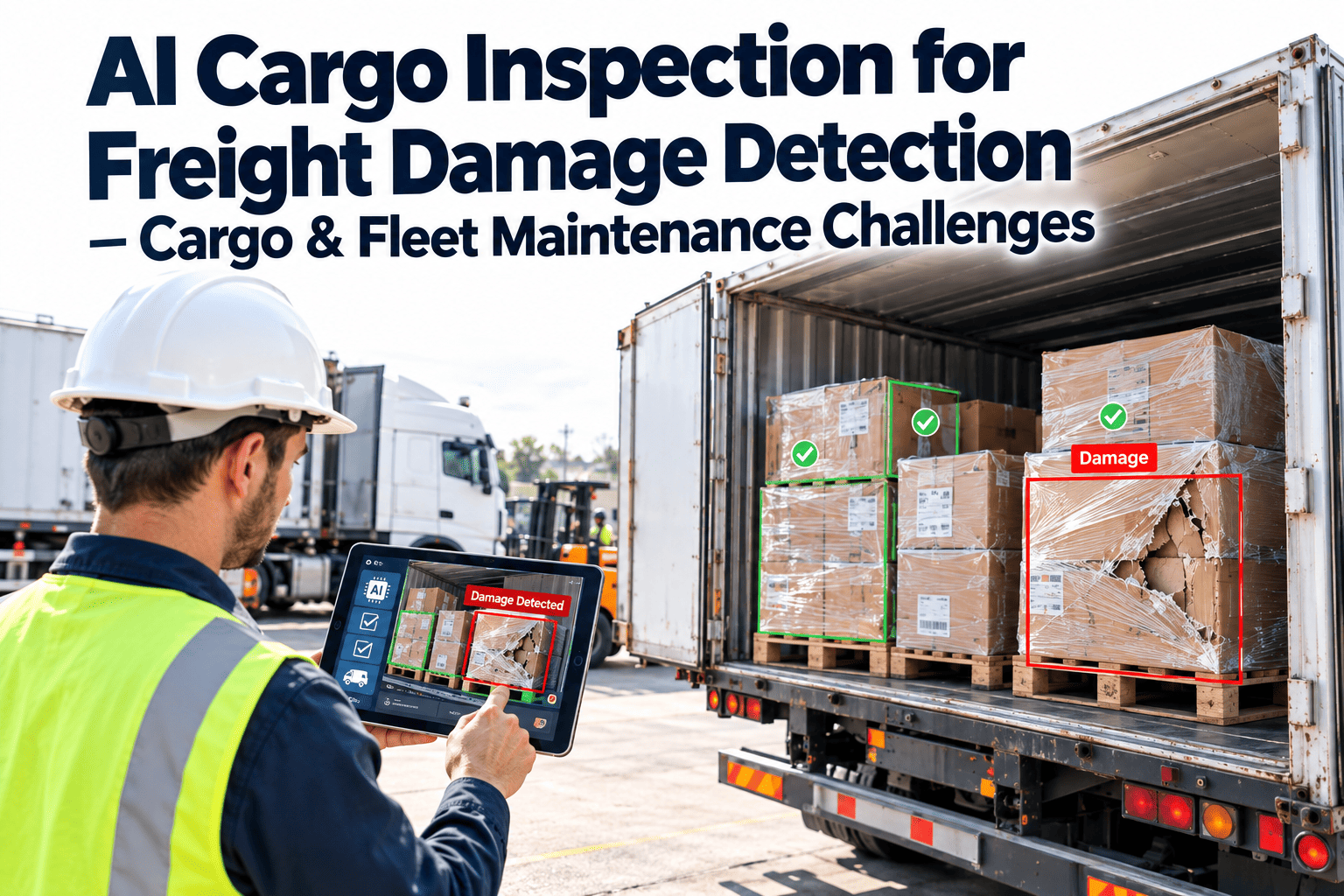
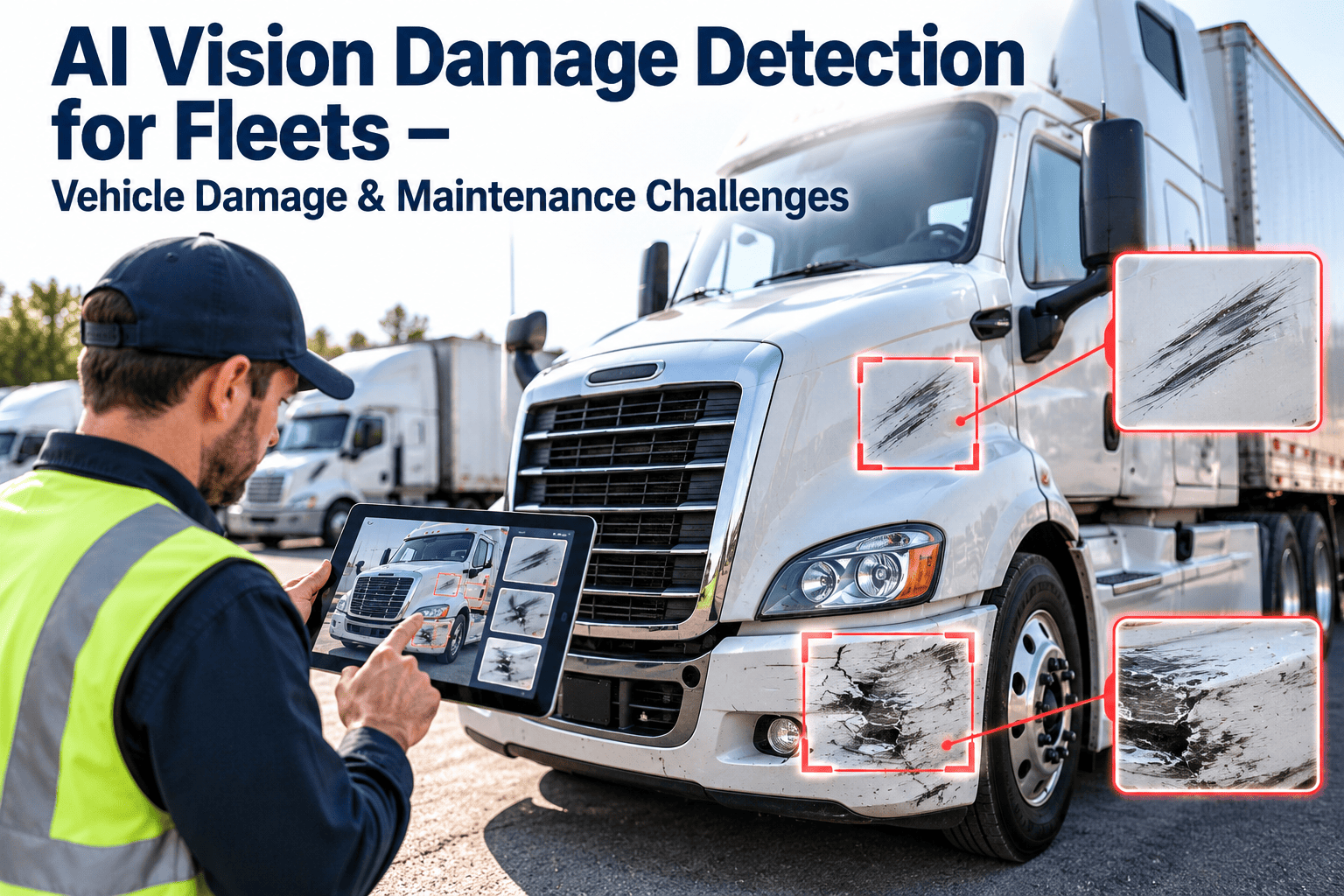
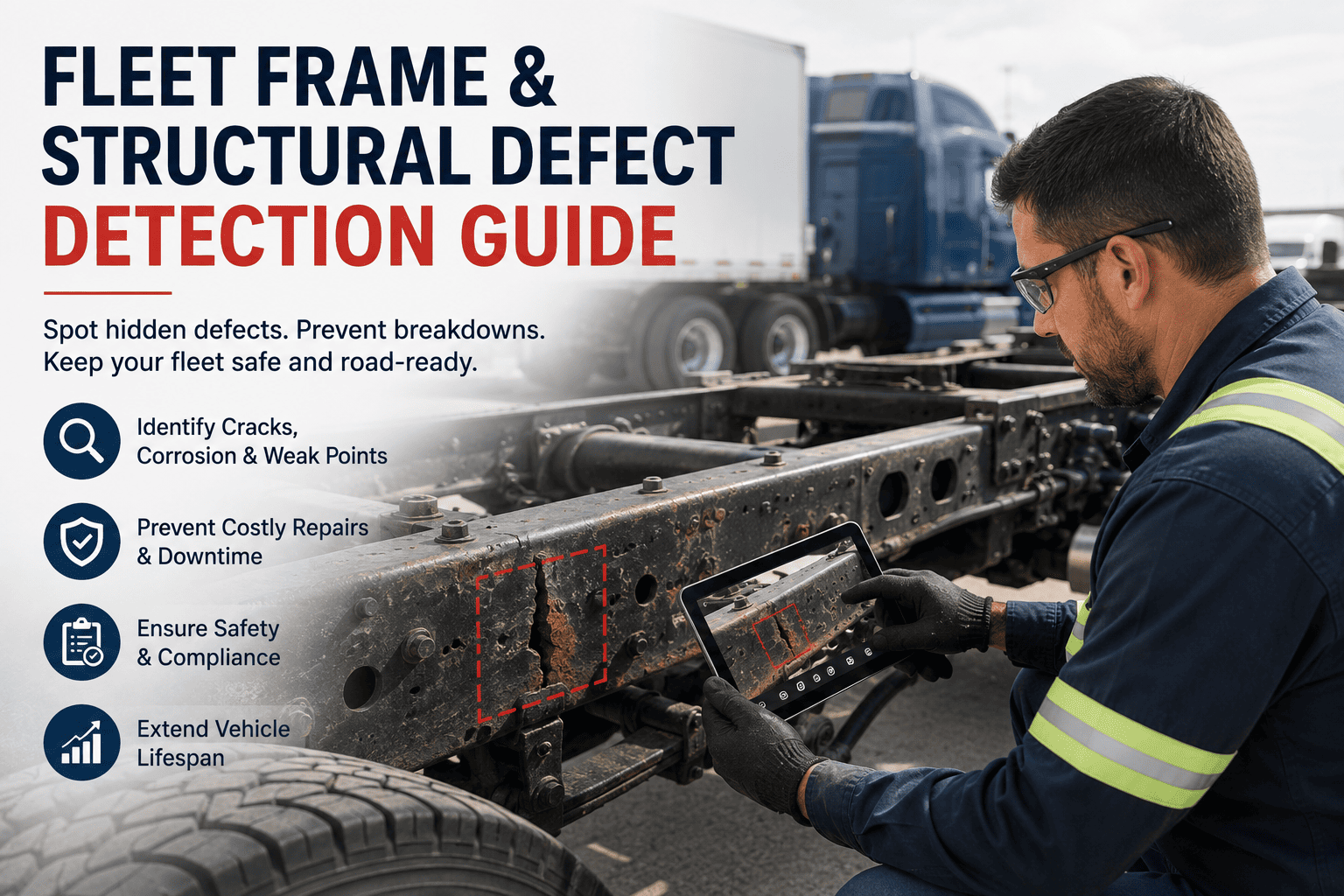
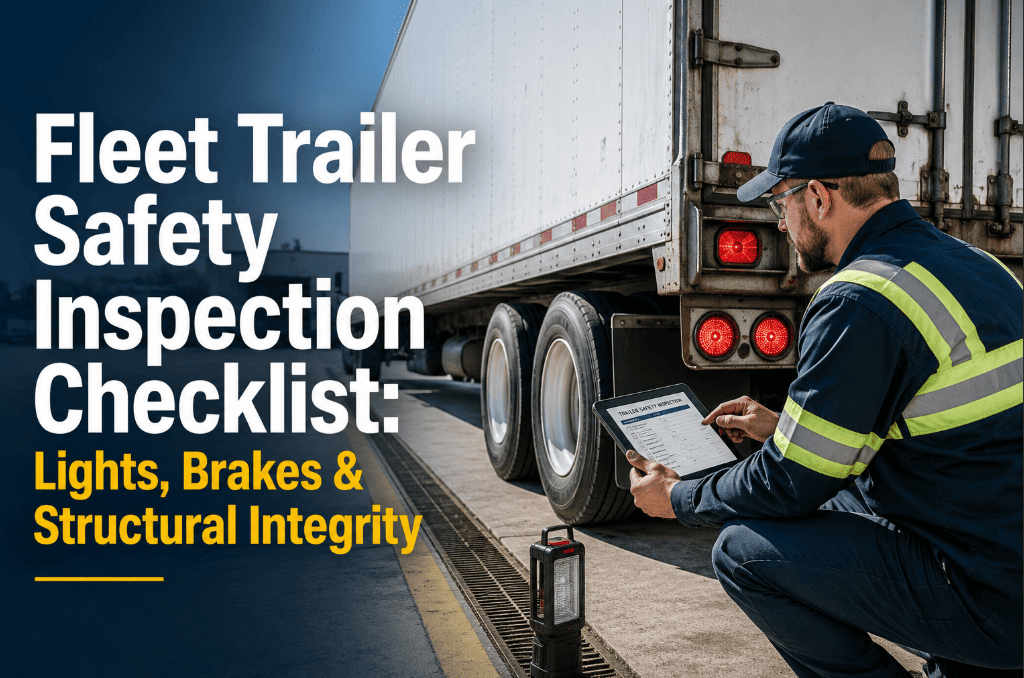
A flatbed carrier in Ohio lost three trailers to catastrophic structural failures in a single quarter — each one a frame weld that had been cracking for months before it propagated to a full fracture under load on the highway. Post-incident inspection found the weld cracks in every case, but the cracks had been invisible to the naked eye during routine walkaround inspections and had never been identified by visual-only inspection protocols. Weld and structural crack detection in fleet vehicles is not a problem that human eyes can reliably solve at depot inspection scale — fatigue cracks in trailer frames, chassis welds, fifth-wheel mounting structures, and suspension components are frequently sub-millimetre at the stage when intervention is inexpensive and safe. By the time they are visible to an inspector walking the vehicle, the repair cost has multiplied and the structural integrity risk is immediate. AI vision-based non-destructive testing changes this equation entirely. Sign in to OxMaint to activate AI structural inspection for your fleet, or book a demo to see how OxMaint AI vision detects weld cracks, frame fatigue, and structural anomalies at every depot inspection — before they become a roadside failure.
AI Weld Detection · Structural Inspection · Non-Destructive Testing · OxMaint Vision
Sub-Millimetre Weld Cracks. Frame Fatigue. Chassis Stress Fractures. AI Vision Detects Every Structural Anomaly That Human Inspection Misses — Before It Becomes a Roadside Failure.
OxMaint AI structural inspection uses high-resolution computer vision cameras to detect weld cracking, frame fatigue, chassis deformation, and suspension component stress at every depot entry — providing non-destructive structural assessment at a speed and consistency that manual inspection cannot match.
73%
of structural fleet failures involve cracks that were present and detectable by AI vision at least 30 days before the failure event
$48K
average cost of a highway structural failure on a commercial trailer — repair, towing, load transfer, CSA violation, and cargo damage combined
0.2mm
minimum crack width detectable by OxMaint AI vision cameras — sub-millimetre detection that is physically impossible with unaided visual inspection
73%
The majority of fleet structural failures involve cracks that were already present and visually detectable — by AI vision — 30 or more days before the failure event. The cracks were not invisible. They were invisible to unaided human inspection at normal inspection pace and lighting conditions. OxMaint AI structural cameras detect surface-breaking fatigue cracks from 0.2mm width, weld toe cracking in high-stress zones, frame deformation patterns that indicate cumulative fatigue, and chassis component stress indicators that do not present as visible damage until structural integrity is already compromised. Detecting these at depot entry is a fraction of the cost of a highway failure — for the vehicle, the cargo, and the driver.
Four Structural Inspection Domains OxMaint AI Vision Covers
WLD — Weld Integrity
AI Weld Crack Detection — Frame Rails, Cross-Members, and Mounting Structures
Weld joints in commercial trailer frames, chassis cross-members, fifth-wheel mounting plates, and body-to-frame attachment points are the highest-stress structural locations in any fleet vehicle. Fatigue cracks initiate at weld toes — the transition between the weld bead and the parent material — under cyclic loading from road vibration, cargo weight variation, and dynamic braking forces. These cracks propagate along predictable paths that AI vision models are trained to identify from surface texture changes, reflectance anomalies, and geometric deformation patterns that are invisible to standard inspection protocols. OxMaint AI weld inspection cameras scan every accessible weld zone at depot entry — creating a timestamped crack detection record that tracks crack length and propagation across consecutive inspections.
Sign in to OxMaint to configure AI weld inspection for your trailer and chassis fleet.
Key Weld Defects AI Vision Detects
Weld toe fatigue cracks — surface-breaking from 0.2mm width
Root weld cracking — detected by surface deformation pattern analysis
Heat-affected zone embrittlement — reflectance signature analysis
Weld undercut — geometric profile deviation from reference baseline
Porosity and inclusion near-surface — texture anomaly detection
Critical Weld Locations AI Vision Prioritises
Fifth-wheel kingpin mounting welds — highest failure consequence on any trailer
Frame rail splice welds — full-width crack propagation risk under load
Cross-member to rail welds — shear crack initiation under torsional load
FRM — Frame & Chassis
Frame Fatigue and Chassis Deformation Detection
Commercial vehicle frames accumulate fatigue damage through millions of cyclic load applications across their service life — and that damage manifests as progressive deformation, stress concentration zones, and eventual crack initiation that begins long before any visible distortion is apparent to a human inspector. OxMaint AI frame inspection cameras use 3D geometric analysis to detect sub-millimetre changes in frame rail geometry across consecutive inspections — identifying sections where cumulative fatigue is concentrating before surface cracking begins. This predictive geometric monitoring gives maintenance engineers the lead time to plan frame repair or replacement at a scheduled opportunity rather than responding to a roadside frame failure.
Book a demo to see AI frame geometry monitoring in OxMaint.
Key Frame Conditions AI Vision Detects
Frame rail bow — longitudinal deformation from overloading events
Chassis twist — torsional deformation pattern from road camber fatigue
Stress concentration surface marks — pre-crack fatigue indicators
Impact deformation — localised damage from curb, dock, or debris contact
Frame Failure Modes AI Vision Identifies Early
Rail section crack propagation — detected from geometric deviation trend
Frame separation at splice — early-stage deformation before crack formation
Mounting bracket fatigue — deck, body, and subframe attachment failures
SUS — Suspension Components
Suspension Structural Crack and Fatigue Detection
Leaf springs, trailing arms, spring hangers, and suspension mounting brackets carry the full dynamic load of a commercial vehicle — and they develop fatigue cracks that are frequently invisible under road contamination, grease, and surface corrosion that human inspectors cannot clean and assess at depot inspection pace. OxMaint AI suspension cameras use multispectral imaging that penetrates surface contamination layers to detect crack patterns in the underlying metal — identifying broken or cracking leaf spring leaves, fatigue cracks in trailing arm welds, and spring hanger stress fractures before they produce a suspension failure on the highway. Suspension structural failures at speed carry the highest safety consequence of any fleet structural failure category.
Sign in to OxMaint to configure suspension AI inspection for your fleet at depot entry.
Key Suspension Defects AI Vision Detects
Leaf spring fracture — broken leaves detected through contamination layers
Trailing arm weld crack — heat-affected zone fatigue detection
Spring hanger stress fracture — mounting point crack initiation
Air spring mount deformation — structural bracket fatigue pattern
Suspension Failure Modes AI Vision Identifies Early
Spring pack collapse — detected from leaf crack propagation tracking
Axle drop event — preceding suspension mounting weld failure detected early
Steering geometry shift — trailing arm weld crack before failure propagation
BDY — Body & Cargo Structures
Body Structure, Cargo Floor, and Coupling Device Inspection
Cargo body structures — refrigerated trailer walls, flatbed stake pockets, curtainsider rails, and tanker shell welds — accumulate fatigue damage from cargo loading cycles, forklift impact, and road vibration that produces cracking in body-to-floor welds, corner post joints, and door frame attachment points. Beyond cargo body integrity, coupling devices including fifth wheels, rear underride guards, and landing gear carry structural loads that must be verified at every inspection — and AI vision can assess all of these surfaces simultaneously during a depot pass-through that takes under 90 seconds per vehicle.
Book a demo to see full body and coupling AI structural inspection in OxMaint.
Key Body Structure Defects AI Vision Detects
Floor-to-body weld cracking — fatigue from repeated forklift loading cycles
Corner post weld fracture — torsional load crack initiation at body corners
Stake pocket fatigue crack — flatbed load securing point structural failure
Underride guard weld integrity — rear impact protection structure assessment
Body Failure Modes AI Vision Identifies Early
Floor panel delamination — adhesive failure preceding structural separation
Refrigeration unit mount crack — compressor vibration fatigue on trailer walls
Door frame weld crack — cargo security failure preceding full fracture
OxMaint AI Vision · Fleet Structural Inspection · Non-Destructive Testing
Every Crack Your Human Inspection Misses Is Already in Your AI Camera's Detection Range. The Question Is Whether You Are Looking.
OxMaint AI structural cameras detect weld cracks, frame fatigue, and suspension stress at every depot entry — in under 90 seconds per vehicle, with zero manual inspection time required.
Three AI Vision Technologies OxMaint Uses for Structural Crack Detection
How OxMaint AI Detects What Human Inspection Cannot See
Technology · Computer Vision
High-Resolution Surface Crack Detection
OxMaint uses high-resolution cameras at 50+ megapixels per inspection zone to capture weld surface detail at sub-millimetre resolution. AI models trained on thousands of confirmed crack images classify surface anomalies by crack type, estimated depth, and propagation direction — providing the technician with a precise location, photograph, and severity rating for every detected anomaly.
Detection threshold: 0.2mm surface-breaking crack width at standard depot lighting
Technology · AI Digital Twin
Crack Propagation Modelling per Vehicle
OxMaint builds a digital twin structural model for each vehicle — recording crack measurements at every inspection and calculating propagation rate from the trend data. The digital twin predicts when a detected crack will reach a critical length under the vehicle's actual operating load profile, generating a scheduled intervention recommendation before the crack becomes a structural integrity risk.
Output: Days-to-critical estimate for every tracked crack based on vehicle load history
Technology · Multispectral Imaging
Sub-Surface & Contamination-Penetrating Detection
Multispectral imaging beyond the visible range allows OxMaint cameras to detect crack signatures through surface corrosion, road grime, grease, and paint coatings that would obscure visual inspection. This is particularly critical for suspension components and underbody weld zones where surface contamination is continuous — enabling reliable structural assessment without pre-inspection cleaning.
Penetration depth: Detects cracks beneath up to 3mm of surface contamination
Structural Failure Risk by Vehicle Type — Where AI Inspection Delivers the Most Protection
Critical Risk
Flatbed Trailers — Fifth Wheel & Frame Welds
Fifth-wheel kingpin mounting welds on flatbeds carry the full articulated load during highway operation. Any crack propagation in this zone creates immediate separation risk. Weekly AI inspection mandatory — not monthly visual walkaround.
Critical Risk
Tanker Vehicles — Shell and Baffle Welds
Tanker shell weld failure creates simultaneous structural failure and hazmat spill risk. Baffle-to-shell welds fatigue from liquid surge loads. AI vision inspection detects weld cracking on tanker shells at every depot entry without requiring confined space entry.
Critical Risk
Heavy Haul — Suspension & Axle Mounting Welds
Overweight load operations accelerate fatigue crack propagation at axle mounting and suspension attachment welds. AI crack detection at post-heavy-haul depot return identifies load-induced damage before the vehicle returns to service for the next assignment.
Elevated Risk
Refrigerated Trailers — Body Frame Welds
Thermal cycling between refrigerated interior and ambient exterior temperatures creates fatigue stress at body frame welds. AI inspection detects early thermal-cycle crack initiation before body integrity is compromised and refrigeration unit efficiency is affected.
Elevated Risk
Box Trailers — Door Frame & Floor Welds
Repetitive forklift loading and unloading cycles fatigue floor-to-body welds and door frame attachment structures. AI vision detects progressive weld fatigue in high-cycle loading zones before cargo security is compromised.
Elevated Risk
Dump Bodies — Tailgate Hinge & Frame Welds
Dump cycle loading places extreme stress on tailgate hinge welds and body-to-frame attachment points. Each dump cycle is a fatigue event. AI weld inspection after high-cycle weeks identifies developing hinge and attachment weld cracking before structural failure under load.
AI Structural Inspection Coverage vs. Traditional NDT Methods
Documented Outcomes — Fleets Using OxMaint AI Structural Inspection
87%
reduction in roadside structural failures at fleets using OxMaint AI weld and frame inspection at every depot entry vs. periodic visual inspection programmes
$48K
average avoided cost per highway structural failure event — AI inspection at $12 per vehicle pass pays back at a 4,000-to-1 ratio per prevented failure
30 days
average advance detection window for structural cracks that became failures — the intervention window AI inspection opens vs. reactive visual inspection
0.2mm
minimum detectable crack width — sub-millimetre detection that human inspection cannot match at depot inspection pace
90 sec
AI inspection time per vehicle at depot entry — complete structural scan while vehicle waits for dispatch clearance
4,000:1
ROI ratio — AI inspection cost per vehicle pass vs. average highway structural failure cost prevented
73%
of structural fleet failures had AI-detectable cracks present 30+ days before failure — all preventable with depot AI inspection
A 0.2mm weld crack in a fifth-wheel mounting structure today is a $48,000 highway failure in 30 days. OxMaint AI sees it today — your walkaround inspection will not.
AI structural inspection at depot entry costs a fraction of one prevented failure. The ROI is not a business case — it is arithmetic.
OxMaint caught a fifth-wheel mounting weld crack on one of our flatbeds that had been through three visual inspections in the prior six weeks without being flagged. The AI flagged it on the Tuesday evening depot scan, we pulled the trailer Wednesday morning, the weld was cracked through 40% of its cross-section. That trailer was loaded and scheduled for a 900-mile run the following day. I don't want to think about what that would have looked like on the highway.
— VP of Maintenance, Flatbed Carrier · Ohio · 180-trailer fleet · OxMaint AI Inspection user since 2023
Frequently Asked Questions — AI Weld and Structural Crack Detection for Fleet Inspection
How does OxMaint AI detect weld cracks that human inspectors miss?
OxMaint uses 50+ megapixel high-resolution cameras with AI models trained on thousands of confirmed weld crack images — detecting surface-breaking cracks from 0.2mm width, heat-affected zone anomalies, and geometric deformation patterns that are invisible at normal inspection pace and lighting. Multispectral imaging detects cracks through surface contamination that human inspection cannot penetrate.
Sign in to OxMaint to configure AI weld inspection for your depot entry.
How long does OxMaint AI structural inspection take per vehicle at depot entry?
Under 90 seconds per vehicle for a full structural scan covering frame rails, weld zones, suspension components, and coupling structures. Vehicles drive through the inspection array during normal depot entry — no additional dwell time, no vehicle preparation, and no cleaning required before inspection.
How does OxMaint track crack propagation over time on the same vehicle?
OxMaint builds a digital twin structural record per vehicle — mapping every detected crack by location, width, and orientation at each inspection. The platform calculates propagation rate from consecutive measurements and generates a days-to-critical estimate based on the vehicle's actual load profile, giving maintenance engineers a data-driven intervention timeline rather than a calendar guess.
Does OxMaint AI structural inspection replace traditional NDT methods like MPI or ultrasonic testing?
OxMaint AI inspection is a continuous screening layer — not a replacement for periodic deep NDT on high-risk structural components. Fleets typically use OxMaint AI for every depot entry screening and schedule MPI or UT at annual intervals or when AI inspection identifies a developing crack requiring depth characterisation beyond surface crack mapping.
Book a demo to see how OxMaint integrates with your existing NDT programme.
What hardware does OxMaint AI structural inspection require at depot entry?
OxMaint AI structural inspection requires a depot entry camera array — typically 8–12 high-resolution cameras positioned to cover underbody, frame rail, suspension, and coupling zones as vehicles pass through. Installation is a one-time depot infrastructure project. Ongoing operation requires no human interaction — AI processes each vehicle pass automatically and generates inspection records in OxMaint with zero manual input.
Every Trailer Leaving Your Depot Today Has Welds That AI Can Inspect in 90 Seconds. How Many Are You Leaving to the Walkaround?
Sub-millimetre crack detection. 30-day advance warning. 4,000-to-1 ROI on prevented failures. OxMaint AI structural inspection makes every depot exit a verified structural clearance — not a visual best-effort.