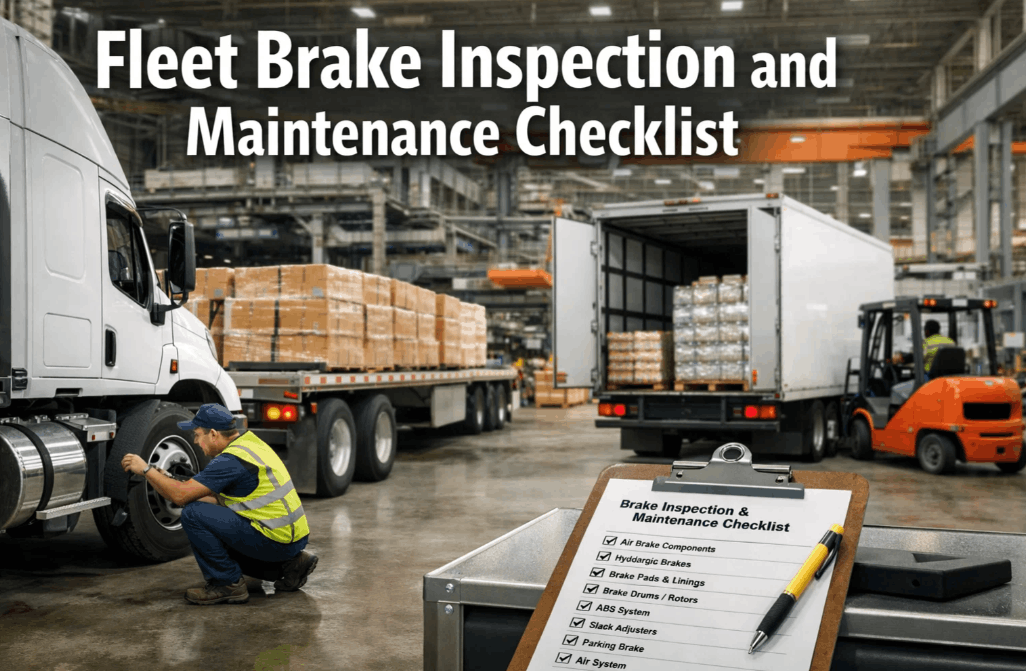
A trailer that fails inspection at the roadside is a trailer that passed dispatch without one. Fleet trailer safety inspections are not a formality — they are the single most reliable mechanism for catching brake defects, lighting failures, structural damage, and kingpin wear before they become FMCSA citations, cargo loss events, or fatal accidents. In 2026, DOT roadside inspections place 1 in 5 commercial trailers out of service — almost entirely for defects that a systematic pre-dispatch inspection would have caught. Trailer lights, brakes, glad hands, tandem slider locks, landing gear, and structural integrity each represent a distinct failure category with its own out-of-service threshold and civil penalty exposure. Sign up for OxMaint and replace your paper trailer inspection forms with a digital checklist system that enforces completion, routes defects to work orders automatically, and retains DOT-ready records indefinitely. Book a Demo to see how fleets reduce trailer out-of-service rates by 40% or more within two operating seasons.
Fleet Trailer Inspections · DOT Compliance · 2026
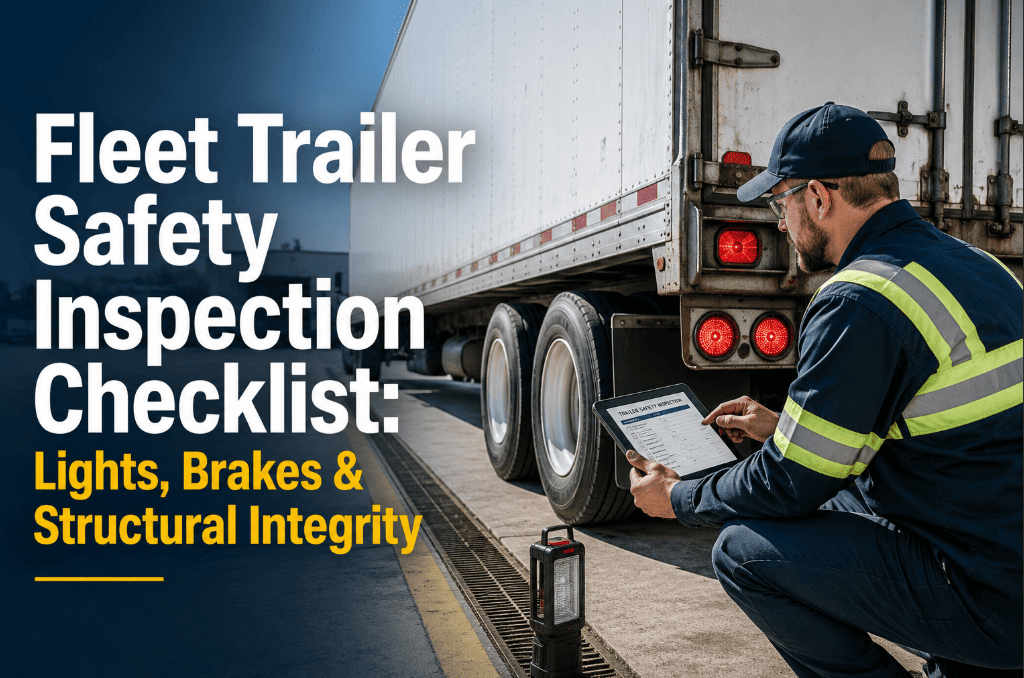
Fleet Trailer Safety Inspection Checklist: Lights, Brakes & Structural Integrity
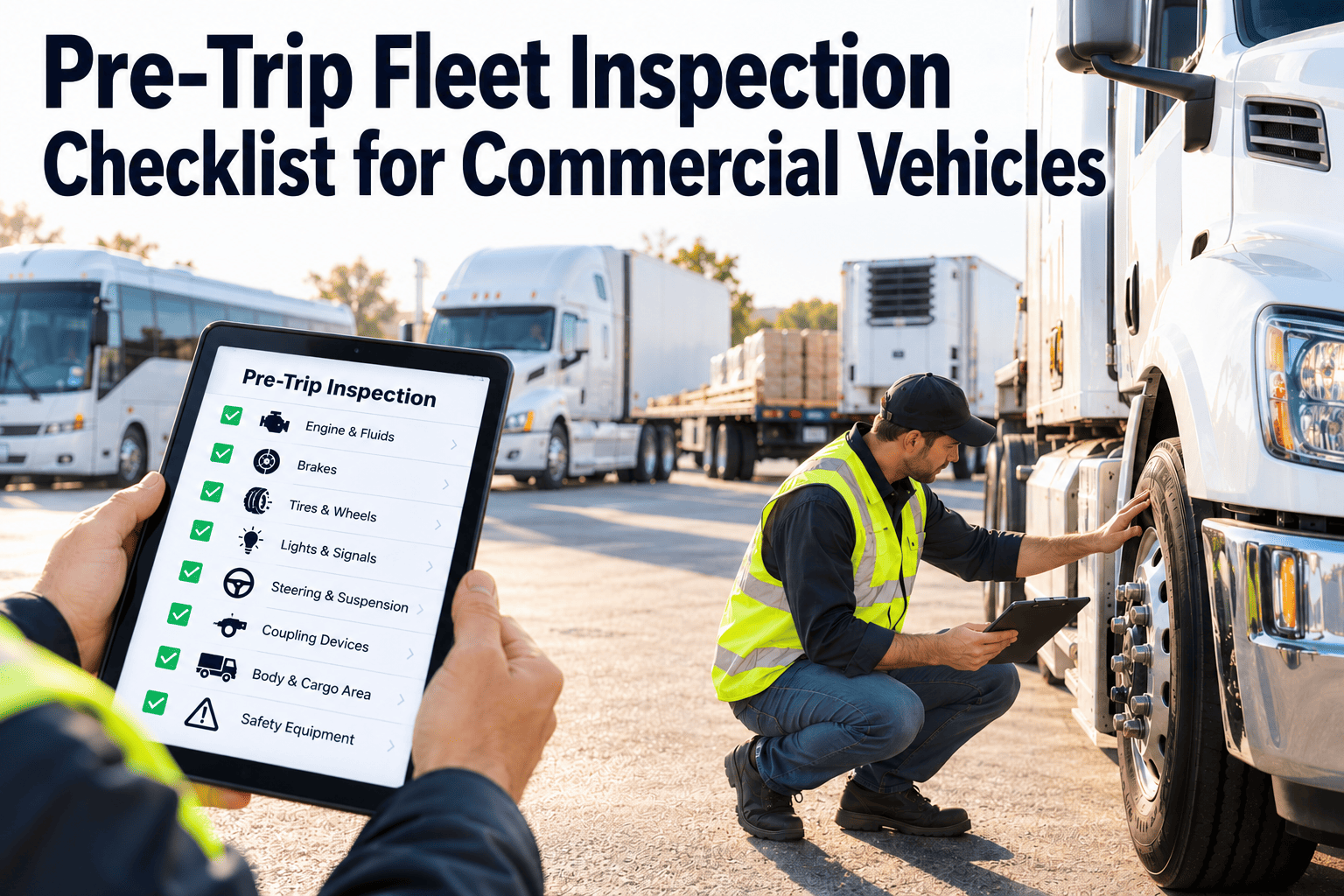
A complete pre-dispatch trailer inspection covers six systems: braking, lighting, structural integrity, coupling hardware, running gear, and in-cab documentation. OxMaint digitizes all six with guided mobile checklists, automatic defect-to-work-order routing, and fleet-wide trailer compliance visibility in real time.
1 in 5
Commercial trailers placed out of service at DOT roadside inspections — defects a pre-dispatch inspection would have caught
$16K+
Maximum civil penalty per brake violation — per axle, per operating day the defect existed before citation
40%
Trailer out-of-service rate reduction in fleets running digital pre-dispatch checklists vs. paper-based programs
87%
Of commercial vehicle crashes attributed to driver behavior or vehicle condition — trailer defects are a direct contributor
The 6-System Fleet Trailer Safety Inspection Framework
Trailer safety does not fail in one place — it fails across six distinct mechanical and compliance systems, each inspected by a different method, each with a different FMCSA out-of-service threshold. OxMaint manages all six from a single mobile checklist, with defect routing, photo documentation, and repair certification tracked per trailer per inspection event.
System 1: Trailer Brake Systems
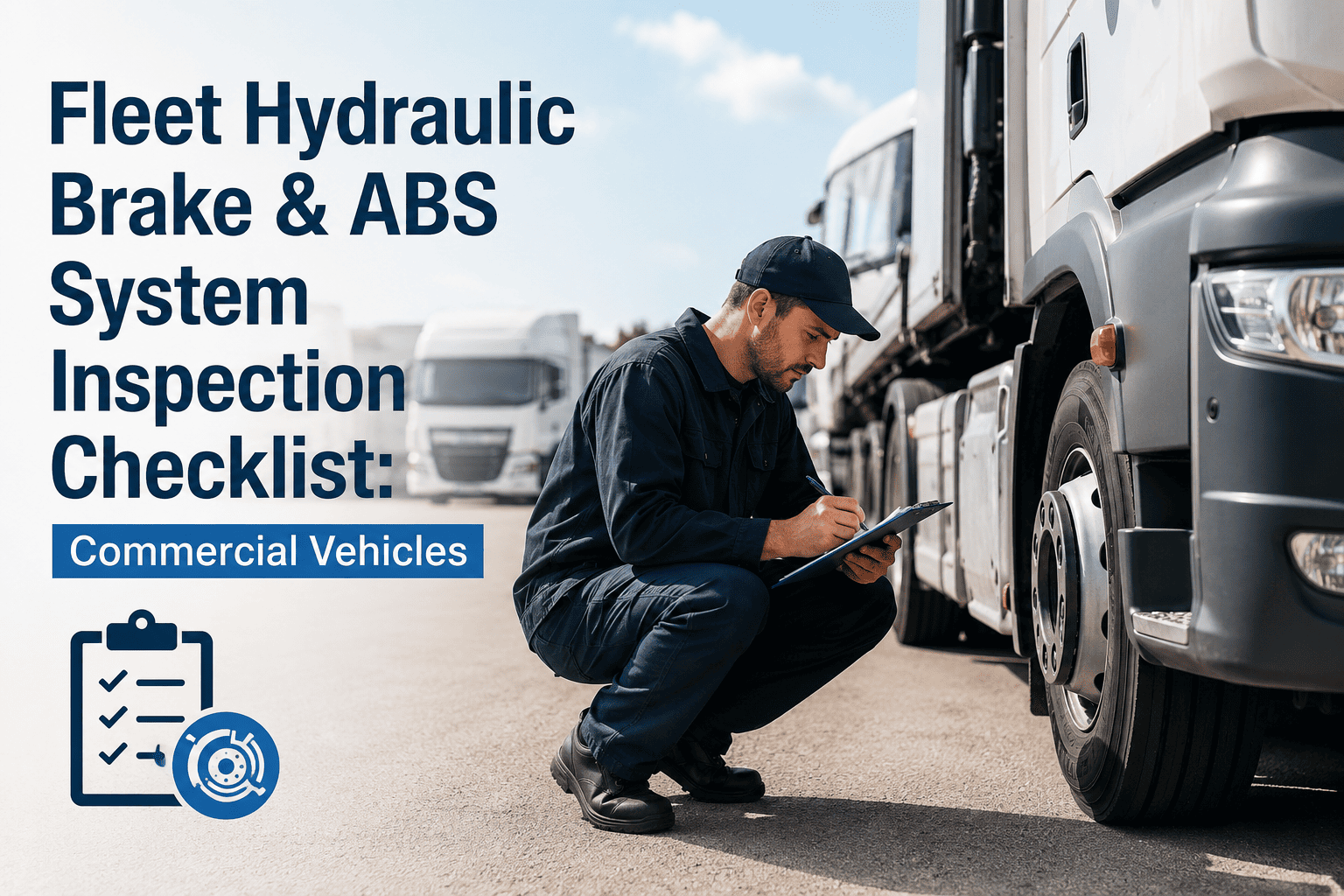
Service brakes, parking brakes, glad hands, brake chambers, slack adjusters, and brake lining condition verified before every dispatch. Brake violations are the leading cause of trailer out-of-service events and carry the highest civil penalty per axle of any inspection category.
Owner: Driver (daily) + Technician (PM) | Frequency: Pre-dispatch + service intervals
System 2: Lighting and Electrical
All marker lights, clearance lights, brake lights, turn signals, reflectors, and conspicuity tape verified functional and undamaged. Lighting defects are the second most cited trailer out-of-service violation — and the most preventable with a 90-second walk-around.
Owner: Driver (daily walk-around) | Frequency: Every pre-dispatch, every post-trip
System 3: Structural Integrity
Floor boards, cross members, rear door condition, side walls, roof integrity, and frame rails checked for damage, corrosion, or deformation that could compromise cargo containment or vehicle stability under load. Structural failures rarely announce themselves — systematic inspection finds them before they become crash causation factors.
Owner: Driver (daily) + Technician (PM structural check) | Frequency: Daily + quarterly detailed
System 4: Coupling Hardware
Kingpin condition and wear, fifth wheel engagement and locking mechanism, trailer glad hand connections, safety chains or cables, and landing gear structural integrity verified before coupling and departure. Coupling failure events are catastrophic — and almost entirely preventable through pre-dispatch inspection.
Owner: Driver (every coupling event) | Frequency: Every hook-up, every dispatch
System 5: Running Gear and Tires
Tire pressure, tread depth, sidewall condition, wheel fastener torque, tandem slider position and lock pins, axle suspension components, and mud flap presence verified per axle. Tire failures are a leading cause of commercial vehicle crashes and the second most common trailer out-of-service violation category.
Owner: Driver (daily) + Technician (torque verification at PM) | Frequency: Daily + PM intervals
System 6: Regulatory Documentation
Trailer registration currency, annual inspection sticker validity, DVIR review and certification, load securement equipment presence, and hazmat placard accuracy if applicable. Documentation violations generate citations regardless of mechanical soundness — each expired document is an individual penalty exposure.
Owner: Fleet/Compliance Manager | Frequency: Expiration monitoring continuous + daily DVIR
Complete Fleet Trailer Safety Inspection Checklist: All 6 Categories
Each category below must be verified systematically on every trailer before every dispatch. OxMaint enforces digital completion with required photo documentation for any defect and automatic work order generation before the vehicle is cleared for departure. Sign up free to deploy digital trailer inspection checklists across your fleet today.
Category 1: Brake System Inspection
Service brake function
Pedal application confirms deceleration at both sides of all axles — no pull, fade, or delayed response
Glad hand connections and seals
Service and emergency glad hands seat fully — no air leaks audible at couplings or hose connections
Brake chamber pushrod stroke
Applied stroke within FMCSA limits per chamber size — automatic slack adjusters confirmed functional
Brake lining thickness
At or above FMCSA minimum — no cracked, contaminated, or missing brake lining segments
Brake hose and line condition
No chafing, cracking, crimping, or contact with moving components — full length of visible run inspected
Spring brake function
Parking brake holds on required grade without service brake engagement — manual caging pins not deployed
FMCSA: inoperative brakes on 20%+ of service positions = immediate out-of-service. Highest civil penalty category per axle.
Category 2: Lighting and Visibility
Brake lights and tail lights
All positions functional — visible at 500 feet minimum, no yellowed or cracked lenses
Clearance and marker lights
All required positions illuminated — front amber, rear red, side markers at mandated spacing
Turn signal function
Left and right — front and rear — 60–120 flashes per minute, trailer signal synchronized with tractor
Conspicuity tape condition
Retro-reflective tape present and undamaged across all required rear and side positions per FMCSR 393.11
Reflectors present and undamaged
All required reflector positions present — no missing, obscured, or non-reflective units
Electrical connector engagement
7-way connector fully seated and locked — no intermittent contact, no corrosion at pins
Lighting is the #2 trailer out-of-service violation — 12.7% of inspected trailers cited. Preventable with every pre-dispatch walk-around.
Category 3: Structural Integrity
Floor board condition
No broken, missing, or rotted floor boards — load rating integrity confirmed, no soft spots under foot pressure
Cross member and frame rail integrity
No visible cracks, deformation, or corrosion penetrating cross members or main frame rails
Rear door and seal condition
Doors open, close, and latch without binding — seals intact, no gaps that would allow cargo shift or moisture ingress
Side wall and roof integrity
No punctures, tears, or deformation that reduces structural integrity or compromises cargo containment
Mud flaps present and secure
All required positions present — no torn, missing, or unsecured flaps at any axle grouping
Load securement equipment
Cargo straps, chains, and load bars present, undamaged, and within rated working load limit
Structural defects affecting cargo containment generate both FMCSA out-of-service and liability exposure for cargo loss or third-party damage.
Category 4: Coupling Hardware
Kingpin condition and wear
No cracks, gouges, or wear exceeding FMCSA limits — kingpin shank diameter within specification
Fifth wheel engagement verified
Tug test confirmed — kingpin locked, jaws closed, locking lever in latched position before departure
Landing gear condition
Fully retracted and locked before departure — no bent legs, stripped gears, or missing crank handle
Safety chains or cables
Present, attached at both ends, and crossed under tongue — no broken links or missing hardware
Pintle hook or ball mount condition
No cracks, deformation, or excessive wear — locking mechanism engages and releases cleanly
Air line routing post-coupling
No air lines under tension, dragging, or routed near heat sources or moving components after hookup
Coupling failure is catastrophic. Kingpin, fifth wheel, and safety chain verification at every hook-up event is non-negotiable.
Category 5: Running Gear and Tires
Tire pressure — all positions
All axle positions verified to placard spec ±5 PSI — no visibly flat or underinflated tires at walk-around
Tread depth — drive and trailer tires
Minimum 2/32" at any two adjacent grooves — steer positions require 4/32" minimum
Sidewall and tread condition
No bulges, cuts, cord exposure, or tread separation — duals checked for contact at all positions
Wheel fastener condition
No loose, missing, or visibly damaged lug nuts — rust streaking from fastener positions noted for torque check
Tandem slider position and lock pins
Slider positioned correctly for load configuration — all lock pins fully engaged and visible at both sides
Suspension components visible check
No broken leaf springs, u-bolts, or air ride components — no abnormal trailer lean at static rest
Tires are the #2 trailer out-of-service violation — 16.2% of inspected trailers cited. Tandem slider lock failures generate separate out-of-service citations.
Category 6: Regulatory Documentation
Trailer registration current
Current plate and registration match trailer VIN — not expired, visible and retrievable in cab documentation
Annual inspection sticker valid
Current-year sticker properly displayed — not expired, inspector credentials on file in fleet records
Previous DVIR reviewed and certified
Last completed DVIR reviewed — all prior defects certified repaired or certified no repair needed before dispatch
Hazmat placard accuracy
Placards correct for cargo if applicable — no prior-shipment placards remaining from different cargo class
Emergency equipment present
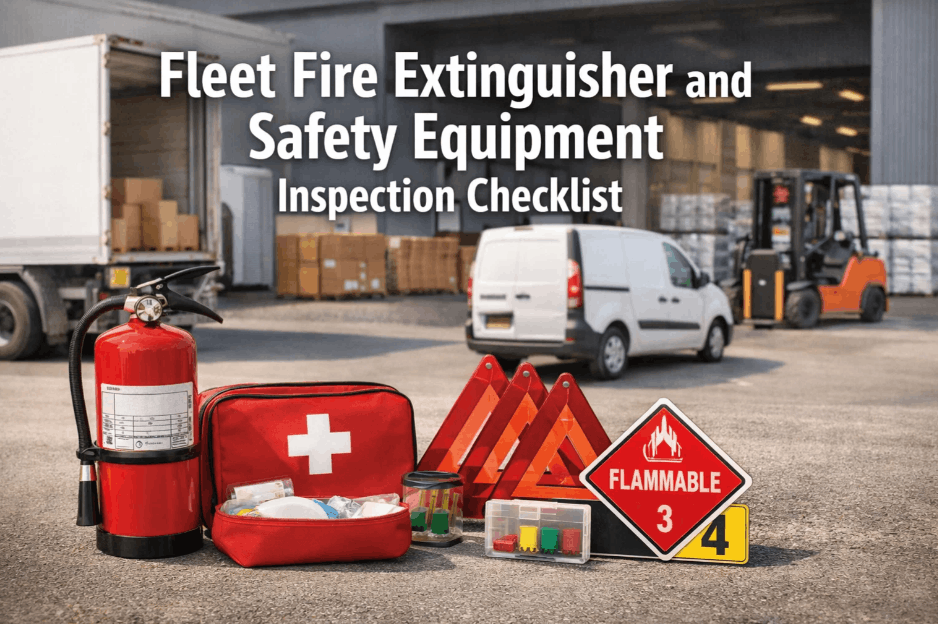
Three reflective triangles, fire extinguisher charged and in-date — accessible without unloading cargo
DVIR completed and signed
Current inspection event DVIR completed, defects noted, driver signature applied before vehicle departure
Documentation violations are cited regardless of mechanical soundness — each expired document carries individual civil penalty exposure per operating day.
How OxMaint Digitizes Fleet Trailer Inspections
Paper trailer inspection forms create three failure modes: incomplete inspections that pass undetected, defects that never reach maintenance, and records that disappear before a DOT audit or legal discovery request. OxMaint eliminates all three. Sign up free and deploy digital trailer checklists across your entire fleet within one operating day — no hardware required.
Guided Mobile Checklists
OxMaint presents every trailer inspection item in a guided mobile format — requiring an explicit pass, fail, or observation response before the checklist can be submitted. No items can be skipped. Photo documentation is required for any failed item. Driver digital signature applied at submission. Fleet managers see outstanding inspections before vehicles depart.
Defect-to-Work-Order Automation
Any checklist item marked defective automatically generates a prioritized maintenance work order — pre-populated with trailer ID, defect description, photo, and severity classification. Trailer dispatch status updates to "safety defect pending" immediately. Dispatchers see the flag on the dashboard before route assignment. Zero gap between defect detection and maintenance action.
DOT-Ready Record Retention
All trailer inspection records, defect reports, and repair certifications are retained indefinitely in OxMaint — searchable by trailer, driver, date, defect type, or inspection category. FMCSA compliance reviews, roadside inspection challenges, insurance investigations, and litigation discovery requests are satisfied in under 60 seconds from any device.
Regulatory Document Expiration Monitoring
Trailer registration, annual inspection, and permit expiration dates stored per asset with configurable advance alerts at 90, 60, and 30 days. Fleet managers see document currency status across every trailer on one dashboard — renewal actions taken before documents lapse rather than after they generate citations.
Fleet-Wide Trailer Safety Dashboard
OxMaint tracks trailer inspection completion rate, defect frequency per trailer, repair certification timing, and PM compliance rate across the entire fleet in real time. Safety managers see which trailers have outstanding defects, which inspections are overdue, and which trailers are approaching service intervals — without building manual reports from site data.
Trailer Maintenance History per Asset
Every inspection event, defect, repair, and PM is stored in the trailer's permanent asset record in OxMaint. Before dispatch, drivers and fleet managers see the complete service and defect history for that trailer.
Book a Demo to see OxMaint's per-trailer asset records configured for your fleet's trailer roster.
Replace Paper Trailer Inspection Forms With a Digital System That Enforces Completion — Free to Start
OxMaint's digital trailer inspection system covers all 6 safety systems — brakes, lighting, structural integrity, coupling hardware, running gear, and regulatory documentation — with guided mobile checklists, automatic defect routing, and FMCSA-ready record retention. Deploy across your fleet in one day. No hardware required.
Trailer Inspection Program Maturity: 4 Levels
Most fleets that experience repeated trailer out-of-service events are not operating without safety intentions — they are operating without safety systems. The difference between a fleet with a 5% out-of-service rate and one with a 20%+ rate is almost entirely in the consistency and completeness of pre-dispatch inspection execution.
Level 1
Reactive
Paper DVIRs completed inconsistently. Defects discovered at roadside inspection or after incidents. No defect-to-repair tracking.
High out-of-service rate. Frequent citations. Emergency repair costs. Poor FMCSA safety rating.
Level 2
Compliant
Inspections performed and signed. Basic defect tracking in place. Regulatory documents monitored manually.
Roadside citations reduced. Safety rating acceptable. Incident rate at industry average.
Level 3
Systematic
Digital checklists with defect-to-work-order automation. Document expiration alerts. PM compliance tracked. Safety KPIs reviewed weekly.
30–40% below-average incident rate. 15–20% insurance premium reduction. Out-of-service rate under 5%.
Level 4
Predictive
AI condition monitoring flags emerging defects before inspection catches them. Telematics behavior analytics. Condition-based asset replacement planning.
50%+ below-average incident rate. Maximum insurance discount. Safety as competitive differentiator for carrier contracts.
Frequently Asked Questions
What DOT regulations govern fleet trailer inspection requirements?
FMCSA 49 CFR Part 396 requires systematic pre-trip and post-trip inspections for all commercial trailers operating in interstate commerce. The driver must complete a Driver Vehicle Inspection Report (DVIR) at each trip's end noting any defect or deficiency affecting safety. Trailers must also pass an annual inspection per 49 CFR 396.17. OxMaint's digital DVIR system satisfies all Part 396 documentation and retention requirements — including the 90-day minimum DVIR retention period and repair certification documentation.
What are the most common reasons trailers are placed out of service at DOT roadside inspections?
The top three trailer out-of-service violation categories are brakes (pushrod stroke, lining condition, and air system integrity), tires (tread depth, sidewall condition, and pressure), and lighting (inoperative brake lights, clearance lights, and conspicuity tape). All three categories are directly addressed by OxMaint's pre-dispatch trailer inspection checklist — defects caught before departure cannot generate roadside citations.
How does OxMaint handle trailer defects found during pre-dispatch inspection?
Any defect marked in OxMaint's checklist automatically generates a maintenance work order routed to the assigned technician — with the trailer flagged as "out of service pending repair" on the dispatch dashboard. Dispatchers cannot inadvertently assign a defective trailer to a route without seeing the safety flag. Once the repair is completed and certified in OxMaint, the trailer status clears and the repair record is retained in the asset's permanent history.
How long must fleet trailer inspection records be retained for FMCSA compliance?
FMCSA requires DVIR records to be retained for a minimum of 90 days. Annual inspection records must be retained for 14 months. In practice, carriers involved in litigation or compliance investigations need 24–36 months of complete inspection and repair records to demonstrate a systematic safety program. OxMaint retains all records indefinitely, searchable by trailer, date, or defect type — available in under 60 seconds for any regulatory or legal inquiry.
Can OxMaint track kingpin wear and annual inspection currency per trailer?
Yes. OxMaint stores each trailer's annual inspection date, inspector certification, and next due date in the trailer's asset record — with advance expiration alerts configurable at 90, 60, and 30 days. Kingpin wear measurements taken at PM events are recorded in the asset's inspection history, creating a trend record that flags trailers approaching replacement thresholds before they fail at roadside.
Book a Demo to see OxMaint's trailer asset tracking for your fleet's specific trailer types.
1 in 5 Trailers Fail DOT Inspection. Systematic Pre-Dispatch Checklists Are How You Stop Being That Trailer.
OxMaint's digital fleet trailer inspection system covers all 6 safety systems with guided mobile checklists, automatic defect-to-work-order routing, DOT-ready record retention, and fleet-wide compliance dashboards. Free to start. No hardware required. Join 1,000+ fleets running systematic trailer safety programs with OxMaint.