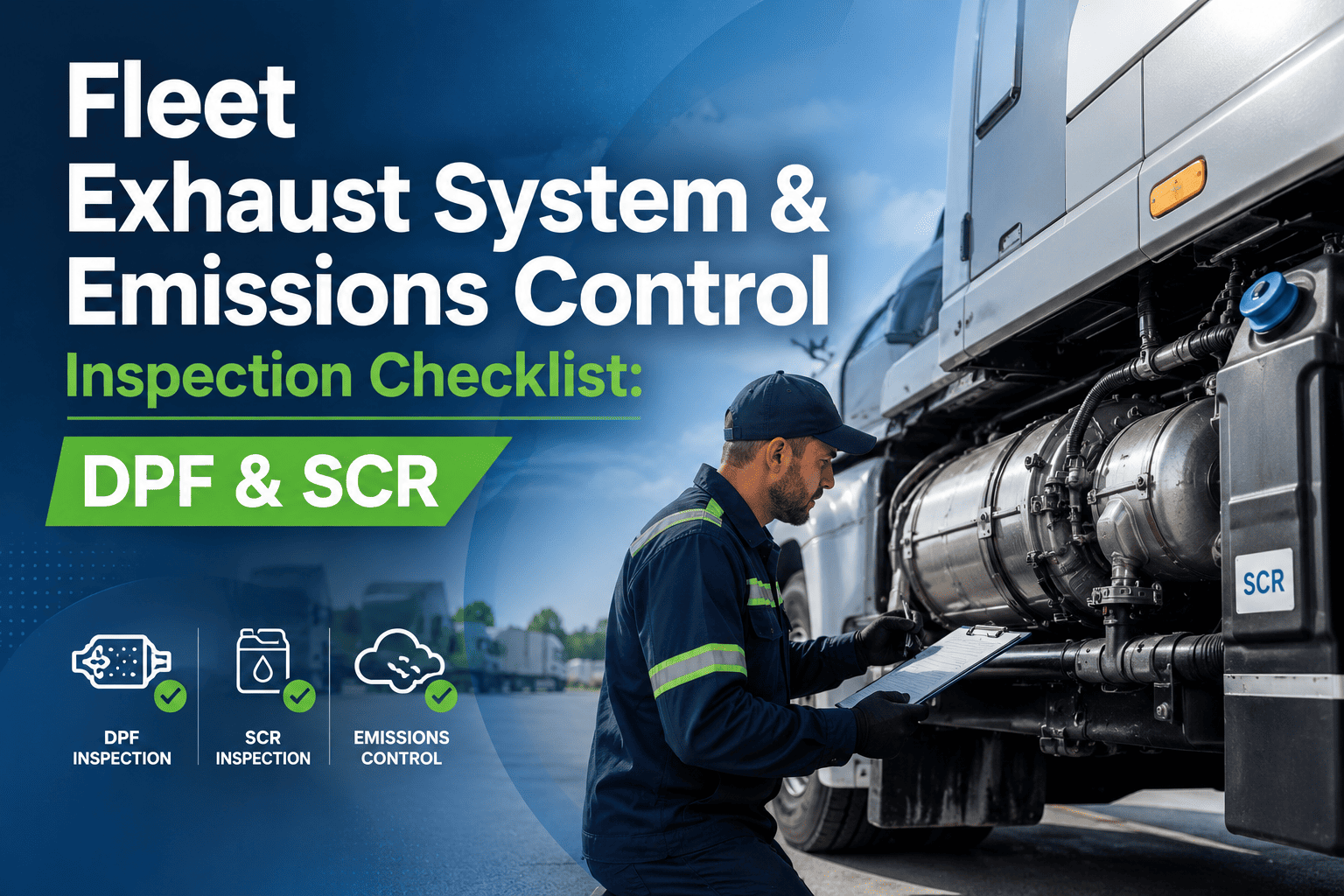
Fleet Exhaust System & Emissions Control Inspection Checklist: DPF & SCR
By Stephen King on June 8, 2026
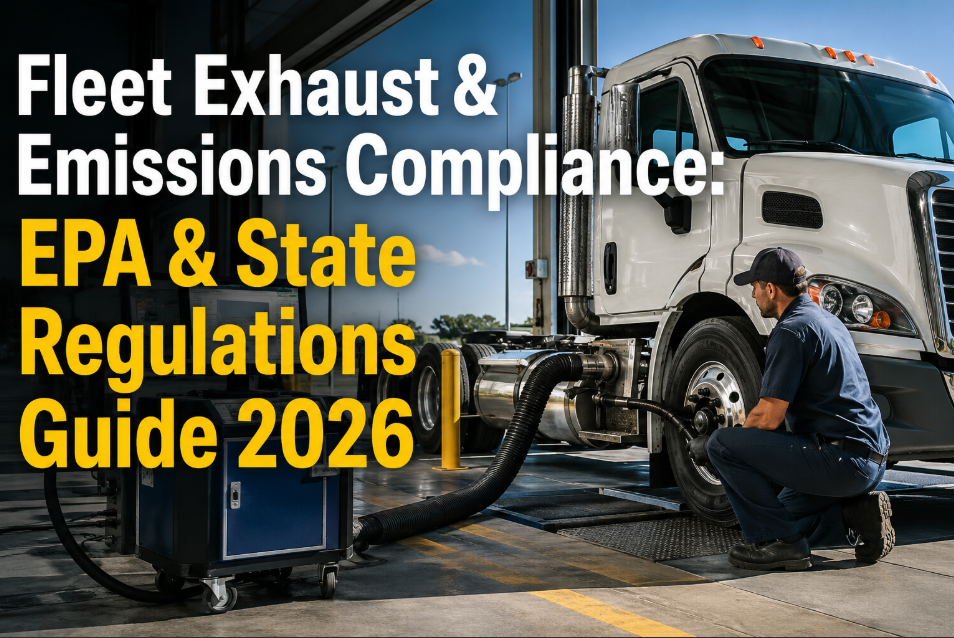
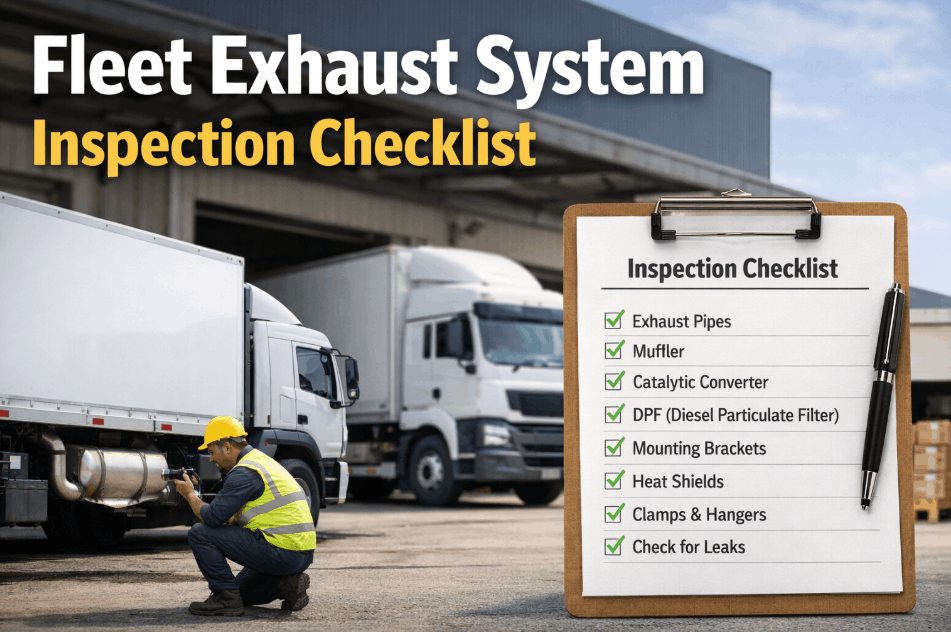
Fleet exhaust and emissions control systems are among the most regulated — and most neglected — components in commercial vehicle maintenance. A failed DPF filter, degraded SCR catalyst, or malfunctioning EGR valve does not just trigger a fault code: it puts your fleet out of EPA compliance, risks roadside shutdown, and can escalate into engine damage costing $8,000–$30,000 per vehicle. With emissions-related violations now carrying fines exceeding $44,000 per day per vehicle in severe cases, no fleet manager can afford an informal inspection program. This checklist covers every critical inspection point in a commercially correct fleet exhaust and emissions control service: DPF condition and regeneration status, SCR catalyst and DEF system integrity, EGR valve function, NOx sensor calibration, and EPA compliance documentation. Facilities using OxMaint's digital work order system execute this checklist on mobile, auto-schedule next inspections, and build a complete emissions compliance history per vehicle — zero paper required. Book a demo to see fleet emissions compliance tracking configured for your fleet. Teams already running structured digital inspection workflows through report 60–70% reductions in emissions-related roadside failures and significantly faster regulatory audit response times. Whether you manage 5 vehicles or 500, to see how automated inspection scheduling eliminates missed emissions checks across your entire fleet. Start today — sign up free — and deploy this checklist digitally within hours.
5Inspection Phases
34Checklist Tasks
$44KMax Daily EPA Fine
70%Fewer Roadside Failures
Priority:Critical EPA violation or engine damage risk if skippedHigh Compliance or performance impactStandard Required before phase sign-off
Digital emissions inspection checklists, DPF status tracking, and EPA compliance documentation — all captured on mobile and filed automatically per vehicle. Book a demo to see fleet emissions compliance live.
Est. 10–15 minutesFleet Manager + TechnicianComplete before any physical inspection
1.1 Vehicle and Compliance Record Verification
#
Task
Acceptance Criteria
Priority
Sign-Off
1.1.1
Confirm vehicle asset ID, odometer, engine hours, and engine model against CMMS work order. Pull last emissions inspection record and any active fault codes stored in CMMS history.
Asset ID confirmed. Previous inspection record accessible. Any open emissions fault codes documented on work order.
High
________
1.1.2
Verify the vehicle's applicable EPA emissions standard tier (EPA 2007, 2010, or newer) and confirm correct inspection scope. Heavy-duty diesel vehicles manufactured post-2010 require full DPF, SCR, and EGR inspection under current EPA standards.
EPA tier confirmed per vehicle VIN. Correct inspection scope applied. Recorded on work order.
Critical
________
1.1.3
Retrieve current DEF (Diesel Exhaust Fluid) consumption data from telematics or CMMS. Abnormal DEF consumption — more than 3–5% of diesel fuel usage — indicates SCR system fault requiring investigation before road return.
DEF consumption rate reviewed and recorded. Abnormal consumption flagged as pre-existing deficiency on work order.
High
________
1.1.4
Connect OBD diagnostic tool and pull all active and pending emissions-related DTCs (Diagnostic Trouble Codes). Record all codes on work order before beginning physical inspection — this establishes the pre-inspection baseline.
All DTCs recorded. Emissions-specific codes (P2002, P20EE, P0401, P0406 range) highlighted for targeted inspection in subsequent phases.
Critical
________
1.1.5
Confirm all required inspection tools and consumables are staged: diagnostic scanner, DPF pressure test adapters, DEF quality tester, NOx sensor test leads, inspection mirror, and torque wrench. Missing tools delay inspection and introduce skip risk.
All tools confirmed staged and calibrated at vehicle. Calibration dates on test equipment verified current.
Standard
________
GATE 1All Phase 1 items signed off. DTCs recorded. EPA tier confirmed. Tools staged. Phase 2 DPF inspection cannot begin until Gate 1 is cleared.
PHASE 2
DPF Filter Condition and Regeneration System Inspection
Est. 20–30 minutesCertified Emissions TechnicianBegin after Gate 1 clearance
2.1 DPF Physical Condition and Loading Assessment
#
Task
Acceptance Criteria
Priority
Sign-Off
2.1.1
Check DPF soot load percentage via diagnostic scanner. Soot load above 80% requires forced regeneration before inspection can continue. A fully clogged DPF (100% soot load) causes exhaust backpressure that can damage turbocharger and engine within hours of continued operation.
Soot load percentage recorded. If above 80%, forced regeneration performed and documented. Soot load under 80% confirmed before continuing.
Critical
________
2.1.2
Inspect DPF differential pressure sensor and connecting hoses for damage, cracks, or blockage. A failed differential pressure sensor gives false DPF loading readings — leading to either unnecessary regeneration cycles or missed clogging events. Clean or replace per OEM specification.
Differential pressure sensor and hoses intact. No blockage found. Sensor readings within normal range per OEM specification.
Critical
________
2.1.3
Inspect DPF housing exterior for cracks, weld failures, impact damage, or corrosion. Check all mounting brackets and heat shield integrity. Damaged housings can allow partial exhaust bypass, triggering EPA non-compliance and voiding emissions warranty.
DPF housing intact with no cracks, weld failures, or impact damage. All mounting brackets secure. Heat shields fitted and undamaged.
Critical
________
2.1.4
Review DPF regeneration frequency data from CMMS or telematics. Regeneration intervals shorter than OEM-specified normal range (typically every 300–500 miles for city operation) indicate high soot production — possible causes include injector wear, EGR malfunction, or incorrect fuel specification.
Regeneration frequency within OEM acceptable range. Abnormal frequency flagged on work order for root cause investigation.
High
________
2.1.5
Check DPF ash load via OEM diagnostic tool if available. Ash accumulates from engine oil additives and cannot be removed by regeneration — it requires scheduled DPF cleaning at OEM-specified intervals (typically every 150,000–200,000 miles for highway trucks). Record ash load on work order.
Ash load percentage recorded. If ash load is at or above OEM cleaning threshold, DPF cleaning flagged as required work item.
High
________
2.2 DPF Temperature Sensor and Regeneration System Verification
#
Task
Acceptance Criteria
Priority
Sign-Off
2.2.1
Inspect all exhaust temperature sensors upstream and downstream of DPF. Temperature sensors failing to read within 50°C of expected values at operating temperature indicate sensor drift or failure — affecting regeneration trigger accuracy and DPF lifespan.
All temperature sensor readings within OEM-specified range at operating temperature. Any out-of-range sensor flagged for replacement.
Critical
________
2.2.2
Verify diesel oxidation catalyst (DOC) condition upstream of DPF. A degraded DOC fails to raise exhaust temperature sufficiently during regeneration — leading to incomplete soot burns and accelerated DPF clogging. DOC efficiency should be assessed via OEM scanner data.
DOC efficiency data recorded. If DOC temperature rise during regeneration is below OEM minimum threshold, DOC flagged for replacement.
High
________
GATE 2DPF soot and ash load recorded. Housing integrity confirmed. Temperature sensors verified. Regeneration frequency reviewed. Phase 3 SCR inspection cannot begin until Gate 2 is cleared.
PHASE 3
SCR Catalyst and DEF System Inspection
Est. 20–25 minutesCertified Emissions TechnicianBegin after Gate 2 clearance
3.1 SCR Catalyst and DEF Dosing System
#
Task
Acceptance Criteria
Priority
Sign-Off
3.1.1
Test DEF quality using a refractometer or dedicated DEF quality tester. DEF must be 32.5% urea concentration (AdBlue/AUS32 specification). Contaminated or degraded DEF — below 30% or above 35% urea — causes SCR catalyst poisoning, triggering EPA NOx exceedance and derate events that limit vehicle to 5 mph.
DEF urea concentration between 31.8% and 33.2%. Contamination test passed. DEF quality result recorded on work order.
Critical
________
3.1.2
Inspect DEF tank, filler neck, and supply lines for crystalline deposits (white residue indicating DEF spillage or leak) and crack damage. Crystalline DEF buildup around fittings indicates slow leaks that cause dosing inaccuracy over time — clean and seal all affected areas.
No active leaks. Crystalline deposits cleaned and leak source identified and sealed. Tank and lines structurally intact.
Critical
________
3.1.3
Inspect DEF dosing injector (injector nozzle and tip) for clogging or crystallisation. A partially blocked DEF injector delivers inconsistent ammonia dosing to the SCR catalyst, causing NOx conversion inefficiency and potential catalyst damage from ammonia slip. Replace if flow rate is below OEM specification.
DEF injector tip clean and clear. Flow rate within OEM specification. Injector replaced if clogged and documented on work order.
Critical
________
3.1.4
Verify SCR catalyst NOx conversion efficiency via diagnostic scanner. Conversion efficiency below 85% (varies by OEM and EPA tier) indicates catalyst degradation or poisoning — common causes include diesel fuel contamination of DEF tank or engine oil ash fouling of SCR substrate. Record efficiency value on work order.
SCR NOx conversion efficiency at or above OEM minimum threshold. If below threshold, catalyst replacement flagged and supervisor notified.
Critical
________
3.1.5
Inspect DEF tank heating element and temperature sensor function. In cold climates, DEF freezes at -11°C (12°F) — a failed heating element causes DEF system shutdown and immediate NOx compliance failure in cold-start conditions. Verify heating circuit continuity and correct temperature sensor output.
Heating element continuity confirmed. Temperature sensor output within specification. Critical inspection for fleets operating in cold climates.
High
________
GATE 3DEF quality confirmed. SCR conversion efficiency recorded. Dosing injector inspected. DEF system integrity verified. Phase 4 EGR and NOx sensor inspection cannot begin until Gate 3 is cleared.
PHASE 4
EGR Valve Function and NOx Sensor Calibration Inspection
Est. 15–20 minutesCertified Emissions TechnicianBegin after Gate 3 clearance
4.1 EGR System Inspection
#
Task
Acceptance Criteria
Priority
Sign-Off
4.1.1
Command EGR valve actuation via diagnostic scanner and verify valve opens and closes fully through its specified range. A stuck-open EGR valve introduces excessive exhaust gas into the intake, causing rough idle, power loss, and elevated DPF soot production. A stuck-closed valve causes NOx spikes above EPA limits.
EGR valve opens and closes fully on command. No sticking, hesitation, or position error codes. Actuator response time within OEM range.
Critical
________
4.1.2
Inspect EGR cooler for internal leakage. EGR cooler failure allows coolant contamination of the intake charge — a leading cause of cylinder liner damage and elevated hydrocarbon emissions. Pressure test cooler per OEM procedure if visual inspection or coolant loss history indicates risk.
EGR cooler shows no signs of internal leakage (no white exhaust, no coolant loss). Pressure test performed if indicated and results recorded.
Critical
________
4.1.3
Inspect EGR valve body and seat for excessive carbon buildup. Heavy carbon deposits restrict valve movement and cause erratic EGR flow, elevating NOx output. Clean valve body per OEM specification using approved carbon solvent — do not mechanically scrape valve seats as this causes sealing surface damage.
EGR valve body clean. Carbon buildup within acceptable range. If valve movement is restricted post-cleaning, flag for replacement.
High
________
4.2 NOx Sensor Inspection and Calibration
#
Task
Acceptance Criteria
Priority
Sign-Off
4.2.1
Check upstream NOx sensor reading (pre-SCR) against diagnostic scanner live data at operating temperature. Upstream NOx sensor provides the baseline NOx input measurement for SCR dosing calculations — a failed upstream sensor causes systematic DEF over- or under-dosing across all operating conditions.
Upstream NOx sensor reading within ±10% of expected value for engine load condition. Sensor replaced if out of range. Reading recorded on work order.
Critical
________
4.2.2
Check downstream NOx sensor reading (post-SCR) against diagnostic scanner live data. Downstream NOx sensor verifies SCR conversion efficiency and triggers compliance fault codes if NOx output exceeds EPA limits. Compare upstream vs downstream values to calculate actual SCR efficiency — record both values on work order.
Downstream NOx reading confirms SCR conversion within compliance range. Upstream/downstream comparison recorded. If NOx breakthrough confirmed, escalate to supervisor before road release.
Critical
________
4.2.3
Inspect NOx sensor wiring harnesses and connectors for heat damage, chafing, or corrosion. NOx sensors are located in high-heat exhaust zones — wiring failures cause intermittent sensor dropouts that generate false compliance fault codes and trigger unwarranted derate events.
All NOx sensor wiring and connectors undamaged. No heat damage, chafing, or corrosion on any harness. Connectors fully seated and locked.
High
________
GATE 4EGR valve function confirmed. EGR cooler integrity verified. Both NOx sensors reading within compliance range. Phase 5 documentation cannot begin until Gate 4 is cleared.
60% Fewer Emissions Failures
Fleets running structured digital emissions inspection programs through OxMaint report 60–70% reductions in roadside emissions-related shutdowns and significantly faster EPA compliance audit response times. See the emissions inspection workflow live.
EPA Compliance Documentation and CMMS Record Close-Out
Est. 10–15 minutesFleet Manager Sign-Off RequiredBegin after Gate 4 clearance
5.1 Compliance Record Documentation and Vehicle Release
#
Task
Acceptance Criteria
Priority
Sign-Off
5.1.1
Record all DPF soot load, ash load, SCR efficiency, DEF quality test results, and NOx sensor readings against the vehicle asset record in CMMS. EPA enforcement actions routinely request 2–3 years of emissions maintenance history — missing records increase regulatory penalty exposure even when the vehicle is technically compliant.
All inspection data entered in CMMS against vehicle asset. Work order includes all numerical readings, not just pass/fail summaries.
Critical
________
5.1.2
Clear all resolved DTCs and perform a final OBD readiness monitor check. Ensure all emissions-related readiness monitors (EVAP, catalyst, O2 sensor, EGR) show complete status before vehicle release. Incomplete monitors indicate a system has not completed its self-diagnostic cycle and may not be cleared for state emissions testing.
All resolved DTCs cleared. Emissions readiness monitors showing complete status. If incomplete monitors remain, vehicle requires a drive cycle before state emissions test eligibility.
Critical
________
5.1.3
Record all parts installed during inspection — DPF sensors replaced, NOx sensors, DEF injectors, EGR components, or DOC elements. Update parts inventory in CMMS and capture parts cost against vehicle asset for total cost-of-compliance tracking per vehicle.
All parts recorded in CMMS. Inventory updated. Parts cost captured against vehicle asset for fleet emissions compliance cost reporting.
High
________
5.1.4
Auto-schedule next emissions inspection in CMMS based on vehicle duty cycle: highway trucks every 150,000–200,000 miles or annually (whichever comes first); severe duty urban vehicles every 50,000–75,000 miles or every 6 months. Do not use fleet-wide averages — set per-vehicle intervals based on operating conditions.
Next inspection date or mileage trigger set in CMMS per vehicle type. Auto-reminder confirmed active. Next service interval recorded on work order.
Critical
________
5.1.5
Fleet manager final sign-off: confirm all open deficiencies are either resolved or formally deferred with risk acknowledgement documented. Vehicles with unresolved critical emissions deficiencies must not be returned to service without documented fleet manager authorisation and a corrective action target date in CMMS.
Fleet manager signature on work order. All deficiencies resolved or formally deferred with corrective action date. Vehicle release authorised in CMMS.
Critical
________
COMPLETEAll five phases signed off. DTCs cleared. Readiness monitors complete. CMMS updated. Next inspection auto-scheduled. Vehicle authorised for full fleet service and EPA compliance documentation on file.
Fleet Emissions Compliance KPIs Every Fleet Manager Should Track
Completing emissions inspections correctly is only half the program. Measuring fleet-wide compliance health is what separates proactive fleet managers from those responding to EPA violation notices. OxMaint calculates these KPIs automatically from your inspection work order data.
0%
Overdue Emissions Inspection Rate
Percentage of fleet vehicles past their emissions inspection due date or mileage. Each overdue vehicle is a potential roadside shutdown and EPA enforcement target. Auto-scheduling in OxMaint keeps this at zero.
Without CMMS: 20–40% overdueTarget: 0% with auto-scheduling
85%+
SCR Conversion Efficiency Minimum
Fleet-wide average SCR NOx conversion efficiency. Below 85% across multiple vehicles signals DEF quality, dosing, or catalyst issues requiring systematic review — not just individual vehicle repairs.
Investigate: below 85%Target: 90%+ fleet average
3–5%
Normal DEF Consumption Ratio
DEF consumption as a percentage of diesel fuel used. Vehicles consuming above 5% DEF indicate SCR system over-dosing or DEF leakage. Vehicles below 3% may indicate dosing system failure or DEF tank fraud — both are EPA compliance risks.
Investigate: outside 3–5% rangeNormal: 3–5% of diesel volume
100%
Readiness Monitor Completion Rate
Percentage of fleet vehicles with all OBD-II emissions readiness monitors showing complete status. Incomplete monitors prevent state emissions test passage and indicate unresolved system faults requiring investigation.
Common issue: 10–15% incompleteTarget: 100% complete fleet
Frequently Asked Questions — Fleet Exhaust and Emissions Control Inspection
Common questions from fleet managers implementing structured fleet exhaust and DPF/SCR emissions inspection programs. Sign up free or book a demo to see OxMaint's emissions inspection workflow configured for your fleet.
How often should fleet DPF filters be inspected and cleaned?
Highway trucks typically require DPF cleaning every 150,000–200,000 miles. Severe-duty urban vehicles — frequent stop-start, short trips — may require cleaning every 50,000–75,000 miles. OxMaint sets per-vehicle DPF inspection and cleaning triggers based on duty cycle, so the correct interval fires automatically for each asset. Sign up free to configure per-vehicle DPF service intervals.
What causes a vehicle to go into DEF derate and how is it prevented?
DEF derate is triggered when the ECM detects SCR system non-compliance — typically due to low DEF level, failed DEF quality, blocked dosing injector, or NOx sensor fault. Prevention requires scheduled DEF quality checks, regular dosing injector inspections, and NOx sensor monitoring — all automated through OxMaint's digital inspection program. Book a demo to see how OxMaint flags pre-derate risk conditions before they ground vehicles.
What EPA compliance records does a fleet need to maintain for emissions systems?
EPA enforcement typically requests 2–3 years of emissions maintenance history per vehicle including inspection dates, DPF service records, DEF quality tests, and repair documentation. OxMaint stores all inspection data automatically against each vehicle asset record, making regulatory audits a data export rather than a document search. Sign up free to start building your compliant emissions maintenance archive.
Can OxMaint manage emissions inspections across a multi-depot fleet with different vehicle types?
Yes. OxMaint supports multi-site fleet management with per-vehicle inspection intervals, depot-specific technician assignments, and fleet-wide compliance dashboards. DPF and SCR inspection intervals are set per vehicle class — Class 8 long-haul trucks get different triggers from Class 5 urban vans. Book a demo to see multi-depot emissions compliance tracking live.
Deploy This Fleet Emissions Checklist Digitally with OxMaint.
Every task in this checklist — DPF soot load, SCR efficiency, DEF quality, EGR actuation, NOx sensor readings — exists inside OxMaint as a configurable digital work order. Completed on mobile, signed off at each gate, and archived automatically per vehicle. Auto-scheduling eliminates missed emissions inspections. EPA compliance documentation is built passively from your work order data. Free to start, no credit card required.