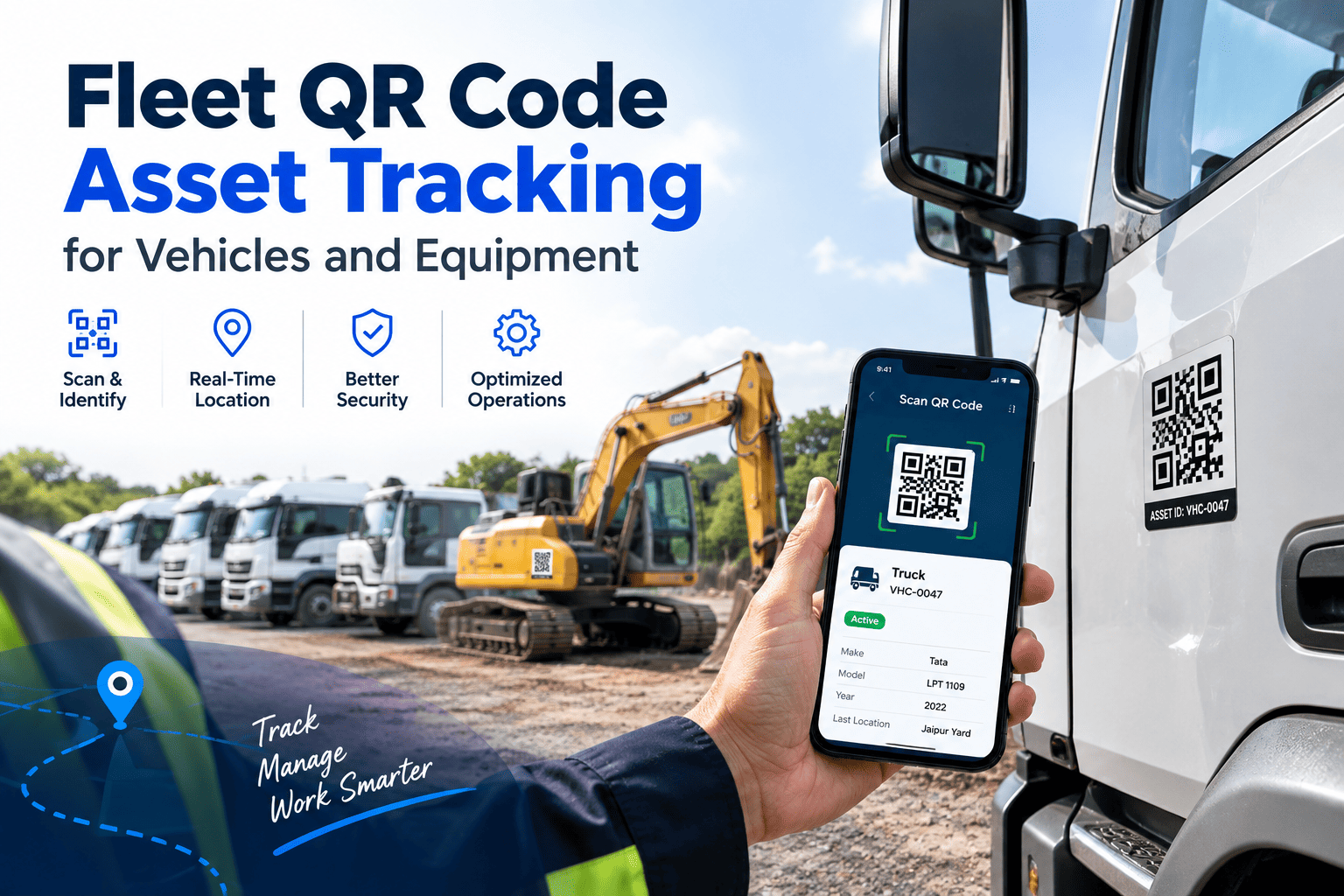
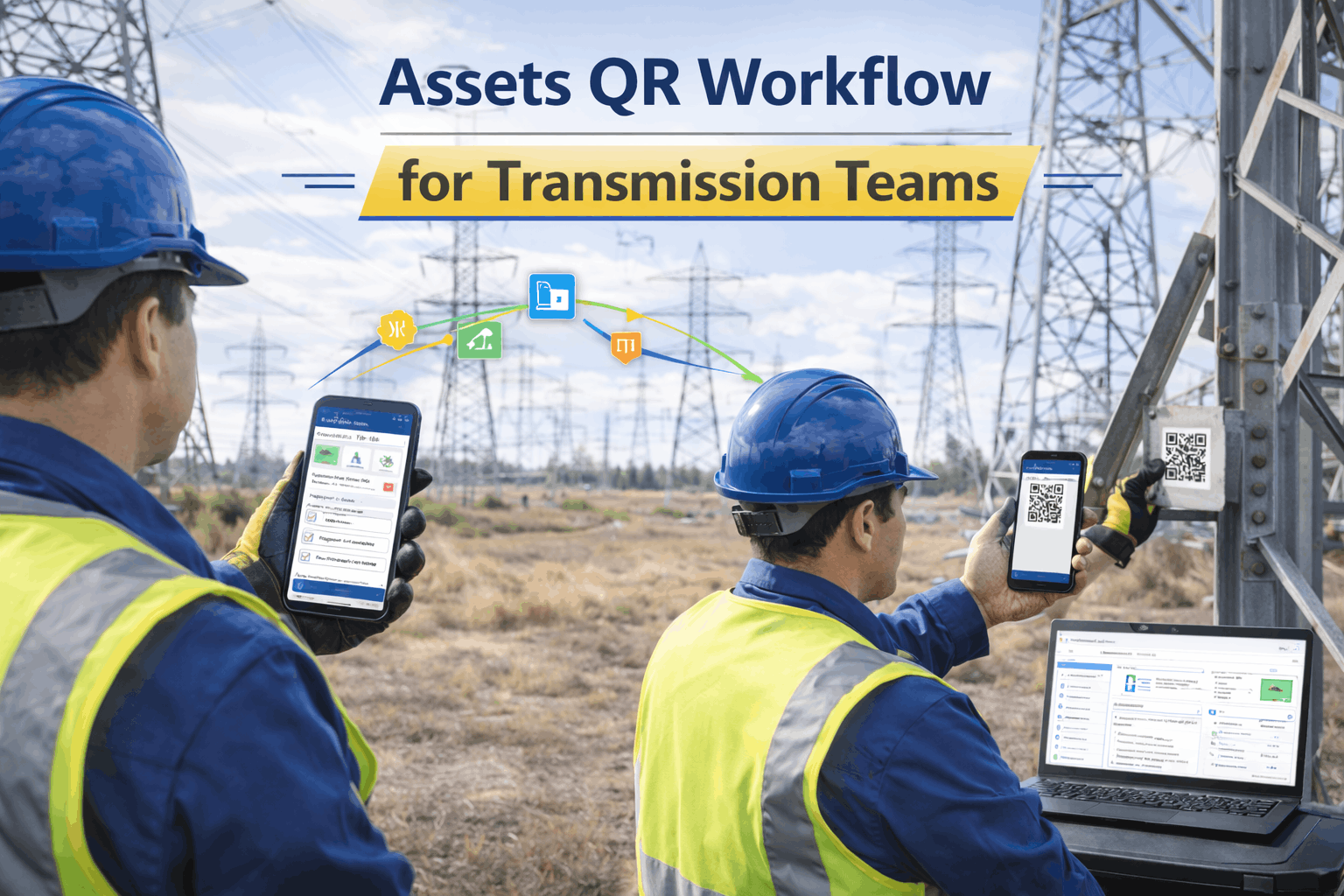
Engine teams across the fleet industry lose an average of 15 hours per week on manual paperwork, misidentified parts, and delayed maintenance records. The fix is surprisingly simple — a QR code on every engine asset, connected to a smart CMMS workflow. Assets QR Workflow for engine teams eliminates guesswork by linking every physical engine component to its complete digital history with a single scan. Whether your technicians are performing routine oil analysis or diagnosing a turbocharger fault, the right information is always one scan away. In this guide, we break down exactly how this workflow operates, why engine teams specifically benefit from it, and how your fleet operation can implement it starting today.
What Is an Assets QR Workflow for Engine Teams
An Assets QR Workflow is a structured maintenance process where every engine asset — from cylinder heads to fuel injectors, turbochargers to cooling systems — is tagged with a unique QR code. When a technician scans the code using a mobile device, they instantly access the asset's full maintenance history, open work orders, parts inventory, OEM specifications, and upcoming service schedules. Unlike traditional barcode systems, QR codes store significantly more data and remain scannable even when partially damaged by grease, heat, or vibration — conditions that are common in engine maintenance environments.
For engine teams specifically, this workflow eliminates the most common bottleneck in fleet maintenance: identifying the right asset and its service context before beginning any work. Instead of flipping through binders or searching spreadsheet tabs, a single scan pulls up everything needed to make a repair decision in seconds. Leading fleet operations are already using platforms like Oxmaint — sign up free to connect their engine assets to intelligent QR-driven workflows that reduce diagnostic time by up to 40%.
How the QR Scan-to-Repair Workflow Operates
The power of this system lies in its simplicity. Every interaction between a technician and an engine asset follows a predictable, repeatable path that captures data at every stage. Here is how a typical engine maintenance cycle flows through the QR workflow:
QR Tag Deployment
Durable QR labels are affixed to every engine component — blocks, heads, turbos, alternators, starters, and fuel systems. Each tag links to a unique digital asset profile in the CMMS.
Technician Scans Asset
Using any smartphone or tablet, the technician scans the QR code on the engine component. The CMMS instantly loads the asset record including last service date, fault history, and available parts.
Work Order Generation
Based on the scan data and inspection findings, a work order is automatically created with pre-populated asset details, reducing data entry errors and saving 10+ minutes per job.
Task Execution and Logging
The technician follows the guided checklist, logs parts used, captures photos of the repair, and records engine hours — all within the mobile workflow interface.
Review, Close, and Schedule
Supervisors review the completed work order, approve the repair, and the system automatically schedules the next preventive maintenance based on engine hours or calendar intervals.
Why Engine Teams Need QR-Based Workflows More Than Any Other Department
Engine maintenance is arguably the most complex and high-stakes area of fleet operations. A single misidentified engine component can lead to catastrophic failure, regulatory fines, and vehicles stuck roadside for days. Here is what makes QR workflows particularly critical for engine teams:
Component Complexity
Modern diesel and natural gas engines contain hundreds of serviceable components, each with unique maintenance intervals. QR codes ensure technicians always pull up the correct part record — not the one from a similar engine model.
Harsh Environment Durability
Engine bays are hot, oily, and subject to constant vibration. QR codes with industrial-grade lamination remain scannable in conditions where barcodes and RFID tags frequently fail.
Fault Code Integration
When a diagnostic tool throws a fault code, the QR workflow links that code to the specific engine asset's history, showing whether this is a recurring issue or a first-time event.
Compliance Documentation
DOT and EPA regulations require detailed engine maintenance records. QR workflows create timestamped, photo-verified audit trails automatically — no manual paperwork required.
Fleet teams managing 50+ vehicles often discover that engine-related downtime accounts for nearly 35% of all unplanned maintenance events. Implementing a QR workflow through a platform like Oxmaint can cut that figure significantly. Book a demo to see how it works with your specific engine types.
Ready to Digitize Your Engine Maintenance Workflow
Join hundreds of fleet teams who have replaced clipboards with QR scans and reduced engine downtime by up to 40%.
Real-World Engine Maintenance Scenarios Solved by QR Workflows
Theory is useful, but fleet managers want to know how this plays out on the shop floor. Here are three common engine maintenance scenarios where the QR workflow delivers measurable impact:
Turbocharger Failure Diagnosis
A Class 8 truck arrives at the shop with low boost pressure. The technician scans the turbo's QR tag and instantly sees that this unit was rebuilt 8 months ago, the oil feed line was replaced 3 months ago, and the current engine hours are 12,000 past the last service. Instead of starting from scratch, the technician knows to check the wastegate actuator first — saving 2+ hours of diagnostic time.
Preventive Engine Oil Analysis
An engine team running a scheduled oil sampling program scans each engine block's QR code before pulling the sample. The CMMS auto-populates the lab submission form with the correct engine model, oil type, last sample date, and current engine hours. Results are automatically linked back to the asset record when they return from the lab.
Warranty Claim Documentation
A fleet discovers a pattern of premature injector failures across multiple vehicles. Because every repair was logged through the QR workflow with timestamped photos and parts records, the warranty claim package is assembled in minutes instead of days — and includes the kind of detailed documentation that OEMs cannot dispute.
These are not hypothetical situations. They represent daily challenges that engine teams face, and a QR-powered CMMS workflow resolves them systematically. Sign up for Oxmaint and start tagging your engine assets this week.
Key Metrics Engine Teams Should Track Through QR Workflows
Implementing QR workflows is only half the equation. The real value comes from the data these workflows generate over time. Here are the metrics that separate good engine maintenance programs from great ones:
Track how quickly your team resolves engine issues from scan to close. QR workflows typically reduce MTTR by 25-35% by eliminating information search time.
Monitor engine-specific maintenance cost per mile across your fleet. Identify which engine models or components are driving costs above acceptable thresholds.
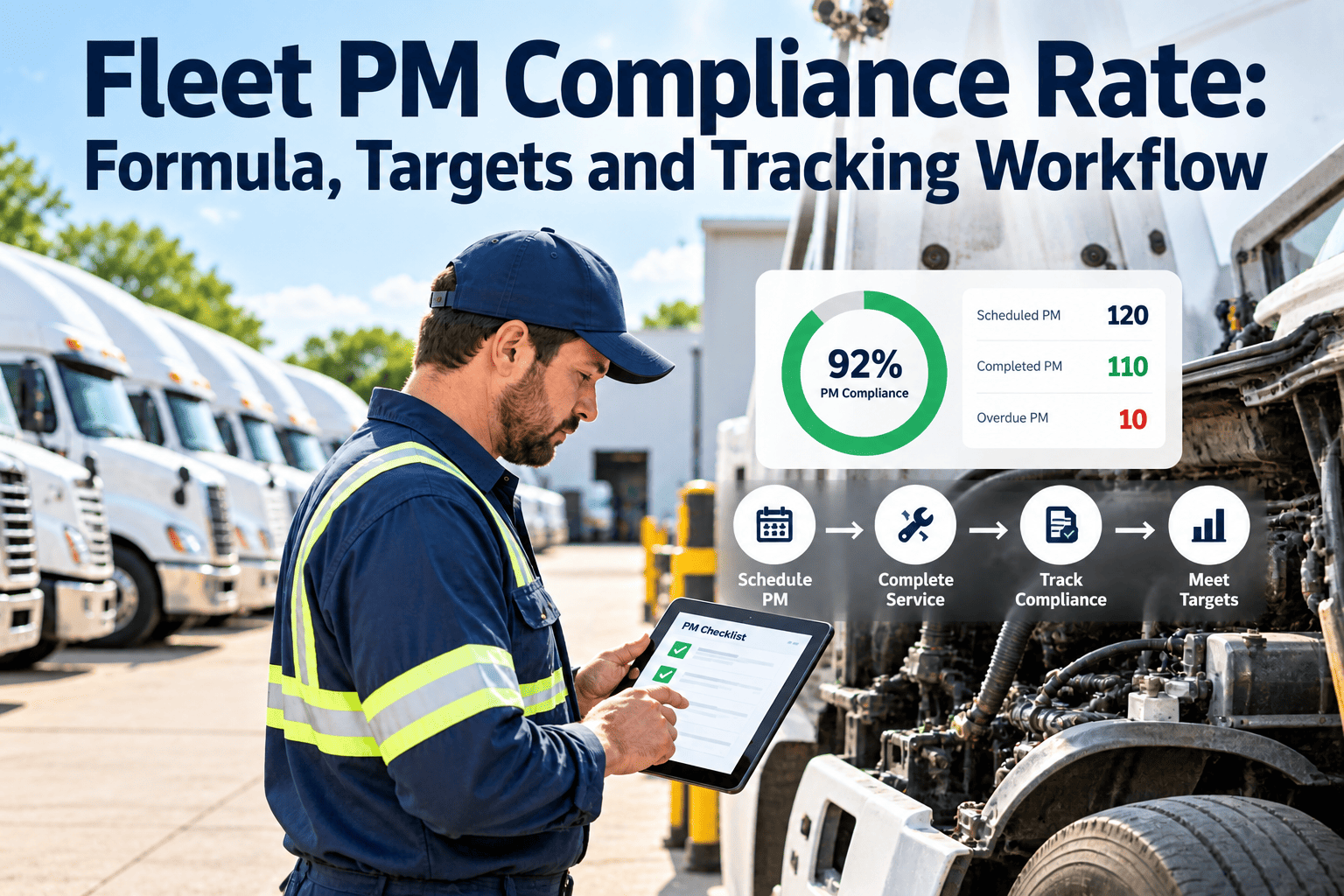
Measure the percentage of preventive maintenance tasks completed on time. QR-triggered reminders help push PM compliance above 95% — the gold standard for fleet operations.
When technicians have full asset history before touching a wrench, first-time fix rates improve dramatically. Fewer comebacks mean more shop capacity.
Every one of these metrics improves when engine teams move from paper-based or spreadsheet tracking to a QR-driven CMMS workflow. Book a demo with Oxmaint to see these dashboards in action.
Implementation Guide — Getting Started in 5 Days
One of the biggest misconceptions about QR asset workflows is that implementation takes months. For engine teams using a modern CMMS like Oxmaint, you can be operational in under a week. Here is a realistic implementation timeline:
Asset Inventory and Data Import
Upload your existing engine asset list into the CMMS. Include engine model, serial numbers, current engine hours, and last service dates. Most teams can import directly from existing spreadsheets.
QR Code Generation and Printing
Generate unique QR codes for each engine asset directly from the CMMS. Print them on industrial-grade labels designed to withstand engine bay conditions — heat, oil, and vibration.
Tag Deployment and Technician Training
Affix QR tags to engine components and run a 30-minute training session with your engine team. The scan-to-work-order process is intuitive enough that most technicians are comfortable within 2-3 practice scans.
Go Live and First Workflow Execution
Your engine team executes their first QR-driven work orders. Supervisors monitor the dashboard for completion rates and data quality. Refinements happen in real time.
The fastest way to get started is to create your free Oxmaint account and begin building your engine asset registry today.
Transform Your Engine Team's Maintenance Workflow Today
Stop losing hours to paperwork and misidentified parts. Give your engine technicians the tools they deserve — a QR scan away from every answer they need.
Frequently Asked Questions
What types of engine assets can be tagged with QR codes
Virtually every serviceable engine component can be tagged — including engine blocks, cylinder heads, turbochargers, fuel injectors, alternators, starters, water pumps, oil coolers, exhaust after-treatment systems, and EGR valves. The key is using industrial-grade QR labels that withstand the heat, oil, and vibration typical in engine bays. Oxmaint supports unlimited asset tagging across all component types.
How does the QR workflow integrate with our existing telematics system
Oxmaint integrates with major telematics providers including Geotab, Samsara, and Verizon Connect. Engine hour readings, fault codes, and mileage data from your telematics system can automatically trigger QR-linked work orders in the CMMS. This means your engine team receives proactive maintenance alerts without any manual data entry.
Can QR codes survive the harsh conditions inside an engine compartment
Yes, when printed on proper industrial materials. Polyester labels with protective lamination, or etched metal plates for extreme environments, remain scannable even after exposure to temperatures up to 300 degrees Fahrenheit, engine oil, diesel fuel, and continuous vibration. QR codes also have built-in error correction, meaning they remain functional even when up to 30% of the code surface is damaged.
How long does it take to train engine technicians on the QR workflow
Most engine technicians are comfortable with the scan-to-work-order process within 30 minutes of hands-on training. The workflow is designed to be intuitive — scan the code, review the asset record, create or update the work order, log the repair, and close. Technicians who already use smartphones daily find the transition seamless.
What happens if a QR code becomes unreadable
The CMMS maintains the complete asset record regardless of the physical QR tag's condition. Technicians can manually search for the asset by serial number, engine model, or vehicle ID. A replacement QR code can be generated and printed in under a minute, linking back to the same asset profile with all historical data intact.
Does the QR workflow work offline in locations without internet access
Yes. Oxmaint's mobile app supports offline functionality. Technicians can scan QR codes, view cached asset records, complete work orders, and capture photos without an internet connection. All data automatically syncs to the cloud when connectivity is restored, ensuring no work is ever lost.
How does this help with DOT and EPA compliance for engine maintenance
Every QR-triggered maintenance event creates a timestamped, photo-verified digital record that satisfies DOT inspection requirements and EPA emissions compliance documentation. Audit reports can be generated in seconds, showing complete maintenance histories for any engine asset in your fleet. This eliminates the scramble to produce records during surprise inspections.