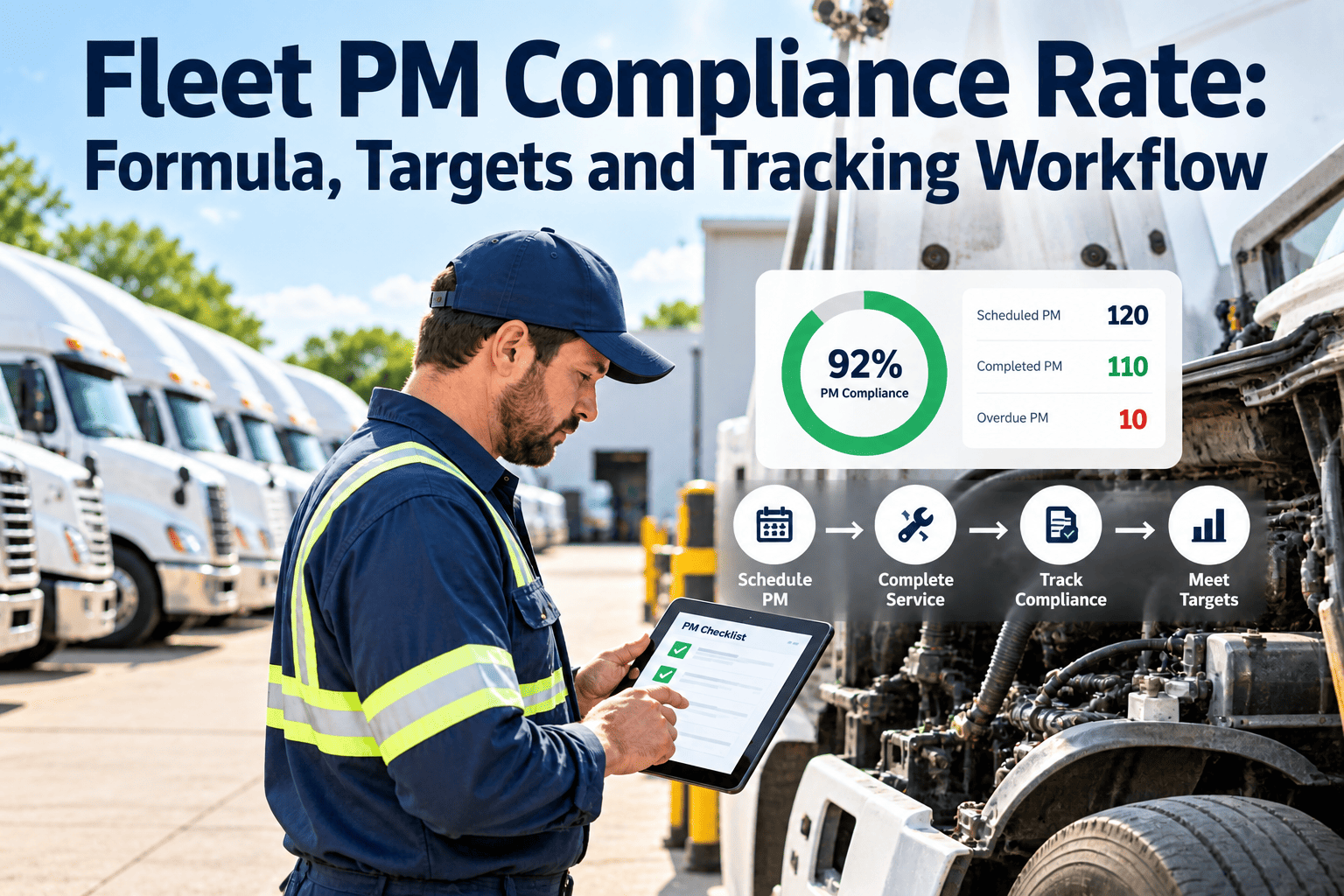
Fleet PM compliance rate tells you how much of the preventive maintenance you promised was actually done, and done on time. It sounds simple, but many fleets calculate it differently, set targets without defining the window, and track it in spreadsheets that lag reality by weeks. The result is a number nobody trusts. This guide covers the formula, realistic targets, and a tracking workflow that turns the metric into fewer breakdowns and cleaner audit files. Teams that run PM from a single system, such as fleet maintenance software, find the rate easier to defend and easier to improve.
Fleet PM Compliance Rate: Formula, Targets and Tracking Workflow
Measure preventive maintenance the same way every month, set targets that match your duty cycle, and track overdue services before they become roadside repairs.
What PM compliance rate actually measures
PM compliance compares scheduled preventive services against services completed inside an agreed tolerance. It is a discipline metric. It does not prove your PM program is well designed, only that the plan is being followed.
Numerator
Count only PMs closed with a completed checklist, a meter reading, and a completion date that falls inside the tolerance window.
Denominator
Count every PM that reached its due point in the period, including those still open. Never remove overdue work to improve the score.
Tolerance window
Define it per interval type, such as a number of days for calendar PMs or a mileage or engine-hour band for meter-based PMs.
Illustrative calculation
These numbers are hypothetical, used only to show how the same month can produce three different readings.
| Status of 200 PMs due | Count | Share | Counts toward on-time rate? |
|---|---|---|---|
| Completed inside the window | 164 | 82.0% | Yes |
| Completed after the window | 21 | 10.5% | No |
| Still open and overdue | 15 | 7.5% | No |
| On-time compliance | 164 of 200 | 82.0% | Headline metric |
| Completion rate including late | 185 of 200 | 92.5% | Secondary metric |
Three ways teams miscalculate the rate
Most disputes about compliance come from definitions, not performance. Fix the definition first.
- Counting a PM as done when the work order is closed, even if the checklist is blank
- Dropping vehicles that were in the shop or out of service from the denominator
- Mixing a 90-day service and a 500-hour service under one flat tolerance
- Resetting the due date to the completion date, which hides how late the service was
- Requiring checklist, meter reading, and technician sign-off before closure
- Keeping every due PM in the denominator and tagging exceptions with a reason code
- Setting tolerance per interval type and documenting it in a written policy
- Keeping the original due date on the record so lateness stays measurable
Fleet PM compliance targets: where to start
There is no regulatory percentage for PM compliance. Targets are internal, so set them by risk and duty cycle, then tighten them as data improves.
| Measure | Common starting goal | Why it matters |
|---|---|---|
| On-time PM compliance, general fleet | 90% or higher | Shows whether scheduled work is being protected from daily operations |
| Safety-critical inspections (brakes, steering, tires) | Target 100%, no grace period | Missed items can become out-of-service violations or crashes |
| Vehicles more than 30 days past due | Zero for critical assets | Long overdue units are the strongest early warning of failures |
| Findings converted to repair work orders | Every finding, same day | An inspection with no follow-up creates liability without benefit |
| Average days late on late PMs | Trend downward each quarter | Separates minor slippage from systemic neglect |
Adjust targets by duty cycle
Put one definition of compliance behind every report
Set tolerance windows, auto-generate PM work orders, and see live compliance by vehicle group in Oxmaint.
The tracking workflow, step by step
A reliable rate comes from a repeatable path from schedule to closed work order. Each step below removes one common source of missing data.
-
1
Build the asset register
Record unit number, class, VIN, engine, and current meter for every vehicle. PM schedules cannot be assigned to assets that are not in the system.
-
2
Define PM templates by class
Create A, B, and C style service levels with task lists, parts, and labor estimates. Base intervals on OEM guidance and your own failure history.
-
3
Choose the trigger
Use miles, engine hours, calendar days, or whichever comes first. Dual triggers protect low-mileage units that still age and idle.
-
4
Set the tolerance and lead time
Generate work orders ahead of the due point so planners can book bays, parts, and downtime before the window opens.
-
5
Capture completion data
Require meter reading, checklist results, and technician sign-off from a mobile device at the vehicle, not later at a desk.
-
6
Convert findings to repairs
Any defect noted during a PM should open a corrective work order linked to the same asset and the parent PM.
-
7
Review weekly, report monthly
Review overdue units every week. Report the rate monthly by location, vehicle class, and shop so problems have an owner.
Why compliance drops: root causes and fixes
Low compliance is rarely a technician attitude problem. It usually traces to scheduling conflicts, parts gaps, or data quality.
| Root cause | What it looks like | Practical fix |
|---|---|---|
| Vehicles not released | Units are always on route when the PM window opens | Book PM slots with operations and flag units as scheduled downtime |
| Parts not on hand | Work orders sit open waiting on filters or fluids | Link PM kits to templates and set minimum stock levels |
| Bad meter data | Services trigger too early or not at all | Capture readings at every work order and inspection |
| Shop capacity | PMs bunch up at month end | Spread due dates and level workload across the week |
| Paper records | Completed work is never entered | Move checklists and sign-off to mobile work orders |
Compliance records and the regulatory link
For US motor carriers, PM records support obligations under the Federal Motor Carrier Safety Regulations. Confirm details with your compliance team.
Record checklist for audit readiness
- Vehicle identification and current meter at each service
- Date and description of every inspection, repair, and PM performed
- Technician name and sign-off on each closed work order
- Link between reported defects and the repair that cleared them
- Retention that matches your regulatory and company policy
Metrics to read alongside PM compliance
A high rate with rising breakdowns means the program is followed but not effective. Pair the metric with these companions.
How Oxmaint supports the tracking workflow
Oxmaint is maintenance management software that keeps schedules, work orders, and history in one place, so the compliance figure comes from live records.
Preventive maintenance scheduling
Meter, calendar, and combined triggers generate PM work orders automatically ahead of the due point.
Mobile work orders
Technicians complete checklists, log meter readings, and close jobs at the vehicle.
Asset history
Every service, repair, and inspection stays attached to the unit for audits and resale decisions.
Inventory control
Tie filters, fluids, and PM kits to templates so parts are ready when a unit arrives.
Dashboards and reporting
View compliance, overdue units, and repair trends by location, class, or shop.
Corrective work orders
Convert inspection findings into repair tasks linked back to the original PM.
A 90-day plan to raise the rate
Baseline
Agree on the formula and tolerance, load assets, and measure the current on-time rate honestly.
Stabilize
Automate PM generation, level shop workload, and clear every critical unit that is more than 30 days late.
Optimize
Review repeat failures, adjust intervals, and raise the target once results hold for two consecutive months.
Fleet PM compliance rate FAQs
What is a good fleet PM compliance rate?
Many fleets aim for 90% or higher on time, with 100% for safety-critical inspections. Set your goal after a baseline measurement.
Should late PMs count as compliant?
Track them separately. On-time rate shows discipline, while completion rate including late shows whether the work eventually happened.
How wide should the tolerance window be?
Keep it tight for safety items and looser for low-risk services. Document it per interval type so results stay consistent.
How often should we report the rate?
Review overdue units weekly and report the rate monthly by location and vehicle class.
Can software calculate this automatically?
Yes. A CMMS calculates it from work order dates and due dates. You can book a demo to see the report.
Make PM compliance a number your team trusts
Start tracking preventive maintenance, inspections, and repairs in one system built for fleet maintenance teams.