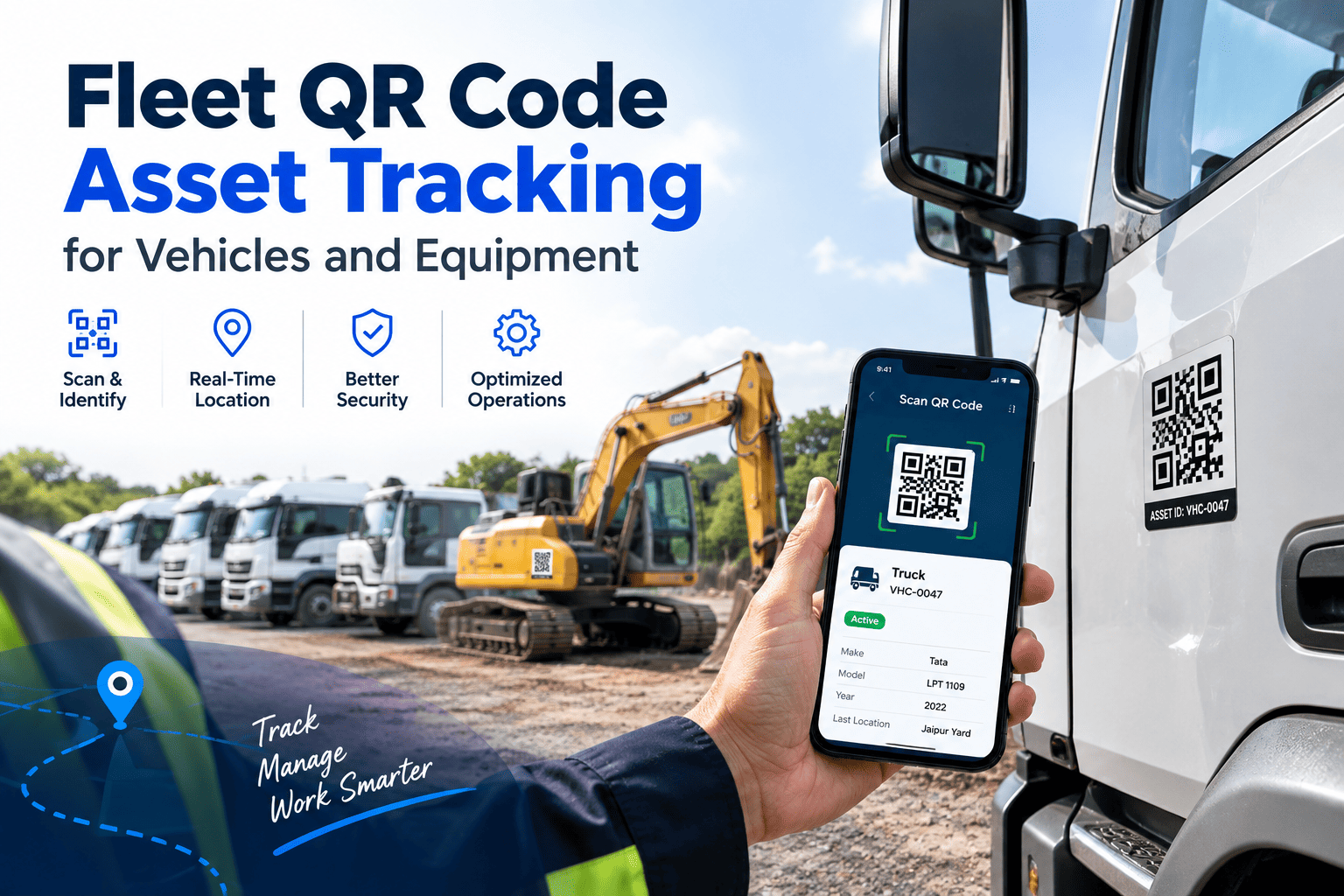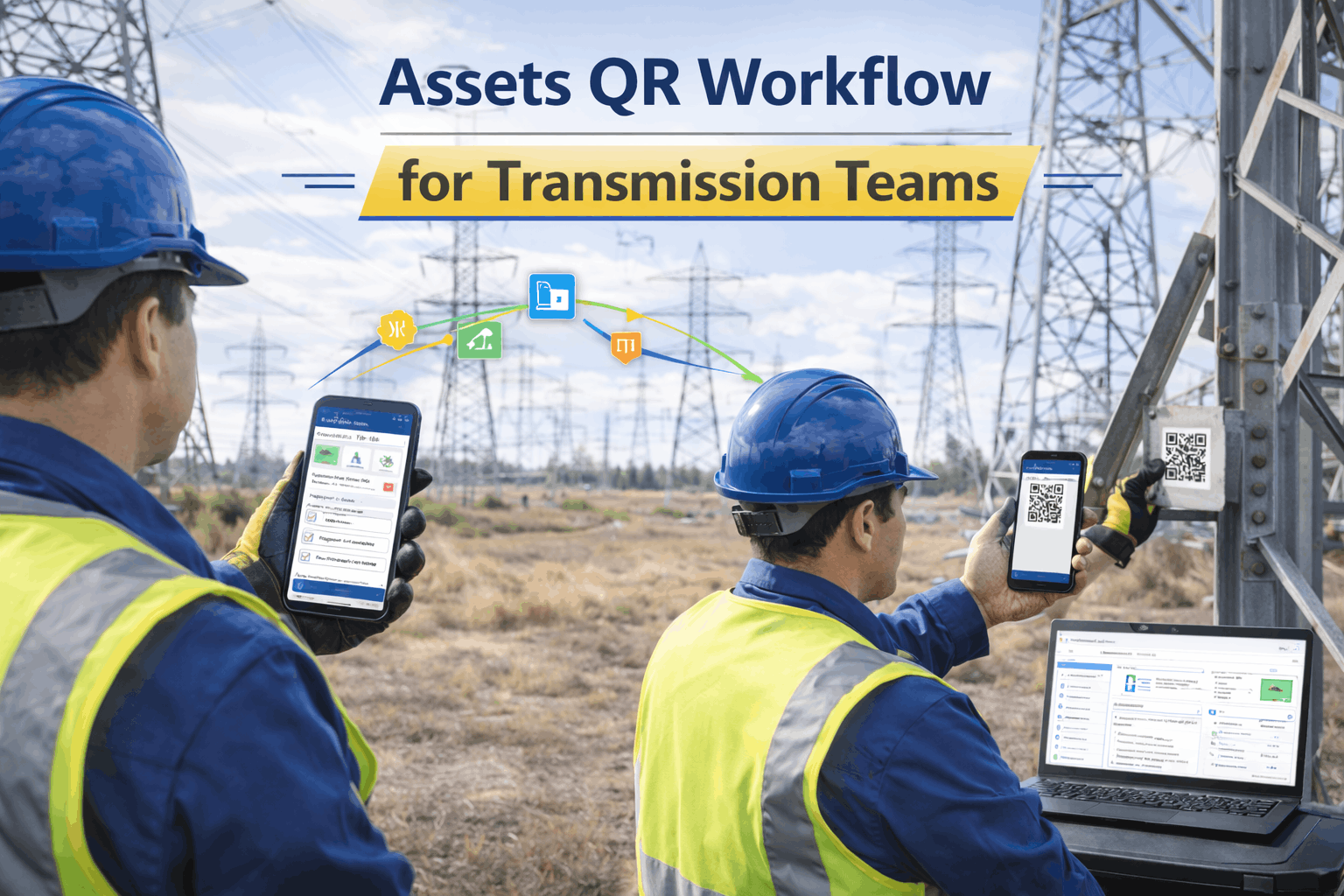
Fleet transmission systems — automatic, manual, and automated manual — are among the most expensive and maintenance-intensive components in any commercial vehicle. A single transmission rebuild costs $3,000–$7,000, and unplanned failures strand trucks, disrupt delivery schedules, and cascade into costly towing and emergency repair bills. Yet most fleets still track transmission maintenance through paper logs, spreadsheets, or memory — creating gaps that lead to missed fluid changes, overlooked filter replacements, and undocumented inspections. An Assets QR workflow eliminates these gaps by attaching a unique QR code to every transmission asset, connecting technicians directly to the asset's full maintenance history, open work orders, PM schedules, and parts inventory with a single scan from their mobile device. Sign up for OxMaint to deploy QR-based transmission maintenance workflows across your entire fleet today.
What Is an Assets QR Workflow
An Assets QR workflow combines physical QR code labels affixed to fleet assets with a CMMS platform that stores every piece of maintenance data linked to that asset. When a technician scans the QR code on a transmission — whether in the shop, at a truck stop, or during a roadside inspection — the CMMS instantly displays the asset profile, service history, upcoming PM tasks, open work orders, parts used, fluid specifications, and any active fault codes. No searching through binders, no calling the office, no guessing when the last service happened.
Affix a durable QR code label to each transmission housing. The label links to the asset's unique profile in the CMMS, including make, model, serial number, vehicle assignment, and fluid specifications.
Technician scans the QR code using any smartphone or tablet. The CMMS mobile app opens the full transmission profile — service history, PM schedule, open work orders, parts inventory, and fluid specs appear instantly.
The technician selects or creates a work order, logs labor time, records parts used, captures photos of worn components, and documents fluid condition — all from the mobile device, linked directly to the correct transmission asset.
Completed work orders automatically update the asset's maintenance history, adjust the next PM due date, decrement parts inventory, and log technician information with timestamps — creating a permanent digital audit trail.
Fleet managers review transmission-level maintenance data — cost per asset, failure trends, fluid consumption rates, and PM compliance — to optimize service intervals, identify chronic problem units, and plan replacements before catastrophic failures.
Transmission Maintenance Tasks Powered by QR Workflows
Every transmission maintenance task — from routine fluid checks to major overhauls — becomes faster, more accurate, and fully traceable when driven by QR-based asset workflows. Here are the core transmission maintenance activities that benefit most from this approach. Teams managing large fleets can book a demo with OxMaint to see these workflows in action.
Scan the QR code to see the exact fluid specification, last change date, current mileage interval, and fluid condition notes from the previous service. Log the new fluid type, quantity, and filter replacement. The CMMS automatically calculates the next service due date based on your fleet's mileage or time interval — no manual tracking required.
Transmission filters trap metal particles, clutch material, and contaminants that accelerate internal wear. QR scan reveals the filter part number, last replacement date, and compatible alternatives from inventory. Technicians log the replacement with one tap, parts inventory auto-decrements, and the next filter change schedules itself.
Hard shifts, delayed engagement, slipping, or gear hunting indicate internal wear or electronic control issues. QR scan pulls up the transmission's fault code history and prior shift quality notes. Technicians document current shift behavior, compare against baseline records, and trigger escalation work orders when degradation trends appear.
For transmissions requiring periodic clutch adjustment, the QR workflow shows previous adjustment measurements, OEM specifications, and service intervals. Technicians record current clutch clearance or pack measurements with photo documentation, creating a measurable trend line that predicts when replacement will be needed.
Modern transmissions rely on TCM/ECU software for shift mapping, torque management, and adaptive learning. QR scan shows current firmware version, last diagnostic scan date, active and historical fault codes, and any pending software updates — ensuring technicians always work from the most current asset information. Sign up for OxMaint to track firmware versions and diagnostic history across every transmission in your fleet.
Transmission cooler lines, external coolers, and heat exchangers prevent thermal damage that shortens transmission life. QR-driven inspections ensure coolant flow rates, line integrity, and cooler fin condition are checked and documented at the correct intervals — with photo evidence of any degradation stored directly in the asset record.
Scan. Service. Track. Every Transmission in Your Fleet.
OxMaint QR workflows connect every technician to every transmission's complete maintenance history — from fluid specs to fault codes — with a single mobile scan. No paperwork, no guesswork.
Why QR Workflows Beat Paper and Spreadsheets
Transmission maintenance demands accuracy — the wrong fluid, a missed filter change, or an undocumented fault code can turn a $200 service into a $7,000 rebuild. QR-based CMMS workflows eliminate the errors and gaps that paper-based systems cannot prevent.
Fleets that switch from paper to QR-based CMMS workflows report up to 26% reduction in equipment downtime and 30% reduction in repair costs through better preventive maintenance compliance. Book a demo to see how OxMaint transforms transmission maintenance for your fleet.
Setting Up Your Transmission QR Workflow
Implementing a QR-based transmission maintenance workflow is straightforward with the right CMMS platform. Here is the step-by-step setup process that gets your team scanning and servicing within days, not weeks. Sign up for OxMaint to get started with pre-built transmission maintenance templates.
Enter each transmission into the CMMS with make, model, serial number, vehicle assignment, fluid type, filter part numbers, OEM service intervals, and warranty information. Build asset hierarchies linking transmissions to their parent vehicles.
Generate unique QR codes for each transmission from within the CMMS. Print on industrial-grade labels rated for heat, oil, and chemical exposure. Affix labels to accessible locations on the transmission housing where technicians can easily scan during service.
Set up preventive maintenance templates for each transmission type — fluid changes, filter replacements, shift quality inspections, cooling system checks, and diagnostic scans. Define triggers by mileage, engine hours, or calendar interval.
Train technicians on the scan-to-work workflow: scan QR, view open tasks, execute service, log results, capture photos, close work order. Most teams are fully operational within one to two days of training on a mobile-first CMMS platform.
Deploy Transmission QR Workflows This Week
OxMaint provides pre-built transmission PM templates, industrial QR label generation, and a mobile app your technicians will actually use. From setup to first scan in days — not months.
Frequently Asked Questions
What is an Assets QR workflow for transmission teams
It is a CMMS-driven maintenance process where each transmission asset is tagged with a unique QR code. Technicians scan the code to instantly access service history, PM schedules, open work orders, parts specs, and fault codes — executing and documenting maintenance from a mobile device.
What transmission maintenance tasks can QR workflows manage
Fluid changes, filter replacements, shift quality inspections, clutch adjustments, electronic control module diagnostics, cooling system verification, and major overhauls — every task is linked to the specific transmission asset with full traceability.
Do QR labels survive in shop and field conditions
Yes. Industrial-grade QR labels are rated for heat, oil, chemical exposure, and UV light. When printed on polyester or aluminum substrates and properly affixed, labels remain scannable for years in harsh fleet maintenance environments.
How quickly can we implement QR workflows
Most fleets are fully operational within days. Asset registration, QR label generation, PM template configuration, and technician training on a mobile-first CMMS like OxMaint can be completed in one to two days for a typical fleet.
Can QR workflows track parts inventory automatically
Yes. When a technician logs a part on a work order, the CMMS auto-decrements inventory, tracks which parts were used on which transmission, and triggers reorder alerts when stock drops below minimum thresholds.
How does OxMaint support transmission QR workflows
OxMaint provides QR code generation, mobile scan-to-work functionality, pre-built transmission PM templates, parts inventory management, photo documentation, and audit-ready compliance reporting — all from one platform trusted by 1,000+ facilities.