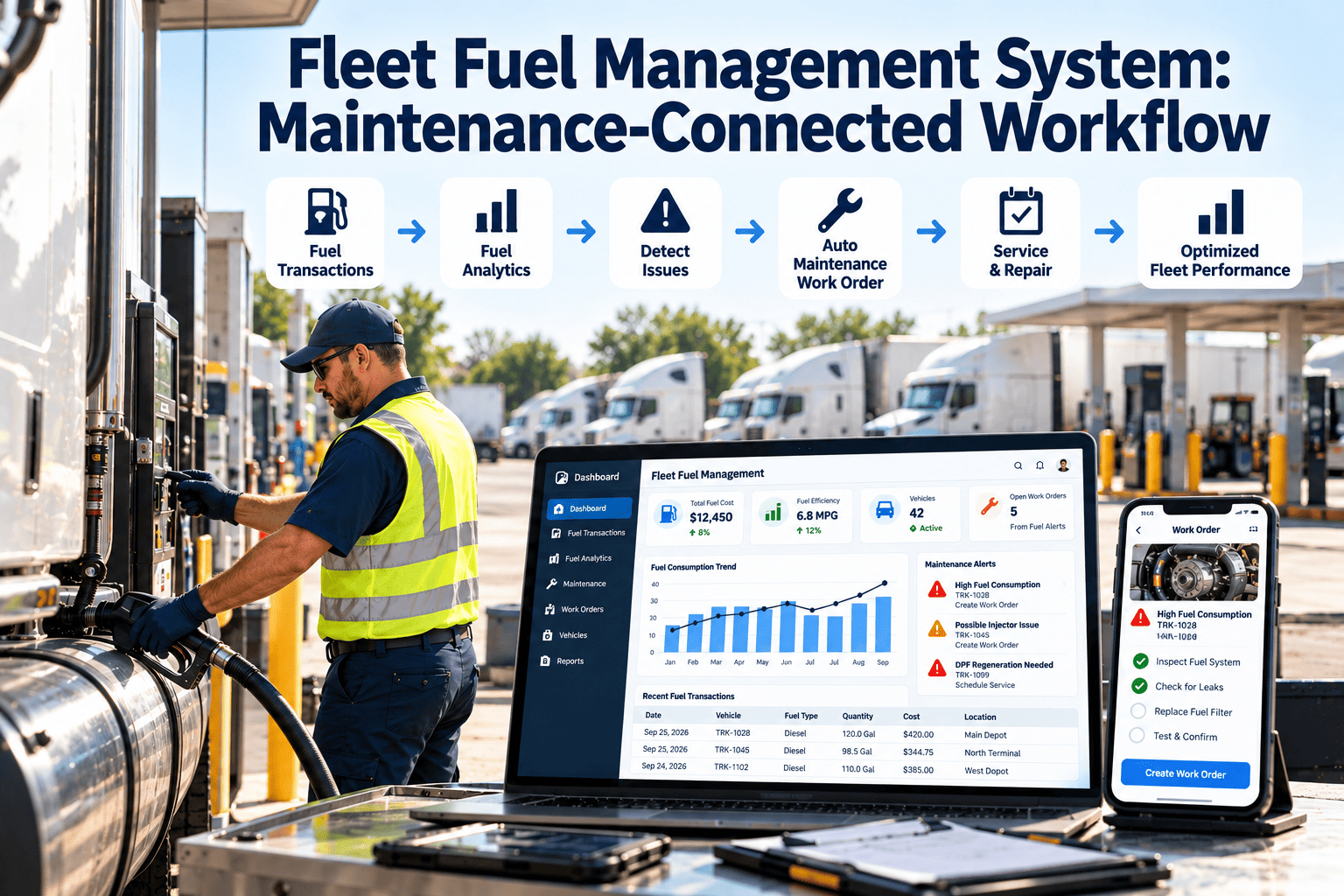
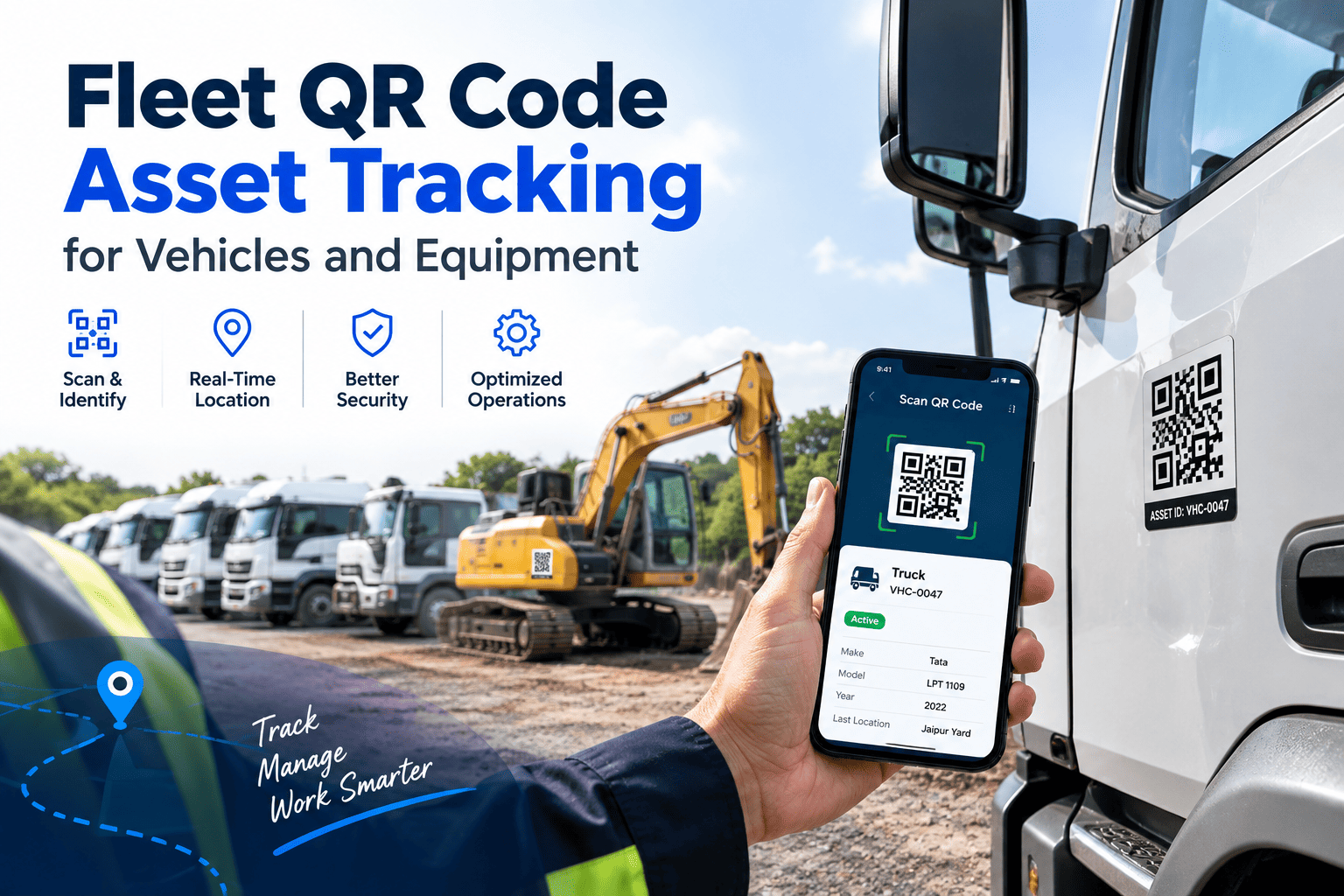
A fleet technician slides under a truck, spots a minor fuel line weep, and immediately pulls out a phone to scan the QR code mounted on the fuel rail bracket. The asset profile loads instantly — the fuel filter was last replaced 14,200 miles ago, the injectors were cleaned at the last Class B service, fuel pressure was 58 PSI at the last test, and there is an open advisory for this model's fuel pump recall. In under ten seconds, the technician has every data point needed to diagnose, document, and act — no trip to the office, no flipping through binders, no calling dispatch. This is the power of an Assets QR workflow built specifically for fuel system teams. Fuel system failures account for some of the most expensive fleet repairs — a single injector failure can cost $1,500 or more, and a contaminated fuel tank can cascade damage through the pump, lines, and engine. Proper fuel system maintenance can improve fuel economy by up to 30% and extend engine life significantly. Sign up for OxMaint CMMS and turn every fuel system component into a scannable, trackable, maintainable digital asset.
How a QR Asset Workflow Transforms Fuel System Maintenance
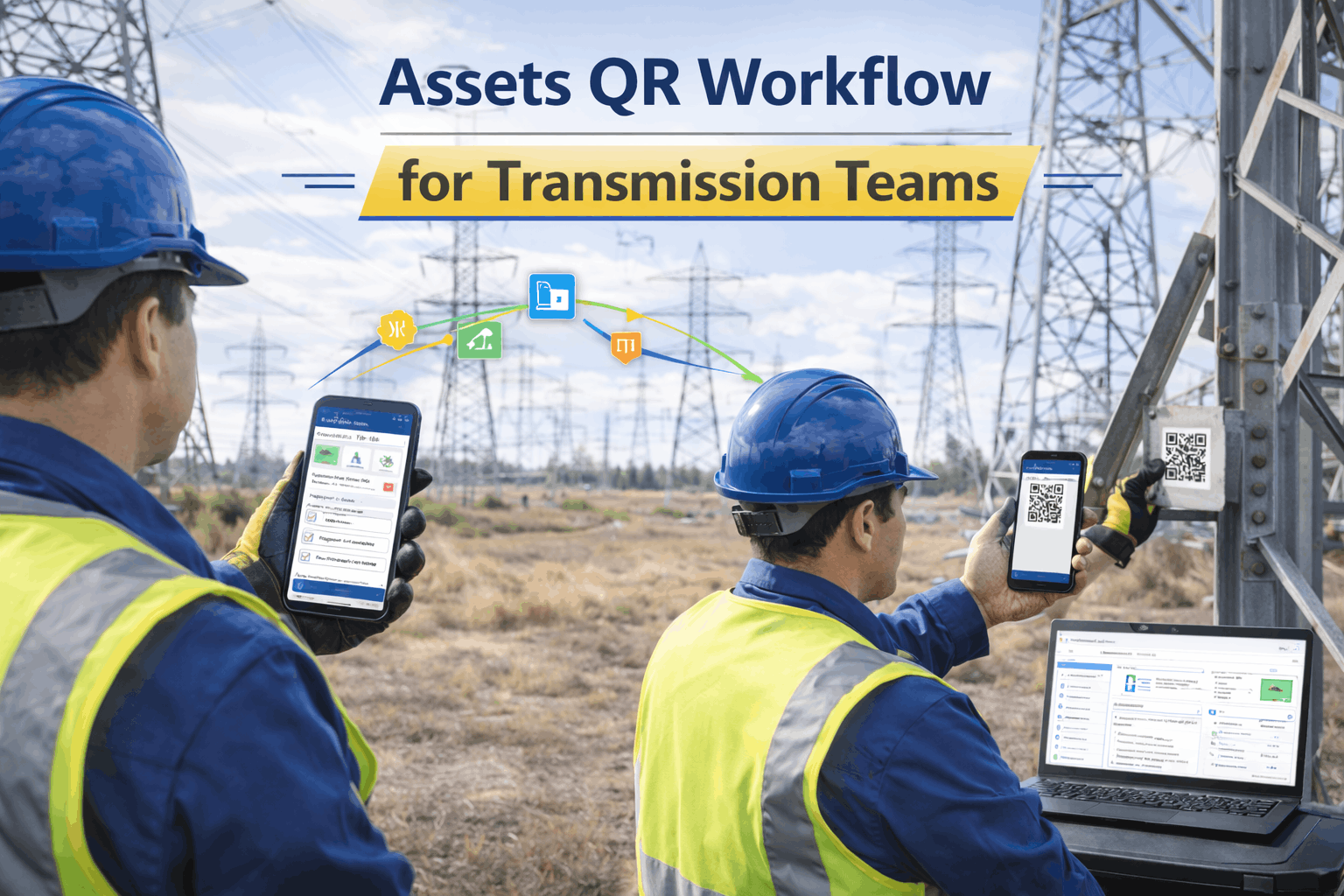
A QR asset workflow assigns a unique QR code to every serviceable fuel system component across your fleet. When scanned, the code deep-links into your CMMS — not to a generic webpage, but directly into the asset's live maintenance profile with history, open work orders, parts, manuals, and the next scheduled PM.
Label
Mount durable QR tags on every fuel system component: tank, pump, filter housing, injector rail, pressure regulator, and fuel lines
Scan
Technician opens OxMaint mobile app, points camera at the QR code — asset profile loads in under 2 seconds
Inspect
The correct inspection checklist auto-loads for that specific component — with mandatory fields, photo requirements, and reading inputs
Record
Technician logs readings, captures photos, notes issues, and closes the work order — all from the field, all on mobile
Automate
CMMS updates asset history, recalculates the next PM date, and triggers corrective work orders for any flagged issues
Fuel System Components That Need QR Tags
Every fuel system has distinct components with different failure modes, service intervals, and compliance requirements. Tagging each one individually lets your team track, inspect, and maintain them with precision instead of treating the entire fuel system as a single black box.
Fuel Tank
The primary fuel storage vessel. QR scan loads: tank capacity, last cleaning date, contamination test results, internal inspection photos, water separator drain records, and any corrosion notes. Tank contamination — dirt, rust, microbial growth, and water — is the root cause of most downstream fuel system failures.
Fuel Pump
Pressurizes and delivers fuel from the tank to the engine. QR scan shows: pump model, installation date, operating hours, pressure test history, current draw readings, and any whining noise reports. Running tanks below quarter-full accelerates pump wear because fuel cools and lubricates the pump.
Fuel Filter & Water Separator
The first line of defense against contaminants reaching the injectors. QR scan displays: filter part number, installation mileage, current mileage, replacement interval (typically 10,000–15,000 miles for diesel), and water separator drain dates. A clogged filter starves the engine of fuel and overworks the pump.
Fuel Injectors
Spray fuel into the combustion chamber at precise timing and volume. QR scan shows: injector set, last cleaning date, resistance test results, spray pattern inspection notes, and any fault codes. Dirty injectors reduce fuel economy, cause rough idling, and produce black smoke — one of the most expensive diesel repairs if ignored.
Fuel Pressure Regulator
Maintains consistent fuel pressure to the injectors. QR scan loads: target pressure spec, last measured pressure, regulator model, and any pressure fluctuation history. Inconsistent pressure causes uneven fuel delivery — some cylinders run lean while others run rich.
Fuel Lines & Connections
Carry fuel between all components under pressure. QR scan shows: line material and age, last leak inspection date, connection torque verification, and any replacement records. Cracked or leaking fuel lines are both a fire hazard and an EPA compliance violation. Book a demo to see component-level tracking in OxMaint.
Every Fuel Component. One Scan. Complete History.
OxMaint links QR codes to live asset profiles so your technicians get instant access to specifications, history, open work orders, and inspection checklists — right at the point of service.
Fuel System PM Schedule via QR Workflow
Scanning a QR code triggers the correct PM checklist for that component at the right interval. Here is the recommended schedule for fleet fuel system maintenance, designed to be executed entirely through scan-triggered workflows.
| Interval | Component | QR-Triggered PM Task |
|---|---|---|
| Pre-Trip | Fuel Lines | Visual inspection for leaks, wet spots, or fuel odor under the vehicle |
| Weekly | Water Separator | Drain water from fuel-water separator; log volume drained |
| Weekly | Fuel Pump | Listen for abnormal whining noise; check for leaks around pump housing |
| Monthly | Fuel Tank | Inspect tank for external damage, corrosion, and mounting security |
| 10–15K Miles | Fuel Filter | Replace primary and secondary fuel filters; log part numbers and mileage |
| Quarterly | Fuel Pressure | Perform fuel pressure test at regulator; compare to spec and log reading |
| Quarterly | Connections | Verify torque on all fuel line connections; inspect clamps and fittings |
| Annual / Class C | Injectors | Clean fuel injectors; perform resistance test and spray pattern inspection |
| Annual / Class C | Full System | Complete fuel system audit: tank cleaning, pump test, all lines, DOT compliance check |
Every completed PM task is timestamped and attached to the specific asset's digital record. OxMaint auto-calculates the next due date based on mileage or time intervals. Sign up free and never miss a fuel system service interval again.
How OxMaint Powers Fuel System QR Workflows
Scan-to-Profile in 2 Seconds
Every QR code links directly to the component's live CMMS profile. Technicians see specifications, full maintenance history, open work orders, attached manuals, linked spare parts, and the next PM date — instantly, on their phone.
Component-Specific Checklists
Scanning a fuel filter QR loads the filter replacement checklist. Scanning the injector rail loads the cleaning and resistance test procedure. Each component gets exactly the right inspection steps — no generic forms, no missed steps.
Mileage-Based PM Triggers
OxMaint tracks cumulative mileage per vehicle and auto-generates fuel filter replacement work orders at your defined interval (10K, 12K, or 15K miles). No manual tracking. No spreadsheets. No forgotten filters.
Parent-Child Asset Hierarchy
Link individual fuel components (filter, pump, injectors, tank) as child assets under the parent vehicle. Track costs and history at both component and fleet levels — identify which vehicles have the highest fuel system maintenance spend.
DOT & EPA Compliance Reports
Generate audit-ready documentation for DOT inspections and EPA fuel system compliance. Every scan, every reading, every replacement is logged with timestamps and technician IDs. Book a demo to see compliance reporting in action.
Download the Template. Tag Your Fuel Systems. Drive Smarter.
OxMaint provides ready-to-use fuel system QR workflow templates — pre-built with component checklists, mileage-based PM triggers, and asset hierarchies. Start free or let our fleet specialists configure it for your operation.
Frequently Asked Questions
What is an Assets QR workflow for fuel system teams
It is a CMMS-driven system where every fuel system component — tank, pump, filter, injectors, pressure regulator, and fuel lines — gets a unique QR code. Scanning the code loads the component's full maintenance profile, enabling faster diagnosis, accurate record-keeping, and scan-triggered PM checklists.
Which fuel system components should have QR codes
At minimum: fuel tank, fuel pump, fuel filter and water separator, fuel injectors, fuel pressure regulator, and fuel lines and connections. Each has different service intervals and failure modes that benefit from individual tracking and dedicated inspection checklists.
How often should diesel fuel filters be replaced
Typically every 10,000 to 15,000 miles, though heavy-duty fleets operating in dusty conditions or hauling heavy loads may need more frequent replacements. OxMaint tracks mileage per vehicle and auto-generates replacement work orders at your configured interval.
What are the warning signs of fuel system problems
Black smoke (fuel system inefficiency or clogged filters), rough idling (dirty injectors), poor acceleration (failing fuel pump or restricted filter), rising fuel costs per mile (system-wide inefficiency), and difficulty starting (fuel starvation from clogged filter or weak pump).
Can drivers submit fuel system issues through QR codes
Yes. OxMaint supports public-facing QR scans where drivers scan the code and fill out a simple work request form — no full CMMS login required. The request routes directly to the maintenance queue with the asset already identified and the vehicle location captured.
Does OxMaint support offline QR scanning
Yes. The OxMaint mobile app works offline — technicians scan codes, complete checklists, and log work without internet. All data syncs automatically when connectivity is restored, ensuring no records are lost in shop or field environments with poor signal.
How does a QR workflow help with fuel system compliance
Every inspection, filter replacement, leak test, and pressure reading is logged with timestamps, technician IDs, and photo evidence. OxMaint generates audit-ready reports for DOT vehicle inspections and EPA fuel system compliance requirements with a single click.
Can OxMaint track fuel system costs per vehicle
Yes. Using parent-child asset hierarchies, OxMaint tracks labor, parts, and downtime costs at both the individual component level and the vehicle level. This reveals which vehicles have the highest fuel system maintenance spend and helps justify repair-vs-replace decisions with real data.