It's 2 AM and your lead tanker's transmission fails 140 miles from the nearest service facility in the Permian Basin. Three trucks behind it are now stranded. The vendor's emergency line goes to voicemail. When someone finally arrives eight hours later, they discover a worn clutch pack—the same component "inspected" during last month's PM.
You've invested $2.4 million in your fleet and $180,000 annually on maintenance contracts. But how do you actually know if your PM programs are performing? This guide delivers a complete KPI framework for automating preventive maintenance fleet management schedules that maximize uptime and minimize costly roadside breakdowns. Sign up free for Oxmaint CMMS to start measuring what matters.
$760
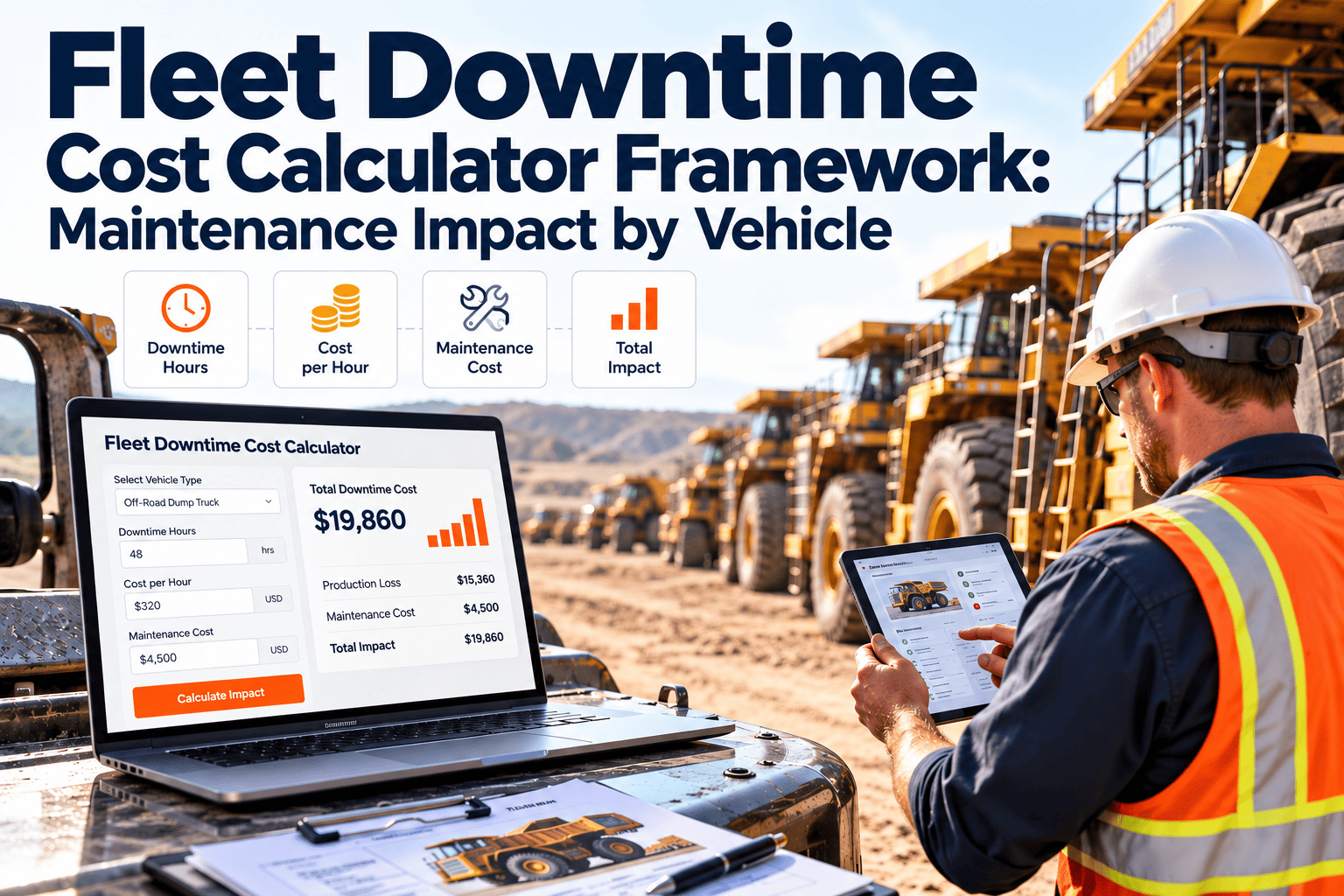
Hourly downtime cost
47%
Preventable breakdowns
23%
Fuel savings potential
3.2x
Typical PM automation ROI
Critical Fleet Assets in Oil & Gas Logistics
Understanding your fleet assets is the foundation of effective asset tracking fleet management. Each vehicle type operates under specific conditions and has unique failure modes that impact delivery schedules and compliance requirements.
| Vehicle Type |
Classification |
Critical Systems |
Annual Miles |
Daily Revenue |
| Crude Oil Tankers |
MC-306 / DOT-406 |
Vapor recovery, emergency shutoffs, suspension, tank integrity |
180,000 |
$1,200 |
| Frac Sand Haulers |
Pneumatic Trailers |
Blower systems, air compressors, discharge valves, PTO units |
150,000 |
$950 |
| Vacuum Trucks |
Produced Water |
Vacuum pumps, tank integrity, discharge systems, hose assemblies |
120,000 |
$1,400 |
| Hot Shot Trucks |
Expedited Equipment |
Engine/transmission, gooseneck hitches, brakes, tire systems |
200,000 |
$800 |
KPI Framework for Preventive Maintenance Automation
Measuring maintenance effectiveness requires the right metrics. These KPIs provide visibility into fleet health, PM program execution, and financial performance—forming the foundation of any serious downtime reduction strategy.
94%+
Fleet Availability Target
45+ days
Mean Time Between Failures
<5%
Unplanned Downtime Rate
95%+
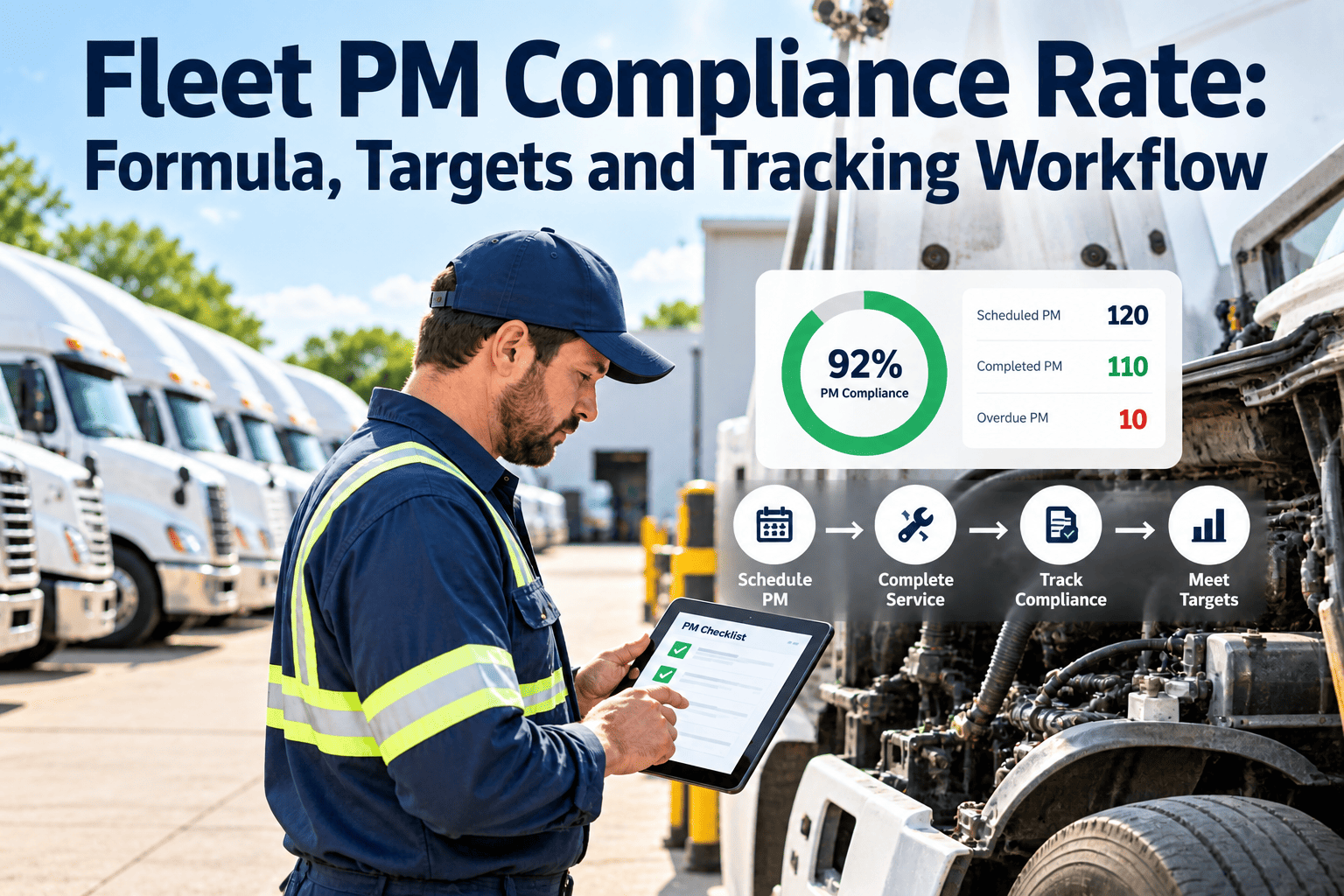
PM Completion Rate
90%+
On-Time PM Execution
92%+
Inspection Pass Rate
<$0.18
Maintenance Cost/Mile
80:20
Planned vs Unplanned Ratio
4-6x
Parts Inventory Turnover
<4 hrs
Mean Time to Repair
<2 weeks
Work Order Backlog
85%+
First-Time Fix Rate
Work Order Automation Pipeline
Work order automation transforms reactive maintenance into predictive fleet intelligence. IoT sensors collect real-time data, AI algorithms detect anomalies and the CMMS generates maintenance tasks before failures occur—this is how modern preventive maintenance fleet management delivers measurable results.
1
IoT Data Collection
Sensors capture engine diagnostics, transmission temp, brake pressure, and tire conditions across your fleet in real-time
2
AI Pattern Analysis
Machine learning algorithms analyze data streams, comparing current readings against baseline performance and failure patterns
3
Risk Scoring Engine
Each asset receives a dynamic failure probability score updated continuously—high-risk components flagged before emergencies
4
Automated Work Orders
Oxmaint CMMS automatically generates PM work orders with diagnostic data, parts requirements, and service procedures
5
Smart Scheduling
Maintenance windows coordinate with dispatch schedules, routing trucks to service during planned downtime
IoT Sensors for Predictive Fleet Maintenance
Modern oil and gas fleets generate terabytes of operational data. The challenge isn't collecting information—it's turning that data into actionable maintenance decisions. These IoT sensors deliver the highest ROI for energy management and predictive maintenance programs.
Oil pressure • Coolant temp • Fuel efficiency • Fault codes • Idle time
Detects engine degradation before catastrophic failure—prevents $25K+ rebuilds
Fluid temp • Shift patterns • Clutch wear • Torque output • Slip detection
Identifies transmission issues before roadside failures—avoids $15K+ rebuilds
Pad thickness • Air pressure • ABS status • Temperature on descent
Critical for DOT compliance and hazmat transport—prevents accidents and violations
Pressure variance • Temperature spikes • Tread depth prediction • Load balance
Prevents blowouts on remote routes—reduces roadside emergencies by 60%
Risk Scoring Dashboard
Risk scoring enables proactive decision-making. When a transmission score hits critical levels, the system automatically generates a work order and schedules service during the next planned yard visit—not 200 miles from the shop on I-20.
Tanker #247
Transmission System
87
Service Now
Vacuum #089
Engine Assembly
45
Monitor
Hot Shot #156
Tire Condition
34
Normal
Sign up for Oxmaint free to implement risk scoring for your fleet, or book a demo to see the dashboard in action.
Making Audits Painless — Fleet Management Compliance Framework
DOT, FMCSA, and EPA auditors require documented evidence that fleet vehicles are properly maintained and compliant. Your compliance logs must show inspection records, repair histories, and corrective actions—all with timestamps and digital accountability.
DOT
DOT / FMCSA Compliance
Annual inspections, DVIRs, hours of service integration, brake adjustment records, and tire compliance documentation.
EPA
EPA / Clean Air Act
Emissions testing records, idle time monitoring, fuel consumption tracking, and vapor recovery maintenance logs.
HAZ
Hazmat Transport
Tank integrity inspections, valve checks, emergency equipment verification, and spill response documentation.
API
API Industry Standards
Loading/unloading procedures, equipment standards, personnel certification, and training records.
Audit-Ready Documentation in 60 Seconds
When the DOT auditor asks for fleet maintenance records, export complete compliance logs instantly—every PM, every repair, every inspection with timestamps and digital signatures.
DVIR Integration
Digital Signatures
GPS Location Logs
OEM Manuals
One-Click Export
Fleet Management CMMS Best Practices
1
Tag Every Fleet Asset
Apply barcode/QR codes to all trucks and trailers. Scan to access complete history, OEM manuals, and compliance status instantly.
2
Automate PM Scheduling
Configure preventive maintenance with mileage-based, hour-based, and calendar triggers. Whichever threshold hits first triggers the work order.
3
Enable Mobile Inspections
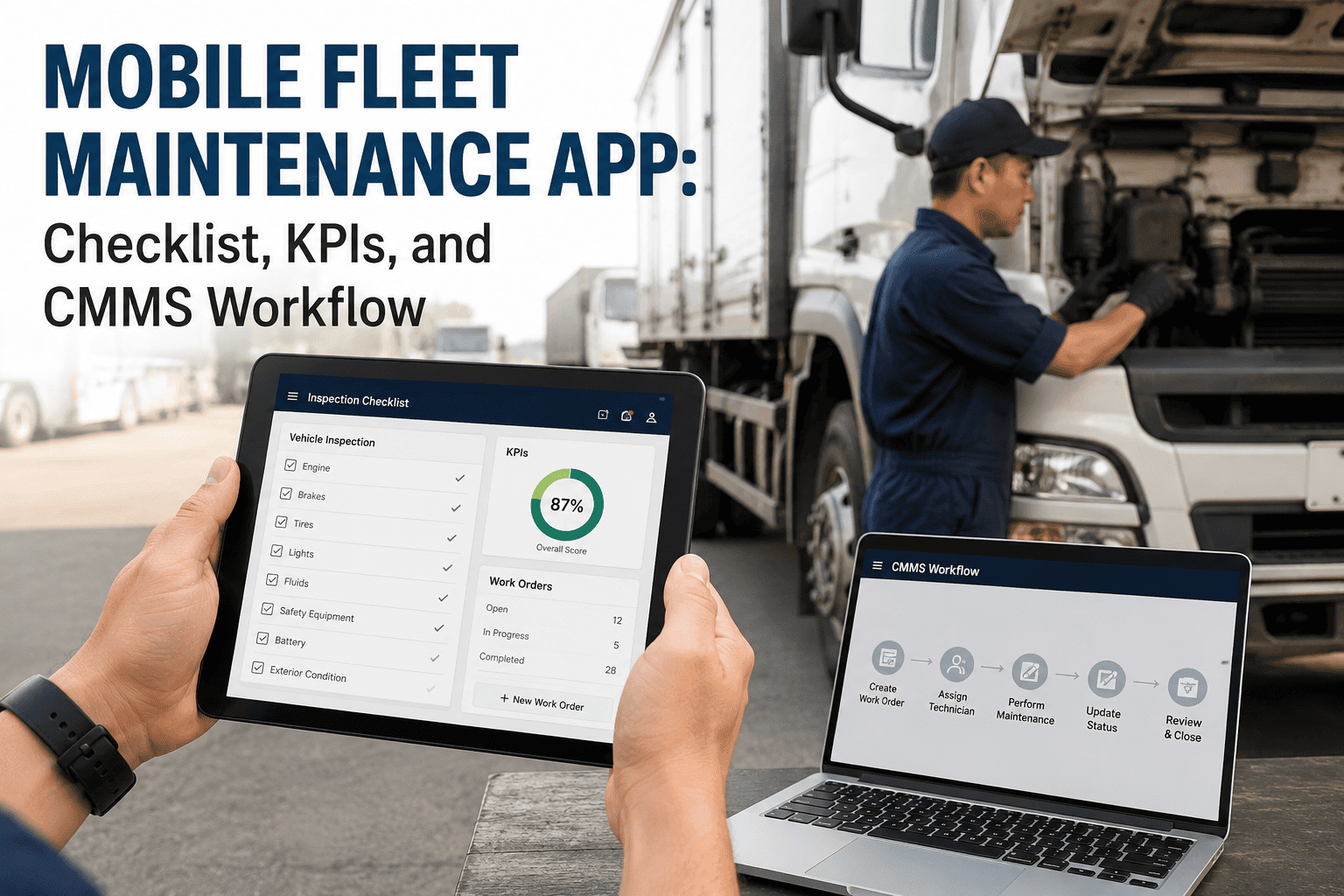
Drivers complete mobile inspections fleet management checklists with offline capability—essential for remote oil field operations.
4
Integrate Telematics Data
Connect IoT sensors directly to CMMS. Fault codes automatically generate diagnostic work orders with repair procedures.
5
Track Energy Management
Monitor fuel consumption by vehicle and route. A 10% MPG drop signals maintenance issues weeks before other symptoms appear.
6
Review KPIs Weekly
Track fleet availability, PM compliance, and cost per mile. Address negative trends before they become roadside breakdowns.
Energy Management Impact
Fuel typically represents 30-40% of fleet operating costs. Tracking energy management metrics reveals equipment degradation early and validates maintenance effectiveness.
15-25%
Fuel savings with optimized maintenance
$12,400
Average annual savings per truck
3-5 yrs
Extended equipment life with proper PM
"Before implementing automated PM schedules, we averaged 12 roadside breakdowns per month across our 85-truck fleet. Within six months of using Oxmaint's work order automation and risk scoring, that dropped to 2-3. The system flagged a transmission issue on one of our crude tankers three weeks before it would have failed—that single save avoided a $180,000 environmental cleanup."
MR
Marcus Rodriguez
Fleet Operations Director, Permian Basin Energy Transport
Ready to Automate Your Fleet PM Program?
Join oil and gas fleets using Oxmaint for predictive maintenance, work order automation, and audit-ready compliance
Conclusion
Oil and gas logistics demands more from fleet maintenance than any other industry. Your trucks travel remote routes where breakdowns mean hours of lost revenue and potential environmental incidents. They haul hazardous materials under strict DOT and EPA oversight. They operate on schedules tied to refinery capacity and pipeline windows that don't flex for mechanical failures.
Automating preventive maintenance schedules transforms this challenge into competitive advantage. The KPI framework delivers visibility into fleet health before problems occur. IoT sensors and risk scoring identify which assets need attention and when. Work order automation ensures nothing falls through the cracks—from routine oil changes to DOT inspection deadlines.
The math is straightforward: a single prevented roadside breakdown saves $5,000-15,000 in towing, emergency repairs, and missed deliveries. Multiply that across a fleet and the ROI compounds rapidly. Start with your highest-risk assets, implement the KPI framework, and hold your maintenance program accountable with data.
Frequently Asked Questions
How do I start tracking fleet maintenance performance without historical data?
Begin today with a clean baseline. Log every maintenance interaction going forward—response time, completion time, repeat visits, and costs. Within 90 days, you'll have enough data for meaningful performance comparisons. Oxmaint CMMS automates this tracking from day one.
Sign up free to start building your maintenance history.
What's a realistic availability target for oil and gas fleet operations?
Industry benchmarks suggest 94-96% fleet availability is achievable for well-maintained operations. Top-performing fleets with predictive maintenance programs reach 97%+. If you're currently below 92%, there's significant opportunity for improvement through better PM compliance and risk scoring.
Book a demo to benchmark your current performance.
How does work order automation integrate with existing telematics?
Oxmaint CMMS integrates with major telematics providers including Samsara, Geotab, Omnitracs, and Platform Science. Engine fault codes, GPS data, and fuel consumption flow directly into the maintenance system, triggering automated work orders when thresholds are exceeded.
Book a demo to see telematics integration capabilities.
Can mobile inspections work in areas without cell coverage?
Yes. Mobile inspections fleet management tools include full offline capability—essential for oil field operations. Drivers complete pre-trip and post-trip inspections without connectivity. All data including photos and signatures sync automatically when the device reconnects.
Sign up free to enable offline mobile inspections.
What KPIs matter most for oil and gas fleet operations?
For oil and gas fleets, prioritize these metrics: fleet availability (target 94%+), PM compliance rate (target 95%+), mean time between failures, and cost per mile (<$0.18). These directly impact both operational capacity and DOT/EPA compliance requirements.
Sign up free to start tracking fleet-specific KPIs.