Your excavator sat idle for 3 days waiting for a hydraulic pump that should have been replaced last month. The $4,200 pump wasn't the real cost—it was the $47,000 in lost productivity, rental fees and contract penalties that followed. The maintenance team insists they are following the schedule. Your mechanics found nothing wrong during the last inspection. But somewhere between reactive repairs and missed warning signs, your profit margin is disappearing.
Construction fleets face a brutal reality: equipment downtime cascades into crew idle time, missed milestones, and damaged client relationships. Yet most fleet managers still rely on calendar-based maintenance that ignores how their equipment actually operates. This guide delivers a complete framework for automating preventive maintenance schedules using IoT sensors, AI analytics, and modern CMMS technology to optimize energy consumption while keeping your equipment running. Sign up free for Oxmaint CMMS to transform reactive repairs into predictive maintenance.
Why Calendar-Based Maintenance Fails Construction Fleets
Traditional preventive maintenance follows simple logic: service equipment every 250 hours or 30 days. But construction equipment doesn't operate in predictable patterns. A wheel loader running 12-hour shifts in dusty conditions degrades faster than the same model doing light utility work. Calendar-based schedules either waste money on premature service, or miss critical wear that leads to catastrophic failure.
When you know a dozer's engine will need attention in 2 weeks instead of discovering it failed this morning, you can schedule work during planned downtime, pre-order parts at standard pricing, and assign crews to other equipment. Book a demo to see automated scheduling in action.
The Energy-Efficiency Connection
Poorly maintained equipment hemorrhages fuel. A construction fleet running with degraded engines, underinflated tires, and clogged filters can burn 15-25% more fuel than optimized equipment—and fuel typically represents 30-40% of total operating costs.
| System | Common Issues | Fuel Impact | Detection Method | PM Interval |
|---|---|---|---|---|
| Engine and Fuel System | Injector wear, timing drift, filter restriction | 12-20% | ECU data + oil analysis | 500 hours |
| Hydraulic System | Pump wear, contaminated fluid, leaks | 10-18% | Pressure sensors + particle count | 1,000 hours |
| Cooling System | Clogged radiators, thermostat failure | 8-15% | Temperature monitoring | 250 hours |
| Undercarriage/Tires | Track tension, tire pressure, alignment | 6-12% | Visual + TPMS sensors | Weekly |
| Air Intake System | Restricted filters, turbo issues | 5-10% | Restriction indicators | 250 hours |
| Drivetrain | Transmission slip, final drive wear | 3-8% | Vibration analysis | 2,000 hours |
Turning Alerts into Actions — A Fleet Management Governance Model with Integrations
Collecting sensor data is only valuable if it triggers the right response at the right time. A governance model connects condition monitoring to automated work orders, ensuring nothing falls through the cracks while prioritizing actions by business impact.
Condition Monitoring
IoT sensors continuously track equipment health: temperature, vibration, pressure, fuel consumption, and operating hours.
Risk Scoring Engine
AI analytics compare real-time data against baseline performance and failure patterns to calculate risk scores.
Automated Work Orders
When thresholds trigger, CMMS automatically generates prioritized work orders with parts lists and procedures.
Resource Optimization
System schedules work during planned downtime, assigns qualified technicians, and verifies parts availability.
Completion and Audit Trail
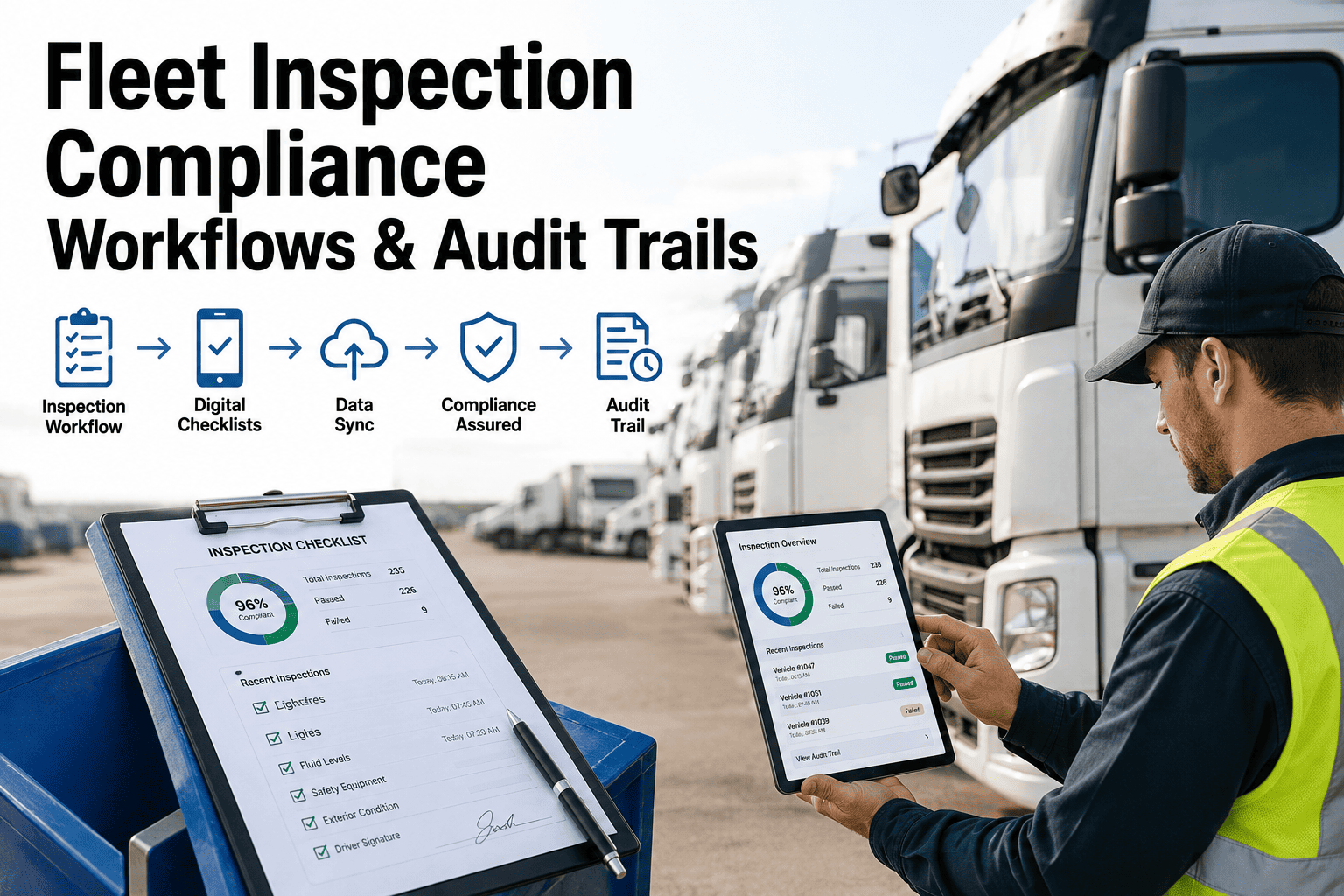
Digital documentation captures all work performed, creating compliance logs and feeding back into analytics.
IoT Sensors and AI Analytics for Predictive Fuel Management
Modern construction equipment generates enormous amounts of operational data. IoT sensors combined with AI analytics transform this data into actionable fuel efficiency insights—detecting problems weeks before they impact your bottom line.
GPS and telematics integration provides complete visibility into equipment location, utilization, and operating conditions across all job sites.
Continuous measurement of temperature, pressure, vibration, and fluid condition reveals equipment health status in real time.
Machine learning algorithms analyze patterns across sensor data, maintenance history, and failure records to predict which assets need attention.
When sensor data crosses defined thresholds, the system automatically creates work orders with complete parts lists and procedures.
Transform Fleet Management Efficiency with Oxmaint CMMS
A computerized maintenance management system serves as the central nervous system for automated preventive maintenance—connecting sensor data, work orders, parts inventory, and compliance documentation into a single platform.
Digital Work Order Management
Create, assign, and track work orders from any device. Technicians receive mobile notifications with complete job details.
Spare Parts Planning
Automated reorder points ensure critical parts are always in stock. AI predicts consumption based on maintenance schedules.
Asset Tracking Fleet Management
Complete equipment profiles with service history, warranty info, cost tracking. QR codes enable instant access.
Compliance Logs and Audit Trail
Automatic documentation creates audit-ready records for OSHA, DOT, and insurance. Export reports in seconds.
Multi-Site Fleet Visibility
Manage equipment across unlimited job sites from a single dashboard. Transfer assets with complete history.
Vendor Management
Track external service provider performance, manage warranties, compare costs between in-house and outsourced.
Fleet Management Compliance Requirements
Construction equipment faces regulatory oversight from multiple agencies. A properly configured CMMS captures all required documentation automatically as part of normal maintenance workflows.
Start building your compliance documentation system with pre-configured templates for construction industry requirements.
Fleet Management CMMS Best Practices
Start with High-Impact Assets
Focus initial automation on equipment with highest downtime costs. A $500,000 excavator sitting idle costs more than a skid steer—prioritize accordingly.
Configure Intelligent Thresholds
Avoid alert fatigue by setting meaningful thresholds. Work with equipment data over 30-60 days to establish normal operating ranges.
Integrate Parts Inventory
A work order without parts availability is just a wish. Connect inventory to scheduling so technicians know if components are in stock.
Require Photo Documentation
Mobile inspections with photo evidence catch issues that checkbox forms miss. A picture tells more than "hydraulic system: checked."
Review Analytics Weekly
Schedule weekly 15-minute reviews of maintenance KPIs to identify emerging trends before they become emergencies.
Document for Warranty Recovery
Complete maintenance records are your proof of proper care when warranty claims arise. Your CMMS audit trail protects your rights.
"After 22 years managing construction fleets, I've seen every maintenance approach from pure reactive to over-engineered predictive systems. What makes automated PM actually work isn't the technology—it's the integration between condition data and maintenance execution. Too many operations collect great sensor data that never triggers action, or generate work orders that can't be completed because parts aren't available. Oxmaint succeeds because it closes that loop: sensor reads abnormal → risk score increases → work order generates with parts verified → technician gets notified with full context. That complete chain is what turns data into uptime."
Ready to Cut Downtime with Maintenance Analytics?
Join construction fleet operators using Oxmaint for predictive maintenance, fuel efficiency tracking, and audit-ready compliance
The Bottom Line on Automated Preventive Maintenance
Start with your worst-performing equipment. Implement the 90-day action plan. Let the efficiency gains fund your fleet-wide rollout. The math works—and your competitors who ignore maintenance analytics will keep subsidizing your competitive advantage.