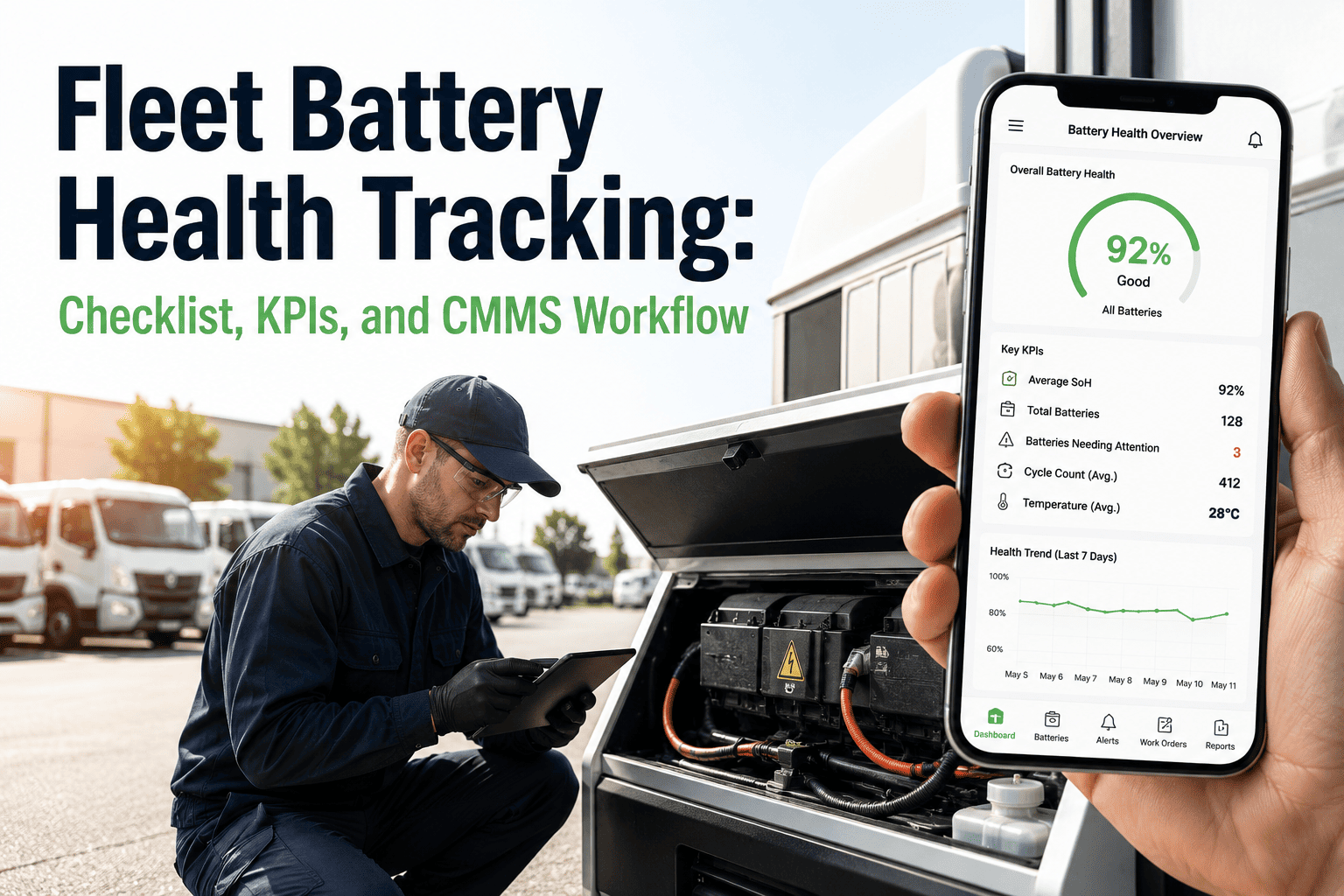
Fleet battery failures account for 29% of all roadside breakdowns, costing companies an average of $600–$1,200 per incident in emergency service calls, towing, and lost productivity. Yet the vast majority of these failures are entirely preventable with a structured battery inspection program. A dead battery doesn't just stop one vehicle—it disrupts delivery schedules, strands drivers in unsafe locations, and creates a ripple of operational chaos that affects your entire fleet. Whether you manage a small fleet of delivery vans or hundreds of Class 8 trucks, this comprehensive guide covers everything you need to know about inspecting, documenting, and maintaining vehicle batteries—including a ready-to-use report template that standardizes the process across your organization.
Battery Inspection Guide & Report Template
Why Battery Inspection Matters for Fleet Operations
A vehicle battery does far more than start the engine. In modern commercial vehicles, the battery powers critical electronic systems including the Engine Control Module (ECM), anti-lock braking system (ABS), electronic logging devices (ELDs), GPS tracking, liftgate motors, refrigeration units, and cabin comfort systems. When battery voltage drops even slightly below optimal levels, these systems begin to malfunction—often without triggering a dashboard warning until the battery is too degraded to recover.
The economics of battery maintenance are straightforward: a new commercial vehicle battery costs $150–$350 installed during a scheduled service visit. A roadside battery failure costs $600–$1,200 when you factor in emergency service calls ($150–$300), towing if jump-starting fails ($200–$500), driver detention time ($50–$100/hour), missed delivery penalties ($200–$1,000+), and the operational disruption of rerouting loads. Fleets that implement structured battery inspection programs consistently report 22–30% reductions in battery-related breakdowns and 20% lower overall maintenance costs. Start digitizing your battery inspections with OxMaint →
What to Inspect: Key Battery Inspection Areas
A thorough battery inspection covers four critical areas, each targeting different failure modes and degradation patterns. Understanding what to look for in each area helps drivers catch sudden-onset issues during pre-trip walk-arounds and gives technicians the systematic approach needed for scheduled maintenance assessments.
Visual Condition Assessment
Start with a careful examination of the battery case itself. Cracks, bulging, or swelling in the case walls indicate internal short circuits or severe overcharging damage—both conditions that mean the battery should be replaced immediately. Check for electrolyte leaks around the base and sides, which corrode the battery tray and surrounding components over time. Verify the hold-down clamp is secure, as vibration from loose mounting is one of the leading causes of premature battery failure in commercial vehicles. Inspect the battery tray underneath for rust, acid damage, or structural weakening that could allow the battery to shift during operation.
Terminal and Connection Integrity
Battery terminals are the most common point of failure in vehicle electrical systems. White powder buildup on lead terminals is lead sulfate, while green powder on copper connectors indicates copper sulfate—both are forms of corrosion that increase electrical resistance and cause voltage drops. Verify all connections are tight by gently attempting to wiggle the terminal clamps; any movement indicates a loose connection that can cause arcing, intermittent electrical failures, and parasitic draw. Inspect cable insulation along its entire length for cracking, fraying, or chafing against metal edges or heat sources. When corrosion is present, clean with a baking soda solution (one tablespoon per cup of water) and a wire brush, then apply dielectric grease or terminal protector spray to prevent recurrence.
Performance Testing Procedures
Measuring resting voltage with a multimeter is the single most informative battery test—a healthy 12V battery should read 12.6V or higher at rest, 12.4V indicates roughly 75% charge, and anything below 12.2V means the battery needs immediate charging or replacement evaluation. With the engine running, alternator output should read 13.8–14.2V at the battery terminals; readings outside this range indicate alternator or voltage regulator problems that will eventually kill even a new battery. For a definitive health assessment, conduct a load test at 50% of the battery's Cold Cranking Amps (CCA) rating for 15 seconds—voltage should not drop below 9.6V at 70°F. For flooded batteries, check electrolyte specific gravity with a hydrometer (1.265 = fully charged; all cells should read within 0.050 of each other). Finally, test parasitic draw with the engine off—anything above 50 milliamps indicates an electrical fault that's slowly draining the battery between uses.
Documentation and Record-Keeping
Every inspection should record the battery's age and original install date (proactive replacement at 3–4 years is recommended for lead-acid batteries in commercial applications), brand, type (flooded, AGM, gel), group size, and CCA rating for accurate replacement matching. Document all findings including voltage readings, visual observations, and test results with a clear pass/fail determination. Note recommended actions: replace immediately, schedule replacement at next service, monitor at the next inspection, or clear (no issues found). Update the vehicle's maintenance records with the inspector's name, date, and signature. This documentation creates the data foundation for trend analysis and predictive maintenance decisions. Book a demo to see how OxMaint standardizes inspections fleet-wide →
Battery Inspection Report Template
A well-structured inspection report ensures consistency across your fleet, provides data for trend analysis and predictive maintenance decisions, and creates the documentation trail required for DOT/FMCSA compliance audits. Every battery inspection should capture the following information in a standardized format:
This template captures every data point needed for comprehensive battery lifecycle management. When this information is stored digitally, it enables powerful trend analysis—you can track voltage degradation rates across your fleet, identify vehicles that are consistently hard on batteries (indicating underlying electrical issues), and predict replacement needs before failures occur. Sign up for OxMaint to get this template built into your digital inspection workflow →
Ready to Streamline Your Battery Inspections?
Join thousands of fleet managers who have reduced maintenance costs and improved vehicle uptime with OxMaint's digital inspection platform. Automated scheduling, standardized workflows, and real-time reporting—all from your phone or tablet.
Battery Inspection Frequency Guide
The right inspection frequency depends on vehicle duty cycle, battery age, and environmental conditions. Here's a recommended schedule that balances thoroughness with operational practicality. Fleets operating in extreme climates (hot summers above 100°F or cold winters below 0°F) should increase frequencies by one tier—for example, performing monthly tests weekly during extreme temperature seasons.
Pre-Trip Visual Check
Quick 30-second inspection during standard pre-trip walk-around. Check for visible damage, leaks, or puddles under the battery area. Verify dashboard battery/charging warning lights are off during engine start. Note any slow cranking or unusual starting behavior. This daily check catches sudden-onset issues like cracked cases from road debris or loose connections from vibration.
Terminal & Connection Inspection
Hands-on check of battery terminals and cable connections. Inspect for corrosion buildup (white or green powder around terminals). Verify connection tightness by gently attempting to wiggle terminals—they should not move. Check cable routing for chafing against metal edges or heat sources. This weekly check catches the gradual corrosion and loosening that causes intermittent electrical problems.
Voltage & Electrolyte Assessment
Measure resting voltage with a multimeter (should read 12.6V or above for a fully charged battery). Clean terminals with baking soda solution and wire brush if any corrosion is present. For flooded batteries, check electrolyte levels in each cell and top off with distilled water as needed (never tap water—minerals cause internal damage). Apply terminal protector after cleaning.
Comprehensive Performance Test
Complete load test using a battery analyzer or carbon pile tester at 50% of CCA rating for 15 seconds. Verify alternator output is within 13.8–14.2V range. Test parasitic draw with engine off (should be under 50mA). Conduct specific gravity test on flooded batteries (all cells should read within 0.050 of each other). Full documentation of all readings and comparison against previous quarter's results for trend analysis.
Benefits of Digital Battery Inspection Programs
Transitioning from paper-based battery inspections to a digital platform delivers immediate and compounding benefits across fleet operations. Here's what fleet managers gain when they digitize their battery inspection process:
Mobile-First Inspections
Conduct complete battery inspections directly from smartphones or tablets using guided digital workflows. Technicians and drivers follow the same standardized process every time, with required fields that prevent skipping critical items. Photo documentation captures visual evidence of corrosion, damage, or leaks that text descriptions alone can't convey. This eliminates the 35% error rate common with paper-based inspections and reduces administrative time by 40–60% since data flows directly into your maintenance system.
Automated Scheduling & Reminders
Never miss a battery inspection with automated notifications triggered by calendar dates, mileage intervals, or engine hours. The system tracks where each vehicle stands in its inspection cycle and alerts the appropriate personnel when inspections are due. For batteries approaching the 3–4 year replacement threshold, the system can automatically escalate inspection frequency and flag them for proactive replacement planning—preventing the "forgotten battery" failures that cause 29% of roadside breakdowns.
Analytics & Trend Tracking
Digital inspection data enables powerful analytics that paper records simply cannot provide. Track voltage degradation trends across individual batteries and your entire fleet over time. Identify vehicles that consistently drain batteries faster than normal (indicating underlying parasitic draw or alternator issues). Compare battery brand performance and lifespan across your fleet to optimize purchasing decisions. Predict replacement needs 30–60 days in advance based on degradation patterns, converting emergency replacements into planned maintenance events.
Compliance & Audit Readiness
Maintain complete, timestamped, and tamper-evident audit trails for every battery inspection performed across your fleet. Digital records satisfy DOT, FMCSA, and state-level inspection documentation requirements without the risk of lost or illegible paper forms. During compliance audits, you can retrieve any vehicle's complete battery maintenance history in seconds. Automated retention policies ensure records are kept for the required periods (1 year for active vehicles, 6 months post-disposal under 49 CFR §396.3).
The combined effect of these benefits is significant: fleets that adopt digital battery inspection programs report an average 22% reduction in battery-related roadside breakdowns within the first six months, with savings that compound as the system accumulates historical data for increasingly accurate predictive maintenance. Book a demo to see how OxMaint transforms your battery maintenance program →
Electric Vehicle Battery Inspection Considerations
With EV adoption accelerating across commercial fleets—particularly in last-mile delivery, transit, and urban logistics—fleet managers need to adapt their battery inspection protocols for high-voltage lithium-ion battery packs. While EV batteries are fundamentally different from traditional 12V lead-acid batteries, they still require regular monitoring and inspection to ensure safety, performance, and longevity.
The good news: modern EV batteries are remarkably durable, with studies showing an average degradation rate of just 1.8–2.3% per year under normal operating conditions. Many EV batteries retain 80%+ capacity after 200,000 miles, and the industry-wide replacement rate due to failure (outside of manufacturer recalls) is only 1.5%. However, proper inspection and monitoring practices are essential to achieving these results.
EV Battery Inspection Focus Areas
As your fleet transitions to include more electric vehicles, OxMaint supports both traditional 12V battery inspections and EV-specific battery health monitoring in a single unified platform—so your technicians use one system regardless of vehicle type. Sign up to manage both conventional and EV battery inspections in one platform →
Frequently Asked Questions
Transform Your Battery Inspection Process Today
Stop relying on paper forms and reactive maintenance. OxMaint gives you the tools to digitize inspections, automate scheduling, track battery health trends, and keep your entire fleet running at peak performance. Your first prevented roadside battery failure pays for the entire platform.