Spring thaw exposes a critical vulnerability in K-12 school buildings: clogged roof drains and blocked scuppers. When roof drainage systems fail after winter, even a moderate rainfall can push standing water past flashing, through membrane seams, and into occupied classrooms within hours. School district facilities teams face the compound pressure of protecting aging building stock, managing deferred maintenance backlogs, and meeting state-mandated inspection timelines — all with limited staff. A structured spring roof drain and scupper inspection checklist, tracked inside a CMMS like Sign Up Free with Oxmaint, converts a reactive leak-response cycle into a documented, auditable preventive maintenance program that protects district assets and reduces emergency repair costs. Districts that Book a Demo consistently report fewer water intrusion events per school year when pre-season drainage PMs are formalized and tracked. This checklist covers every component in the roof drainage system — primary drains, overflow drains, scuppers, downspouts, and parapet wall conditions — with compliance-grade documentation built in from the first inspection.
Automate Spring Roof Inspection Scheduling Across Every School Building
Oxmaint schedules seasonal roof drain PMs automatically, assigns work orders to facilities staff, and stores photo-documented inspection records — district-wide, in one platform.
Why Spring Roof Drainage Inspections Are Non-Negotiable for School Districts
School roofs carry unique risk factors compared to commercial properties. Flat and low-slope rooflines on gymnasium, cafeteria, and classroom wing additions are common across K-12 campuses — and these are precisely the geometries where drainage failures cause maximum damage. Winter debris accumulation from leaf litter, ice dam remnants, and windblown gravel clogs primary drain strainer baskets and scupper openings during the exact period when spring rains are heaviest. A single plugged 4-inch primary drain on a 10,000 sq ft roof section can accumulate 3,000+ gallons of standing water during a 1-inch rainfall event. At 8.34 lbs per gallon, that load exceeds the structural design capacity of most mid-century school construction. Facilities directors who Sign Up Free with Oxmaint gain automated seasonal scheduling that ensures no drain goes uninspected before peak rain season — and every finding is logged with photographic evidence for insurance, capital planning, and school board reporting.
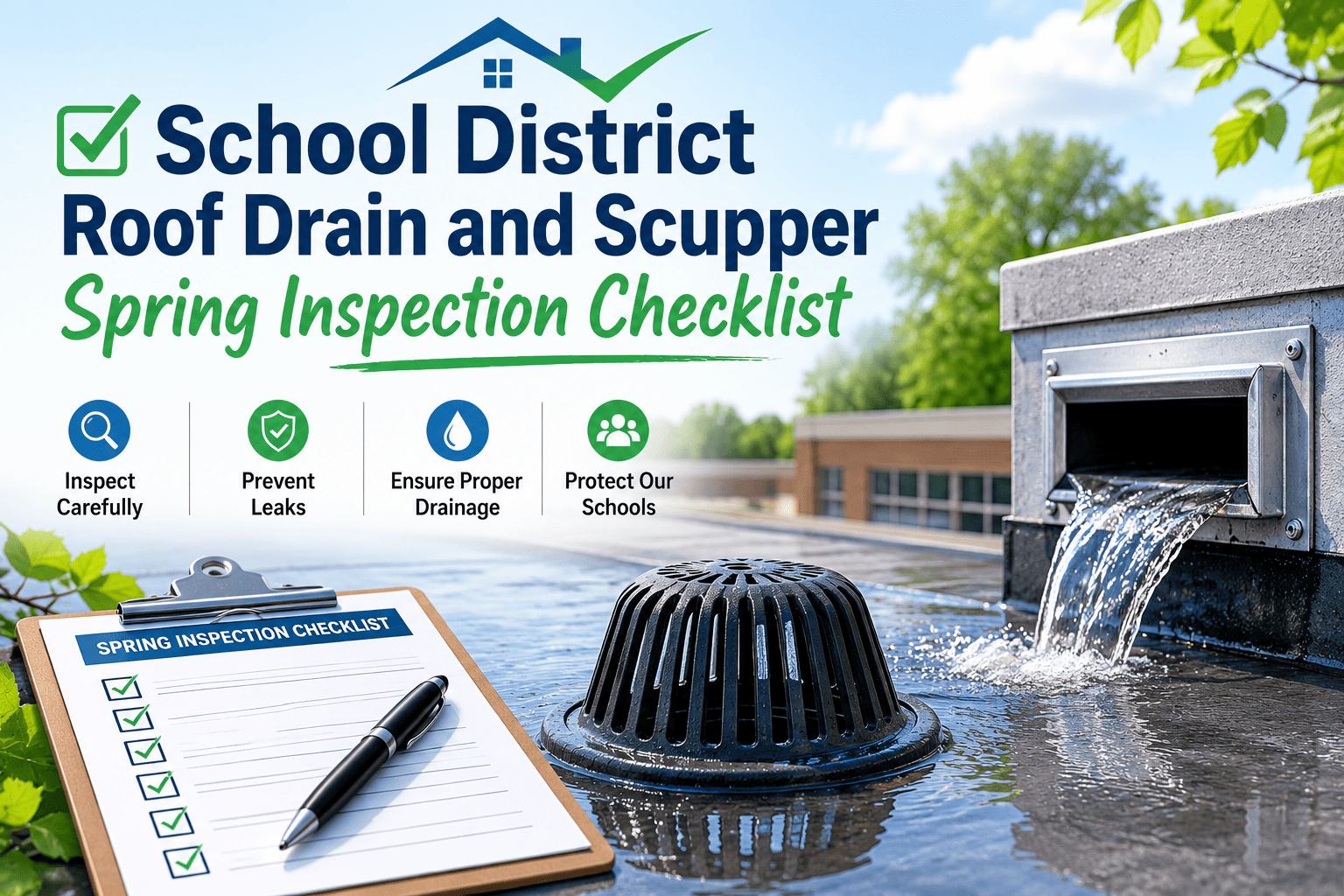
School District Roof Drain and Scupper Spring Inspection Checklist
| Inspection Item | Check Criteria | Frequency | Documentation Required |
|---|---|---|---|
| Primary Drain Strainer Basket | Clear of debris, seated properly, no corrosion | Spring + Fall | Photo, pass/fail log |
| Overflow Drain / Secondary Drain | Unobstructed, 2" above primary drain level | Spring + after storms | Clearance measurement, photo |
| Scupper Opening | Free of debris, mortar cracks, bird nesting | Spring + Fall | Photo, condition rating |
| Scupper Flashing and Liner | No separation, rust, or membrane lifting at edges | Annually | Photo evidence, repair order if needed |
| Downspout Connection | Tight joint, no separation, no backflow staining | Spring | Flow test, photo |
| Downspout Discharge / Splash Block | Directed away from foundation, no erosion | Spring | Visual inspection note |
| Roof Membrane at Drain Collar | No blistering, cracking, or uplift within 12" of drain | Spring | Photo, membrane condition note |
| Parapet Wall Drainage Openings | Weep holes clear, no mortar blocking scupper throats | Spring | Photo, remediation if blocked |
| Standing Water After 48 hrs | No ponding deeper than 1/4" after 48-hour dry period | Post-rain | Depth measurement, location sketch |
| Full Roof Drainage PM | All items above completed, work orders closed | Spring (before May) | CMMS-closed PM record, photos attached |
6 Roof Drainage Failure Points That Cost School Districts the Most
Leaf debris and gravel accumulate over winter inside and around strainer domes. A fully blocked 4-inch drain on a flat gym roof can cause structural overload within one rain event. Clean and reseat strainer baskets every spring before April rains begin.
Overflow drains exist specifically to prevent roof collapse when primary drains fail. If they are capped, corroded shut, or set at the wrong elevation, they provide zero protection. Verify overflow drain clearance and flow path every spring — this single check prevents catastrophic failure.
Scuppers on parapet walls collect windblown debris throughout winter. Mortar deterioration and bird nesting are common blockers. Separated scupper flashing allows water to bypass the drainage path and enter the building envelope — inspect flashing laps and liner edges during every spring PM.
Freeze-thaw cycles expand downspout joints through winter. Separated connections discharge water directly against foundation walls and into below-grade spaces. Flow-test all downspouts after reconnection and verify discharge at splash blocks or storm connections is directed away from the building.
The membrane-to-drain collar interface is the highest-wear zone on any flat school roof. Blistering, cracking, and clamping ring looseness all develop here first. Inspect the 12-inch radius around every drain collar for membrane condition during spring PM — early repair costs $80-$200 vs. $4,000+ for full drain replacement.
Ponding water accelerates membrane aging at 3-5x the rate of properly drained sections. Document ponding depth and location with photos during spring inspection. Recurring ponding in the same area indicates drain elevation problems or structural deflection requiring capital planning attention, not just cleaning.
Reactive Leak Response vs. Proactive CMMS-Tracked Inspection Program
How Oxmaint Supports School District Roof Drain Inspection Programs
Spring roof drain inspections fire automatically across every building in the district at your configured calendar date. No manual scheduling required — facilities staff receive work orders before April rains begin, every year.
Inspectors complete the roof drain checklist on mobile, attaching photos directly to each drain and scupper item. Every finding is timestamped, geotagged to the building, and immediately visible to facilities management.
Roof drain PMs roll out simultaneously across elementary, middle, and high school campuses. Assign by building, by maintenance zone, or by technician specialty — with real-time completion tracking for district-wide oversight.
Blocked scuppers, separated flashing, or overflow drain failures flagged during inspection automatically generate corrective work orders. Critical deficiencies route to supervisors immediately — no findings sit unaddressed in a paper log.
Every completed inspection stores as a permanent, exportable record with inspector ID, timestamp, photos, and findings. District facilities audits, insurance reviews, and bond program reporting all draw from the same verified source of truth.
Track inspection history per roof section across years. Recurring drain failures, chronic ponding, and membrane deterioration patterns become visible — giving facilities directors the data to justify capital replacement budgets to school boards.
Measurable Results from Structured K-12 Roof Drainage Programs
Schedule Spring Roof Drain PMs Across Your Entire District — Automatically
Oxmaint deploys seasonal roof inspection checklists to every building, assigns work orders to facilities staff, and stores photo-documented findings in a searchable CMMS record — no spreadsheets, no gaps, no missed buildings.
Frequently Asked Questions
How often should school district roof drains be formally inspected?
At minimum twice per year — spring (before peak rain season) and fall (before winter freeze). Post-storm inspections after major rain events are also recommended for flat and low-slope roof sections, particularly above classrooms and gymnasiums.
What is the difference between a primary drain and an overflow drain on a school roof?
Primary drains handle normal rainfall runoff and are typically set at the lowest point of the roof. Overflow drains are positioned 2 inches higher and activate only when primary drains are blocked — preventing structural overload. Both must be clear and functional before spring rain season.
Can Oxmaint manage roof drain inspections across multiple school campuses simultaneously?
Yes. Oxmaint supports multi-site PM scheduling, allowing district-wide seasonal inspections to launch across all campuses in a single workflow. Each building's inspection records remain separate and searchable by location.
What documentation should school districts retain from roof drain inspections?
Retain timestamped inspection records with inspector identification, photos of each drain and scupper condition, pass/fail findings, and any corrective work orders generated. Oxmaint stores all of this automatically and exports it on demand for audits or insurance purposes.
How does a CMMS help school facilities teams manage deferred roof maintenance backlogs?
A CMMS like Oxmaint tracks inspection findings across years, making recurring deficiencies visible as trends. This data supports capital planning requests by demonstrating documented need — giving facilities directors credible evidence for roof replacement budget approvals. Book a Demo to see how trend reporting works in practice.
What is the cost difference between proactive drain maintenance and emergency leak repair in schools?
A proactive spring drain cleaning and inspection costs $150-$400 per roof section. An emergency leak response triggered by a blocked drain — including water damage remediation, ceiling tile replacement, and class disruption — typically runs $2,500-$8,000 per event. Sign Up Free to start building a preventive program today.
Protect Every School Building from Preventable Roof Drainage Failures This Spring
Oxmaint automates seasonal roof drain PM scheduling, deploys digital inspection checklists with photo evidence, and maintains audit-ready records for every school in your district. Join 1,000+ facilities teams across 40+ countries — free trial, no credit card required.