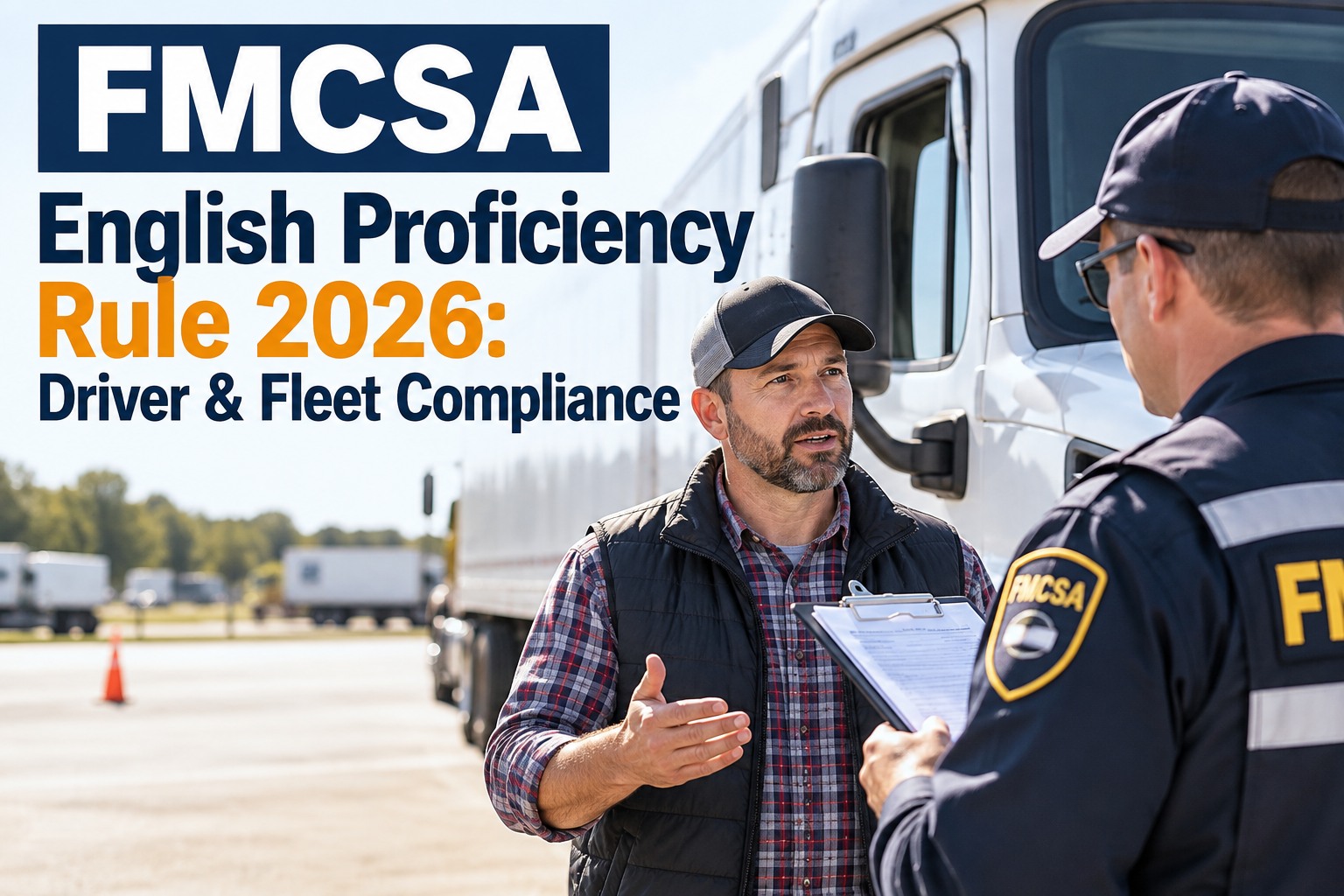
If your trucking company hasn't formally checked its English Language Proficiency (ELP) compliance since the rule became an out-of-service violation in mid-2025, this is the page to work through. A single driver placed out of service at a scale house means a stranded load, a scramble for coverage, and a mark on your safety record — all avoidable with preparation done before the stop. This is a practical, phase-by-phase ELP compliance checklist for 2026: what to understand, assess, document, and rehearse so every interstate driver can satisfy 49 CFR 391.11(b)(2) at the roadside. Work the list, and keep the records behind it in OXMAINT AI, the AI-powered CMMS.
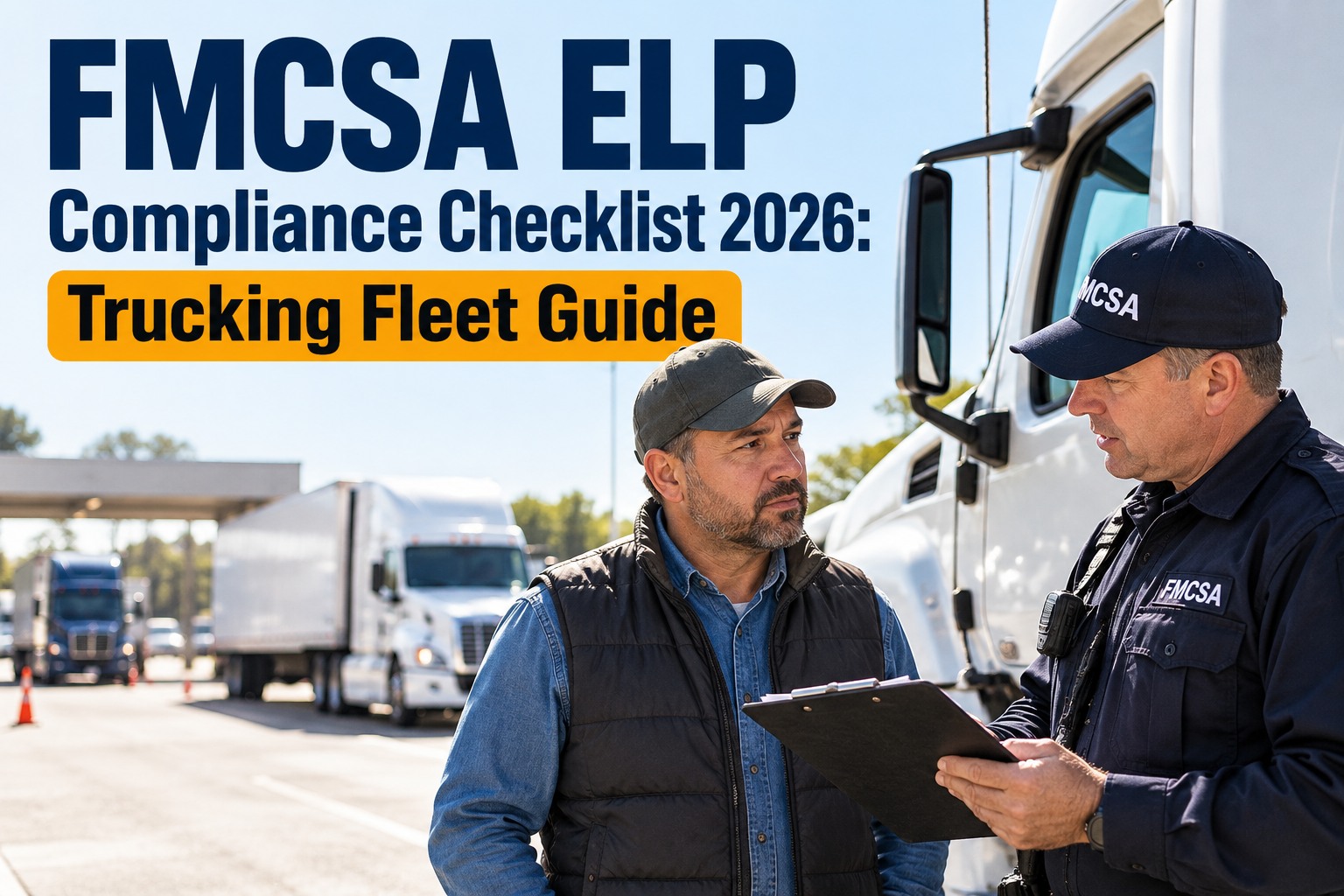
FMCSA ELP Compliance Checklist 2026: Trucking Fleet Guide
Worried a roadside English check could sideline a driver and strand a load — with no record to fall back on? Work this checklist and keep the proof in OXMAINT AI: driver-qualification files, ELP assessments and inspection history in one platform, tied to each driver and ready to produce for an auditor or an officer.
The Checklist at a Glance
Compliance isn't one task — it's six phases that build on each other. Here's the whole path before we walk each phase in detail. Track your progress through them as a running readiness score.
Start free and turn these phases into tracked tasks in OXMAINT AI.
Phase 1 — Understand the Rule
You can't build compliance around a rule the team can't state. Get everyone clear on the four-part standard and what changed. A driver must read and speak English well enough to converse with the public, understand highway signs and signals, respond to officials, and make entries on records.
Book a walkthrough to align your team on the standard.
Phase 2 — Assess Your Drivers
A gut feeling isn't an assessment. Build a consistent, job-related check that mirrors what an officer will actually do — and apply it the same way to every driver.
Start free and log each driver's assessment in OXMAINT AI.
A Checklist You Can't Prove You Ran Isn't Compliance.
The difference between a defensible fleet and an exposed one is documentation — a dated, standardized record for every driver. OXMAINT AI keeps each assessment tied to the driver's qualification file, ready to produce.
Phase 3 — Document Everything
If it isn't written down, it didn't happen — that's the auditor's view and the officer's. Every assessment and training event belongs in the driver's qualification file, retrievable on demand.
Book a walkthrough of DQ documentation in OXMAINT AI.
Phase 4 — Train the Team
Two audiences need training: the evaluators who run the assessment, and the drivers who'll face the roadside version. Consistency on both sides is what holds up under scrutiny.
Start free and track training completion in OXMAINT AI.
Phase 5 — Prepare for the Roadside
The assessment your drivers will actually face has two steps. Prepare them for exactly this — a driver who can't complete step one doesn't reach step two, and no translation aids are allowed.
Book a walkthrough to prep your drivers with OXMAINT AI records.
The exact conduct of the roadside assessment is set by FMCSA guidance and applied by individual inspectors. Prepare drivers to the general shape of the check, and verify specifics against current federal guidance. This guide is informational, not legal advice.
Phase 6 — Monitor & Maintain
Compliance decays if it's a one-time push. Keep it live: re-assess on schedule, watch for issues, and keep records current so a stop years from now still meets documentation.
Start free and keep compliance current in OXMAINT AI.
Quick Reference: What Gets Checked
| Ability (391.11(b)(2)) | What it means | How you prepare |
|---|---|---|
| Converse with the public | Communicate in English on the job | Practice realistic spoken exchanges |
| Understand signs & signals | Read U.S. highway signs in English | Drill text and MUTCD symbol signs |
| Respond to officials | Answer an officer's questions unaided | Mock interviews, no translation aids |
| Make entries on records | Complete logs and reports in English | Review real forms and documentation |
Frequently Asked Questions
Work the Checklist Before the Roadside Does.
Turn all six phases into tracked tasks, log every assessment and training event, and keep each driver's qualification record one search away — with OXMAINT AI, so a roadside stop meets documentation, not a scramble.
-compliance-checklist.png)

