Fuel is the second-largest operating expense for most fleet businesses — trailing only labor costs. For a 50-vehicle fleet averaging 1,500 gallons per vehicle per month, the difference between a 3¢ and a 15¢ per-gallon rebate is $72,000 per year. That's not a rounding error — it's a headcount decision, a capital expenditure, or a year's worth of preventive maintenance. The fleet fuel card market has matured significantly entering 2026: WEX alone powers 50+ card programs and is accepted at 95% of US fuel stations, while Comdata now offers up to 25¢ per gallon savings for high-volume trucking fleets. Choosing the right card — and connecting it to a CMMS that actually tracks cost-per-mile — separates fleets managing fuel costs from those being managed by them. Book a demo to see how OxMaint integrates with every major fuel card to give you automatic cost-per-mile tracking without spreadsheets.
Fleet Operations · Fuel Management 2026
Best Fleet Fuel Cards: Comparison & Savings for 2026
WEX, Comdata, ExxonMobil, AtoB, OTR — compared side by side on rebates, controls, fees, and CMMS integration. Find the right card for your fleet and connect it to OxMaint for automatic cost-per-mile tracking, rebate optimization, and zero-reconciliation fuel intelligence.
$72K+
Annual savings · 50 vehicles · top rebate tier
95%
US station acceptance — WEX network
25¢/gal
Max savings · Comdata high-volume fleets
30%
Fuel spend lost without card controls
$72K+
Annual fuel savings for a 50-vehicle fleet at 15¢/gal vs. no card program
95%
US fuel station acceptance — WEX's nationwide network coverage
25¢/gal
Maximum savings available through Comdata for high-volume trucking fleets
30%
Of fleet fuel spending lost to unauthorized purchases without card controls
What Is a Fleet Fuel Card — and Why Do You Need One in 2026?
A fleet fuel card is a payment card specifically designed for commercial vehicle operators. Unlike standard credit cards, fleet cards include purchase controls that restrict what drivers can buy, require driver PIN authentication, capture odometer readings at the pump, and generate structured transaction data for every fill-up. The result is a complete, automated record of fuel spending by driver, vehicle, station, and date — without any manual data entry. In 2026, leading cards add direct API connections to CMMS and telematics platforms, pulling fuel cost data automatically into maintenance workflows and cost-per-mile calculations. Without a fuel card program, fleet managers are manually reconciling fuel receipts, unable to catch unauthorized purchases, and missing the data foundation for real operational cost intelligence.
Control
Stop Unauthorized Fuel Spending
Driver PIN requirements, fuel-only purchase restrictions, daily gallon limits, time-of-day controls, and geographic boundaries prevent misuse before it happens — not weeks later when you find it in a reconciliation report.
Savings
Per-Gallon Rebates Compound Quickly
Even a 3¢ per gallon rebate adds up to $27,000 annually for a 50-vehicle fleet. Volume tiers reward larger fleets with progressively better rates — the more you buy, the more you save. High-volume fleets access rates up to 25¢ per gallon.
Visibility
Transaction-Level Fuel Intelligence
Every transaction captures driver ID, vehicle ID, gallons purchased, price per gallon, odometer reading, station location, and timestamp — automatically. This data feeds cost-per-mile calculations and maintenance triggers without manual entry.
Integration
Direct CMMS and Telematics Connection
Top 2026 fuel cards offer API integrations with fleet management platforms like OxMaint — pulling fuel data automatically into cost tracking, maintenance scheduling, and performance dashboards with zero manual reconciliation.
Top 6 Fleet Fuel Cards Compared for 2026
These are the six most-used fleet fuel card programs in 2026, evaluated across the five factors that most directly affect your total fuel program value: network coverage, rebates, card fees, controls, and integration capabilities.
Best Overall Coverage
WEX Fleet Card
Universal — All Fleet Sizes
Network95% US stations · 160,000 locations
Rebates3¢–15¢/gal in-network · 1¢–3¢/gal out-network
FeesUp to $4/card/month · $40 setup
ControlsDriver PIN · product restrictions · 2FA (Dynamic Prompt)
Best for: Any fleet size needing reliable nationwide coverage with solid controls and a large service network at 45,000+ locations for tires, repairs, and oil changes.
Best Volume Savings
Comdata / Corpay
Large Fleets · Trucking
Network8,000+ truck stops · major trucking routes
Rebates7¢–25¢/gal volume-based at partner sites
Fees$59/mo for <10 cards · free for 10+ cards · $3 extended network fee
ControlsOn/off card switch in mobile app · driver ID · purchase alerts
Best for: High-volume long-haul fleets (100+ vehicles) that can unlock the highest per-gallon rebate tiers. Fee structure penalizes small fleets.
Best for Branded Stations
ExxonMobil BusinessPro
Gas-First · Light & Heavy Fleets
Network12,000+ Exxon/Mobil US stations · 800+ diesel lanes
RebatesUp to 6¢/gal at Exxon/Mobil stations · Fuel Anywhere add-on available
Fees$0 setup · $0 card fees (Exxon/Mobil only)
ControlsDriver PIN · product type restrictions · dollar and daily limits
Best for: Fleets with routes through Exxon/Mobil-dense corridors. Zero fees make small-fleet economics strong. FleetPro card adds diesel lane access and Mastercard flexibility.
Best for Trucking Routes
OTR Fuel Card
Owner-Operators · OTR Trucking
Network8,000+ US stations · 3,000+ in-network discount sites
RebatesAverage $0.50/gal savings in-network (prepaid or credit)
Fees$0 in-network transaction fees · no credit check required
ControlsPrepaid option eliminates credit risk · spending alerts
Best for: Owner-operators and small trucking fleets on OTR routes. No credit check and prepaid option makes approval accessible. Exceptional in-network savings rate.
Best Flat-Rate Savings
AtoB Fleet Card
All Fleet Sizes · Universal
NetworkUniversal acceptance at all major fuel stations
RebatesAverage 45¢/gal savings with software-enabled optimization
Fees$3/month per active card · no hidden fees
ControlsLive usage tracking · spending limits · misuse prevention dashboard
Best for: Fleets wanting simple, transparent pricing with strong software-driven savings. Flat $3/card/month fee structure makes total cost highly predictable.
Best for Small Fleets
Fuelman / Fleetcor
Small–Mid Fleets · 5–50 Vehicles
NetworkBroad US network via Fleetcor infrastructure
RebatesVolume-based discounts · rate dependent on monthly gallons
FeesVariable — review contract for per-transaction and monthly fees carefully
ControlsProduct restrictions · driver ID · transaction alerts · real-time controls
Best for: Small and mid-size fleets (5–50 vehicles) wanting straightforward controls with decent coverage. Note: review fee structures carefully — extended network fees apply at non-preferred locations.
How to Choose the Right Fleet Fuel Card: 4 Decision Factors
The right card for your fleet depends on four operational factors that override any headline rebate rate. Apply this framework before committing to any program.
01
Fleet Size and Monthly Volume
Your monthly fuel volume determines which rebate tiers you can actually unlock — and therefore what your real savings will be. Small fleets (5–50 vehicles) typically cannot meet the minimum volume thresholds for high-tier Comdata or WEX rebates, making simpler flat-rate programs like AtoB or ExxonMobil BusinessPro a better fit. Large fleets (100+ vehicles) unlock the economics that make Comdata's 25¢/gal maximum meaningful. Calculate your actual monthly gallon volume before evaluating any rebate tier table — the published maximum is rarely what small or mid-size fleets actually achieve.
Small fleet (5–50): AtoB or ExxonMobilMid fleet (50–100): WEXLarge fleet (100+): Comdata or WEX
02
Network Coverage and Operating Routes
WEX's 95% US station acceptance is the industry standard for nationwide coverage — but acceptance rate is only part of the picture. Rebates only apply at in-network locations: WEX's EDGE savings network covers approximately 4,500 stations for maximum rebates, not all 160,000 acceptance locations. For OTR trucking routes, Comdata's 8,000+ truck stop network matters more than broad consumer acceptance. For regional fleets concentrated in a specific geography, a branded card (ExxonMobil, Shell) paired with a universal card can deliver better combined economics than a universal card alone. Map your top 20 fueling locations before evaluating any card program.
OTR trucking: Comdata or OTR CardNational mixed fleet: WEXRegional: branded + universal pair
03
Fraud Risk and Control Requirements
Fuel theft and unauthorized purchases are the fleet fuel cost problem that rebates cannot solve — and card controls are the prevention mechanism. If unauthorized fuel spending is a concern, prioritize cards with driver PIN at the pump (not just card swipe), product-type restrictions (fuel only, no merchandise), daily and per-transaction gallon limits, time-of-day and geographic restrictions, and real-time exception alerts. WEX's Dynamic Prompt 2-factor authentication and Comdata's real-time on/off card switch in their mobile app represent the current control standard. Exception alerts that notify managers of any rule violation are now a table-stakes requirement for any enterprise fleet card program.
Best controls: WEX + ComdataRequire: driver PIN + product restrictionMust-have: real-time exception alerts
04
CMMS and Telematics Integration
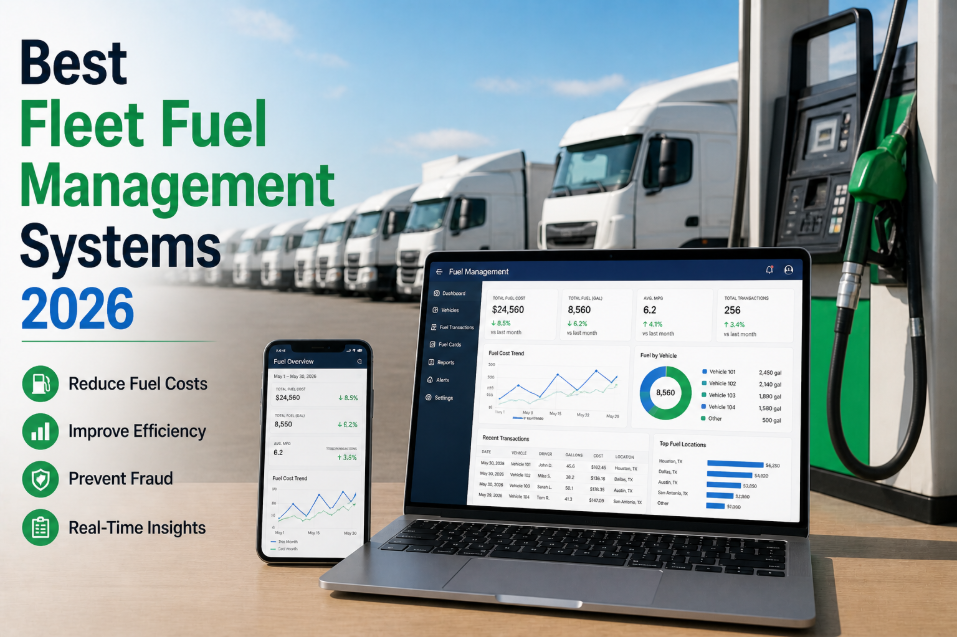
A fuel card that cannot connect to your fleet management platform is leaving most of its potential value on the table. The real operational intelligence — cost-per-mile by vehicle, fuel efficiency trends, correlation between driver behavior and fuel consumption, maintenance cost impact of fuel system health — requires fuel transaction data to flow automatically into your CMMS. OxMaint integrates via API with WEX, Comdata, Fuelman, Shell, and BP fuel card programs. Transaction data imports automatically, matching each purchase to a driver and vehicle. Fuel cost-per-mile, efficiency trends, and exception reports generate without manual data entry — giving you the fuel intelligence that card rebates alone cannot provide.
OxMaint integrates: WEX, Comdata, Fuelman, Shell, BPAuto cost-per-mile trackingZero manual reconciliation
Experience a Cloud-Native Fleet CMMS Built for Real Operations
OxMaint connects to WEX, Comdata, Fuelman, Shell, and BP fuel cards automatically — pulling transaction data into real-time cost-per-mile dashboards, maintenance triggers, and fuel exception alerts. No spreadsheets. No manual reconciliation. Free to start.
Fuel Card + CMMS: The Integration That Changes Everything
Fuel cards generate structured transaction data. A CMMS turns that data into operational intelligence. The combination of a well-chosen fuel card program and an integrated fleet CMMS like OxMaint gives fleet managers a capability set that neither tool delivers alone.
Automatic Cost-Per-Mile by Vehicle
Fuel transaction data matched to vehicle ID and odometer reading automatically calculates fuel cost-per-mile for every vehicle in real time. Identify outliers — vehicles burning 20–30% more fuel than fleet average — that signal engine inefficiency, route problems, or driver behavior issues before they compound into larger costs.
Fuel Consumption Triggers PM Schedules
OxMaint's usage-based PM scheduling uses actual fuel consumption and mileage data from fuel card transactions to trigger maintenance intervals — not generic calendar dates. Vehicles driven harder get more frequent service. Underutilized vehicles don't accumulate unnecessary PM costs. Service intervals adapt automatically to real-world usage.
Exception Alerts Tied to Maintenance History
When a vehicle shows unusual fuel consumption relative to its historical average, OxMaint cross-references the maintenance record — open work orders, recent PM completion, DVIR defect flags — to determine whether a maintenance issue is driving the inefficiency. Fuel data becomes a diagnostic signal, not just a cost figure.
Rebate Optimization Analytics
OxMaint's fuel analytics shows which stations your fleet uses most, what rebate tier you are achieving per vehicle, and where fueling location shifts could increase your monthly rebate. Fleets that track this actively achieve the top rebate tier 40% more consistently than those managing fuel cards in isolation from their operational data.
Fleet Fuel Card ROI: What the Numbers Show
The return on a well-managed fleet fuel card program compounds across rebates, fraud prevention, and operational efficiency. Here is what documented fleet data shows for operations at different fleet scales.
$27K
Annual savings · 50 vehicles · 3¢/gal rebate
50 vehicles × 1,500 gal/month × $0.03 × 12 months. The minimum rebate tier achievable by any fleet with any major card program — before volume tiers, fraud prevention savings, or efficiency gains.
$72K+
Annual savings · 50 vehicles · 15¢/gal top-tier rebate
50 vehicles × 1,500 gal/month × $0.15 × 12 months. Achievable for fleets consistently fueling at WEX EDGE network locations or Comdata partner truck stops at qualifying volume tiers.
30%
Of fleet fuel spending typically lost to unauthorized purchases without controls
Industry data on unauthorized fleet fuel purchases consistently lands in the 20–35% range for fleets using open corporate credit cards. Driver PIN + product restrictions reduces unauthorized spending to near zero.
45¢/gal
Average savings reported by AtoB fleet card users with software optimization
Software-enabled routing and station selection combined with flat-rate card discounts. At this rate, a 50-vehicle fleet saves $405,000 annually — demonstrating the compounding effect of card + platform integration.
Frequently Asked Questions: Fleet Fuel Cards 2026
Can we use multiple fuel cards at the same time across our fleet?
Yes — and many fleets do. A common 2026 strategy is to pair a universal card (WEX or Comdata) for broad coverage with a branded card (ExxonMobil, Shell) for corridors where the branded rebate rate exceeds the universal card rate. Some fleets also pair a high-savings in-network card (OTR, Comdata) for OTR routes with a universal card for local operations. The key to managing multiple programs without administrative overhead is integration: OxMaint consolidates transaction data from WEX, Comdata, Fuelman, Shell, and BP into a single dashboard — so your total fuel spend, cost-per-mile, and rebate performance are visible in one place regardless of how many card programs you run.
Sign up free to connect your fuel cards to OxMaint today.
How do fleet fuel card rebates actually work — and how do I maximize them?
Most rebates are applied as a credit on your monthly billing statement. They are calculated per gallon purchased and determined by your volume tier — the more gallons your fleet buys in a given month, the higher the per-gallon rebate rate you unlock. For example, WEX's EDGE network pays 3¢–15¢/gal depending on monthly volume, while Comdata's partner program pays 7¢–25¢/gal for qualifying trucking fleets. To maximize rebates: (1) Concentrate fueling at in-network locations where higher rebates apply — not just any station. (2) Consolidate card programs to maximize volume on a single provider's network if you want to reach higher volume tiers. (3) Track your actual rebate achievement monthly and compare it to published tier thresholds — OxMaint's fuel analytics show you exactly where you are relative to the next tier and what operational change would move you up.
Book a demo to see OxMaint's rebate optimization dashboard.
What controls should I require in a fleet fuel card to prevent unauthorized purchases?
The minimum control set for any 2026 enterprise fleet fuel card program: driver PIN at pump (not just card swipe — PIN ties the transaction to a specific driver); product-type restriction (fuel only — preventing drivers from purchasing merchandise, food, or other non-fuel items); daily and per-transaction gallon limits (flags excessive fueling that may indicate theft or off-route fueling); time-of-day restrictions (no transactions outside shift hours); geographic restrictions or geofencing alerts (flags transactions outside assigned operating territory); and real-time exception alerts sent to fleet managers when any control is violated. WEX's Dynamic Prompt 2FA and Comdata's mobile on/off card switch represent the current security standard. Any card program that cannot provide all of these controls is leaving a significant portion of your fraud prevention capability unaddressed. OxMaint's fuel card integration surfaces all exception events in real time, regardless of which card program generates them.
Sign up free to centralize fuel exception management.
How does OxMaint integrate with fleet fuel card data — and what does that give us?
OxMaint connects via API to WEX, Comdata, Fuelman, Shell, and BP card programs. Transaction data imports automatically and matches each purchase to a driver and vehicle record in OxMaint. This creates several capabilities that fuel cards alone cannot deliver: automatic fuel cost-per-mile calculation for every vehicle without manual data entry; fuel consumption trends that flag vehicles burning significantly more than fleet average (indicating maintenance issues or behavior problems); maintenance interval triggers based on actual mileage and fuel consumption data rather than calendar dates; and cross-referenced cost reports that show total vehicle operating cost including fuel, maintenance, parts, and labor — the complete cost-per-mile picture. Most OxMaint customers reduce fuel reconciliation time from 4–8 hours per week to near zero after integrating their card program.
Book a demo to see the integration live across your fleet.
Stop Evaluating. Start Saving.
OxMaint integrates with every major fleet fuel card to give you real-time cost-per-mile tracking, automated exception alerts, rebate optimization analytics, and maintenance triggers based on actual fuel consumption — all in one cloud-native platform. Join 1,000+ fleet operations already managing fuel costs intelligently. Free to start. Live within days.