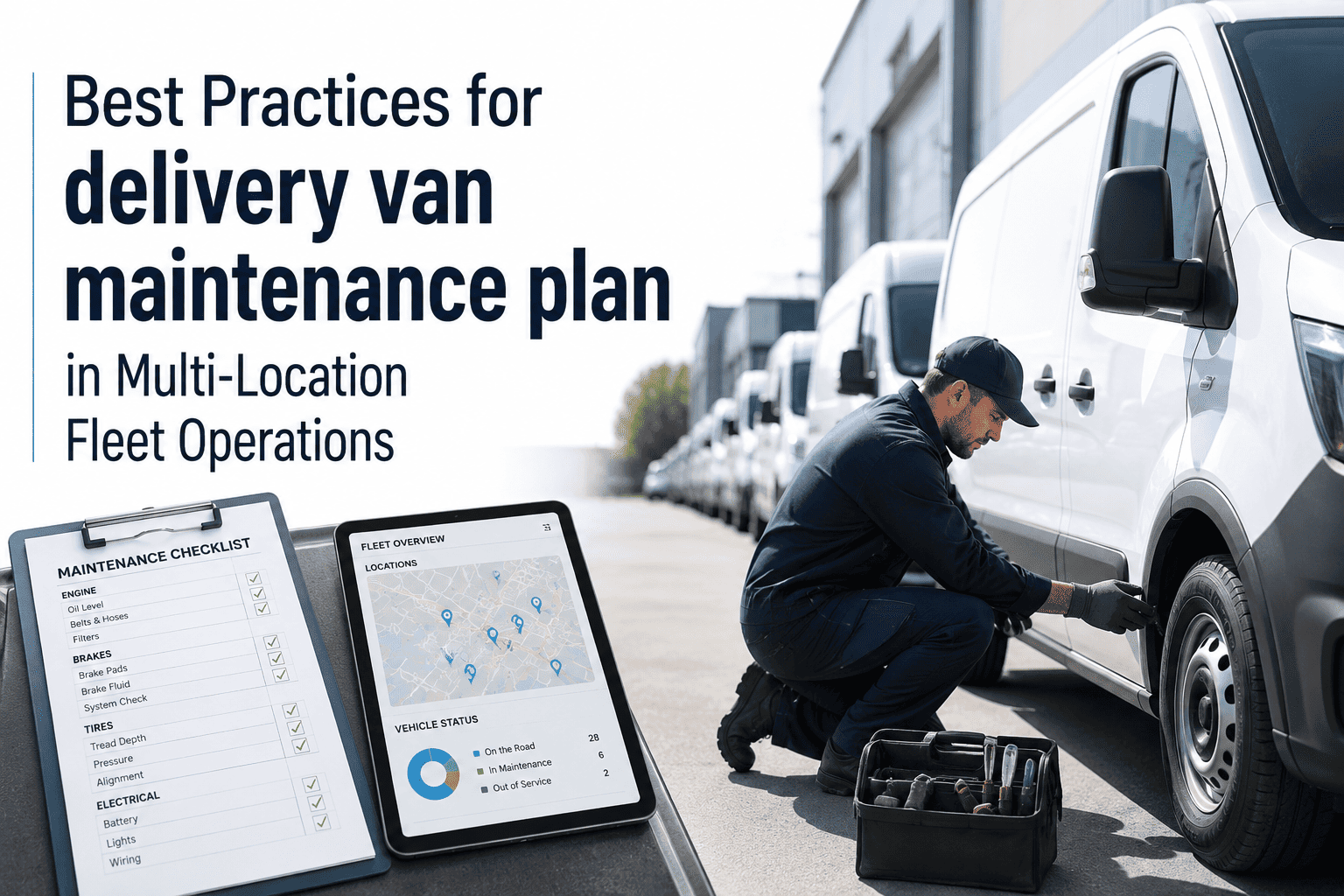
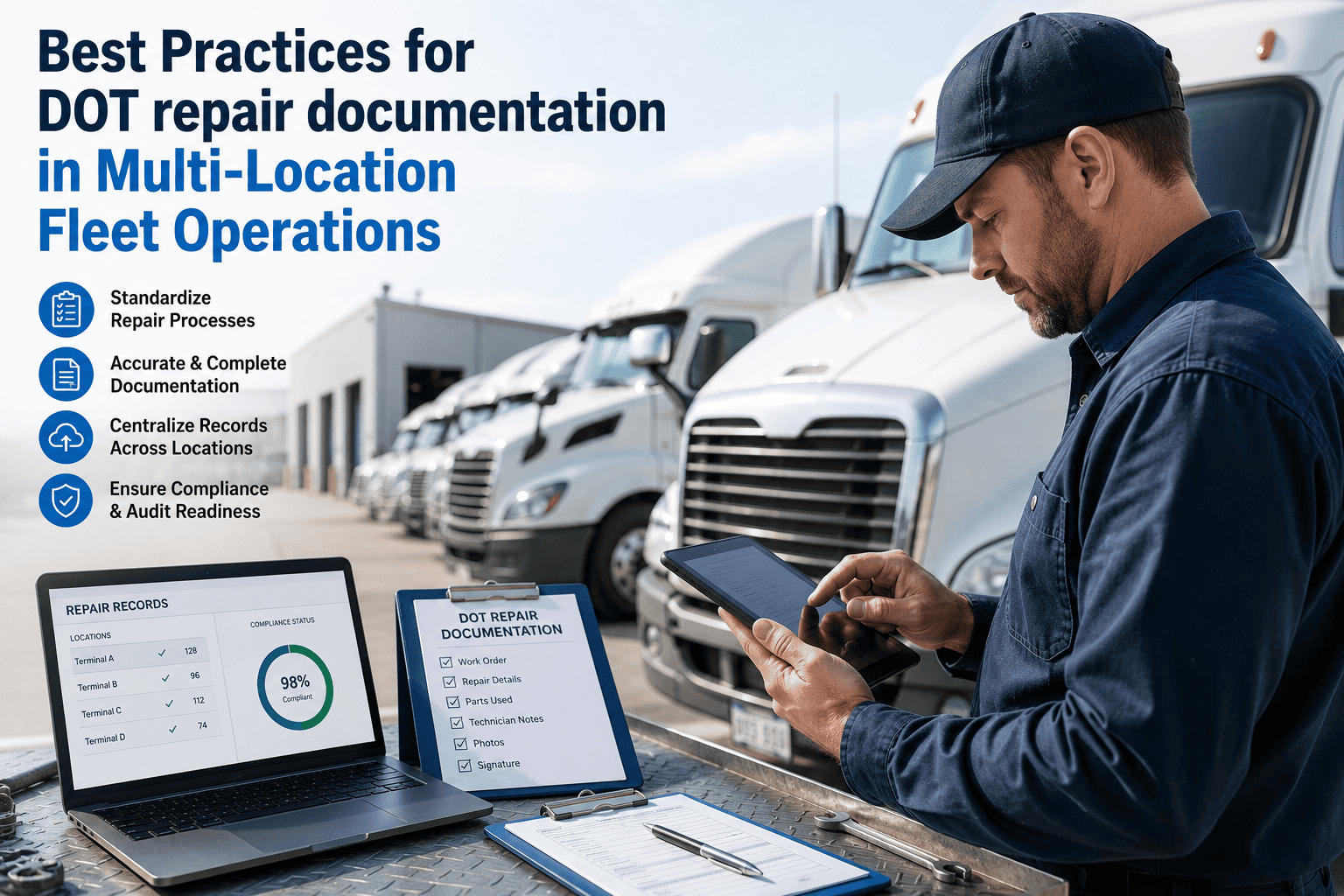
Managing construction fleet maintenance across multiple locations is one of the most demanding operational challenges in heavy equipment management. When excavators in one city, dump trucks at a remote site, and cranes at a third location all need coordinated servicing, the gaps between sites become gaps in your maintenance program — and those gaps cost money. Missed PMs, duplicated parts inventory, and inconsistent inspection standards across branches quietly erode your fleet's reliability and push up cost per machine hour. A CMMS built for multi-location fleet operations closes those gaps by giving every site, every supervisor, and every technician a shared system of record. OxMaint's AI Predictive Maintenance brings heavy equipment fleets scattered across dozens of sites into a single intelligent maintenance platform.
Heavy Equipment · Multi-Location Fleet Management
Best Practices for Construction Fleet Maintenance Across Multiple Locations
How leading construction companies standardize PM programs, eliminate parts duplication, and cut equipment downtime fleet-wide with connected CMMS workflows.
23%
Average reduction in unplanned downtime with centralized fleet CMMS
35%
Reduction in duplicate parts inventory across sites
18%
Lower maintenance cost per machine hour vs. siloed site management
3x
Faster compliance reporting for multi-site inspection audits
Why Multi-Location Fleet Maintenance Fails Without a Shared System
Most construction companies start with site-level spreadsheets. When the fleet grows to three, five, or fifteen sites, those spreadsheets multiply — and so do the failure modes. The problems are predictable, but they compound quietly until a major breakdown or a compliance audit forces the issue.
01
No PM Consistency Across Sites
Site A services excavators every 250 hours. Site B does it at 350. Same machine type, same OEM spec, different intervals — because there is no enforced standard. The result is accelerated wear at the permissive site and warranty-voiding practices that stay invisible until failure.
02
Parts Hoarding and Inventory Blind Spots
Each site buys its own filters, belts, and hydraulic seals because site supervisors don't trust other sites to have stock when needed. The company carries 3x the required inventory in total — capital tied up in parts that expire or get lost at remote sites.
03
No Cross-Site Equipment Visibility
When a critical machine breaks down at Site C, no one knows that an identical unit at Site B is idle and could be transferred. Equipment sits idle while rentals are ordered, because utilisation data lives in a site manager's head, not a shared system.
04
Technician Knowledge Stays on Site
The best technician at Site D has solved the same hydraulic drift issue five times. No one at Sites A, B, or C knows the fix. The same diagnostic hours are spent repeatedly across the fleet because repair history is stored locally, not centrally.
OxMaint connects all your sites into a single maintenance platform — standardised PMs, shared parts inventory visibility, and cross-site equipment history accessible by every supervisor and technician in your fleet. Start a free trial or book a 30-minute demo to see multi-site fleet management in action.
8 Best Practices for Multi-Location Construction Fleet Maintenance
These practices are drawn from construction companies operating 50 to 500+ assets across dispersed sites. Each one addresses a specific failure mode that emerges when fleet maintenance is managed site-by-site without a unified CMMS backbone.
Practice 1
Centralise Your Asset Registry
Every asset in the fleet — regardless of site — lives in a single CMMS asset register with a unique ID, OEM specs, warranty dates, and service history. When an asset moves between sites, its full maintenance record travels with it. No re-entering history, no lost service records.
Practice 2
Enforce OEM-Based PM Templates Fleet-Wide
Build PM checklists at the equipment model level — not the site level. When a D6 dozer requires a 250-hour service, that checklist is identical whether the machine is at Site A or Site J. Site supervisors can execute; they cannot modify intervals without fleet manager approval.
Practice 3
Use Telematics-Triggered PM Scheduling
Engine-hour-based PM scheduling eliminates calendar drift. When telematics data feeds directly into CMMS, work orders are generated automatically as assets approach service thresholds — regardless of which site the machine is operating at. No manual tracking required from site supervisors.
Practice 4
Build a Shared Parts Visibility Layer
Before ordering a part, every technician should be able to see whether that part is in stock at any other site. Shared inventory visibility across sites reduces emergency orders by 30–40% and enables inter-site transfers instead of new purchases for common critical parts.
Practice 5
Standardise Inspection Checklists
Pre-shift and post-shift equipment inspections should follow a standard digital format across all sites. Digital checklists capture defect findings with photos, auto-generate work orders for flagged items, and create an audit trail that paper forms cannot produce — essential for insurance claims and compliance audits.
Practice 6
Track Cost Per Machine Hour by Site
Fleet-level cost reporting masks site-level inefficiencies. Break maintenance cost down to cost per machine hour by site — when Site C is running 40% higher than Site A for the same equipment type, the data surfaces the problem before it compounds. OxMaint generates this report automatically from work order labour and parts data.
Practice 7
Define Clear Escalation Paths for Critical Breakdowns
When a critical machine goes down at a remote site, who decides whether to repair on-site, transfer a replacement, or call a specialist contractor? Document and encode escalation logic in the CMMS. Automatic notifications to fleet managers when priority-1 work orders are created eliminate the lag between breakdown and decision.
Practice 8
Run Monthly Cross-Site Fleet Reviews
A monthly fleet review meeting driven by CMMS data — PM compliance by site, asset availability rates, top breakdown causes, cost variance — turns reactive site management into proactive fleet strategy. Identify which sites need additional technical support, which assets are approaching end of economic life, and where inventory policy needs adjustment.
Multi-Location Fleet Maintenance: Key Metrics to Monitor
Managing by instinct works for a single site. Managing multiple sites requires data. These are the metrics that give fleet managers an accurate picture of maintenance performance across a dispersed construction fleet.
| Metric |
What It Measures |
Industry Benchmark |
Warning Signal |
| PM Compliance Rate |
% of PMs completed on time vs. scheduled |
85%+ fleet-wide |
Below 75% at any site |
| Asset Availability |
% of scheduled operating hours asset is available |
88–92% for construction equipment |
Below 80% for critical assets |
| Cost Per Machine Hour |
Total maintenance cost divided by operating hours |
Varies by equipment type |
Site variance more than 30% above fleet avg |
| Mean Time Between Failures |
Average operating hours between unplanned breakdowns |
Baseline from first 12 months in CMMS |
MTBF declining more than 15% in 90 days |
| Reactive vs. Planned Work Ratio |
% of work orders that are reactive (breakdown) vs. planned |
Reactive below 30% of total WOs |
Reactive above 45% at any site |
| Parts Fill Rate |
% of parts requests fulfilled from on-hand stock |
90%+ for critical parts |
Below 80% causing schedule delays |
How OxMaint Supports Multi-Location Construction Fleet Management
OxMaint's AI Predictive Maintenance platform is purpose-built for companies that manage heavy equipment across multiple locations. Here is what that means operationally for fleet managers and site supervisors.
Single Fleet View Across All Sites
One dashboard shows every asset, its current status, upcoming PMs, and open work orders — regardless of which site it is operating at. Fleet managers see the whole picture; site supervisors see their site filtered automatically by login permissions.
AI-Powered Failure Prediction
OxMaint's AI engine analyses telematics data, service history, and inspection findings to flag assets showing early failure signatures — before a breakdown occurs. Predictions are surfaced at the fleet manager level, enabling proactive intervention at the right site before the machine goes down.
Mobile-First for Field Technicians
Technicians at remote sites update work orders, complete inspection checklists, and request parts from mobile devices — even with limited connectivity. All data syncs to the central platform, so fleet-level visibility is never dependent on a site supervisor manually compiling a report.
Centralized Parts and Inventory
OxMaint tracks parts inventory across all site stockrooms simultaneously. Before ordering, the system checks whether stock exists at another site within transfer distance — reducing emergency purchases and normalizing inventory levels across the fleet without manual coordination between site managers.
Frequently Asked Questions
How does a CMMS handle equipment that moves between construction sites regularly?
In a well-configured CMMS, assets are registered by equipment ID rather than site — the site is just an attribute that updates when the machine transfers. All PM schedules, service history, and open work orders travel with the asset. OxMaint handles inter-site transfers with a simple location update that automatically reassigns PM responsibility to the receiving site supervisor.
Explore OxMaint's asset management features.
What is the biggest mistake construction companies make when scaling fleet maintenance to multiple sites?
The most common mistake is allowing each site to develop its own maintenance standards and tracking methods before a centralised system is in place. By the time the company recognises the problem, data is fragmented across multiple formats and site managers have entrenched habits that resist standardisation. Implementing a CMMS early — even for a small fleet — avoids this entirely.
Can small construction companies with just 2-3 sites benefit from a multi-location CMMS?
Absolutely. The coordination overhead of even two sites — shared parts, technician scheduling, consistent PM standards — is enough to justify a CMMS. Companies that standardise early with OxMaint also scale much more smoothly when they add a fourth or fifth site, because the process infrastructure is already in place.
Book a demo to see how OxMaint works for smaller fleets.
How does AI predictive maintenance apply to construction equipment specifically?
Construction equipment operates in highly variable conditions — different loads, terrains, and duty cycles affect wear rates significantly more than in controlled industrial settings. AI models trained on construction equipment telemetry can detect anomalies in engine parameters, hydraulic pressure patterns, and vibration data that precede failures by days or weeks, giving fleet managers enough lead time to schedule repairs during planned downtime windows rather than emergency breakdown responses.
How long does it take to implement OxMaint across multiple sites?
Most multi-site construction fleet implementations go live within 4 to 8 weeks depending on fleet size and data migration requirements. OxMaint provides structured onboarding with site-by-site rollout support, allowing you to start with your highest-priority site and expand without disrupting operations at sites already running on the system.
Start your free trial today.
AI Predictive Maintenance · OxMaint
Stop Managing Each Site in Isolation — Connect Your Entire Fleet
OxMaint gives construction fleet managers a single platform for multi-location PM scheduling, shared parts visibility, AI-powered failure prediction, and cross-site performance reporting. Stop losing money to coordination gaps between sites.