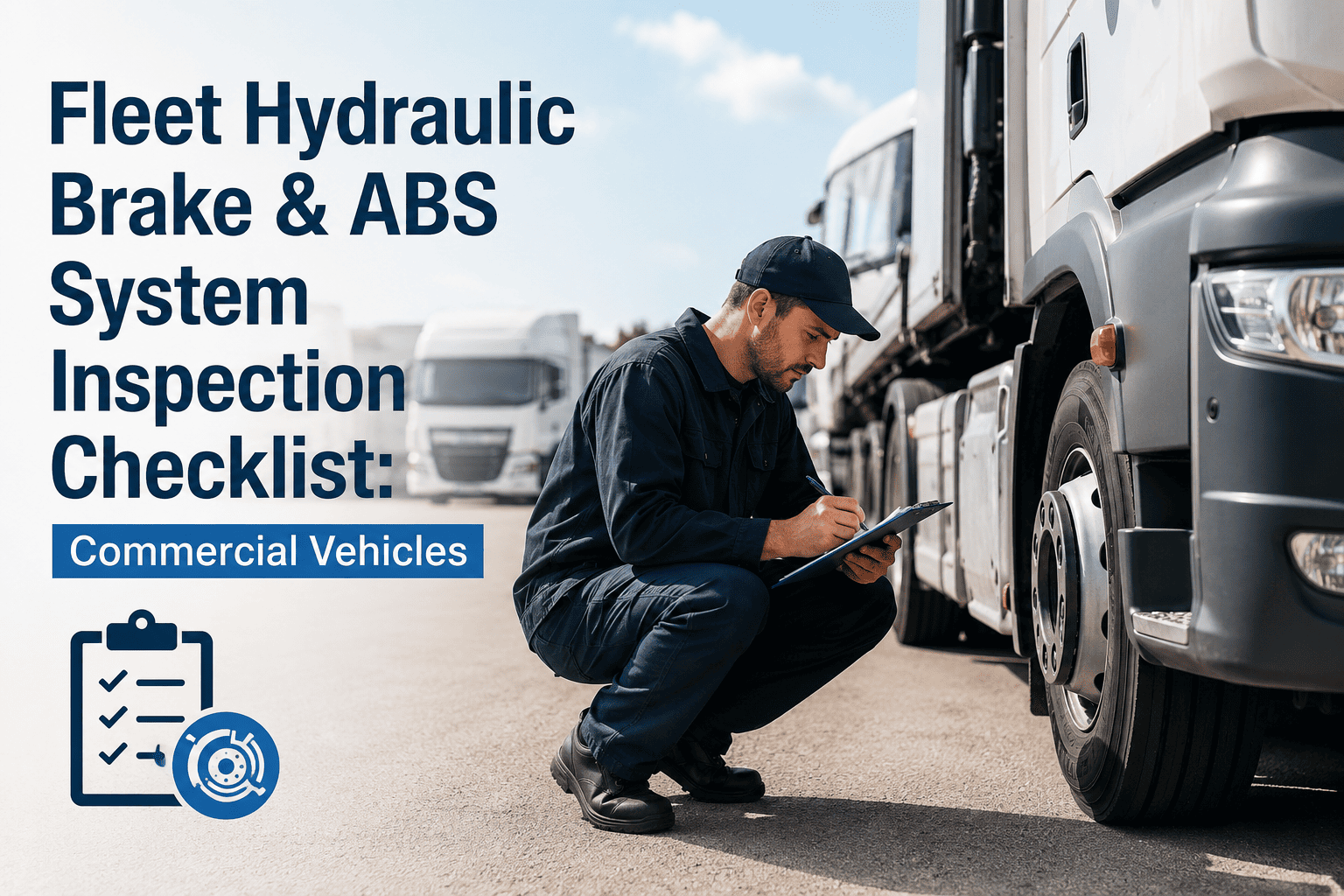
Brake system failures remain the leading cause of commercial vehicle out-of-service violations, with nearly 30% of fatal truck crashes linked to brake problems according to FMCSA data. During the 2024 Brake Safety Week, inspectors examined 16,725 commercial vehicles and placed 12.8% out of service for brake-related violations. For fleet managers operating on tight margins, a single brake failure can trigger a cascade of costs including emergency repairs, towing fees, missed deliveries, and potential CSA score damage. This guide provides everything you need to implement a professional brake inspection protocol that keeps your fleet compliant and your assets on the road generating revenue.
Brakes Inspection Guide and Report Template
Professional brake inspection protocol designed for commercial fleet compliance. Standardize your inspection reports and protect your assets with our Asset Master framework.
Why Brake Inspections Matter More Than Ever
Commercial vehicles operating at 80,000 pounds require approximately two football fields of stopping distance under ideal conditions. When brake systems degrade, that distance increases dramatically, putting drivers, cargo, and other motorists at serious risk. The Federal Motor Carrier Safety Administration reports that brake violations consistently rank among the top vehicle defects cited during roadside inspections, with six of the top 20 violations being brake-related in 2023.
The financial impact extends far beyond repair costs. According to industry data, the average cost of unplanned downtime ranges from $448 to $760 per vehicle per day. When you factor in towing fees, expedited repairs, driver detention, and potential lost contracts, a single brake failure can easily exceed $5,000 in total costs. Fleet operators who implement systematic brake inspection protocols using digital maintenance management platforms report up to 37% fewer brake-related breakdowns compared to those relying on paper-based systems.
Key Components of a Professional Brake Inspection
A thorough brake inspection goes far beyond a quick visual check. Professional inspections must evaluate multiple interconnected systems that work together to bring your vehicles to a safe stop. Understanding these components helps fleet managers ensure their inspection protocols cover all critical areas and meet CVSA standards.
Brake Linings and Pads
Brake linings are the friction material that creates stopping power. Inspectors check for minimum thickness (typically 6.4mm), contamination from oil or grease, cracks, voids, and secure attachment to brake shoes. During the 2024 Brake Safety Week, 38% of lining violations were contamination-related and 27% involved cracks or voids.
Drums and Rotors
Brake drums and rotors provide the surface against which linings create friction. Inspectors look for scoring, heat cracks, excessive wear, and out-of-round conditions. Drums worn beyond maximum diameter specifications cannot dissipate heat properly and increase stopping distances significantly.
Air System Components
The air brake system includes compressors, tanks, valves, lines, and chambers that work together to apply braking force. Technicians verify proper air pressure build-up, check for leaks, inspect chamber condition, and ensure all safety devices function correctly. A single corroded hole in a spring brake housing is an automatic out-of-service violation.
Pushrod Stroke and Adjustment
Pushrod stroke measurement determines whether brakes are properly adjusted. When stroke exceeds regulatory limits, brakes cannot apply full force to stop the vehicle. This is one of the most common brake violations and a leading cause of extended stopping distances in commercial vehicles.
Digitize Your Brake Inspections Today
Stop losing inspection reports in paper files and start building a digital maintenance history. Use our Oxmaint maintenance management software to automate scheduling, ensure compliance, and track brake wear trends across your entire fleet.
Common Brake Violations and How to Avoid Them
Understanding the most frequently cited brake violations helps fleet managers focus their inspection efforts where they matter most. Data from recent CVSA inspections reveals clear patterns that proactive fleets can address through systematic preventive maintenance. Implementing a structured inspection protocol through fleet management software ensures these common issues are caught before they become violations.
Brake Adjustment Out of Limits
Pushrod stroke exceeding maximum limits indicates brakes cannot apply full force. Automatic slack adjusters should maintain proper adjustment, but wear and mechanical issues can cause them to fail.
Prevention: Weekly stroke measurements and immediate repair of malfunctioning slack adjustersContaminated Brake Linings
Oil, grease, or other fluids on brake linings drastically reduce friction and stopping power. Contamination often indicates failing hub seals or other leaks requiring repair.
Prevention: Regular seal inspections and immediate replacement when leaks are detectedCracked or Damaged Linings
Cracks extending through brake lining material compromise structural integrity and can lead to complete lining failure. Heat cycling and age contribute to crack formation.
Prevention: Visual inspections at every PM interval and replacement before cracks developAir System Leaks
Excessive air leaks prevent the system from maintaining proper pressure, resulting in reduced braking force and potential complete brake loss in severe cases.
Prevention: Daily air leak tests and immediate repair of any leaks exceeding 3 PSI per minuteBrake Inspection Frequency Guidelines
Establishing consistent inspection intervals is essential for maintaining compliance and preventing unexpected failures. The frequency of inspections should match the operating conditions and regulatory requirements for your fleet. Heavy-duty applications, stop-and-go operations, and mountainous terrain all accelerate brake wear and may require more frequent inspections.
Pre-Trip Visual Inspection
Drivers check for visible damage, leaks, and warning lights before each trip
Pushrod Stroke Measurement
Verify all brake chambers are within adjustment limits
Air System Performance Test
Check build-up time, governor operation, and leak-down rates
Complete Brake System Inspection
Full inspection of all components by certified technician
DOT Annual Inspection
Comprehensive inspection meeting all federal requirements
Fleets using automated maintenance scheduling achieve significantly higher compliance rates by eliminating the manual tracking errors that cause inspections to be missed or delayed.
Warning Signs Every Driver Should Know
Early detection of brake problems depends on drivers recognizing and reporting warning signs promptly. Training your team to identify these symptoms and report them immediately through your digital DVIR system creates an early warning network across your entire fleet.
Spongy Brake Pedal
Indicates air in the hydraulic system or worn master cylinder components requiring immediate inspection
Grinding or Squealing
Metal-to-metal contact signals worn linings beyond safe limits, causing drum damage if operation continues
Vehicle Pulling
Uneven braking force between sides indicates contaminated linings, stuck caliper, or air system imbalance
Slow Pressure Build-Up
Compressor taking over 2 minutes to reach operating pressure signals worn compressor or system leaks
Burning Smell
Hot brake odor indicates dragging brakes from stuck chambers, failed springs, or severe overheating
Vibration When Braking
Pulsation or shudder indicates warped drums, out-of-round conditions, or loose wheel bearings
The Economics of Prevention vs. Reaction
The business case for proactive brake maintenance is compelling. When comparing the cost of scheduled inspections against emergency repairs, the numbers clearly favor prevention. Beyond direct costs, consider the impact on customer relationships, driver morale, and your company's safety reputation.
Fleet operators who transition from paper-based inspection systems to digital maintenance management platforms consistently report significant improvements in compliance rates and reduction in brake-related breakdowns. The ability to track inspection history, automate scheduling, and identify trends across your fleet transforms brake maintenance from a reactive expense into a strategic advantage. Use our Oxmaint maintenance management software to sign up or book a demo to see how digital inspections can transform your fleet reliability.
Transform Your Fleet Brake Safety Program
Join thousands of fleet operators who have eliminated paper checklists and reduced brake violations with Oxmaint digital inspection platform. Use our Oxmaint maintenance management software to get started with automated scheduling, compliance tracking, and predictive maintenance insights.