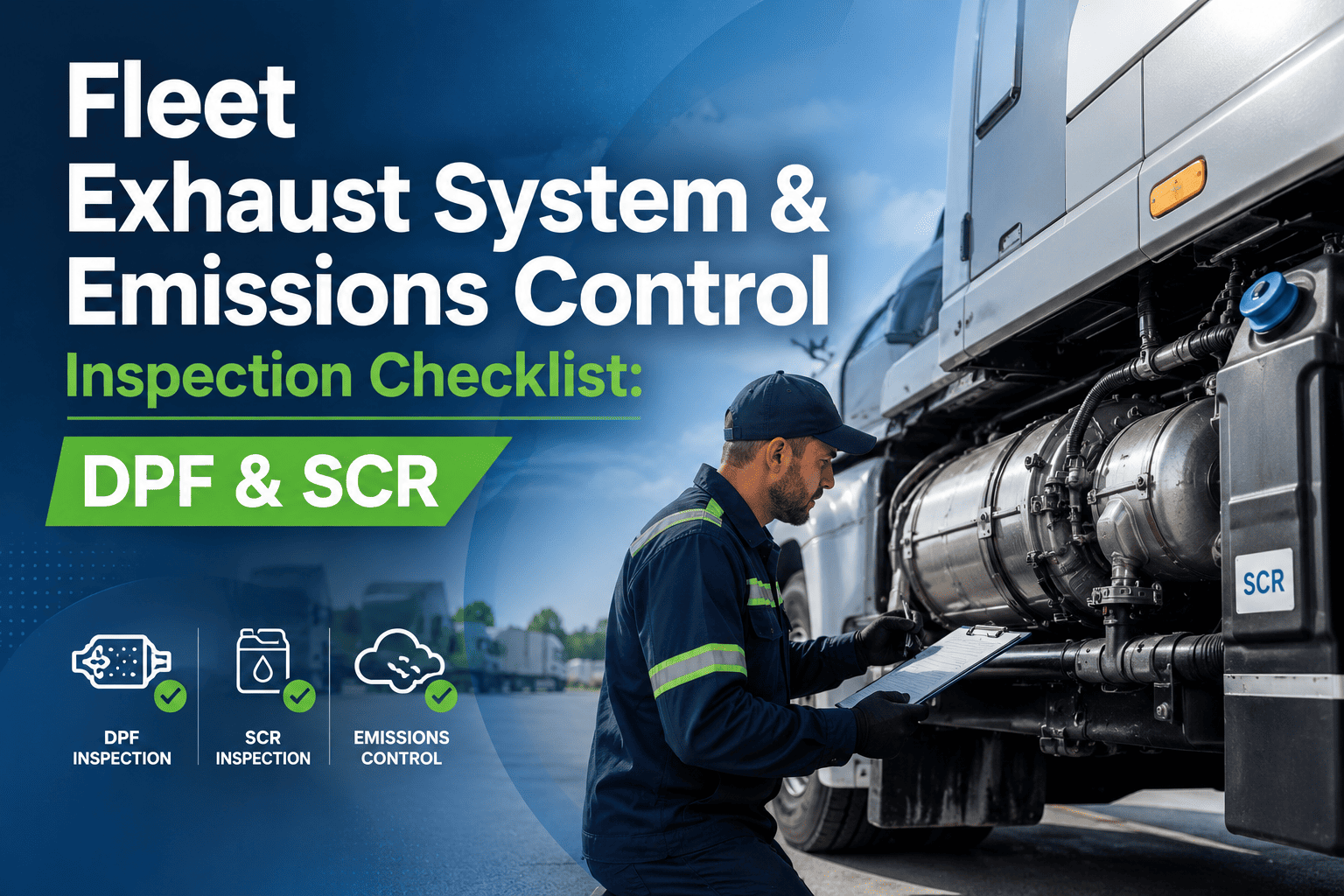
A truck locked at 5 mph on a busy interstate, a $12,000 repair invoice, anda delivery that missed its window by two days. For fleet managers, this nightmare scenario almost always traces back to one root cause: a Diesel Exhaust Fluid quality issue that went undetected until the SCR system forced a full derate. Since 2010, every on-road diesel truck in the United States has relied on DEF to meet EPA emissions standards, and the aftertreatment systems that use it have become one of the most expensive maintenance categories in commercial trucking. The American Trucking Associations estimates that aftertreatment and emissions-related repairs now account for roughly 13% of total maintenance costs for Class 8 trucks. But a new generation of AI-powered predictive maintenance is changing the equation entirely, giving fleets the ability to detect DEF quality degradation weeks before it triggers a fault code, a derate, or a roadside breakdown.
$15,000+
Total cost of a single SCR failure including parts, labor, towing, and lost revenue
13%
Share of Class 8 truck maintenance costs tied to aftertreatment systems
1 in 10
Machines that can run out of DEF on any given day across commercial fleets
Understanding the DEF System: Why Quality Is Everything
Diesel Exhaust Fluid is a precisely engineered solution of 32.5% high-purity synthetic urea and 67.5% deionized water, manufactured to the strict ISO 22241 standard. It is injected into the exhaust stream of diesel engines equipped with Selective Catalytic Reduction technology, where it undergoes thermal decomposition at temperatures between 400 and 1,200 degrees Fahrenheit. The urea breaks down into ammonia and carbon dioxide, and the ammonia then reacts with nitrogen oxide pollutants inside the SCR catalyst, converting them into harmless nitrogen gas and water vapor. This chemical process is essential for meeting EPA Tier 4 emissions standards that have been mandatory for all new on-road diesel vehicles since 2010.
The critical detail that many fleet operators underestimate is how sensitive this entire process is to DEF quality. The urea concentration must remain within a tight window, typically between 32.5% and 37%, for the SCR system to function correctly. Even small deviations caused by contamination, dilution, or degradation can cascade into serious operational problems. A DEF system that receives contaminated fluid does not simply work less efficiently; it actively damages itself. Contaminants poison the SCR catalyst surface permanently, clogged injectors starve the system of the fluid it needs, and crystallization deposits block lines and reduce flow. The onboard diagnostic system eventually detects the problem and initiates a progressive derate sequence, first limiting the truck to 55 mph, then further restricting power until the vehicle can barely move at 5 mph. Platforms like OxMaint now use AI to monitor these systems continuously and catch problems at the earliest possible stage. Sign up today to protect your fleet from DEF-related failures before they happen.
Anatomy of a DEF System: Components That AI Monitors
Stores the fluid and includes heating elements to prevent freezing below 12 degrees. AI tracks fluid levels, temperature patterns, and consumption rates to predict refill needs and detect anomalies.
Transfers fluid from the tank to the injector at precise pressures. AI monitors pressure variations and flow anomalies that indicate developing pump failures or line blockages.
Sprays metered doses of DEF into the exhaust stream. AI analyzes dosing frequency, spray patterns, and crystallization buildup to predict injector clogging before it impacts performance.
Where the NOx-to-nitrogen conversion happens. AI tracks conversion efficiency trends over time to detect catalyst degradation or poisoning from contaminated DEF fluid.
Upstream and downstream sensors measure emissions before and after treatment. AI compares sensor readings to vehicle-specific baseline models to assess overall system health.
Interfaces with the engine ECM to adjust injection rates based on operating conditions. AI correlates control module data with environmental factors to identify calibration drift.
The Hidden Costs of DEF Quality Failures
When fleet managers calculate the cost of a DEF-related failure, they typically think about the repair bill. But the true financial impact extends far beyond parts and labor. A single DPF replacement costs between $2,000 and $8,000, and SCR repairs routinely exceed $10,000. Add specialized labor at $1,500 to $5,000 per incident, towing fees of $500 to $2,500, and the revenue lost from a truck sitting idle, and a single aftertreatment failure can easily cost $15,000 to $20,000. For owner-operators and small fleets, that number can represent the difference between profitability and financial strain.
But the costs multiply in ways that are harder to measure. When a truck derates on the road, the load it was carrying needs to be reassigned, which disrupts scheduling across the entire fleet. Customer relationships suffer when deliveries arrive late. Insurance premiums can increase after repeated roadside incidents. And perhaps most insidiously, every DEF quality issue that damages the SCR catalyst shortens the overall lifespan of the aftertreatment system, meaning the fleet faces premature replacement of components that should have lasted hundreds of thousands of miles. The EPA's August 2025 guidance acknowledges the severity of this problem, directing manufacturers to update software that prevents sudden, severe derates and instead implements more gradual power reduction sequences. But even with these improvements, the underlying issue remains: if your DEF quality is compromised, your truck will eventually be forced off the road. The only real solution is detecting problems before they reach that point. Book a demo to see how OxMaint's predictive analytics catch DEF issues weeks in advance.
Common DEF Quality Threats and Their Fleet Impact
Cross-Contamination
Diesel fuel splashing into the DEF tank during fueling is the most common contamination source. Even small amounts of fuel, oil, or grease destroy SCR catalyst surfaces permanently and void warranties.
Concentration Dilution
Water ingress from leaky storage areas, tap water substitution, or repeated freeze-thaw cycles shifts urea concentration below the required 32.5%, causing the system to overdose and crystallize.
Storage Degradation
DEF exposed to temperatures above 86 degrees or stored beyond its 12 to 18 month shelf life undergoes urea decomposition, producing ammonia gas and reducing effectiveness below usable thresholds.
Particulate Contamination
Dirt, dust, and debris from shop environments or dirty dispensing equipment introduce insoluble particles that clog DEF filters and injectors, blocking fluid delivery to the SCR system.
How AI Detects DEF Quality Issues Before They Become Failures
Traditional DEF monitoring is fundamentally reactive. The onboard quality sensor checks urea concentration against a simple threshold, and the system only responds when the reading falls outside acceptable parameters. By the time a fault code appears, the contamination has often been present for days or weeks, silently damaging components with every mile. The most common fault code fleet technicians encounter, P20EE, indicates that SCR NOx catalyst efficiency has already dropped below required thresholds, meaning the problem has progressed significantly before any alert was generated.
AI-powered predictive maintenance takes a fundamentally different approach by analyzing multiple data streams simultaneously and correlating patterns that no human technician or single-parameter sensor could detect. Machine learning algorithms process continuous feeds from NOx sensors (both upstream and downstream of the SCR catalyst), exhaust gas temperature sensors, DEF tank level and temperature data, dosing rate patterns from the injector, engine load and operating condition metrics, and historical maintenance records for each specific vehicle. By establishing a detailed operating baseline for every truck in the fleet, the system can identify subtle anomaly patterns that signal developing problems. For example, a gradual 3% increase in DEF dosing frequency combined with a 1.5% decline in downstream NOx conversion efficiency and slightly elevated exhaust temperatures might individually seem insignificant, but together they form a recognizable pattern that AI associates with early-stage DEF contamination, typically 3 to 4 weeks before any fault code would trigger.
Traditional Monitoring vs. AI-Powered Detection
Traditional DEF Monitoring
AI-Powered Predictive Detection
The AI Detection Pipeline: From Raw Data to Maintenance Action
Understanding how AI transforms raw sensor data into actionable maintenance decisions helps fleet managers appreciate why this technology delivers results that traditional approaches simply cannot match. The process operates as a continuous closed loop, running around the clock across every vehicle in the fleet simultaneously.
Real-Time Data Ingestion
IoT sensors and onboard diagnostic systems stream continuous data from every DEF system component. This includes urea concentration readings, exhaust gas temperatures at multiple points, NOx levels before and after the SCR catalyst, DEF dosing volumes and frequency, tank level and temperature, and engine operating parameters like load, RPM, and ambient conditions. Modern telematics systems capture and transmit this data in near real-time through cellular networks.
Vehicle-Specific Baseline Modeling
Machine learning algorithms analyze historical data for each individual vehicle to establish what normal looks like under various operating conditions. The baseline accounts for engine type and age, typical routes and terrain, seasonal temperature variations, load patterns and driving style, and previous maintenance history. A Freightliner Cascadia running heavy mountain loads will have different DEF baselines than a Peterbilt 579 running flat interstate routes.
Multi-Parameter Anomaly Detection
AI algorithms continuously compare live sensor readings against learned baselines, looking for correlated deviations across multiple parameters simultaneously. Rather than checking if a single value crosses a threshold, the system evaluates complex relationships between dosing frequency, conversion efficiency, exhaust temperatures, and consumption rates. These multi-dimensional analyses detect contamination, dilution, and degradation signatures invisible to conventional monitoring.
Remaining Useful Life Calculation
When anomalies are detected, the system calculates estimated remaining useful life of affected components and the predicted timeline before the issue would trigger a fault code or derate. This incorporates the severity and progression rate of the anomaly, historical data from similar failure patterns across the fleet, and current operating conditions. The result is a prioritized risk assessment telling maintenance teams exactly how urgent the situation is.
Prescriptive Maintenance Actions
The platform prescribes specific actions: draining and flushing the DEF tank, replacing the filter or injector, testing the supply source for contamination, scheduling a full SCR inspection, or adjusting filling procedures. Automated work orders are generated with correct parts, priority levels, and technician assignments, ensuring nothing falls through the cracks and repairs happen during planned downtime.
Stop Reacting to DEF Failures. Start Predicting Them.
OxMaint's AI-powered platform monitors your fleet's DEF systems around the clock, analyzing multiple data streams to catch quality issues 3 to 4 weeks before they trigger fault codes or derates. Join thousands of fleet managers who have eliminated surprise aftertreatment failures and reduced maintenance costs by 30%.
Measurable Results: What AI-Driven DEF Monitoring Delivers
The business case for AI-powered DEF quality monitoring is compelling and well-documented across the fleet industry. Fleets that implement predictive analytics for their aftertreatment systems consistently report significant improvements across multiple operational and financial metrics. The technology does not just prevent catastrophic failures; it fundamentally restructures the economics of aftertreatment maintenance by replacing wasteful time-based schedules and expensive emergency repairs with precisely targeted, data-driven interventions.
AI eliminates unnecessary scheduled DEF system services and prevents emergency repairs from undetected contamination. Fleets service vehicles only when data confirms actual need. A single prevented SCR failure saving $10,000 to $20,000 can justify the entire annual platform investment.
Predictive alerts give maintenance teams 3 to 4 weeks of advance notice, allowing repairs during planned downtime rather than disrupting active routes. With unplanned downtime valued at $500 to $1,000 per vehicle per day, even small improvements in uptime translate directly to the bottom line.
Continuous DEF quality monitoring ensures SCR systems always operate at peak conversion efficiency. With civil penalties reaching $5,500 per violation for individuals and up to $48,000 per vehicle for commercial operations, maintaining compliance is not optional.
AI identifies patterns across your entire fleet. If multiple vehicles refueled at the same location show DEF anomalies, the system flags a contaminated supply source. If trucks serviced by a particular technician show recurring crystallization, it indicates a procedural problem. These insights eliminate systemic root causes.
The return on investment typically materializes within 3 to 6 months. For a 50-truck fleet, preventing 3 to 5 major SCR failures per year saves $45,000 to $100,000 in direct repair costs. Adding reduced downtime, extended component life, optimized parts inventory, and efficient technician scheduling, total savings range from 25 to 30 percent of overall aftertreatment spend. If your fleet still relies on reactive maintenance for DEF issues, you are spending 30 to 50 percent more than necessary. Sign up for OxMaint and start cutting those costs immediately.
Edge Computing and Digital Twins in DEF Monitoring
The latest advancement in AI-powered DEF monitoring combines edge computing with digital twin technology for unprecedented accuracy and speed. Edge computing processes sensor data directly at the vehicle level, running lightweight anomaly detection algorithms without cloud latency. Critical anomalies are flagged in milliseconds, which matters when a truck operates in areas with limited connectivity. Industry analysts project over 50% of enterprise data will be processed at or near the network edge, and fleet operations are leading this shift.
Digital twin technology creates a real-time virtual replica of each vehicle's DEF and aftertreatment system. The twin continuously mirrors actual conditions, comparing real performance against simulated ideal performance to detect the smallest deviations. Research shows digital twin-based predictive systems achieve failure prediction accuracy up to 95%, giving fleet managers extremely high confidence in alerts. This combination of edge intelligence and cloud analytics represents the cutting edge of DEF monitoring. Book a demo with OxMaint to explore how digital twin-powered monitoring protects your aftertreatment systems.
Best Practices for DEF Quality Management
While AI dramatically reduces DEF-related failures, combining technology with sound operational practices delivers the best results. Even the most advanced monitoring system works better when underlying DEF handling, storage, and dispensing procedures are solid. Here are the practices top-performing fleets implement alongside their AI platforms.
Verify DEF Certification
Only purchase DEF carrying both ISO 22241 certification and American Petroleum Institute (API) licensing. Verify suppliers through API's real-time directory and require a Certificate of Analysis with every bulk shipment.
Control Storage Conditions
Store DEF between 12 and 86 degrees Fahrenheit in sealed, dedicated containers away from direct sunlight. DEF degrades significantly in heat and has a shelf life of 12 to 18 months. Use enclosed dispensing systems.
Prevent Cross-Contamination
Never use funnels, hoses, or containers previously used for other fluids. Even trace amounts of diesel, oil, or coolant compromise the entire SCR system. Dedicate all DEF equipment exclusively to DEF.
Test DEF Regularly
Use a digital refractometer to check urea concentration at every service visit. Readings should fall between 32.5% and 37%. Visually inspect for cloudiness, which indicates contamination or degradation.
Train Your Team
Educate all drivers and technicians on proper DEF handling, contamination warning signs, and the critical importance of using only certified fluid. One filling mistake can cause thousands in damage.
Leverage Fleet-Wide Insights
Use your AI platform's analytics to identify contamination patterns tied to specific fueling locations, storage batches, or service procedures. Address root causes systematically, not just individual incidents.
What Makes OxMaint Different for DEF System Management
Many CMMS platforms offer basic maintenance scheduling, but OxMaint integrates AI-powered predictive analytics specifically designed for complex fleet systems like DEF and aftertreatment management. The platform connects with your existing telematics and sensor infrastructure to deliver actionable intelligence without requiring additional hardware. Most modern diesel vehicles already have the sensors needed through their ECM and OBD-II systems. OxMaint aggregates data from these existing sources, applies machine learning analytics, and delivers prioritized recommendations through its dashboard and mobile app.
Predictive DEF Analytics
AI models trained on thousands of DEF failure patterns recognize early warning signatures specific to your fleet's operating conditions, vehicle types, and routes. The system continuously learns and improves.
Automated Compliance Tracking
Stay ahead of EPA regulations with continuous emissions monitoring and automated documentation. Generate compliance reports demonstrating environmental performance for audits and regulatory reviews.
Smart Work Order Generation
Maintenance tasks are automatically created, prioritized by risk level, and scheduled during planned downtime. Parts are pre-ordered and technician assignments optimized to minimize repair time.
Fleet-Wide Pattern Detection
Compare DEF performance across your entire fleet to identify systemic issues like contaminated supply sources, problematic filling stations, or procedural gaps generating recurring failures.
Mobile Technician Alerts
Field technicians and drivers receive real-time notifications about DEF quality concerns, upcoming maintenance needs, and recommended actions directly on their mobile devices for faster response.
ROI Tracking Dashboard
Track the financial impact with clear metrics showing prevented failures, avoided downtime costs, extended component life, and total savings compared to your previous maintenance approach.
The shift from reactive to predictive DEF maintenance represents one of the highest-ROI investments a fleet can make. With SCR repair costs ranging from $3,000 to $10,000 for components and total incident costs reaching $15,000 to $20,000, preventing even a handful of failures per year delivers returns far exceeding the platform cost. Whether you operate 10 trucks or 10,000, the platform scales to deliver consistent results. Sign up for OxMaint today and stop letting DEF quality issues drain your bottom line. Or book a personalized demo with our fleet specialists to see it in action.
Transform Your Fleet's DEF Maintenance Strategy Today
Join forward-thinking fleet managers who use OxMaint's AI-powered platform to predict DEF quality issues, prevent costly SCR failures, and maintain full emissions compliance. Whether you manage a small fleet or an enterprise operation, OxMaint delivers measurable results from day one.
Frequently Asked Questions
What is DEF and why does its quality matter so much for fleet operations
Diesel Exhaust Fluid is a solution of 32.5% high-purity synthetic urea and 67.5% deionized water, manufactured to ISO 22241 standards. It is injected into the Selective Catalytic Reduction system of diesel engines to convert harmful nitrogen oxide emissions into harmless nitrogen and water vapor. Quality matters because even small deviations in urea concentration or the introduction of contaminants like fuel, oil, or minerals can poison the SCR catalyst, clog injectors, cause crystallization buildup, and trigger progressive vehicle derate sequences that ultimately limit the truck to 5 mph. A single DEF quality failure can cost between $15,000 and $20,000 when you factor in parts, labor, towing, and lost revenue.
How does AI detect DEF quality problems before they cause breakdowns
AI-powered systems analyze multiple data streams simultaneously rather than relying on a single quality sensor. Machine learning algorithms process continuous feeds from NOx sensors, exhaust temperature readings, DEF dosing rates, SCR conversion efficiency metrics, tank level and temperature data, and engine operating parameters. The system establishes a detailed operating baseline for each individual vehicle and detects correlated deviations across multiple parameters that signal developing problems. A subtle increase in dosing frequency combined with a slight decline in conversion efficiency and elevated exhaust temperatures forms a pattern that AI recognizes as early-stage contamination, typically 3 to 4 weeks before any traditional fault code would trigger.
What are the most common causes of DEF contamination in fleet vehicles
The most common contamination source is diesel fuel splashing into the DEF tank during fueling, since diesel fuel nozzles can fit into DEF tank openings. Other frequent causes include using dirty or shared storage containers, water ingress from leaky storage areas, improper handling where funnels or equipment previously used for other fluids contact the DEF, using sub-standard or agricultural-grade urea instead of certified DEF, and purchasing DEF that has been stored improperly or has expired. Even trace amounts of oil, fuel, coolant, or minerals can compromise the entire SCR system and lead to repairs costing thousands of dollars.
What is a DEF derate and how much does it cost a fleet
A derate is an automatic engine power reduction triggered by the onboard diagnostic system when it detects a DEF quality issue, low DEF level, or SCR malfunction. The derate follows a progressive sequence: first limiting the truck to 55 mph, then further restricting speed down to 5 mph if the issue is not resolved. Direct costs include the tow to a repair facility ($500 to $2,500), diagnostic work and repair ($5,000 to $12,000 for SCR components), and lost revenue from the truck being out of service ($500 to $1,000 per day). Including operational disruption, customer penalties, and long-term component damage, a single derate event frequently costs $15,000 to $20,000 or more.
How much can AI-driven DEF monitoring save my fleet annually
Most fleets see positive ROI within 3 to 6 months. For a 50-truck fleet, preventing 3 to 5 major SCR failures per year saves $45,000 to $100,000 in direct repair costs alone. Adding reduced unplanned downtime, extended SCR component lifespan of 18 to 40 percent longer, optimized parts inventory, and efficient technician scheduling, total savings typically range from 25 to 30 percent of overall aftertreatment maintenance spend. Smaller fleets often see even higher percentage ROI because each prevented failure has a proportionally larger impact on tight margins.
Does OxMaint require special hardware to monitor DEF systems
No. OxMaint integrates with your existing telematics infrastructure and onboard diagnostic systems. Most modern diesel vehicles manufactured since 2010 already have the sensors needed through their Engine Control Module and OBD-II systems, including NOx sensors, exhaust temperature sensors, and DEF quality sensors. OxMaint aggregates data from these existing sources through standard telematics connections, applies AI analytics in the cloud, and delivers insights through its web dashboard and mobile app without requiring additional hardware investment.
Can small fleets benefit from AI-powered DEF predictive maintenance
Absolutely. Smaller fleets often see the highest percentage ROI because a single prevented SCR failure has a disproportionately large impact on operating margins. For an owner-operator or 10-truck fleet, one SCR replacement costing $10,000 to $15,000 is a significant financial event. AI monitoring that prevents even one such failure per year more than justifies the platform cost. OxMaint scales from small operations to enterprise fleets, and predictive analytics work equally well across 5 trucks or 5,000.
How does AI-powered DEF monitoring help with EPA compliance
The EPA requires all diesel trucks to maintain functioning SCR systems meeting emissions standards. Disconnecting or bypassing these systems carries civil penalties of $5,500 per violation for individuals and up to $48,000 per vehicle for commercial operations. AI monitoring ensures continuous compliance by verifying SCR conversion efficiency stays within parameters, DEF quality meets ISO 22241 standards, and all aftertreatment components function correctly. The system generates automated compliance documentation for regulatory audits and inspections.