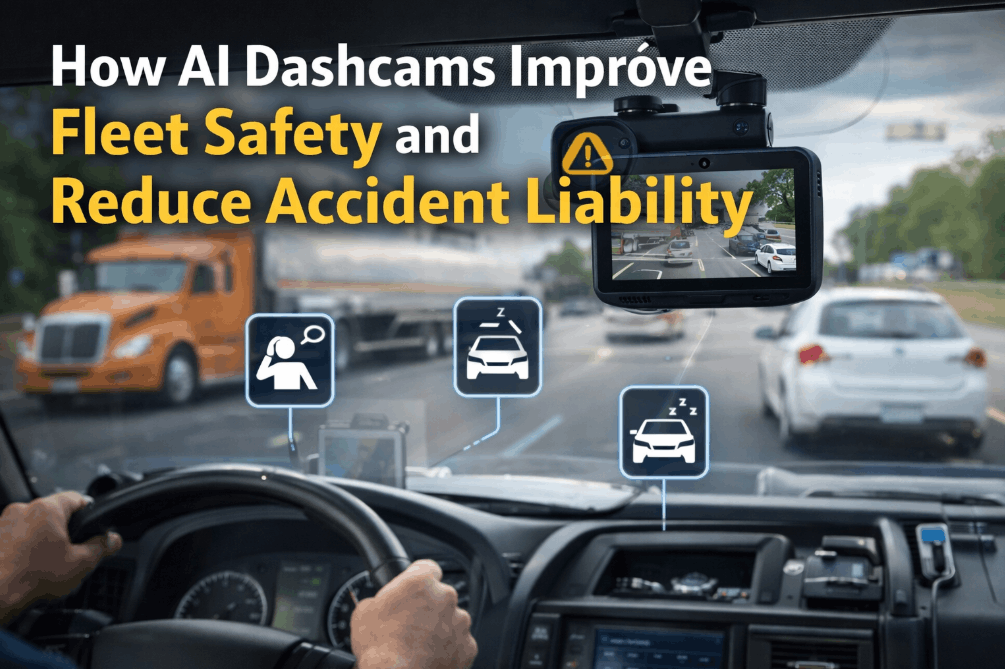
Fleet accidents cost U.S. businesses over $75 billion annually in crash-related expenses — and 52% of those accidents are now preventable with AI-powered dashcam systems. In 2026, AI fleet dashcams have moved far beyond simple video recorders. They detect distracted driving, fatigue, and tailgating in real time, coach drivers before incidents happen, and provide irrefutable video evidence that exonerates drivers and slashes insurance premiums. One fleet saved $370,000 from a single not-at-fault claim using dashcam footage. Preventing just one FMCSA-recorded injury crash — averaging $148,279 per incident — can justify your entire fleet's camera investment. This guide breaks down the best AI dashcam systems for 2026, what to look for, and how OxMaint ties safety data into your fleet maintenance and compliance workflows. Book a demo to see how OxMaint integrates safety intelligence with your CMMS today.
52%
Fewer accidents in fleets using AI video telematics
80%
Reduction in distracted driving incidents within 90 days
$148K
Average cost of one injury crash — FMCSA 2025 data
5–20%
Insurance premium reduction for fleets with active AI safety programs
What Is an AI Fleet Dashcam System?
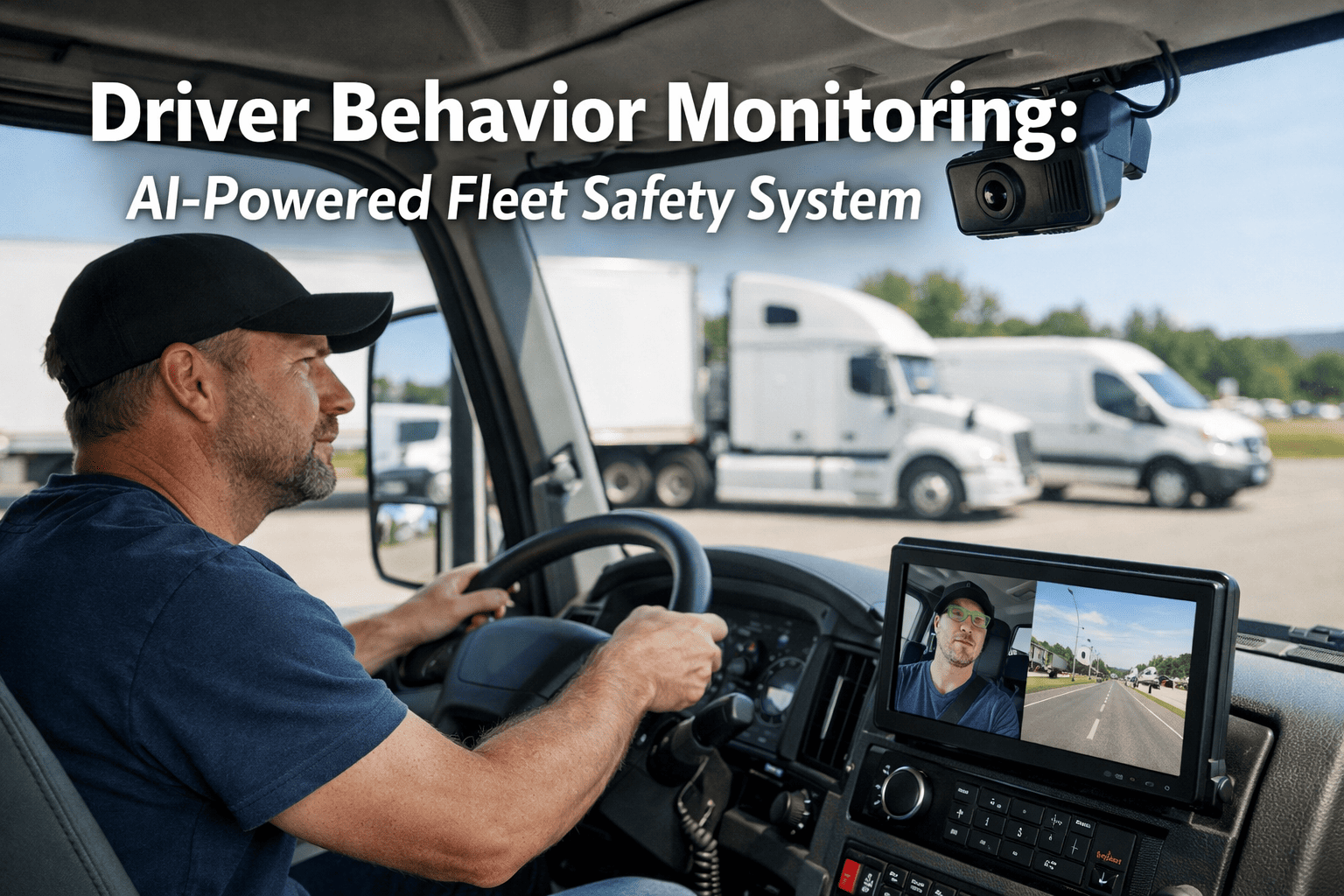
An AI fleet dashcam is a dual-facing camera system integrated with deep learning software that analyzes 100% of drive time — not just trigger events. Unlike legacy cameras that simply record video, AI systems run 30+ neural network models simultaneously to detect risk, alert drivers in real time, and generate structured safety data that feeds into fleet management platforms. The result is a shift from reactive incident documentation to proactive accident prevention — the difference between collecting evidence after a crash and stopping the crash from happening.
Basic Dashcam
Records only after G-force trigger — near-misses never captured
Local SD card storage — footage lost when device is damaged
No real-time driver alerts — managers review footage days later
Single front-facing lens — no driver visibility or interior documentation
Zero integration with telematics, maintenance, or compliance data
Manual footage review requires hours of manager time per incident
VS
AI Dashcam (2026)
Continuous AI analysis on 100% of drive time — 30+ models running simultaneously
Automatic LTE cloud upload — footage preserved even if device is destroyed in collision
Real-time in-cab audio and visual alerts — driver corrects behavior before incident occurs
Dual-facing cameras — road and driver captured at 1080p+ with IR night vision
Full platform integration — safety events link to GPS, telematics, maintenance and compliance
AI-filtered event review — only critical incidents surfaced, cutting review time by 70%+
8 Critical Features to Require in Any AI Fleet Dashcam System
Not all AI dashcams deliver equal value. Evaluate every platform against these eight non-negotiable capabilities before signing a contract. Missing even one can create significant blind spots in your fleet safety program.
Detection
Real-Time Distraction Detection
Phone use, eating, and eyes-off-road detected via driver-facing AI. In-cab alert fires immediately. 95%+ detection accuracy with false-positive rates low enough that drivers don't learn to ignore alerts.
Detection
Driver Fatigue and Drowsiness
Facial landmark AI tracks eye-closure frequency, head drop, and micro-sleep onset. Critical for long-haul and overnight fleets. Immediate alert stops the driver before full sleep state is reached.
Safety
Forward Collision Warning
Forward-facing AI calculates following distance against speed in real time. Fleets deploying collision alerts report 40% reduction in rear-end incident risk within 60 days of activation.
Safety
Lane Departure and Swerving
Road lane markers tracked continuously. Unintentional departures (no turn signal) trigger instant alert and event flag. IR night vision extends detection to the high-risk overnight window.
Evidence
Automatic Cloud Upload
LTE-connected cameras upload flagged clips automatically during the trip. Footage preserved even if the device is destroyed on impact — the one scenario where you need evidence most.
Evidence
Dual-Facing HD Recording
1440p road-facing and 1080p driver-facing captured simultaneously. Wide-angle lenses (140°+ road, 160°+ driver) with infrared night vision ensure coverage in every operating condition.
Coaching
Driver Safety Scorecards
AI generates automated driver safety scores from event frequency, severity, and trend data. Managers spend time coaching the 10% of drivers generating 60% of safety events — not reviewing hours of footage.
Integration
CMMS and Telematics Integration
Safety event data must connect to your maintenance platform and GPS system — not live in a silo. Hard braking events should trigger brake inspection reviews. Behavior data should inform route assignment decisions.
4 Fleet Safety Problems AI Dashcams Solve Directly
These are the pain points fleet managers consistently identify as their most expensive and most difficult to solve without video intelligence. Each one has a documented, measurable impact on fleet operating costs.
01
Fraudulent and At-Fault Claims
80% of commercial truck accidents involve other vehicles as the primary cause. Without dashcam footage, at-fault determinations default to the commercial vehicle by default. One fraudulent or misattributed claim can cost $15,000–$500,000+ in settlements and premium increases. One fleet documented $370,000 saved from a single exonerated incident.
80% of truck accidents caused by other vehicles — without video, you lose by default
02
Rising Insurance Premiums
Commercial fleet insurance premiums have risen 47% over the past five years. In 2026, insurers don't just want cameras — they want proof you're actively using safety data to reduce risk. Fleets without documented safety improvement programs are receiving the steepest renewal increases, while active AI safety programs achieve 5–20% reductions.
47% premium increase over 5 years — AI safety programs reverse the trend
03
Repeated Unsafe Driving Behaviors
Manager-led coaching after incidents is 4x less effective than real-time in-cab alerts because the behavior correction is separated from the moment of risk by hours or days. Without real-time feedback, unsafe driving patterns repeat until they escalate into incidents. AI in-cab alerts change behavior in the moment — when it actually matters.
4× more effective: real-time alerts vs. post-trip coaching for behavior change
04
Accelerated Vehicle Maintenance Costs
Hard braking increases brake wear. Aggressive acceleration increases engine and fuel costs. Harsh cornering accelerates tire wear. Fleets without behavior visibility have no connection between driving patterns and maintenance cost trends. The highest-cost vehicles are often driven by the same small group of drivers with the worst safety scores.
$0.15/mile in maintenance cost — driver behavior drives significant variation per vehicle
How OxMaint Turns Dashcam Data Into Operational Intelligence
A dashcam system that operates in isolation delivers a fraction of its potential value. OxMaint is the fleet CMMS that connects dashcam safety event data to maintenance scheduling, driver management, DOT compliance documentation, and cost-per-vehicle analytics — turning safety footage into actionable operational data.
Hard Braking Triggers Maintenance Review
When a driver generates repeated hard braking alerts, OxMaint flags the vehicle for brake inspection. Behavior patterns correlate with work order history — connecting driving style to accelerated maintenance costs before damage accumulates into a breakdown or DVIR defect.
Safety Scores Inform Route Assignment
Driver safety scores from dashcam AI integrate into OxMaint's driver management layer. High-risk drivers matched to supervised routes. High-value loads and sensitive deliveries assigned to drivers with the strongest safety records. Safety data becomes dispatch intelligence.
Incident Evidence Stored in Compliance Record
Every dashcam-documented incident links to the vehicle's compliance record in OxMaint — alongside DVIR history, maintenance logs, and driver qualification files. DOT auditors get a complete cross-referenced record in a single export. No manual evidence assembly.
Safety Data Builds Your Insurance Narrative
OxMaint's analytics correlates driver safety event frequency with per-vehicle maintenance cost — generating the documented safety improvement story that insurance carriers require for premium reduction negotiations. Declining event trends + coaching records = negotiating power at renewal.
PM Scheduling Connected to Driver Behavior
Vehicles driven by high-risk drivers accumulate component wear faster than average. OxMaint adjusts PM scheduling based on actual usage patterns — not just mileage — using behavior-correlated wear rates to trigger service intervals earlier for high-stress vehicles.
Mobile App for Real-Time Fleet Visibility
OxMaint's mobile-first platform gives fleet managers real-time visibility into safety event alerts, open work orders, DVIR defect flags, and driver safety scores — all in one place. No switching between dashcam platform, CMMS, and compliance system to get the full picture.
Experience a Cloud-Native Fleet CMMS Built for Real Operations
OxMaint connects dashcam safety data with maintenance scheduling, DOT compliance, and cost analytics. Free to start. Measurable results within 90 days.
Before vs. After: Fleet Safety Without and With AI Dashcams
The operational difference between a camera-free fleet and one running an active AI dashcam and coaching program is documented across hundreds of real deployments. This is what the data shows across the six metrics that matter most to fleet managers and their insurance carriers.
ROI That Makes the Business Case Undeniable
The AI dashcam ROI calculation has four streams that compound on each other. Fleet managers who count only fuel savings miss the full picture — and understate the return to leadership and insurance carriers.
$370K
Saved from a single exonerated not-at-fault claim using dashcam footage
One incident can cover years of system subscription costs. 80% of truck accidents involve other vehicles as the primary cause — without video, commercial fleets lose by default.
$148K
Average FMCSA-documented cost of a single injury crash prevented
Preventing one injury crash justifies the camera investment for 50+ vehicles. At 52% accident reduction, a 50-vehicle fleet saving its historical 4 annual accidents recovers $297,000 per year.
20%
Insurance premium reduction achievable with documented AI safety program
Insurers require declining event trends and coaching documentation — not just cameras. OxMaint structures this safety improvement data into the carrier narrative that drives premium reductions at renewal.
15 min
Installation time per vehicle — leading AI dashcam systems fully operational same day
Deploy across a 50-vehicle fleet in a single day. No IT department, no server infrastructure, no complex integration projects. Cloud-native platforms including OxMaint go live within days, not months.
Frequently Asked Questions
What is the real difference between a basic fleet dashcam and a 2026 AI dashcam system?
Basic fleet dashcams are passive recording devices that trigger on G-force events — they document incidents after they happen. AI dashcams in 2026 are active safety systems that run 30+ deep learning models on 100% of drive time. They detect distracted driving, fatigue, tailgating, lane departures, and stop violations in real time — alerting the driver before an incident occurs. The data output is also fundamentally different: AI systems produce structured safety event data, driver scorecards, coaching reports, and trend analytics that integrate with fleet management platforms like OxMaint. Basic cameras produce hours of unstructured video requiring manual review. The shift is from incident documentation to incident prevention — and the performance gap between the two is measurable at 52% fewer accidents in AI-equipped fleets.
Sign up free or
book a demo to see OxMaint's integrated safety platform.
How much can AI dashcams realistically reduce our commercial fleet insurance premiums?
Documented premium reductions range from 5–20% for fleets with active AI safety programs at renewal. The critical distinction in 2026 is that insurers no longer just want to see cameras installed — they want proof that camera data is actively used to reduce risk: declining safety event frequency, documented driver coaching sessions, exoneration statistics, and trend data showing measurable improvement over time. Fleets that can present this data narrative achieve the top-end reductions. Some carriers now require video safety programs as a coverage condition for large commercial fleets. OxMaint structures dashcam safety event trends, driver scores, coaching records, and incident documentation into the comprehensive carrier report that drives negotiating leverage at renewal. The insurance saving alone typically covers total system cost within 12–18 months for mid-size fleets.
Book a demo to see how OxMaint builds your insurance narrative.
How do AI dashcam safety events connect to vehicle maintenance management in OxMaint?
The safety-to-maintenance connection works in three directions. First: behavior-triggered maintenance — repeated hard braking events flagged by dashcam AI trigger brake inspection work orders in OxMaint ahead of schedule, catching wear before it becomes a roadside failure. Second: driver behavior impact on maintenance cost — aggressive acceleration increases engine wear, harsh cornering accelerates tire wear, and swerving stresses suspension. OxMaint correlates driver safety scores with per-vehicle maintenance cost to identify which drivers are accelerating your maintenance spend and quantify the financial return on coaching investment. Third: incident documentation continuity — when a vehicle is involved in an incident, dashcam footage links to the vehicle's maintenance history, recent DVIR records, and open work orders in a single cross-referenced record that satisfies both insurance and DOT requirements.
Sign up free to connect your dashcam system to OxMaint's maintenance engine.
What video resolution and storage specs should we require when evaluating AI dashcam platforms?
Minimum specifications for enterprise fleet deployment in 2026: road-facing resolution of 1440p (2K) minimum — 1080p is the legacy baseline but 2K delivers the license plate and sign detail required for claim evidence and FMCSA compliance documentation. Driver-facing 1080p minimum with infrared night vision for 24/7 monitoring. Storage: cloud-based with minimum 60-day retention for standard footage and indefinite retention for flagged incident clips — local SD card alone is insufficient because footage is lost when the device is damaged in the exact incident you need evidence for. Connectivity: LTE upload rather than Wi-Fi-only ensures footage uploads immediately when an incident occurs. Wide-angle minimum: 140°+ road-facing and 160°+ driver-facing. Additional: G-sensor acceleration logging synchronized with video timestamps, and audio capture capability where local regulations permit. Leading 2026 systems including Samsara CM34 and Motive AI Dashcam Plus exceed all these specifications.
Book a demo to discuss dashcam integration requirements with the OxMaint team.
Stop Managing Safety and Maintenance in Separate Silos
OxMaint connects your AI dashcam safety data with fleet maintenance scheduling, DOT compliance documentation, driver performance analytics, and cost-per-vehicle reporting — all in one cloud-native platform. Join 1,000+ fleet operations already running smarter. Free to start. Deploy in days.




.png)
.png)