Fleet Data Integration: Overcoming System Silos for Improved Fleet Performance

By Arturo Oxen on March 7, 2026

fleet-data-integration

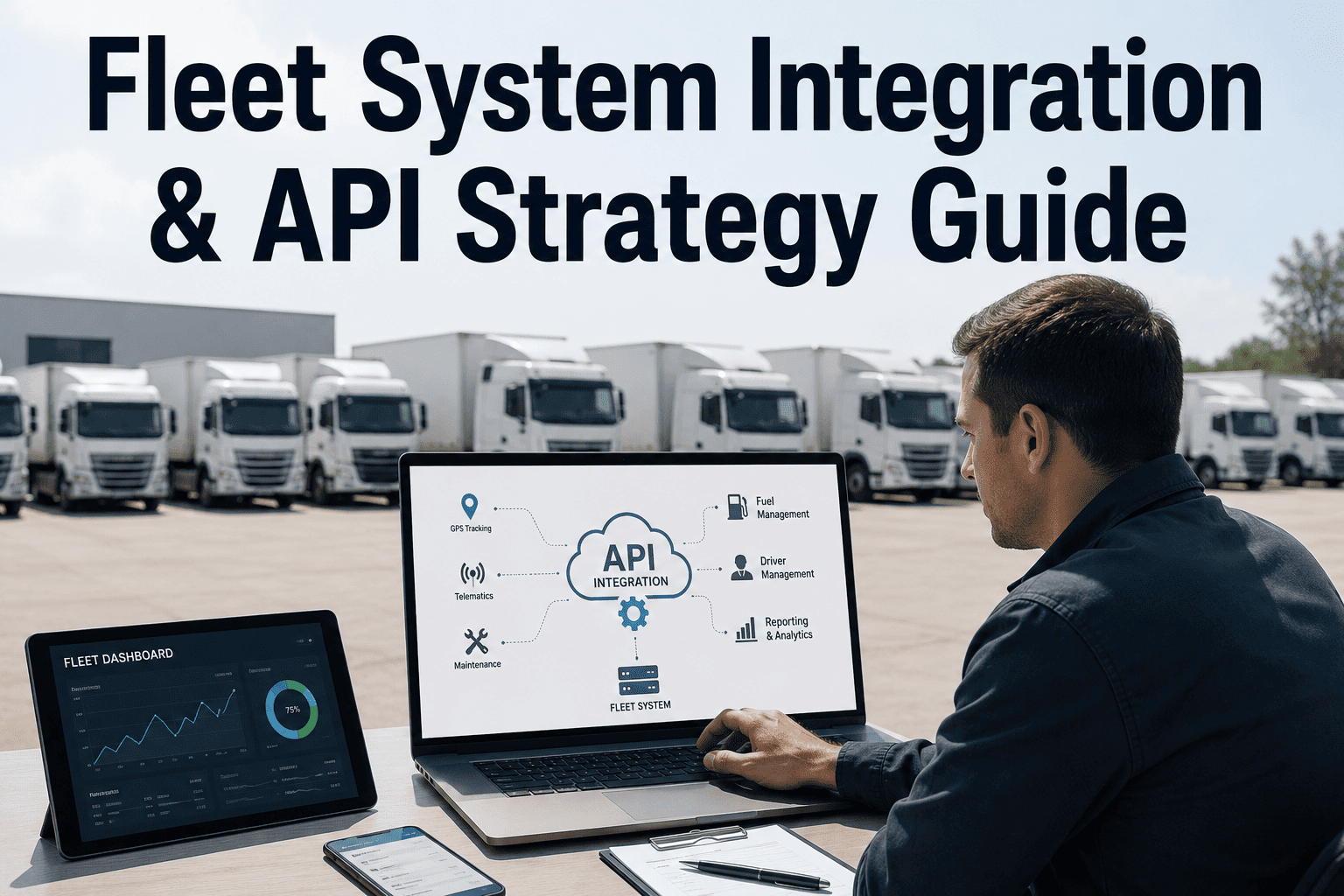
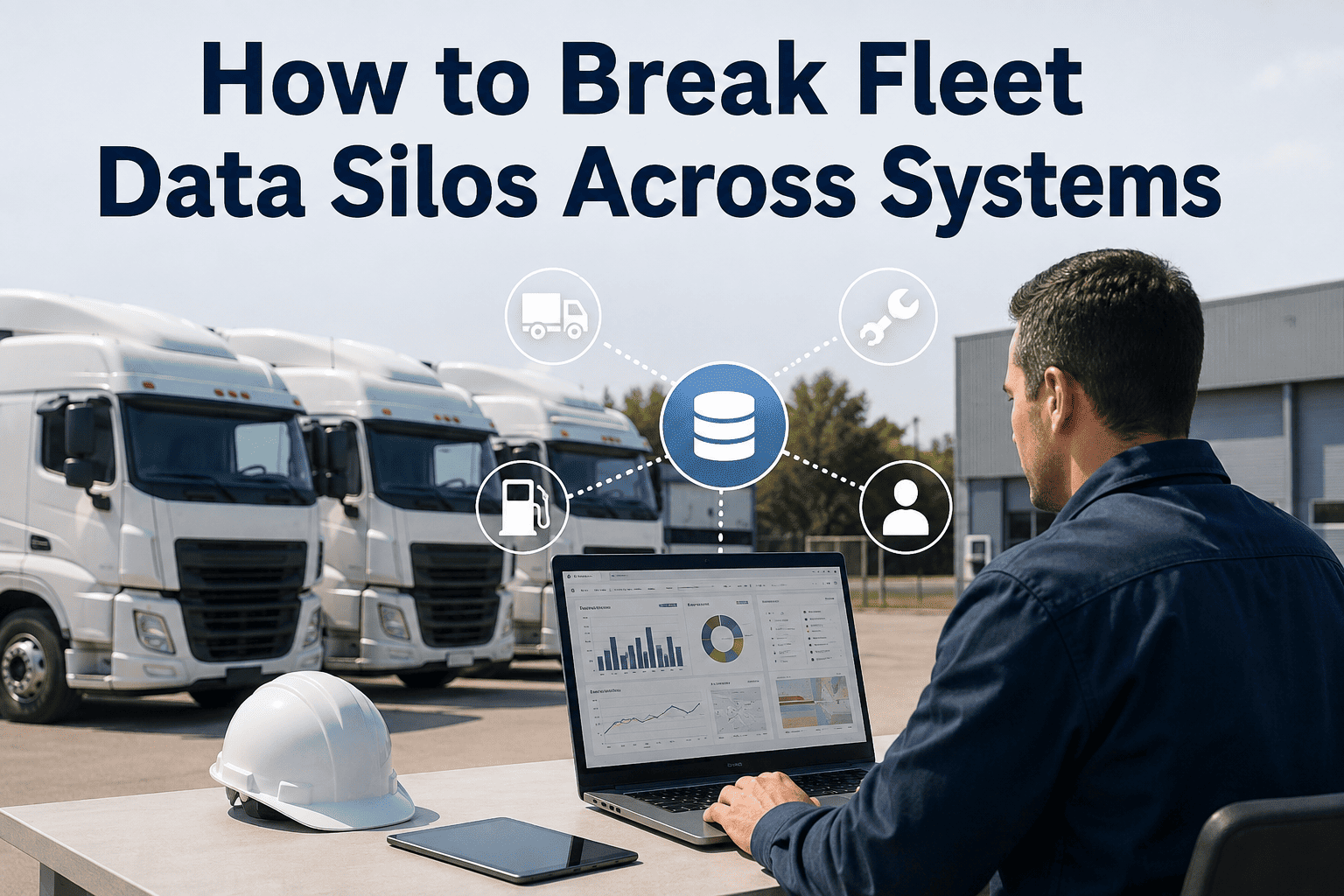
A regional construction company operating 84 vehicles and 200+ pieces of heavy equipment across 9 job sites had invested in four separate technology systems over six years: a GPS telematics platform, a fuel card management tool, a spreadsheet-based preventive maintenance tracker, and an accounting system. Every system worked. None of them talked to each other. When a field supervisor needed to know the true operating cost of a specific excavator — fuel consumption, maintenance spend, idle hours, depreciation — he had to log into three systems, export four spreadsheets, and spend 90 minutes building a calculation that was outdated the moment he finished it. When a $4,200 engine failure occurred that should have been caught by a mileage-triggered PM alert, the investigation revealed the maintenance tracker had the vehicle at 12,400 miles while the GPS system showed 14,800 miles. The data existed. It was just locked in silos that couldn't see each other. After deploying OxMaint's unified fleet data integration layer — connecting GPS telematics, fuel data, maintenance records, and inspection logs into a single real-time platform — the same true cost report took 4 seconds to generate. The mileage discrepancy problem was eliminated on day one. And the PM alert that should have prevented the engine failure now triggers automatically from live GPS odometer data rather than manually entered spreadsheet values. Book a demo to see OxMaint's data integration in action.

Fleet Operations  ·  Blog

Fleet Data Integration: Overcoming System Silos for Improved Fleet Performance

The average fleet operation runs 4–7 disconnected software systems simultaneously. Each one holds a piece of the operational truth. None of them share it. The result isn't just inefficiency — it's decisions made on incomplete data, maintenance failures that were visible in one system but invisible to the people who needed to act, and a cost structure that's impossible to accurately measure or improve.

The Disconnected Fleet — A Typical System Landscape
GPS Telematics
Location · Speed · Odometer · Idle time
No data sharing
Fuel Cards
Fill-ups · Volume · Cost · Driver ID
No data sharing
Maintenance Records
PM schedules · Work orders · Parts cost
No data sharing
Inspection Logs
DVIR · Defects · Compliance docs
No data sharing
Result: 4 sources of truth. 0 unified decisions.
The Silo Problem

Why Fleet Data Silos Are More Expensive Than You Think

Fleet operators consistently underestimate the cost of disconnected systems because the losses are diffuse — spread across dozens of daily decisions, dozens of maintenance events, and dozens of operational inefficiencies that never appear as a single line item. Here's where the money actually goes.

$448K
Annual cost of data reconciliation labor
For a 50-vehicle fleet with 3 staff members spending 2 hours daily reconciling data across disconnected systems at $32/hr — that's $448,000 in pure reconciliation labor annually that produces no operational output.
34%
of preventable breakdowns traced to data gaps
Industry analysis shows 34% of unplanned vehicle breakdowns occur within 2 service cycles of a missed PM — not because the schedule didn't exist, but because the trigger data (odometer, engine hours) was in a separate system that didn't communicate with the maintenance platform.
67 min
Average time to generate a single cost-per-vehicle report
When fuel data, maintenance cost, depreciation, and utilization live in separate systems, fleet managers spend an average of 67 minutes assembling a single vehicle cost report — a report that will be obsolete by the time the next decision requires it.
$6,200
Average unplanned repair cost vs. $380 planned PM
The cost differential between a planned preventive maintenance event ($380 average) and the unplanned breakdown it prevents ($6,200 average in parts, labor, and downtime) represents a 16:1 return on timely PM execution — which data integration makes possible and data silos make unreliable.
The Integration Architecture

What Fleet Data Integration Actually Looks Like — The 4-Layer Architecture

True fleet data integration isn't about connecting systems with a data feed. It's about building a unified intelligence layer that makes every data point available to every function that needs it — in real time, without manual intervention. OxMaint's integration architecture operates across four layers.

Data Ingestion Layer
GPS Telematics APIs Fuel Card Feeds OBD-II / Engine Diagnostics Driver Mobile App IoT Sensors ELD Devices
All data sources connect via open API or pre-built integration — ingesting real-time location, odometer, engine fault codes, fuel transactions, and driver behavior data continuously.
Unified Asset Record Layer
Vehicle Master Record Live Odometer Sync Maintenance History Total Cost of Ownership Utilization Metrics Compliance Status
Every data stream is attributed to a single vehicle record — creating the authoritative source of truth for each asset that eliminates the odometer discrepancies and cost fragmentation that define disconnected systems.
Intelligence & Automation Layer
PM Trigger Automation Fault Code → Work Order Predictive Failure Alerts Fuel Anomaly Detection Compliance Deadline Alerts Cost Threshold Flags
Integrated data enables automated decision triggers — PM work orders fire when the live GPS odometer crosses a threshold, fault codes automatically generate diagnostic work orders, and fuel anomalies alert fleet managers in real time.
Reporting & Analytics Layer
Real-Time Cost Dashboards Fleet Performance KPIs Predictive Maintenance Reports Compliance Audit Exports TCO Analysis per Vehicle Driver Performance Scoring
Every report draws from the unified data layer — delivering accurate, real-time cost-per-vehicle, uptime, and compliance data in seconds rather than the 67-minute manual assembly process disconnected systems require.
Your fleet data exists. It's just locked in silos that can't talk to each other. OxMaint connects them.
Connect your GPS telematics, fuel cards, inspection tools, and maintenance records into a single unified platform — deploying in days, delivering real-time cost intelligence from the first connected stop.
System Integration Map

The 6 Systems OxMaint Integrates — and What Each Connection Unlocks

Each integration connection OxMaint makes isn't just a data feed — it unlocks a specific operational capability that was impossible when the systems operated in isolation. Here's exactly what each connection delivers.

System
Data Captured
What It Unlocks
Impact
GPS & Telematics
Live odometer · Engine hours · Location · Fault codes · Idle time · Driver behavior scores
PM triggers fire from live GPS odometer — no manual entry. Fault codes auto-generate diagnostic work orders. Idle time feeds driver coaching workflows automatically.
Eliminates odometer discrepancy. PM compliance +40%
Fuel Card Systems
Transaction data · Volume per fill · Cost per gallon · Driver ID · Location · MPG calculation
Fuel cost attributed to individual vehicles automatically. Anomalies (fill volume exceeds tank capacity, off-route transactions) trigger instant alerts. True cost-per-mile calculated without manual data export.
Fuel theft detection. 8–12% average fuel cost reduction
ELD & HOS Compliance
Hours of service logs · Drive time · Rest periods · FMCSA compliance status · Violation flags
HOS data feeds driver scheduling automatically — dispatchers see available hours without manual log review. Compliance violations surface in the same dashboard as maintenance alerts, creating a single daily review instead of multiple system logins.
Compliance audit time: days → minutes with unified export
Parts & Inventory Systems
Parts availability · Reorder points · Vendor pricing · Usage history per asset · Cost per repair
Work orders trigger parts reservation automatically. Parts usage history per vehicle feeds predictive consumption models — preventing the "ordered the wrong part" and "out of stock" delays that add 2–3 days to average repair turnaround.
Parts delays eliminated. Repair turnaround −2.4 days average
Accounting & ERP Systems
Cost center allocation · Work order costs · Depreciation schedules · Invoice reconciliation · Budget tracking
Maintenance costs flow directly to accounting cost centers without manual re-entry. Work order completion triggers invoice generation. Fleet budget vs. actual tracking updates in real time — no month-end reconciliation required.
Manual data re-entry eliminated. Month-end close time −60%
Inspection & DVIR Apps
Pre/post-trip inspection results · Defect photos · Driver signatures · Compliance timestamps · Defect-to-repair workflow
Inspection defects automatically generate work orders assigned to the appropriate technician — eliminating the paper DVIR-to-shop communication gap where 23% of reported defects were never actioned in disconnected operations.
Zero defects lost. Inspection-to-repair time −68%
Before vs. After

Disconnected Systems vs. Integrated Fleet Platform — The Operational Reality

The performance difference between a fleet running disconnected point solutions and one running a unified integrated platform isn't abstract — it shows up in specific, measurable outcomes across every operational metric that matters.

Operational Scenario
Disconnected Systems
OxMaint Integrated
PM trigger accuracy
Manual odometer entry — average 12% error rate leading to early or late PM
Live GPS odometer triggers PM automatically — 100% trigger accuracy
Cost-per-vehicle report
67 minutes — export fuel data, export maintenance data, export depreciation, manually combine in Excel
4 seconds — all data sources unified in a single live dashboard
Inspection defect → repair
Paper DVIR handed to shop — 23% of defects never converted to work orders
Digital defect auto-generates work order — 100% defect capture
Fuel anomaly detection
Monthly fuel card statement review — anomalies discovered 30 days after occurrence
Real-time alert when fill volume or location deviates from expected pattern
Fault code response
Telematics alert in one system, work order in another — average 3.2 days from fault to repair start
Fault code auto-generates work order — average 4 hours from fault to repair start
Compliance audit preparation
3–5 days assembling maintenance records, inspection logs, and HOS data from separate systems
Single-click audit export — all documentation generated in under 10 minutes
Vehicle replacement decision
Incomplete TCO data — decisions based on gut feel or incomplete maintenance-only cost view
Full TCO: fuel + maintenance + downtime cost + depreciation — data-driven replace vs. repair analysis
Implementation

How OxMaint Integrates Your Fleet Systems — The 3-Phase Deployment

Fleet data integration sounds complex because disconnected operations have accumulated years of data in incompatible formats across multiple vendor systems. OxMaint's deployment process is specifically designed to navigate this reality — connecting your existing systems without replacing them, validating data accuracy before going live, and delivering unified intelligence within weeks rather than months.

01
Systems Audit & Integration Mapping
Week 1
OxMaint's integration team catalogs every existing data source — GPS telematics provider, fuel card platform, current maintenance records format, inspection tools, and accounting system. For each system, the integration method is determined: direct API connection for systems with open APIs (Samsara, Verizon Connect, WEX, Fleetcor, and 40+ others), file-based import for systems with scheduled data exports, and manual migration for historical data in spreadsheet or legacy formats. The output is an integration map showing exactly which data flows where and what capabilities each connection unlocks.
Integration map complete API credentials configured Data format validation
02
Data Migration & Parallel Validation
Weeks 1–3
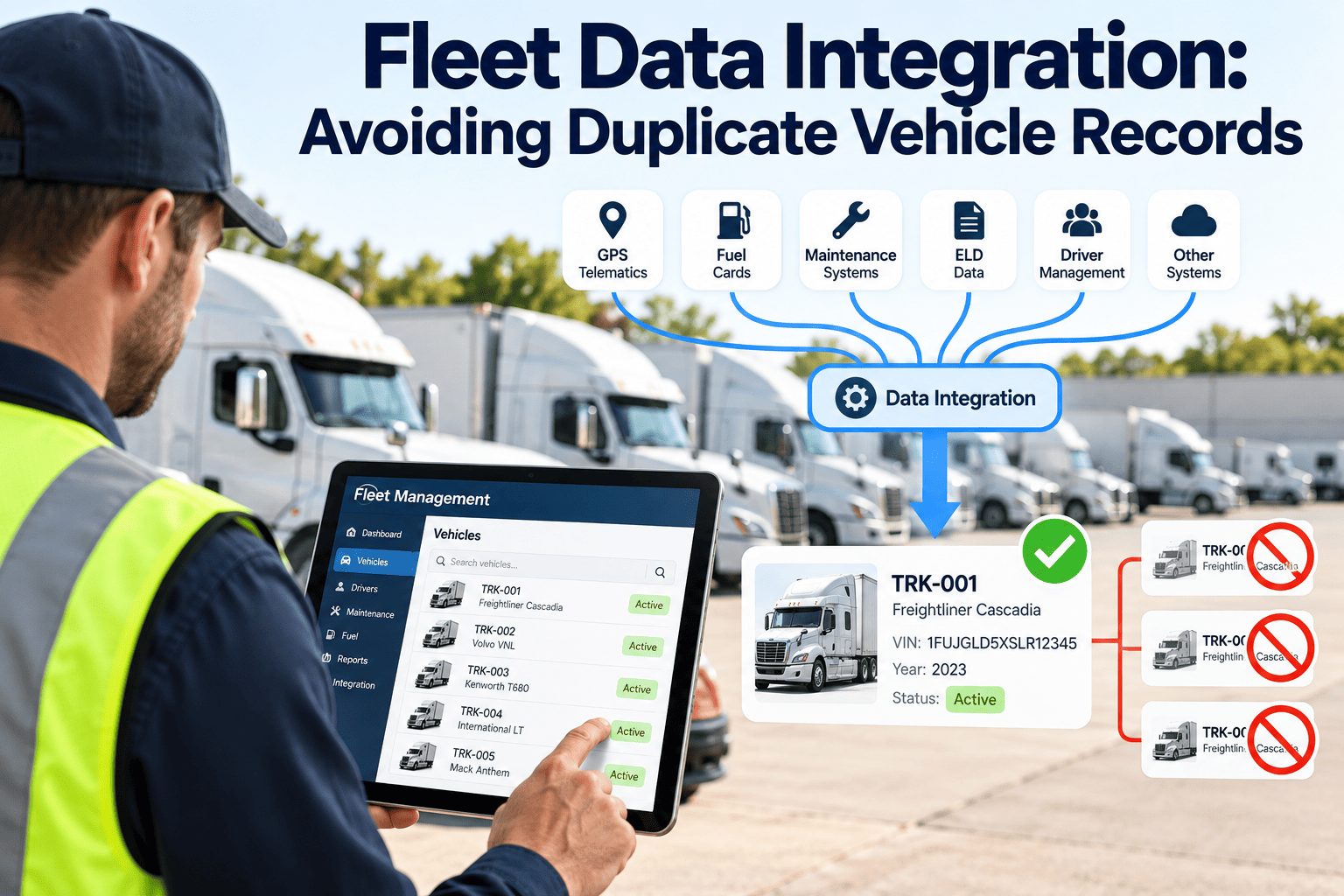
Historical data from all connected systems is imported into OxMaint's unified asset records — vehicle master data, maintenance history, and fuel consumption history feeding the baseline analytics and predictive models. For 7–10 days, OxMaint runs in parallel alongside existing systems, and the integration team validates that data flowing from each source is accurate, complete, and correctly attributed to the right vehicle records. This parallel validation phase catches the odometer discrepancies, duplicate records, and data format inconsistencies that are present in virtually every fleet operation that has operated disconnected systems — resolving them before they contaminate the unified platform.
Historical data migrated Parallel validation complete Discrepancies resolved
03
Live Unified Platform + Team Onboarding
Week 3 onward
All integration feeds go fully live. GPS odometer triggers activate PM scheduling. Fault code workflows begin auto-generating work orders. Fuel transaction anomaly detection activates. The unified cost dashboard shows real-time cost-per-vehicle data drawing from all connected sources simultaneously. Team onboarding runs in parallel — fleet managers, maintenance supervisors, and technicians receive role-specific training on the unified platform, focused on the specific workflows that replace their previous multi-system processes. Most fleet operations are running their entire maintenance and compliance workflow from OxMaint alone within 2 weeks of Phase 3 activation. Existing disconnected tools can be decommissioned on the fleet's own timeline.
All feeds live simultaneously Team training complete Full unified operation
Frequently Asked Questions

Fleet Data Integration — Detailed Questions Answered

These are the questions fleet managers, IT directors, and operations leaders ask when evaluating fleet data integration and unified platform deployment.

What is fleet data integration and why do fleet operations need it?
Fleet data integration is the practice of connecting all the separate software systems a fleet operation uses — GPS telematics, fuel card management, maintenance tracking, inspection tools, ELD compliance, and accounting — into a single unified platform where data flows automatically between functions without manual export or re-entry. Fleet operations need it because the alternative — running 4–7 disconnected systems — creates three categories of operational damage. First, decision-making is based on incomplete data: a fleet manager making a vehicle replacement decision without unified fuel, maintenance, and downtime cost data is working with perhaps 40% of the relevant information. Second, automation is impossible: PM triggers based on manually entered odometer data are only as accurate as the last manual entry, whereas PM triggers based on live GPS odometer data are 100% accurate. Third, the labor cost of manual data reconciliation is substantial — industry benchmarks show fleet operations spending 2–4 hours daily on cross-system data reconciliation per administrative staff member, representing $150,000–$400,000 in annual labor cost that produces zero operational output. OxMaint's unified platform eliminates all three categories simultaneously by making data integration the foundation of the system rather than an afterthought.
Does OxMaint replace our existing GPS telematics system, or integrate with it?
OxMaint integrates with your existing GPS telematics system — it does not require you to replace it. This distinction is important for three reasons. First, telematics hardware is a significant capital investment, and replacing it has real cost and operational disruption. Second, your team is likely already familiar with your telematics platform's tracking interface, and replacing it creates unnecessary retraining. Third, OxMaint's integration architecture is hardware-agnostic by design — it accepts data from any telematics provider via API, meaning you keep the tracking tools you know and add OxMaint's maintenance, compliance, and analytics intelligence layer on top. OxMaint has pre-built integrations with over 40 telematics providers including Samsara, Verizon Connect, Geotab, Fleet Complete, Teletrac Navman, and others. The integration setup takes minutes for supported providers — you provide the API credentials, OxMaint connects, and live odometer, fault code, and engine hours data begins flowing into your unified vehicle records immediately. For telematics providers not on the pre-built list, OxMaint's open API accepts data in standard formats from any source. Sign up free to test the integration with your specific telematics provider.
How does unified fleet data integration actually improve preventive maintenance compliance?
The PM compliance improvement from data integration is mechanistic — it removes the human error points that cause PM misses in disconnected systems. In a typical disconnected fleet operation, the PM trigger process works like this: the telematics system shows the live odometer, a fleet manager or technician periodically checks the telematics system, manually notes the current mileage, and updates the maintenance tracking system. This manual transfer process has an average 12% error rate from transcription errors, delayed updates, and system check frequency gaps. A vehicle that should receive a PM at 15,000 miles might be scheduled at 15,120 miles (transcription error), or might not be updated until 15,400 miles (update frequency gap). In a fleet with 50 vehicles, 12% PM trigger error rate, and 4 PM events per vehicle per year, that's 24 PM events annually with incorrect triggers — each representing a window for the unplanned failure that proper PM timing prevents. With OxMaint's GPS telematics integration, the live odometer from the telematics system directly triggers PM work orders the moment the threshold is reached — no human transfer, no transcription error, no update frequency gap. PM compliance rates in OxMaint deployments consistently reach 94–98% within the first 90 days, compared to 67–78% industry average for manually managed PM programs.
What happens to our historical maintenance data when we migrate to OxMaint?
Historical maintenance data is migrated into OxMaint as part of the standard deployment process — it is not discarded or left in legacy systems. The migration process handles data from any source: spreadsheet exports (Excel, CSV), legacy CMMS exports, paper records that have been digitized, or any other format your historical records exist in. The migration covers vehicle master records (VIN, make, model, year, purchase date, mileage at acquisition), complete work order history (repair type, date, mileage/hours at service, parts used, labor time, cost), PM schedule history (service intervals, last service dates, upcoming service triggers), parts and vendor records, and inspection history where digitally captured. Historical data is critical for two specific capabilities that require meaningful fleet history to function: predictive maintenance modeling (which analyzes historical failure patterns to predict future failures) and total cost of ownership analysis (which requires full lifetime maintenance cost to calculate accurate TCO vs. book value comparisons for replacement decisions). OxMaint's data team assists with migration as standard — most fleets have their complete historical data imported within the first week of deployment. For very large fleets (500+ vehicles) with complex historical data, migration is completed in phases during the parallel validation period.
How does OxMaint handle fleet data security across multiple integrated systems?
OxMaint's security architecture is designed for the specific threat model of integrated fleet data — where a single platform holds GPS location data, financial transaction data (fuel costs, maintenance costs), compliance documentation, and driver performance data simultaneously. The platform uses SOC 2 Type II compliant infrastructure with AES-256 encryption at rest and TLS 1.3 for all data in transit. Integration credentials (API keys for telematics providers, fuel card systems, and accounting platforms) are stored in encrypted vaults with per-integration access controls, meaning a compromise of one integration credential cannot access other connected systems. Role-based access controls allow fleet operators to restrict data visibility by role, location, and function — a technician sees work orders for their shop, not financial cost data or driver behavior scores for drivers outside their location. All integrations use OAuth 2.0 or API key authentication with the connected third-party systems — OxMaint never stores usernames and passwords for integrated platforms. Audit logging tracks every data access and modification event across the integrated platform, providing the complete audit trail required for compliance documentation and security incident investigation. For government and defense fleet operations with specific data sovereignty requirements, OxMaint offers dedicated instance deployment options that ensure data residency compliance.
What is the ROI of fleet data integration, and how quickly does it pay back?
The ROI of fleet data integration has five measurable components that can be calculated from your existing fleet data. PM compliance improvement: moving from 70% to 95% PM compliance on a 50-vehicle fleet with 4 PM events per vehicle annually prevents approximately 15 additional failures. At an average $4,200 unplanned repair cost vs. $380 planned PM cost, that's $57,300 in annual avoided repair costs from PM compliance improvement alone. Fuel anomaly detection: integrated fuel data identifies theft, inefficient routing, and excessive idling that costs the average fleet 8–12% of total fuel spend annually — on a 50-vehicle fleet burning $180,000/year in fuel, that's $14,400–$21,600 in recoverable fuel cost. Data reconciliation labor elimination: at 2 hours daily across 2 staff members at $32/hr, that's $33,280/year in labor that automation replaces. Inspection defect capture: improving from 77% to 100% defect capture prevents the repeat inspection failures and compliance violations that carry $500–$5,000 penalty exposure per violation. Parts procurement efficiency: integrated parts data reduces emergency procurement (which costs 35–60% more than planned procurement) by eliminating the parts stockout surprises that disconnected inventory systems allow. Combined across these five categories, most 50-vehicle fleets achieve $90,000–$140,000 in first-year savings, with payback periods of 60–120 days. Book a demo to run the calculation with your specific fleet data.
Your Fleet Data Isn't the Problem. The Silos Are. OxMaint Breaks Them.

OxMaint's unified fleet data integration platform connects GPS telematics, fuel cards, inspection tools, parts inventory, ELD compliance, and accounting into a single real-time intelligence layer — deploying in 2–3 weeks, eliminating manual reconciliation from day one, and delivering the accurate, integrated cost intelligence that makes every fleet decision measurably better.

Share This Story, Choose Your Platform!