Transportation accounts for roughly 27 percent of all U.S. greenhouse gas emissions, making it the single largest contributing sector to climate change in the country. Within that, road transportation alone drives 81 percent of transport-related emissions. For fleet operators, this isn't just an environmental statistic. It's a business reality that shapes regulatory compliance, operational costs, customer expectations, and brand reputation. The good news is that green fleet management has evolved from an aspirational goal into a proven operational strategy with measurable financial returns. Fleets that electrify 30 to 40 percent of their light vehicles are seeing 25 to 30 percent carbon footprint reductions within two years, with ROI on electric vehicles arriving in as little as 18 months. Meanwhile, 58 percent of fleet operators now have formal sustainability goals, and that number is climbing every year. Whether your fleet runs five vehicles or five thousand, the path to sustainability starts with better data, smarter maintenance, and the right platform to connect it all. Sign up for OxMaint and start building your green fleet strategy today.
What Is Green Fleet Management
Green fleet management is a comprehensive approach to operating vehicles in a way that minimizes environmental impact while maximizing efficiency and cost-effectiveness. It encompasses every decision that affects a fleet's carbon footprint: vehicle selection and procurement, fuel strategy, driver behavior, maintenance practices, route optimization, and end-of-life vehicle disposition. It's not limited to buying electric vehicles, although electrification is an important component. A truly green fleet strategy also includes reducing unnecessary mileage through intelligent routing, extending vehicle lifespans through proactive maintenance, cutting fuel waste through driver coaching, and tracking emissions with the same rigor used for financial performance.
The business case is compelling. Green fleet practices directly reduce fuel costs, the second-largest fleet expense after labor. They lower maintenance expenses by keeping vehicles in optimal condition. They reduce regulatory risk as emissions standards tighten globally. And they strengthen competitive positioning with customers and partners who increasingly evaluate suppliers on environmental performance. According to ADEME research, 65 percent of employees value their employer's commitment to sustainability, making a green fleet a tool for talent attraction and retention as well.
Six Strategies That Make Fleets Greener Today
You don't need a complete fleet overhaul to begin reducing your environmental footprint. The most effective green fleet programs start with operational improvements that lower emissions and costs simultaneously, using the vehicles already on the road. Each of these strategies is powered by better data, which is exactly what a fleet-focused CMMS delivers.
Preventive and Predictive Maintenance
A poorly maintained engine produces significantly more emissions than one operating at peak efficiency. Clogged air filters restrict airflow and increase fuel burn. Worn spark plugs cause incomplete combustion. Underinflated tires increase rolling resistance and fuel consumption by up to 3 percent. Predictive maintenance powered by telematics data ensures every vehicle in your fleet operates at maximum efficiency, minimizing both fuel waste and harmful emissions. Sign up for OxMaint to automate your preventive maintenance programs.
Intelligent Route Optimization
Every unnecessary mile driven burns fuel and produces emissions. Route optimization software analyzes traffic patterns, delivery windows, vehicle capacity, and road conditions to create the most efficient paths for every trip. Avoiding congested areas during peak hours reduces idle time, one of the most wasteful sources of fleet emissions. Fleets using advanced routing consistently report 10 to 15 percent reductions in total miles driven.
Eco-Driving Programs
Driver behavior has a direct and measurable impact on fuel efficiency and emissions. Harsh acceleration, excessive speeding, aggressive braking, and unnecessary idling all increase fuel consumption dramatically. Telematics-powered driver scorecards identify specific behaviors for coaching. Fleets with active eco-driving programs typically achieve 5 to 15 percent fuel savings without changing a single vehicle, simply by changing how those vehicles are driven.
Alternative Fuel Adoption
For fleets that can't immediately transition to electric, alternative fuels offer a powerful bridge. Renewable diesel can replace conventional diesel with no engine modifications, reducing lifecycle emissions by up to 80 percent. Biodiesel blends offer varying degrees of emission reduction. Compressed natural gas provides lower emissions for heavy-duty applications. In 2024, 39 percent of surveyed fleets reported using renewable diesel, with adoption growing rapidly. Book a demo to learn how OxMaint tracks fuel types and consumption across your fleet.
Electric Vehicle Integration
Electric vehicles eliminate tailpipe emissions entirely and reduce lifecycle emissions by approximately 75 percent compared to conventional vehicles, even when accounting for battery production and electricity generation. EVs save an estimated 2 tons of CO2 per vehicle per year. The total cost of ownership is increasingly favorable as battery prices decline and charging infrastructure expands. New York City now operates over 5,000 plug-in EVs in its municipal fleet, having exceeded its original 2025 target a year early.
Emissions Tracking and Reporting
What gets measured gets managed. A robust emissions tracking system monitors CO2 output per vehicle, per route, per driver, and per fuel type. This data enables benchmarking against industry peers, identifies the highest-impact reduction opportunities, and provides the documentation needed for regulatory compliance and ESG reporting. CO2 emissions and GHG data are the top metrics fleets share with stakeholders today.
Your Green Fleet Strategy Starts with Better Data
OxMaint helps fleet operators track fuel consumption, automate maintenance schedules, monitor vehicle efficiency, and generate the sustainability reports that regulators and customers demand.
The Role of a CMMS in Fleet Sustainability
A computerized maintenance management system is the operational backbone that connects sustainability goals to daily fleet operations. Without a centralized platform, green fleet initiatives tend to stall because data lives in silos, maintenance schedules slip, and emissions tracking becomes a manual exercise nobody has time for. OxMaint bridges this gap by integrating telematics data, work order management, preventive maintenance scheduling, and compliance documentation into a single platform designed for fleet operations.
Measuring Your Fleet's Environmental Progress
Effective green fleet management requires the same measurement rigor as financial management. Without clear metrics, it's impossible to know whether your sustainability investments are working, where the biggest opportunities remain, or how you compare against industry benchmarks. Here are the key performance indicators that every green fleet should track.
Drive Sustainability with Data-Powered Fleet Management
Join 1,000+ organizations using OxMaint to reduce fuel waste, automate maintenance, and track their environmental impact across every vehicle in their fleet.
Frequently Asked Questions
What is the fastest way to reduce fleet emissions without buying new vehicles
The three quickest wins are implementing an anti-idling program, optimizing routes to reduce unnecessary mileage, and ensuring all vehicles receive timely preventive maintenance. Together, these operational improvements can reduce emissions by 15 to 25 percent using your existing fleet. Properly inflated tires, clean air filters, and well-maintained engines all burn fuel more efficiently and produce fewer emissions. A CMMS like OxMaint automates the maintenance scheduling and tracking that makes this possible at scale.
How does OxMaint help with fleet sustainability
OxMaint serves as the operational platform that connects sustainability goals to daily maintenance actions. It automates preventive maintenance schedules to keep every vehicle at peak efficiency, tracks fuel consumption across the fleet, integrates telematics data for predictive maintenance alerts, manages mixed ICE and EV fleets in a single system, and generates compliance and sustainability reports. By ensuring no maintenance task is missed and providing complete visibility into fleet performance, OxMaint helps reduce the fuel waste and excess emissions that come from poorly maintained vehicles.
What are the financial benefits of green fleet management
Green fleet practices deliver measurable cost savings across multiple categories. Fuel optimization programs typically reduce fuel spending by 10 to 15 percent. Predictive maintenance reduces overall maintenance costs by 25 percent by preventing expensive emergency repairs. Electric vehicles save approximately 600 to 1,000 euros (or equivalent) per vehicle per year in operating costs. Route optimization reduces total miles driven, lowering both fuel and wear-related costs. Many organizations find that sustainability initiatives pay for themselves within the first year through operational savings alone.
How do I measure my fleet's carbon footprint
Fleet carbon footprint is calculated across three scopes defined by the Greenhouse Gas Protocol. Scope 1 covers direct tailpipe emissions from burning fuel. Scope 2 covers indirect emissions from electricity used to charge EVs. Scope 3 covers everything else including vehicle manufacturing, fuel production, and end-of-life disposal. For most fleets, Scope 1 is the largest and most directly controllable category. Start by tracking total fuel consumed by type, then convert to CO2 equivalents using standard emission factors. OxMaint tracks fuel consumption data that feeds directly into these calculations.
Can OxMaint manage both electric and conventional vehicles in the same fleet
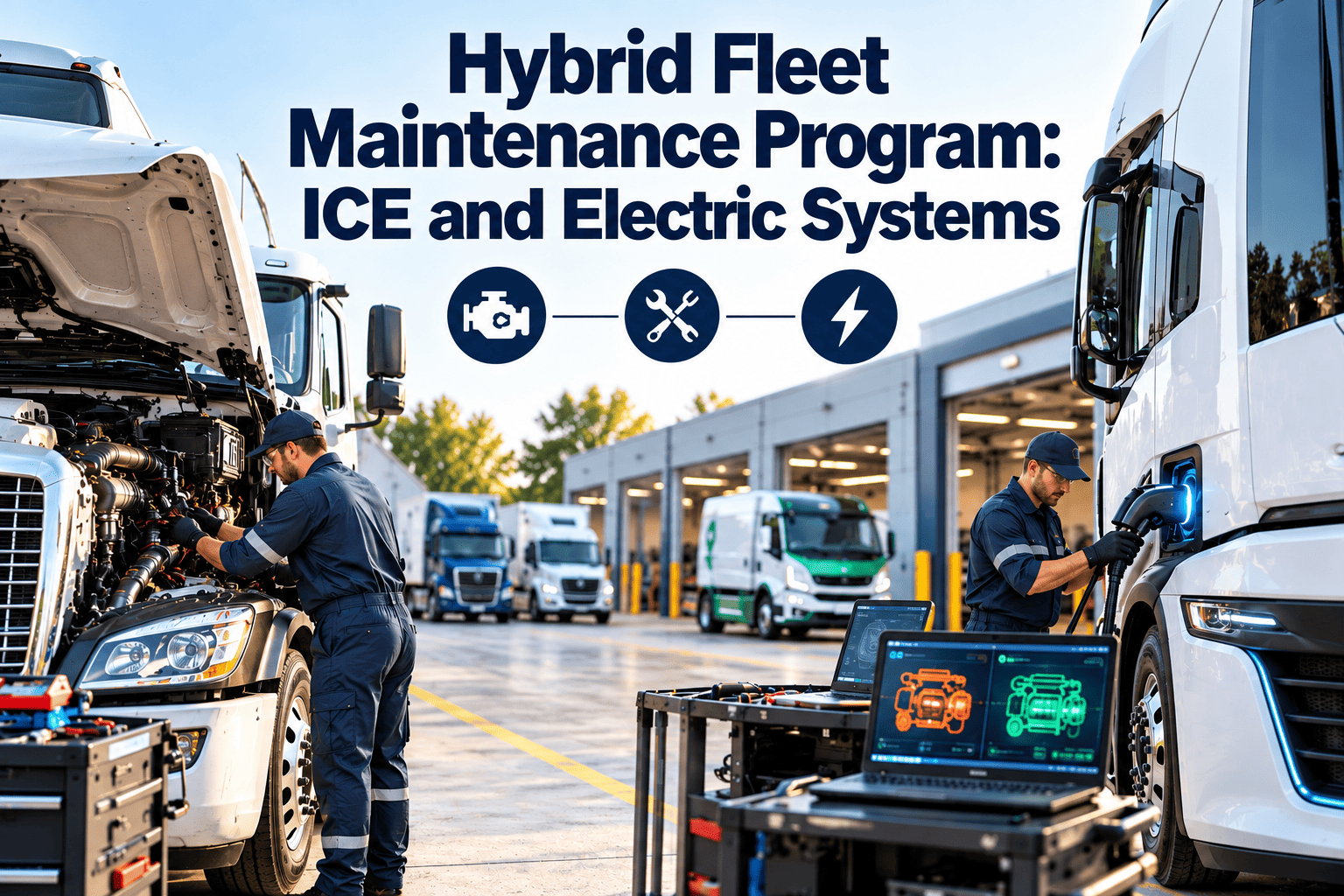
Yes. OxMaint is designed to manage mixed fleets that include conventional internal combustion vehicles, hybrids, electric vehicles, and alternative fuel vehicles in a single unified platform. Each vehicle type has its own maintenance requirements and tracking parameters, and OxMaint accommodates all of them. For EVs specifically, the platform tracks battery health, charging schedules, energy consumption, and range utilization alongside traditional fleet metrics.
What sustainability regulations should fleet operators be aware of
Key regulations vary by region but include EPA greenhouse gas emission standards for medium and heavy-duty vehicles, California's Advanced Clean Fleets regulation requiring zero-emission vehicle purchases for certain fleets, European Union CO2 emission standards for new vehicles, and various state-level clean fleet mandates in U.S. states that follow California's regulations. ELD and HOS compliance requirements also intersect with sustainability through fuel efficiency tracking. OxMaint helps maintain compliance documentation across all these regulatory frameworks.