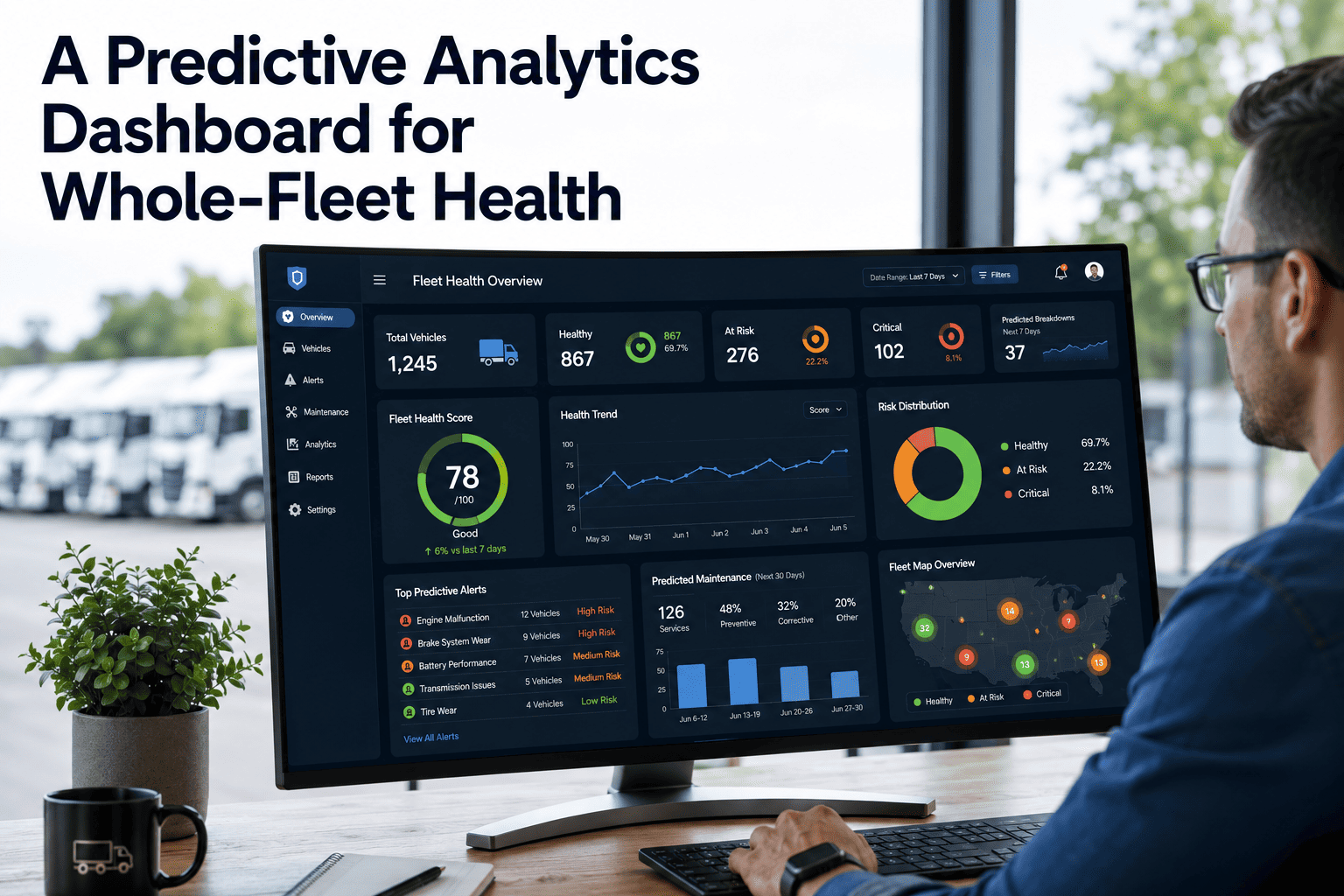
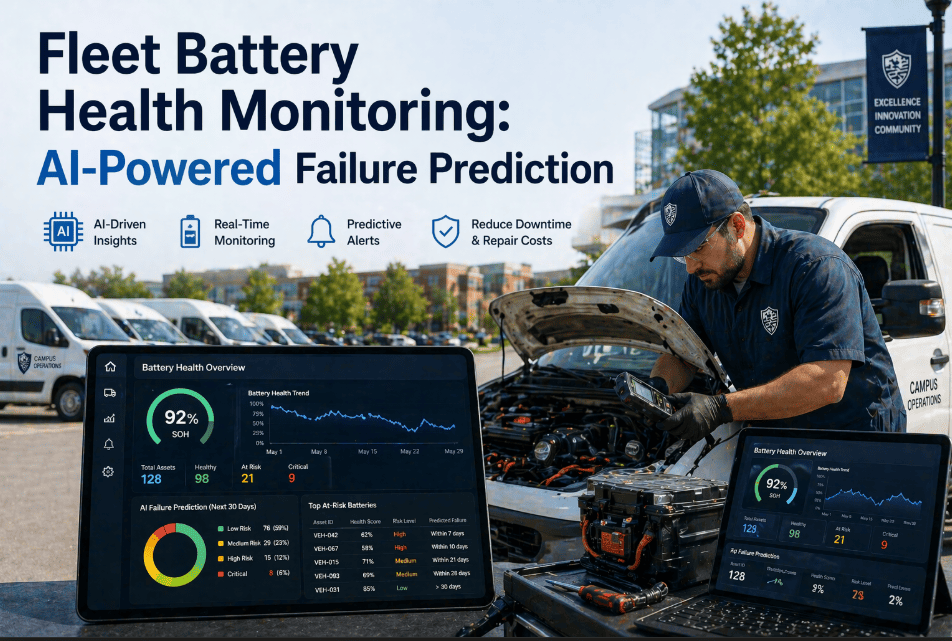
If you manage a fleet of diesel vehicles, you already know the pain of unexpected DPF regeneration failures. A single DEF system malfunction can sideline a truck for hours, costing youroperation thousands in lost productivity, emergency repairs, and compliance penalties. But what if you could detect these issues days or even weeks before they cause real damage? That is exactly what AI-powered predictive maintenance does — it transforms your DEF and DPF management from a reactive scramble into a calm, data-driven strategy. Fleet managers using platforms like OxMaint are already seeing up to 40% reductions in unplanned downtime by catching regeneration anomalies before they escalate.
Understanding the DEF System and DPF Regeneration
The Diesel Exhaust Fluid (DEF) system and the Diesel Particulate Filter (DPF) work hand-in-hand to keep your diesel fleet compliant with EPA emissions standards. The DPF traps soot particles from exhaust gases using a ceramic honeycomb structure, while DEF is injected into the Selective Catalytic Reduction (SCR) system to neutralize harmful nitrogen oxides. Over time, trapped soot accumulates inside the DPF and must be burned off through a process called regeneration.
There are three main types of regeneration: passive (occurs naturally at highway speeds when exhaust temperatures exceed 600 degrees F), active (triggered automatically by the Engine Control Module when soot load hits 45 to 70 percent), and manual or forced (requires the vehicle to be stationary, often taking 30 to 60 minutes). When any of these processes fail or get interrupted repeatedly, the consequences cascade quickly — from clogged filters and engine derating to complete vehicle shutdowns on the side of the road.
The DPF Regeneration Cycle at a Glance
Soot Accumulates
Engine combustion creates particulate matter that the DPF captures and stores.
Sensors Detect Load
Pressure and temperature sensors measure soot levels and signal the ECM.
Regeneration Fires
Exhaust temps rise to 1,100 degrees F, burning soot into ash.
Filter Restored
DPF returns to optimal flow. Cycle repeats every few hundred miles.
Why DPF Regeneration Failures Are So Costly
A failed regeneration cycle is never just a minor inconvenience. When a DPF cannot complete its burn-off process, soot continues to build until the filter is critically clogged. The engine enters limp mode, forcing the driver to pull over and attempt a manual regen — or worse, call for a tow. Industry data shows that a single unnecessary forced regeneration burns 1 to 1.5 gallons of fuel and takes 30 to 60 minutes of idle time. Multiply that across a fleet, and the numbers get staggering. One study found over 1,100 unnecessary regens on a single engine model, wasting up to 1,671 gallons of fuel and costing nearly $6,000 in fuel alone — not counting technician labor, parts, or the ripple effect of missed deliveries.
The root causes are varied: faulty exhaust temperature sensors, low DEF levels, contaminated diesel exhaust fluid, worn fuel injectors, ECM software glitches, or simply too much low-speed idling that never lets exhaust temperatures climb high enough. Without a system that connects these dots in real time, fleet managers are left guessing — and guessing is expensive. That is why forward-thinking operations are turning to AI-driven platforms to book a demo and see how predictive analytics can transform their maintenance workflow.
How AI Detects DPF Regeneration Issues Before They Strike
Traditional maintenance relies on dashboard warning lights and scheduled service intervals — essentially waiting for something to go wrong before responding. AI-powered predictive maintenance flips this model entirely. By continuously monitoring telematics data from every vehicle in your fleet, machine learning algorithms build a detailed health profile for each truck's aftertreatment system. The AI tracks exhaust gas temperatures, differential pressure across the DPF, DEF consumption rates, soot loading patterns, and regeneration cycle frequency and duration.
When the system detects subtle deviations — say, regen cycles becoming slightly more frequent or exhaust temperatures dipping during active regeneration — it flags the vehicle for inspection before any warning light ever appears on the dashboard. This early detection window, often days or weeks ahead of a failure, gives your maintenance team the luxury of scheduling repairs during planned downtime rather than scrambling for an emergency fix on the highway. Platforms like OxMaint integrate these AI insights directly into your work order system, so alerts automatically become actionable tasks. Ready to see this in action? Sign up for a free trial today.
AI Detection: What Gets Monitored
Common DEF System Failures AI Catches Early
AI does not just watch for one type of failure — it learns the unique behavior patterns of every vehicle and flags deviations that a human eye would never catch in time. Here are the most critical DEF and DPF issues that predictive maintenance algorithms are trained to detect:
Incomplete regeneration cycles are the most frequent culprit, often caused by vehicles that spend too much time idling or running short, low-speed routes where exhaust temperatures never climb high enough. The AI tracks regen completion rates over time and spots the trend long before a clog becomes critical. Sensor malfunctions in exhaust temperature or differential pressure sensors can silently prevent regeneration from ever initiating. The AI cross-references expected values against actual readings to catch drift or failure early. DEF quality degradation is another invisible threat — contaminated or expired diesel exhaust fluid can corrode the SCR catalyst and trigger cascading aftertreatment failures. AI monitors DEF consumption anomalies that signal quality problems. Finally, fuel injector issues that reduce post-combustion fuel delivery for active regen are caught through pattern analysis of temperature rise rates during regen cycles.
Stop Guessing. Start Predicting.
Join thousands of fleet managers who have eliminated surprise DPF failures with AI-powered maintenance intelligence. OxMaint gives you the early warnings, automated work orders, and data-driven insights you need to keep every truck on the road.
Implementing AI-Driven DEF System Monitoring
Getting started with predictive maintenance for your DEF and DPF systems does not require ripping out your existing workflows. Modern platforms like OxMaint are designed to layer on top of your current telematics and maintenance management setup. The implementation typically follows a straightforward path: connect your vehicle telematics data feed, allow the AI engine a brief learning period to establish baseline patterns for each asset, and then start receiving predictive alerts that integrate directly into your existing work order process.
The key best practices that maximize your return include using only API-certified DEF and CK-4 rated low-ash engine oils, scheduling periodic highway driving for vehicles stuck in stop-and-go routes, training drivers to never interrupt active regeneration cycles, and running diagnostic scans during every preventive maintenance visit. When these operational habits combine with AI-driven monitoring, the results compound dramatically — fleets typically see maintenance costs drop by 5 to 10 percent and breakdowns decrease by up to 75 percent. If your fleet is still relying on dashboard lights and gut instinct, it is time to book a demo and experience the difference predictive intelligence makes.
Reactive vs. Predictive: The DEF/DPF Maintenance Shift
Real ROI: What Predictive DEF Maintenance Delivers
The financial case for AI-powered DEF and DPF monitoring is compelling and well-documented across the industry. Fleets that adopt predictive maintenance platforms report up to 40 percent reduction in unplanned downtime, 30 percent lower overall maintenance costs, and a 50 percent increase in maintenance team productivity. For a mid-sized fleet of 500 vehicles, these efficiencies translate to $2 to $4 million in annual bottom-line impact, with most operations achieving full return on investment within 12 months.
Beyond the direct cost savings, there are operational benefits that are harder to quantify but equally important: improved driver retention (because drivers hate being stranded), higher on-time delivery rates, better compliance with environmental regulations, and the peace of mind that comes from knowing your fleet health is being monitored around the clock. Fleet managers who sign up for OxMaint often tell us that the biggest surprise was not the cost savings — it was how much calmer their daily operations became once they stopped firefighting and started forecasting.
Your Fleet Deserves Smarter Maintenance
Every day without predictive AI is another day of unnecessary risk. Let OxMaint show you exactly which vehicles in your fleet need attention — before the warning lights come on.
Frequently Asked Questions
What is DPF regeneration and why does it fail
DPF regeneration is the process of burning off accumulated soot inside the Diesel Particulate Filter. It can fail due to faulty sensors, low DEF levels, excessive idling, contaminated exhaust fluid, worn fuel injectors, or ECM software issues. When regeneration fails repeatedly, the DPF clogs and the engine enters limp mode, causing significant downtime.
How does AI predict DEF system failures before they happen
AI algorithms continuously analyze telematics data including exhaust temperatures, DPF pressure differentials, regen cycle patterns, DEF consumption rates, and sensor health. By comparing current readings against each vehicle's established baseline, the system detects subtle anomalies — often days or weeks before a failure occurs — and generates predictive alerts for your maintenance team.
What kind of cost savings can I expect from predictive DEF maintenance
Fleets using AI-powered predictive maintenance typically see 30 percent lower maintenance costs, up to 40 percent less unplanned downtime, and 75 percent fewer breakdowns. For a mid-sized fleet, this can translate to $2 to $4 million in annual savings. Most operations achieve full ROI within 12 months of implementation.
Do I need to replace my existing fleet management system
No. Platforms like OxMaint are designed to integrate with your existing telematics providers, fleet management software, and maintenance databases. The AI layer connects to your current data feeds and adds predictive intelligence on top of your established workflows — no rip-and-replace required.
How long does it take for AI to start generating accurate predictions
Most AI systems require a brief learning period — typically a few weeks — to establish baseline performance patterns for each vehicle. During this time, the system is already collecting data and can flag obvious anomalies. Prediction accuracy improves continuously as the model processes more operational data from your specific fleet.
What preventive steps can I take to reduce DPF regeneration failures
Key preventive measures include using API-certified DEF and CK-4 rated low-ash engine oil, minimizing excessive idle time, scheduling periodic highway driving for stop-and-go vehicles, never interrupting active regeneration, running diagnostic scans during every PM service, and cleaning the DPF professionally every 200,000 km or as duty cycles require.