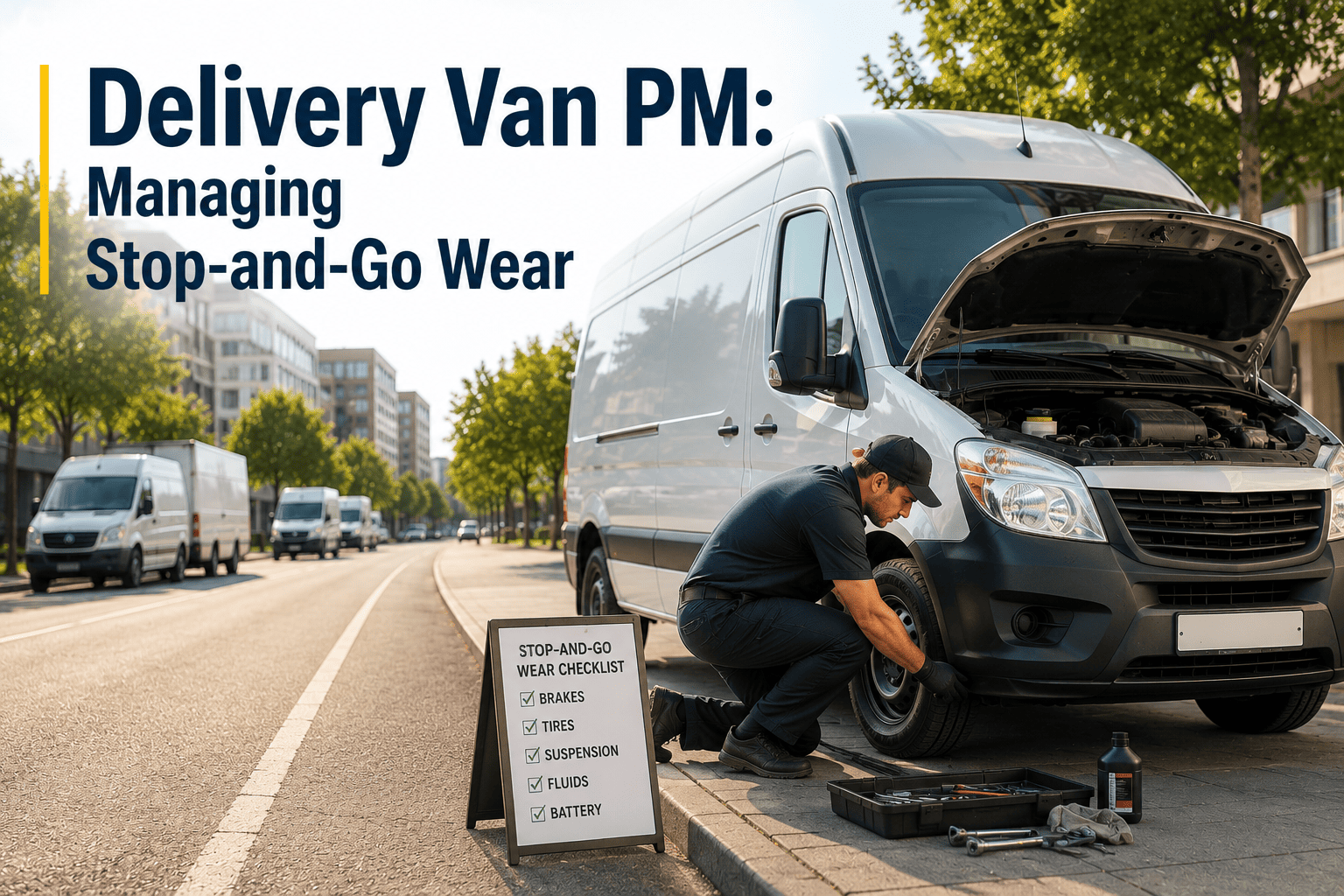
A regional last-mile delivery fleet running 60 vans across dense urban routes found brake pads wearing out at 9,000 miles instead of the expected 25,000, while tires on the same vans needed replacement every 14,000 miles from constant curb scrubbing and tight-radius turns. The fleet was still checking brakes and tires on a flat 90-day calendar, regardless of how many stops each van made that day. A van running 180 stops on a 12-mile route wears a brake pad down in weeks, while a van covering the same 12 miles on one highway run barely touches the pedal. Unplanned brake failures cost this fleet $340 per van in emergency labor and downtime, totaling $20,400 in a single year before anyone questioned the schedule itself. Fleets facing the same stop-and-go wear pattern can see how odometer-triggered tire and brake inspections catch this early by visiting Oxmaint's free trial.
Delivery Van Preventive Maintenance: Why Stop-and-Go Routes Wear Tires and Brakes Three Times Faster
A van that stops 180 times a day does not wear like a van that drives 180 miles on the highway. This guide breaks down why stop-and-go routes destroy brakes and tires early, and how odometer-triggered inspections catch the wear before it strands a driver.
Stop Guessing When a Van's Brakes and Tires Need Attention
Oxmaint schedules brake and tire inspections by the miles each van actually drives on its route type, not by a fixed date on a calendar. A van built for 180 stops a day gets checked like one, and a highway-only van does not get pulled in early for nothing.
Stop-and-Go Driving Puts Different Loads on a Van Than Highway Miles Ever Will
Every stop on a delivery route asks the brakes to convert the van's full weight and momentum into heat, over and over, dozens of times an hour. Every tight turn into a loading zone or driveway scrubs the tire's outer edge against the pavement in a way a straight highway mile never does. The odometer reads the same whether a van earned those miles on an open road or in a stop-and-go grid, which is exactly why mileage alone is not enough — the route type has to factor into the schedule too.
Four Odometer Triggers That Catch Van Wear Before It Becomes a Roadside Call
Calendar-Based PM vs. Odometer-Triggered PM on the Same Delivery Fleet
The numbers below come from a 60-van fleet that switched from a flat 90-day brake and tire check to inspections triggered by each van's actual mileage and route severity.
| Metric | 90-Day Calendar Check | Odometer-Triggered Check |
|---|---|---|
| Brake pad life used before replacement | Often past 100% — pads found metal-on-metal | Caught at 70–80% — replaced before failure |
| Tire tread checks on curb-scrub routes | Same interval as highway vans | Checked 2,500 miles sooner on average |
| Unplanned roadside brake failures per year | 11 events across the fleet | 3 events across the fleet |
| Annual emergency repair cost | $20,400 | $5,600 |
| Driver downtime from roadside brake issues | Average 4.5 hours per event | Average 0 hours — handled at scheduled visit |
What Odometer-Triggered PM Actually Saves a Delivery Fleet
Give Every Van the Inspection Schedule Its Route Actually Earns
Tag each van by route type — stop-heavy, curb-scrub, highway — and Oxmaint adjusts brake, tire, and fluid triggers automatically. No more waiting for a date on the calendar to catch damage that already happened.
Frequently Asked Questions
How does Oxmaint know which vans are on stop-go routes?
Do we need telematics hardware installed before this works?
Can different vans on the same route have different schedules?
How quickly can a 50–100 van delivery fleet get this running?
Does this replace our driver pre-trip inspection process?
Give Every Delivery Van the Schedule Its Route Has Already Earned
Odometer and route-severity triggers for brakes, tires, and fluids — set up in days, adjusting automatically as each van's route changes. Fewer roadside brake calls, fewer surprise tire replacements, more vans on the road.