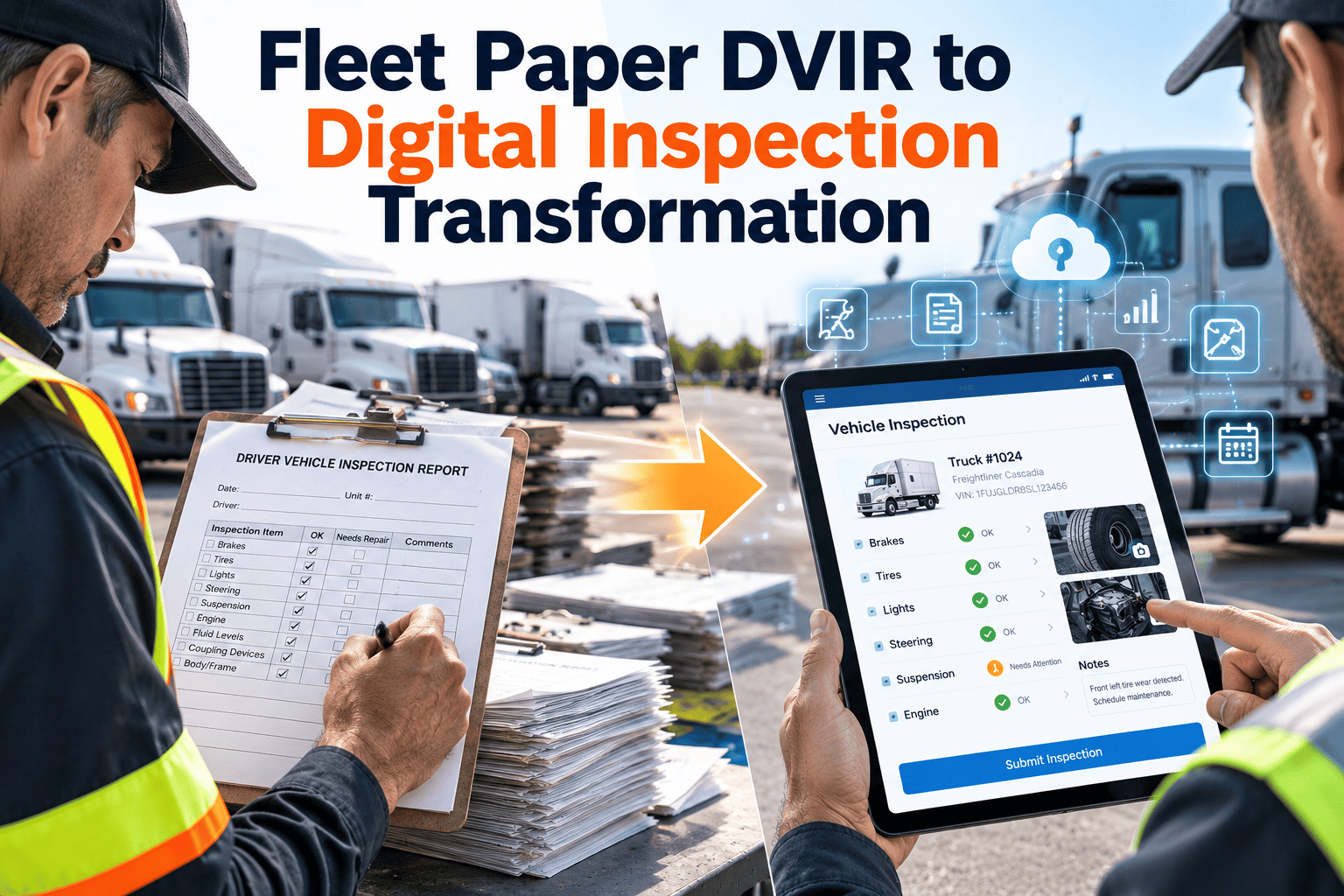
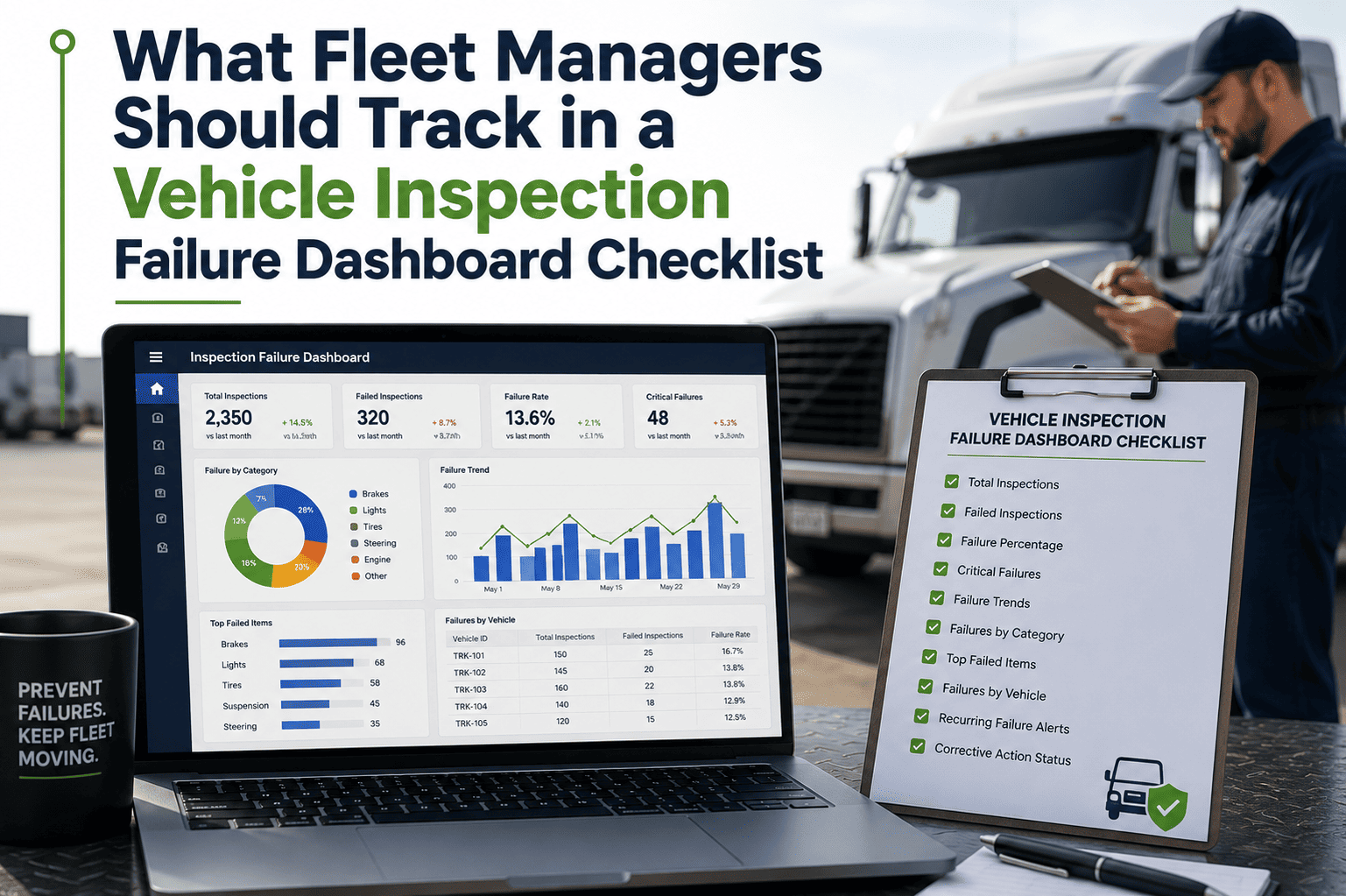
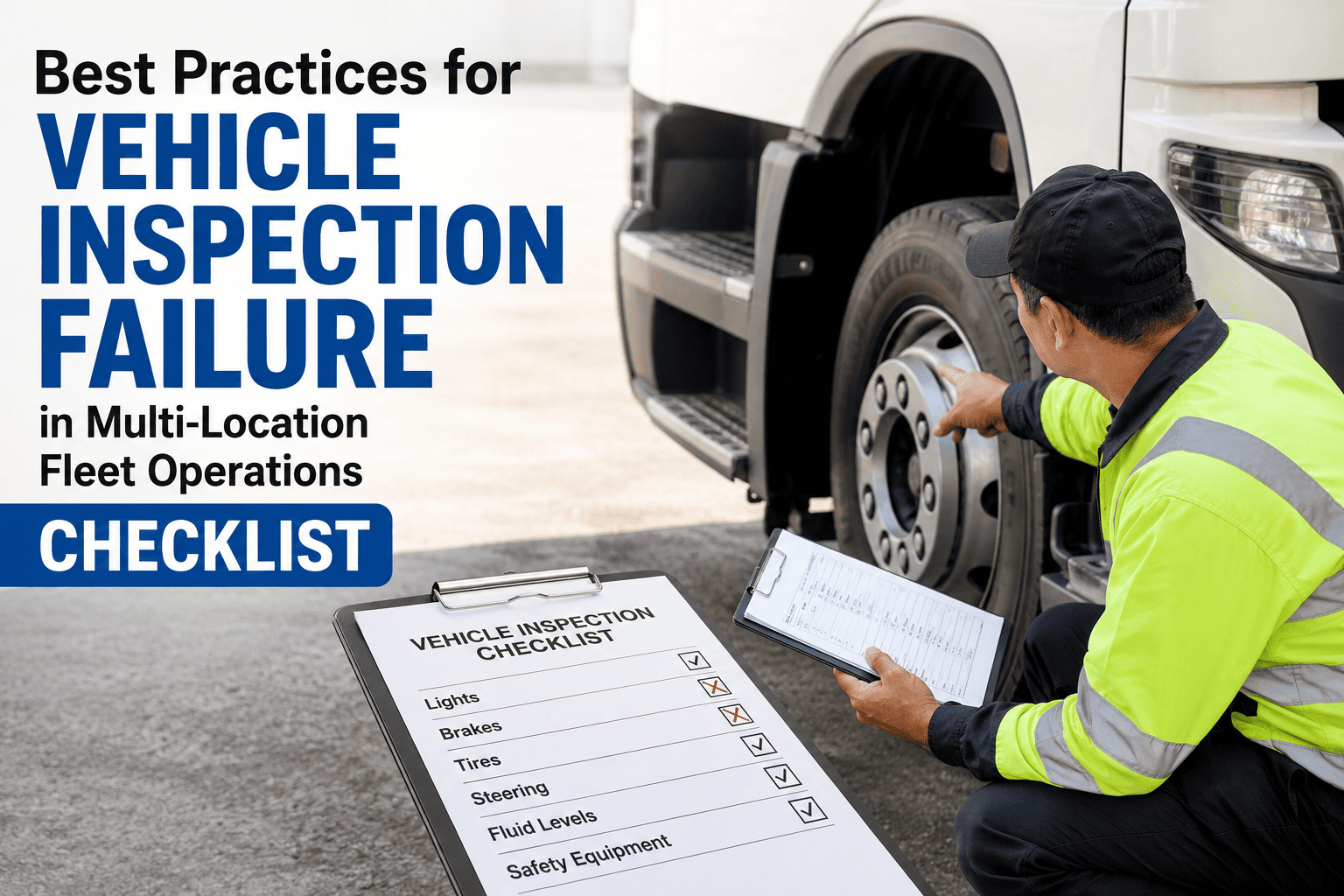
The paper-based Driver Vehicle Inspection Report is one of the most consistently non-compliant documents in commercial trucking — not because drivers skip inspections, but because paper DVIR creates a record-keeping system that is impossible to enforce at scale. A driver who marks "no defects" on a paper form and leaves it in the cab creates no visibility for the fleet manager, no repair trigger for the shop, and no audit trail for FMCSA. The result is predictable: a 2023 CVSA inspection study found that brake system violations — the most commonly missed DVIR item — account for 43% of all commercial vehicle out-of-service orders at roadside inspections. Oxmaint's digital DVIR module puts photo-verified checklists on the driver's mobile device, auto-classifies defects, notifies the shop immediately, and creates an unbroken digital chain from driver inspection to mechanic close-out to FMCSA audit record. See Oxmaint's digital DVIR configured for your fleet — start free.
Digital DVIR: AI-Powered Vehicle Inspection Reports for Commercial Fleets
Photo-verified checklists, voice-to-text defect reporting, automatic defect classification, instant supervisor notifications, and mechanic-verified close-out — all in Oxmaint's mobile DVIR module. Zero paper. Zero missed defects.
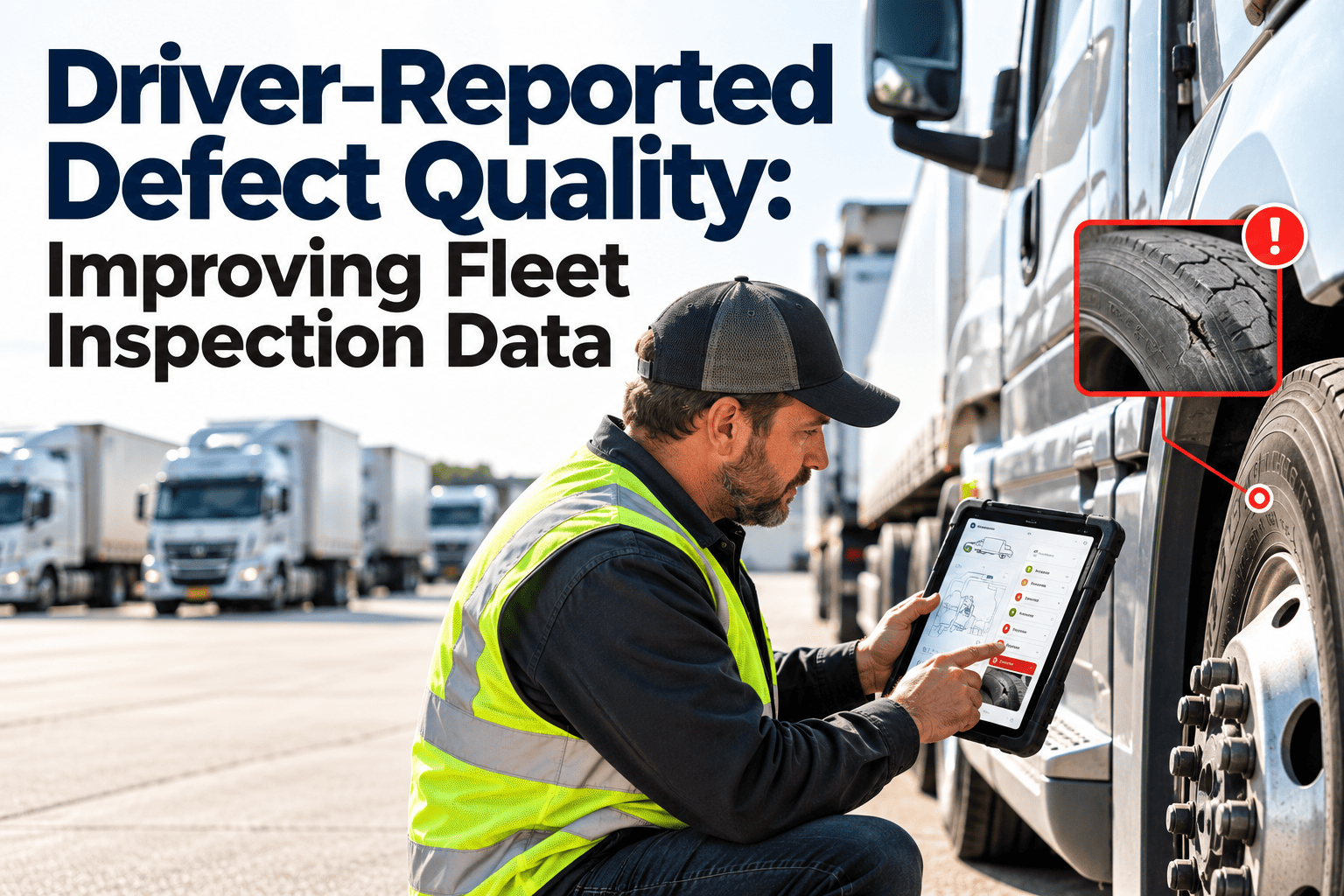
Oxmaint's digital DVIR gives drivers a guided mobile inspection checklist with photo attachment, voice-to-text defect description, and AI defect classification — so every brake, tire, light, and fluid defect is captured, escalated, and closed with a mechanic's digital signature before the vehicle moves again.
Why Paper DVIR Creates Compliance Risk You Cannot See
Paper DVIR has three structural failure modes that digital inspection eliminates. First, paper forms have no mandatory completion verification — a driver can leave fields blank, write illegibly, or skip sections entirely without the fleet manager knowing until a roadside inspector requests the form. Second, paper defect reports have no automatic escalation — a brake defect noted at 06:00 may sit in a filing tray until the fleet manager reviews forms at end of day, while the vehicle operates on a defective system for 12 hours. Third, paper records have no reliable retrieval system — FMCSA inspectors who request DVIR records for a specific 90-day window typically find that paper systems can produce 60 to 75% of required records in a reasonable timeframe, with gaps that become findings.
Oxmaint's AI-powered digital DVIR closes all three gaps. Completion is enforced by the mobile workflow — a driver cannot submit without completing every checklist section, and GPS confirmation ensures the inspection is conducted at the vehicle location, not in a break room. Defect escalation is immediate — a brake defect flagged in the Oxmaint DVIR generates a priority repair work order to the shop within seconds, with a push notification to the shop supervisor and a flag on the fleet compliance dashboard. Record retrieval is instant — any 90-day DVIR history exports from Oxmaint in under 3 minutes, structured exactly as FMCSA requests. Start your free trial and see Oxmaint DVIR on your fleet.
Digital DVIR Results — Oxmaint Customer Fleets
Measured outcomes across commercial fleets that migrated from paper DVIR to Oxmaint's digital inspection module — 12-month post-deployment data.
DVIR Checklist Coverage — What Oxmaint Captures by Vehicle Class
FMCSA 49 CFR 396.11 specifies required DVIR items — but the inspection depth that prevents OOS violations goes beyond the minimum requirement. Oxmaint's digital DVIR templates are configured by vehicle class, with guided inspection prompts, photo requirements for high-risk items, and AI defect classification that flags safety-critical defects for immediate escalation versus routine repair scheduling. See Oxmaint DVIR templates for your vehicle classes.
| Inspection Category | FMCSA Requirement | Oxmaint AI Feature | Escalation Level |
|---|---|---|---|
| Brake System | Mandatory — all CMVs | Photo + AI wear classification | Safety-Critical |
| Tires & Wheels | Mandatory — all CMVs | Tread depth AI estimate from photo | Safety-Critical |
| Lights & Reflectors | Mandatory — all CMVs | Guided checklist by light type | Priority |
| Steering Mechanism | Mandatory — all CMVs | Play measurement prompt | Safety-Critical |
| Fluid Levels | Mandatory — all CMVs | Level field + leak photo | Priority |
| Coupling Devices | Class 8 / tractor-trailer | 5th wheel photo verification | Safety-Critical |
| Emergency Equipment | Mandatory — all CMVs | Expiry date scan + photo | Routine |
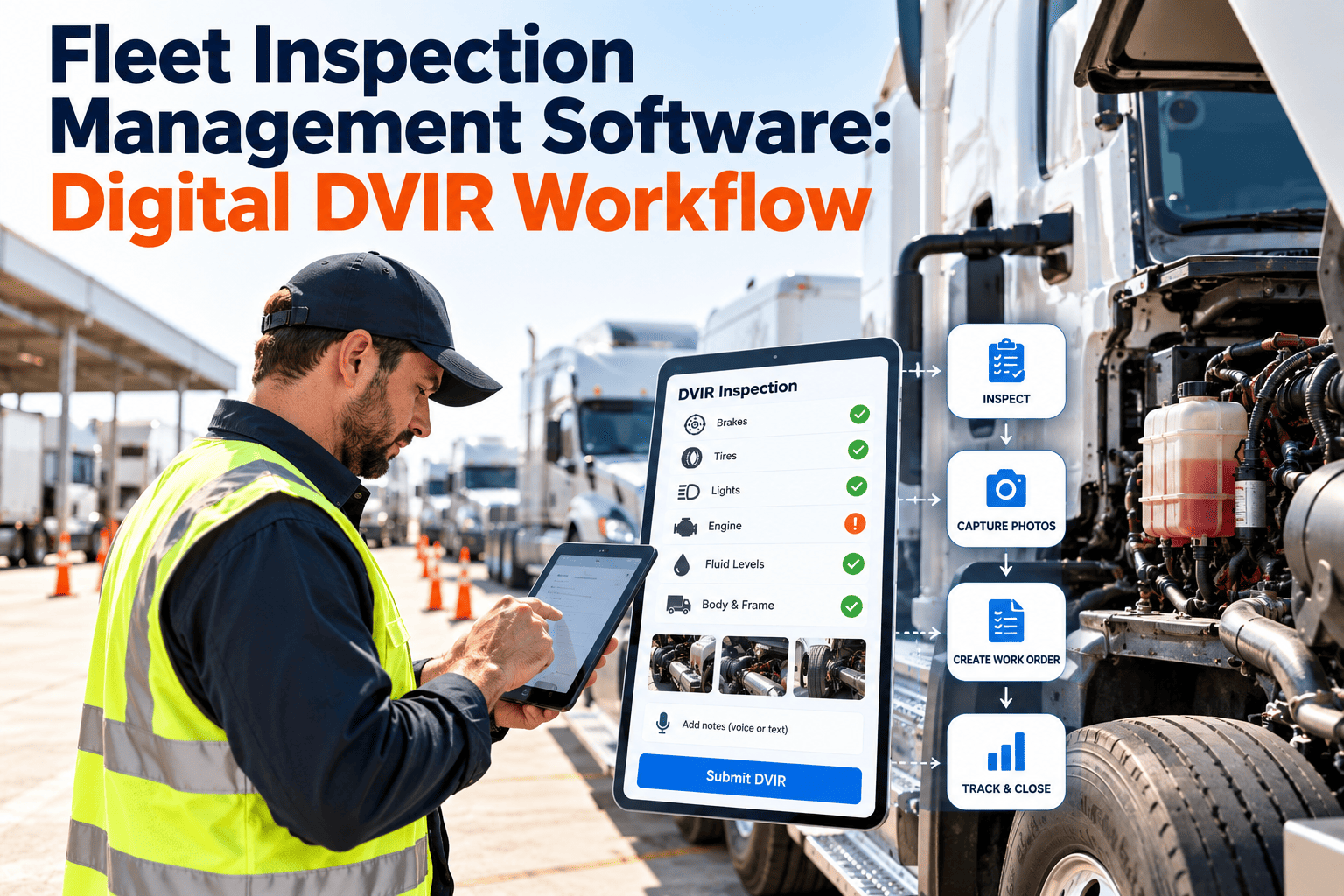
Digital DVIR Workflow — Driver to Mechanic to Audit
Oxmaint's digital DVIR is not just a digital form — it is an end-to-end compliance workflow that connects driver inspection, shop repair, and FMCSA audit export in a single unbroken record. Every step is timestamped, GPS-verified, and stored against the vehicle's asset record permanently.
Our roadside inspection pass rate went from 88% to 99.1% in 8 months. The key change was the brake defect photo — drivers were marking no defects on paper because it was faster. Oxmaint's photo requirement caught 14 brake issues in the first 90 days that would have been OOS violations on the road.
Frequently Asked Questions
99% DVIR Completion. Zero Missing Records. -78% Brake OOS Violations.
Photo-verified digital DVIR with AI defect classification — live in Oxmaint within 1 week.