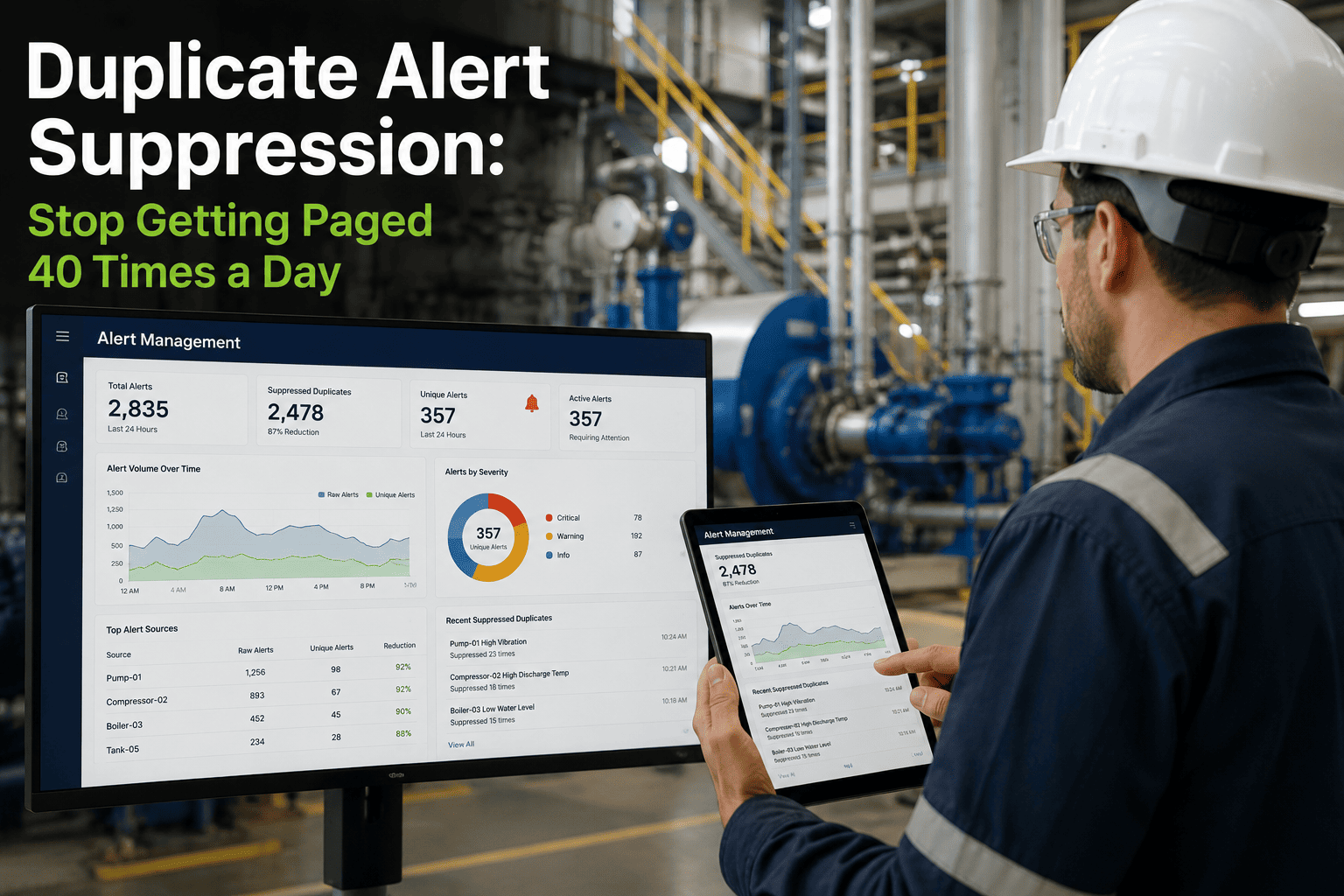
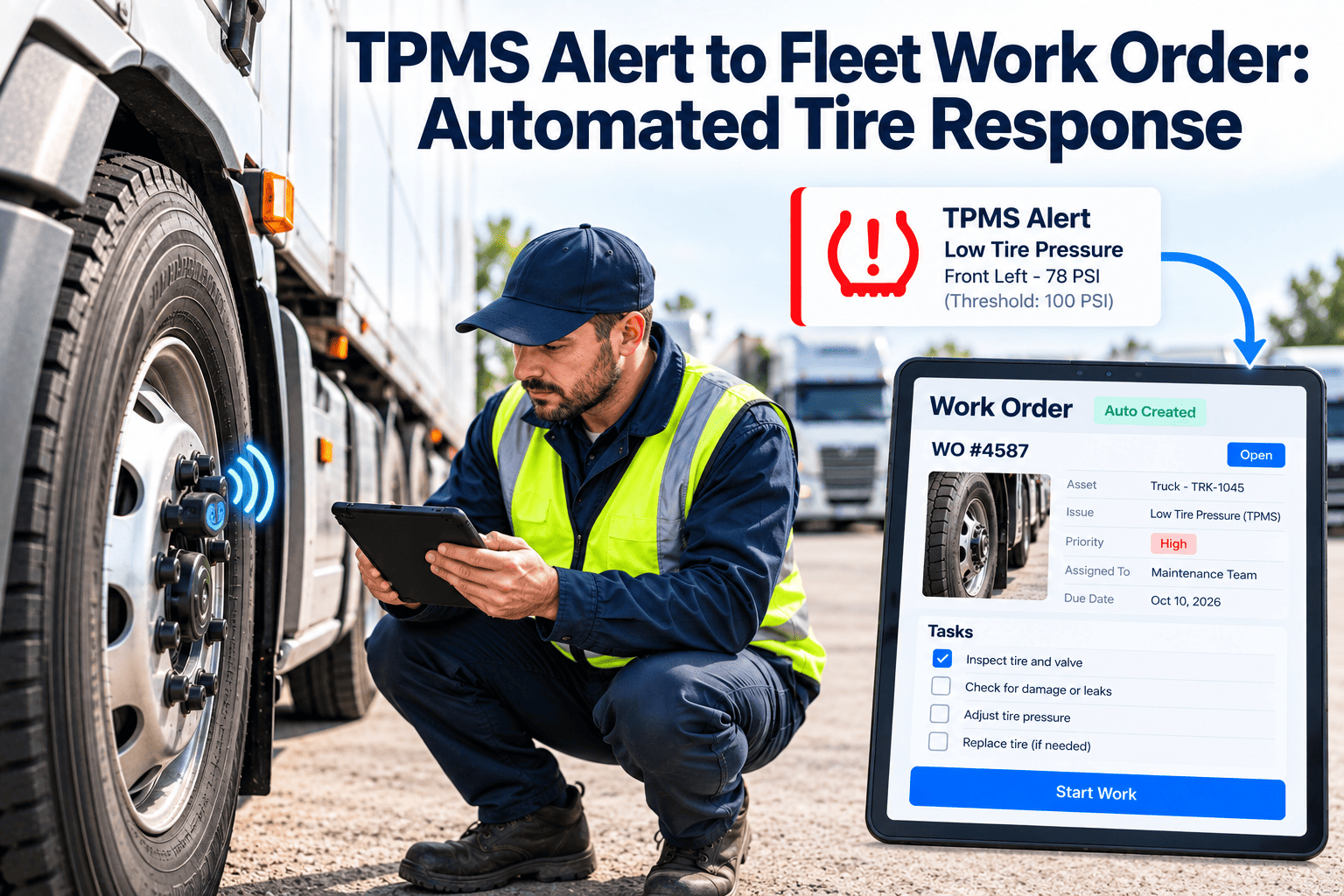
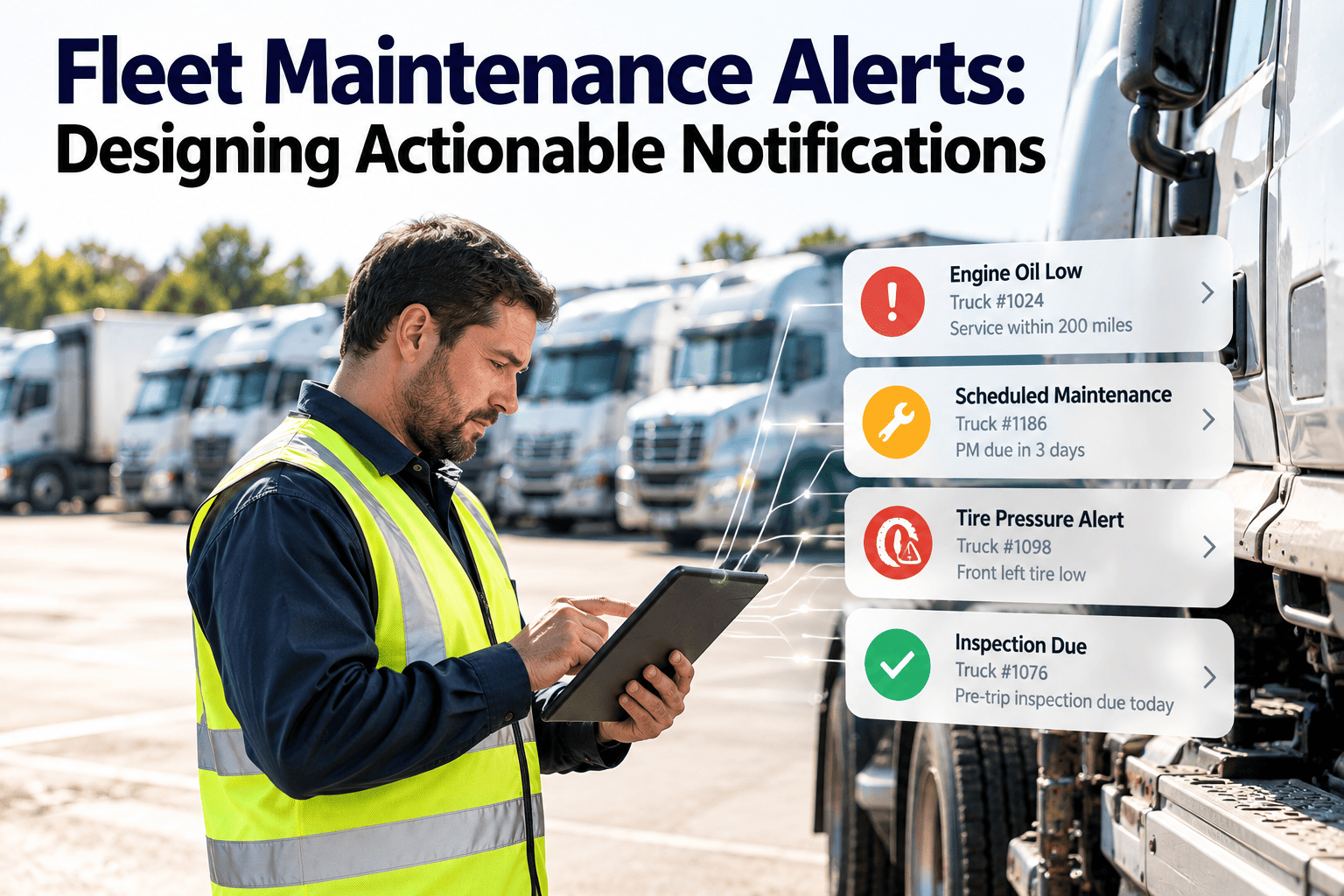
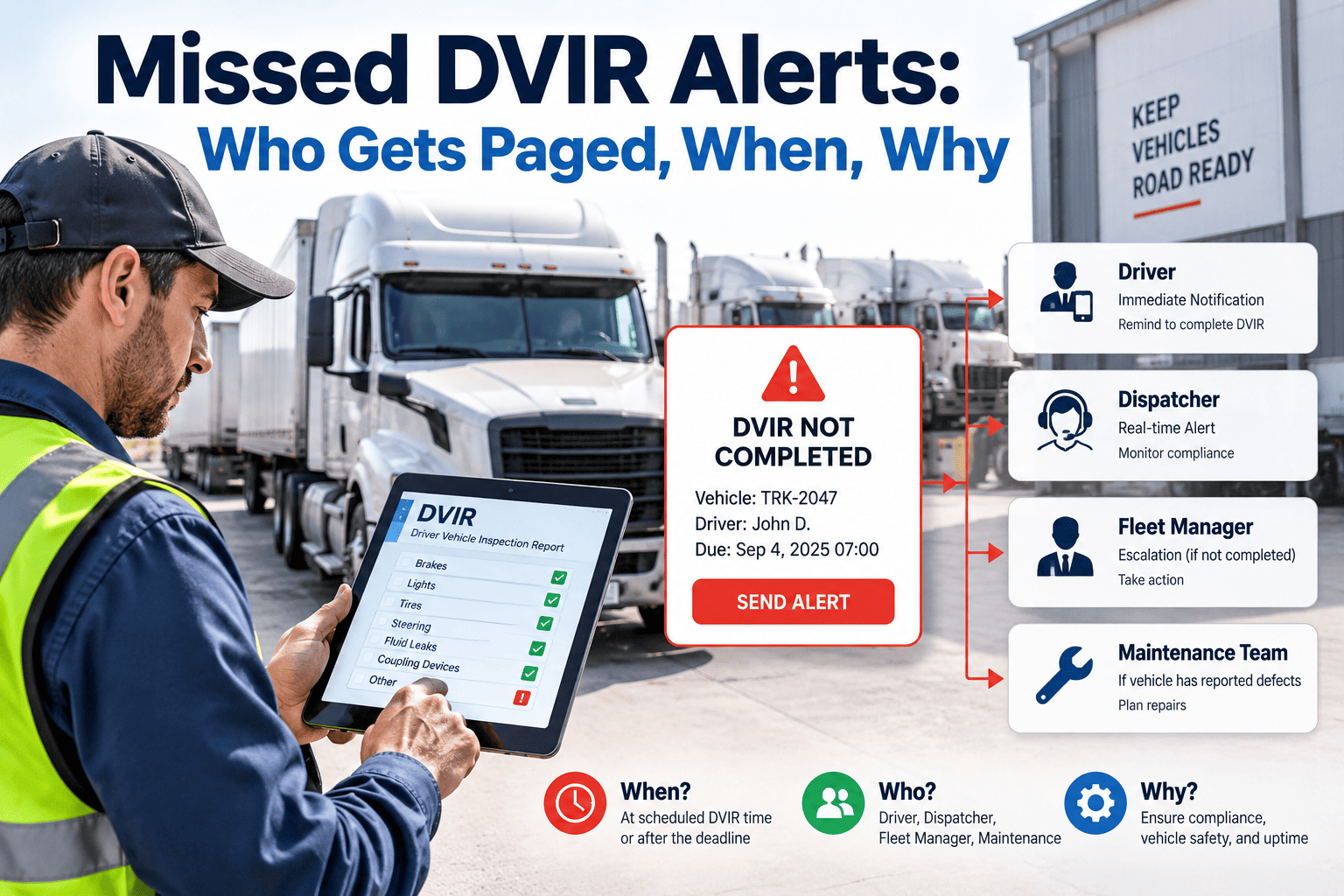
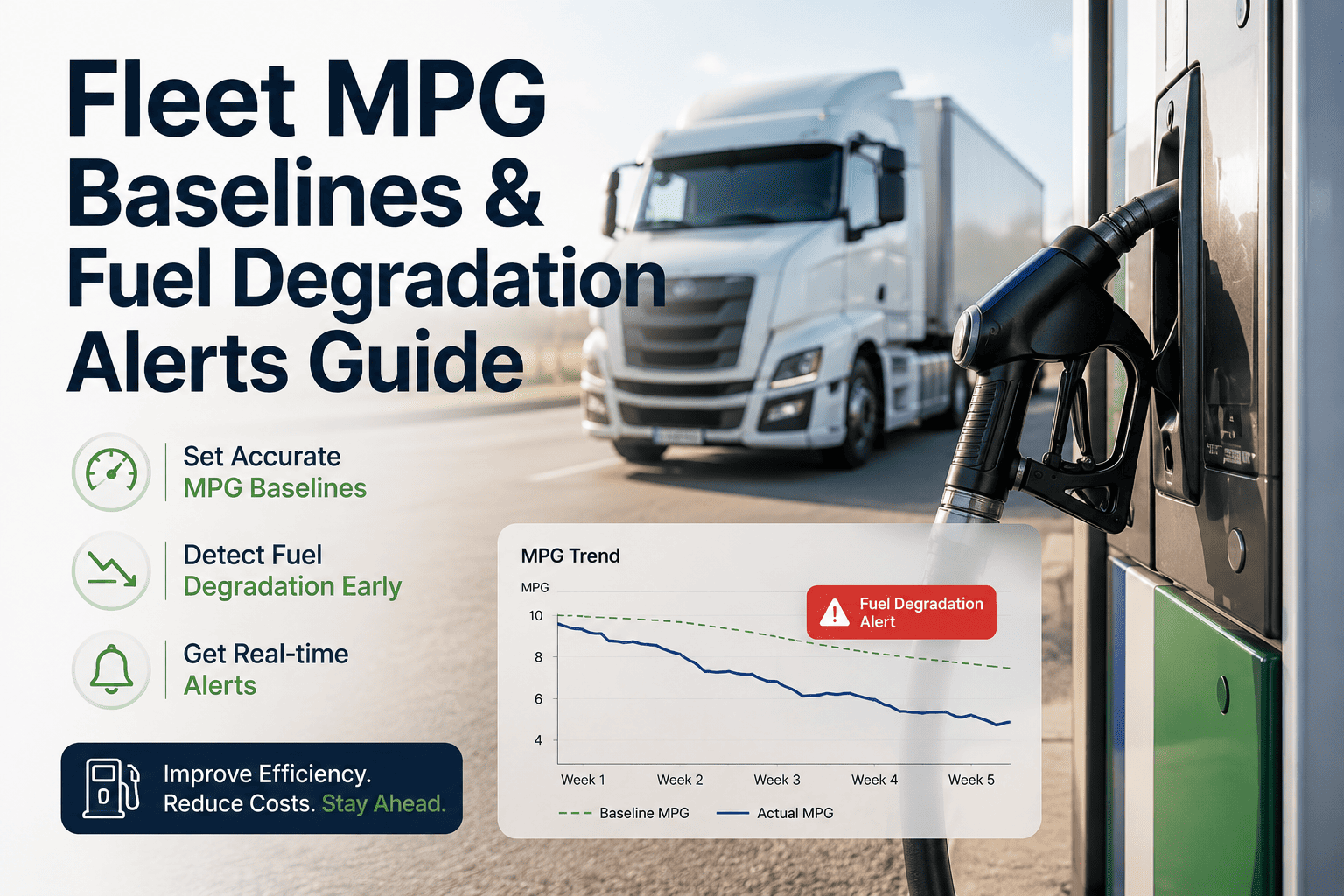
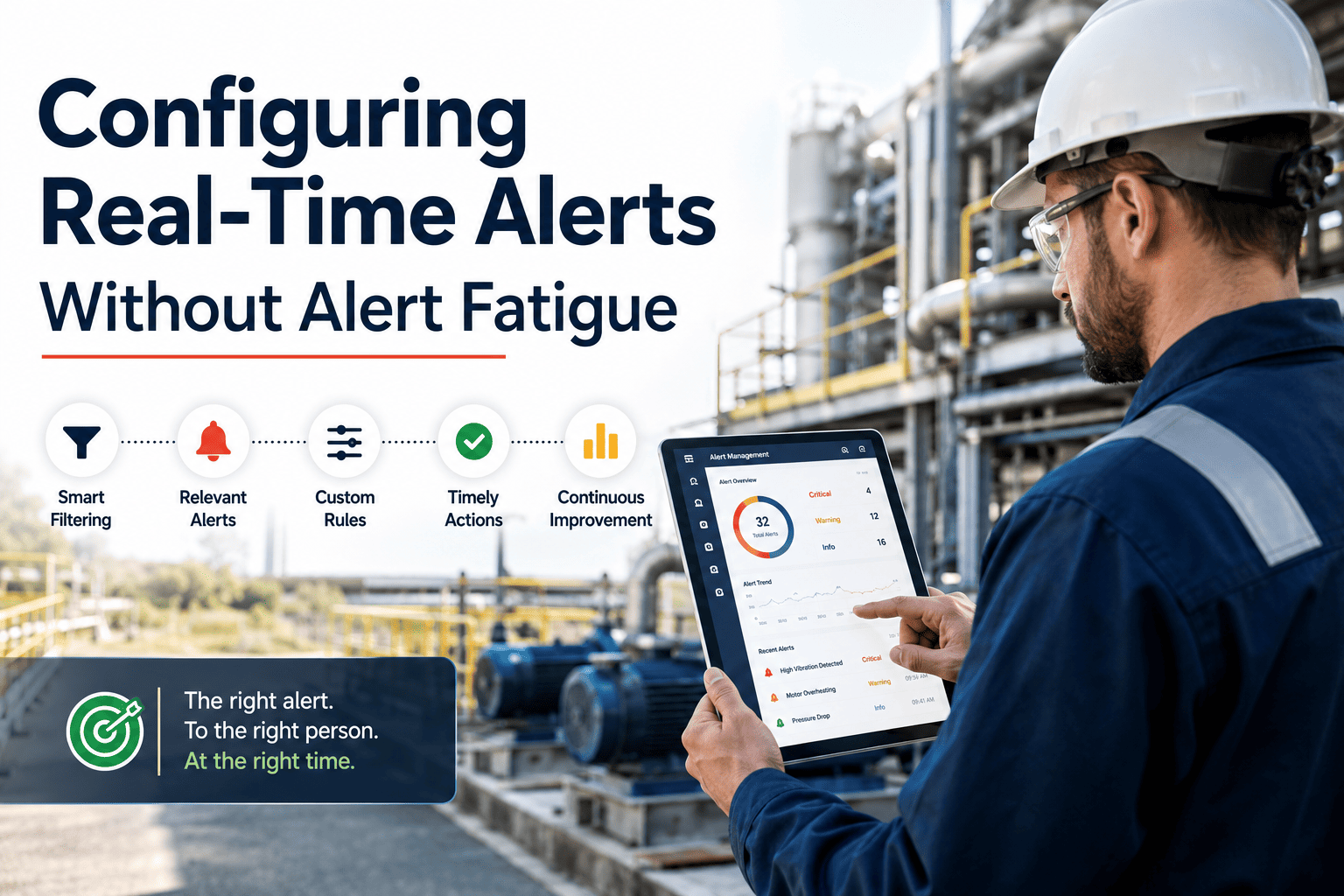
A single flat tire can trigger a maintenance alert, a telematics alert, a driver app alert, and a dispatcher SMS — all for one truck, one problem, all within ninety seconds. Multiply that across a 40-vehicle fleet and a bad pothole season, and dispatchers stop reading alerts altogether, because reading every alert would mean reading the same event four or five times over. That's how real breakdowns get buried under noise, and it's why fleets that never fix deduplication eventually just mute the channel. OxMaint's alert engine groups every signal tied to one root cause into a single actionable page, and you can sign in to OxMaint to see your own alert volume before and after grouping.
Alert Fatigue · Fleet Operations
One Problem, One Page — Not Forty
Most fleet platforms treat every sensor trigger as a separate event. OxMaint treats every sensor trigger as evidence about one truck's one problem, and pages your team once, with everything attached.
60%
average drop in daily alert volume after grouping rules are applied
40
separate pages a single low-battery event can generate without dedup
6 min
average time a real breakdown alert sat unread behind duplicate noise
3 sec
time OxMaint takes to cluster related signals into one incident
1 truck = 1 page
A single fault code rarely shows up alone — it drags a diagnostic trouble code, a telematics threshold breach, an idle-time flag, and sometimes a geofence exit along with it. Paged separately, that is four interruptions for one mechanical issue. OxMaint's engine recognizes when signals share a vehicle, a time window, and a probable cause, and collapses them into a single incident thread before anyone's phone buzzes.
Sign in to OxMaint to see today's alerts grouped this way.
How Grouping Actually Happens — Four Steps, Not Magic
Signal Capture
Every trigger is logged, none are dropped
OBD codes, geofence events, temperature breaches, and driver-app flags all land in the same event stream first, timestamped to the second, so nothing is discarded before it's evaluated.
Correlation Window
Related signals are matched by vehicle and time
Signals from the same vehicle inside a rolling correlation window — typically 2 to 5 minutes — are checked against known fault patterns to see if they describe one event or several.
Root Cause Scoring
One signal is picked as the primary alert
The engine scores each signal for how directly it explains the others, then promotes the strongest one to the primary alert and attaches the rest as supporting evidence underneath it.
Single Dispatch
One page goes out, fully documented
Dispatchers and drivers receive one notification with the full evidence trail attached, instead of a scattered sequence of near-identical pages arriving minutes apart.
Suppression Rules You Can Configure Per Fleet
Same-Vehicle Clustering
Any signals from one vehicle inside the correlation window are treated as one candidate incident before severity is even checked.
Repeat-Trigger Cooldown
A sensor that keeps crossing the same threshold — a loose connector flapping in and out of range — is capped at one alert per cooldown period.
Severity Escalation Only
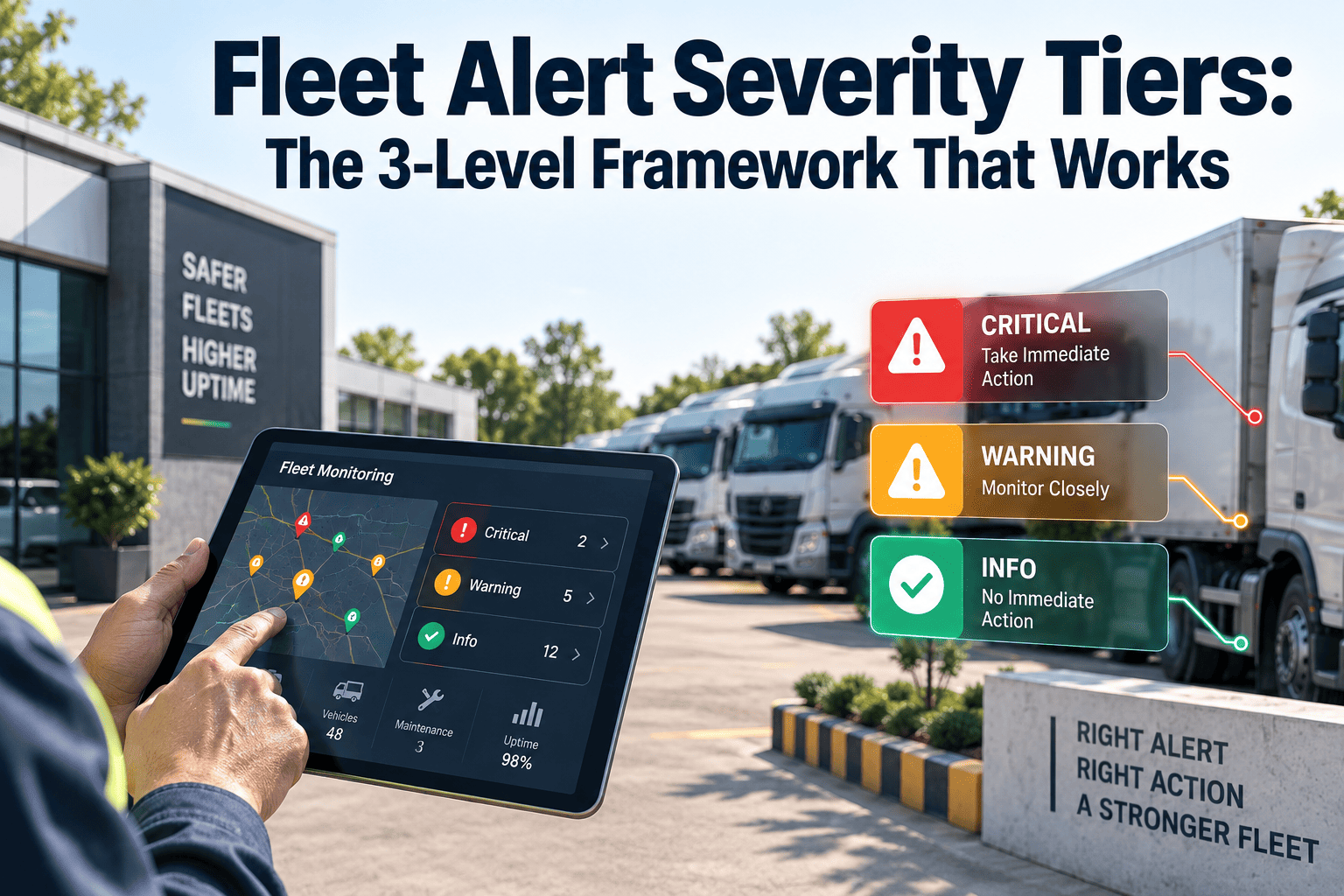
A grouped incident re-notifies only when its severity actually rises, so a minor flag turning critical still reaches someone, quietly, without a fresh flood of duplicates.
Fleet-Wide Event Bundling
When one storm or one depot power outage trips the same sensor across many vehicles at once, those are bundled into a single site-level alert instead of one per truck.
Alert Volume Before and After Grouping, By Fleet Type
What Fleets Miss When Every Signal Pages Separately
Under 10 vehicles
Noise is annoying, not dangerous
A small fleet's dispatcher can still mentally filter repeat pages. Grouping helps focus, but duplicate volume rarely buries a real incident yet.
10 to 40 vehicles
Real alerts start getting lost
Dispatchers begin skim-reading titles instead of opening alerts, and a genuine engine-temperature warning can sit unopened behind five duplicate pings.
40+ vehicles
Teams start muting the channel
At this scale, ungrouped alerting trains staff to ignore notifications entirely — which means the one alert that mattered gets the same non-response as the other thirty-nine.
Your dispatchers didn't stop caring about alerts. They stopped trusting them, because forty pages a day trained everyone to assume most are noise.
OxMaint's grouping engine restores that trust by making every page mean something.
Common Questions About Alert Deduplication
Will grouping ever hide a real problem inside a bundle?
No — every signal is still logged and viewable inside the incident thread. Grouping only changes how many separate pages you receive, not what data is captured. You can review the full trail after
signing in to OxMaint.
Can we set different correlation windows for different vehicle types?
Yes, correlation windows and cooldown periods are configurable per fleet segment, so cold-chain trailers and delivery vans can use different grouping sensitivity.
What happens if two unrelated faults happen on the same truck at once?
Root-cause scoring separates unrelated faults even inside the same correlation window, so a coincidental brake warning and a coolant warning still generate two distinct incidents.
Does deduplication delay how fast a critical alert reaches us?
Critical severity bypasses the correlation window and pages immediately; grouping only applies to signals below the threshold you configure as urgent.
How do we see today's suppressed duplicate count?
A running suppression count sits on the dispatcher dashboard, so you can see exactly how much noise was filtered out that day.
Book a demo to walk through it live.
Forty Pages a Day Isn't Vigilance — It's Noise Your Team Has Learned to Ignore
OxMaint groups every related signal into one incident, so the alert that reaches your team is the one that actually needs a response.