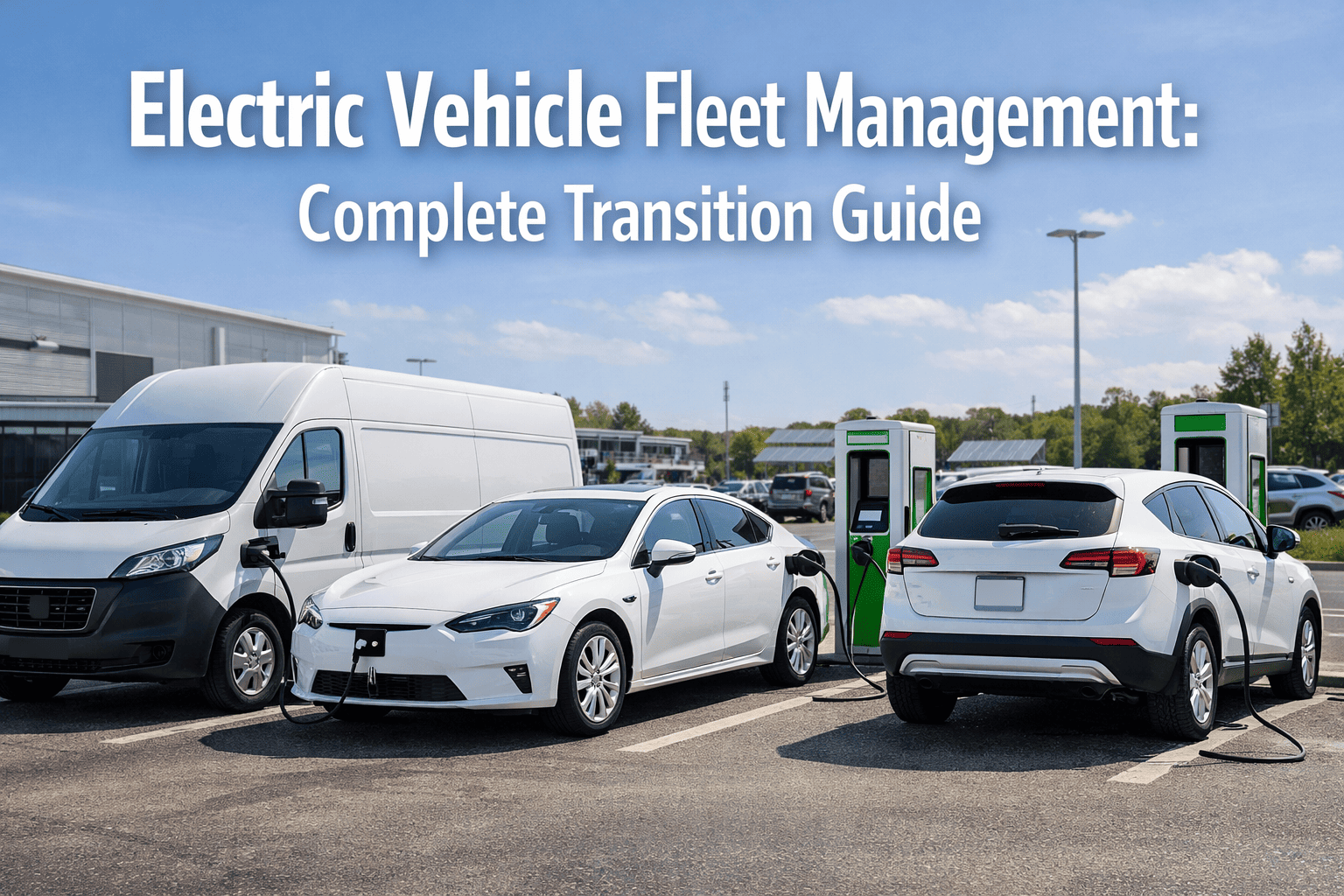
Managing a heavy-duty electric truck fleet is fundamentally different from running diesel Class 6-8 operations — and most fleet managers discover this the hard way, six months into their first EV deployment. A Freightliner eCascadia costs $380,000 versus $180,000 for its diesel equivalent, requires megawatt charging infrastructure that takes 12–18 months to permit and install, and delivers 250 miles of real-world range where diesel runs 1,200. The trucks themselves are simpler mechanically — no DEF, no DPF, no oil changes — but the operational complexity shifts to energy management, charging orchestration, route planning with range constraints, and specialized high-voltage maintenance protocols. The transition isn't impossible, but it demands a different playbook. Fleets running 20+ electric Class 8 trucks successfully in 2026 share three characteristics: they chose the right routes first, they planned infrastructure before ordering trucks, and they use connected maintenance platforms like Oxmaint to manage charging schedules, battery health, HV system diagnostics, and regulatory compliance across mixed diesel-electric operations.
Electric Truck Fleet Management for Heavy-Duty Operations
Manage Class 6-8 electric trucks with confidence — route planning, megawatt charging, battery monitoring, HV maintenance, and TCO optimization for commercial EV fleets.
Which Routes Are Actually EV-Ready Today
Not every route can support electric trucks in 2026 — but the right routes deliver better economics than diesel starting Year 1. Use this matrix to identify your first 10 electric truck candidates. The fleets succeeding with Class 8 EVs started with the easiest applications, proved the model, then scaled methodically.
Ideal for Electric
Regional distribution, port drayage, local delivery, beverage routes
Possible with Planning
Regional haul with charging partner, dedicated lane with en-route infrastructure
Not Yet Viable
Long-haul OTR, irregular routes, rural operations — wait for next-gen 500+ mile trucks
Megawatt Charging — What You Actually Need
A single Class 8 electric truck charging at 350 kW draws more power than 30 homes combined. Multiply that by 5–10 trucks charging simultaneously, and you're operating a small power plant. Charging infrastructure planning determines whether your EV deployment succeeds or fails. Here's the real-world breakdown fleet operators need.
Manage Charging Like the Critical Asset It Is
Oxmaint schedules charging windows, tracks energy consumption, monitors battery health, and alerts on charge failures — preventing the "truck needed but battery at 20%" crisis.
What Changes When You Maintain Electric Trucks
Electric Class 8 trucks have 50–70% fewer moving parts than diesel equivalents — no engine oil, no coolant changes, no DPF regeneration, no DEF system, no transmission service. Maintenance hours drop 40–60%, but what remains is more specialized, higher-stakes, and requires new certifications. Here's what actually changes in your shop.
What Goes Away
What Gets Added
What Stays the Same
Who Can Legally Touch a 900-Volt Powertrain
Class 8 electric trucks operate at 600–900 volts DC — enough to kill instantly. OSHA and NFPA 70E require specific training and PPE for anyone performing work on high-voltage systems. Your diesel techs can't just "figure it out." Here's the certification path your maintenance team needs before your first electric truck arrives.
HV Awareness
4-hour course for drivers, dispatchers, and anyone who might encounter an EV. Covers hazard recognition, emergency procedures, and when to call a qualified technician.
Qualified EV Technician
40-hour program covering HV safety, de-energization procedures, PPE requirements, and non-intrusive diagnostics. Required for any technician performing service near HV components.
Master EV Technician
80+ hour advanced program for battery pack service, HV component replacement, and powertrain diagnostics. Required for in-house pack work or complex electrical repairs.
The Real Total Cost of Ownership — 7-Year Comparison
Electric Class 8 trucks cost 2× upfront but deliver 30–40% lower operating costs and 60–70% lower total cost of ownership over seven years when deployed on suitable routes. This TCO model reflects real-world 2026 pricing including available incentives. Your numbers will vary based on route, utilization, and local electricity rates.
"We deployed 12 eCascadias on our Port of LA drayage routes. Year-one TCO beat diesel by $18K per truck after incentives. The operational challenge wasn't the trucks — it was coordinating charging windows and managing battery health across the fleet. Oxmaint gave us visibility we didn't have with diesel."
— Fleet Manager, 85-truck drayage operation, California
How Oxmaint Manages Heavy-Duty EV Fleets
Oxmaint is built for the operational complexity of mixed diesel-electric heavy-duty fleets. It doesn't just track oil changes — it manages charging schedules, monitors battery state of health, coordinates HV-certified technician assignments, and generates compliance documentation for CARB, EPA, and customer audits. Book a demo to see it configured for Class 8 electric operations.
Charging Orchestration
Schedule overnight charging windows, track energy consumption per vehicle, alert on charge failures, and optimize for off-peak electricity rates.
Battery Health Tracking
Monitor state of health per pack, track degradation curves, predict replacement dates, and flag anomalous capacity drops.
HV Safety Compliance
Track technician certifications, assign HV-qualified staff to electric work orders, and maintain NFPA 70E audit trails.
Range & Route Planning
Analyze historical route data to score EV suitability, model range under load, and identify charging infrastructure gaps.
Mixed-Fleet PM Scheduling
Separate EV-specific PM templates (no oil changes, add HV checks) while managing diesel trucks in the same system.
Incentive & Grant Documentation
Auto-generate utilization reports, emissions documentation, and operational data required for HVIP, LCFS, and state grant compliance.
Frequently Asked Questions
What's the real-world range of a Class 8 electric truck?
How long does it take to charge a Class 8 electric truck?
What incentives are available for electric Class 8 trucks?
Do electric trucks require different shop equipment?
Can Oxmaint manage both diesel and electric trucks in the same fleet?
Manage Heavy-Duty EVs Like the Complex Assets They Are
Charging, battery health, HV safety, mixed-fleet PMs — all in one platform.