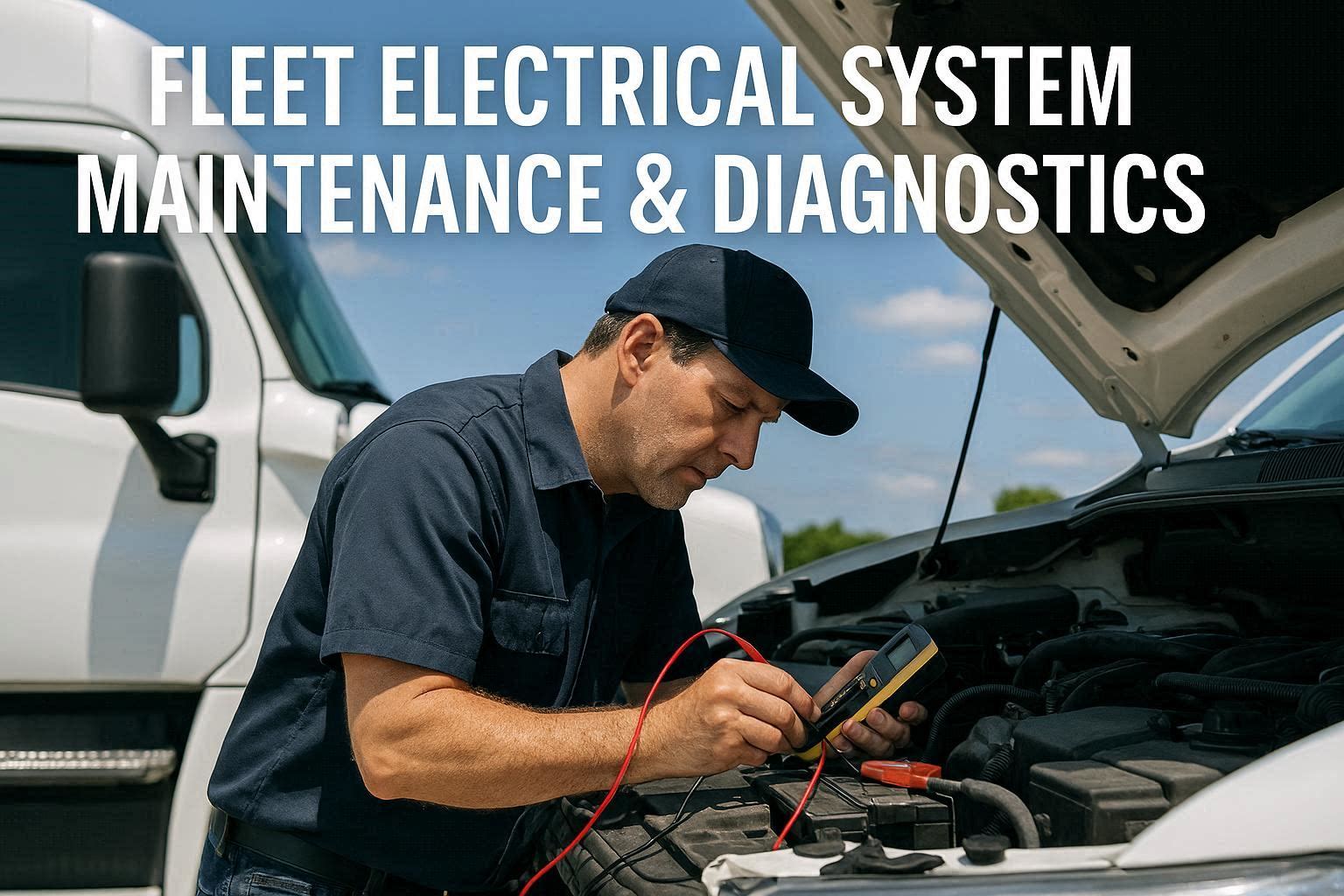
Electrical System Maintenance for Fleet Vehicles: Batteries, Alternators, and Wiring

By Alex Jordan on March 30, 2026

electrical-system-maintenance-for-fleet-vehicles-batteries,-alternators,-and-wiring

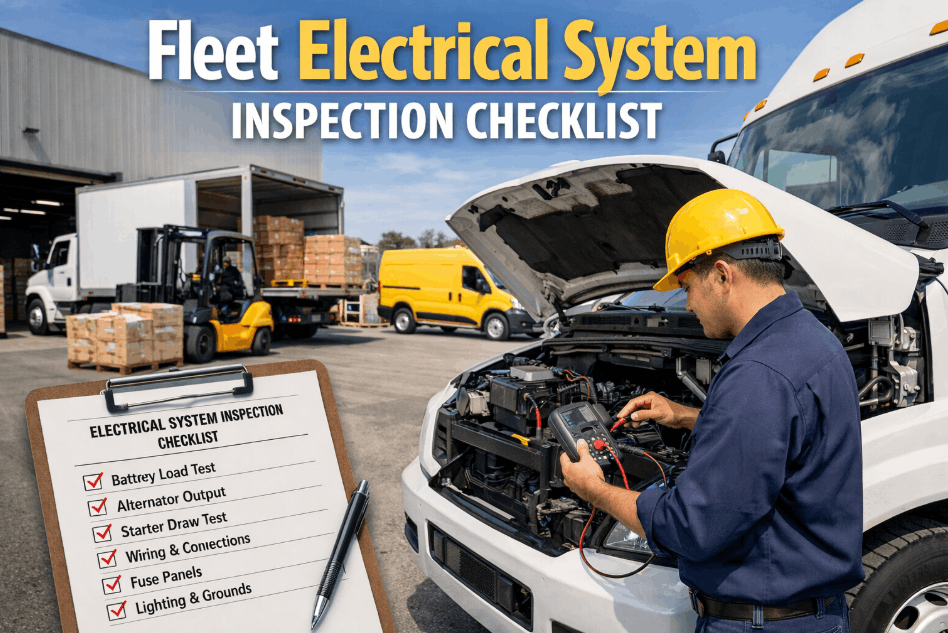
Electrical failures are the leading cause of unexpected fleet breakdowns — responsible for more roadside events than any other single system including tyres, brakes, or engine. Unlike mechanical failures that degrade visibly over time, electrical faults are instant: a battery that tests at 78% state of health at Monday's pre-trip check can strand a driver on Wednesday with no warning. Structured electrical PM — battery testing, alternator output measurement, wiring inspection, and starter load testing — prevents the overwhelming majority of these events. OxMaint schedules every electrical PM event per vehicle automatically — battery test, alternator check, wiring inspection, and lighting verification on defined intervals.

Fleet Maintenance  ·  Article  · 

Electrical System Maintenance for Fleet Vehicles: Batteries, Alternators, and Wiring

Batteries, alternators, starters, wiring harnesses, fuse panels, lighting, and vehicle electronics — with CMMS-tracked electrical PM schedules, OBD fault monitoring, and predictive maintenance protocols for commercial fleet operations.

#1Electrical failure — leading cause of fleet breakdowns
−74%Electrical breakdown rate with structured battery + alternator PM
$2,100Average breakdown cost vs. $140 for a planned battery replacement
6 moAdvance warning window from OBD before electrical failure event

What's Failing and Why — Electrical Failure Root Causes

Most fleet operators think of electrical maintenance as "change the battery when it dies." The reality is that 82% of electrical failures are caused by six preventable root causes — all of which have clear inspection and testing protocols that a CMMS can schedule automatically. The six cause tiles below show the breakdown of commercial fleet electrical failures by category, the percentage each contributes to total electrical downtime, and the maintenance action that prevents each one. OxMaint creates PM templates for every electrical component — ensuring every cause category has a scheduled interception point before failure occurs.

34%
Battery Failure
Age, sulphation, or deep discharge. Annual conductance test catches 94% before failure event.
22%
Alternator Wear
Diode failure, brush wear, or bearing degradation. Output voltage test detects undercharge 3–6 months ahead.
16%
Wiring / Corrosion
Chafed harnesses, corroded terminals, and loose grounds. Visual inspection at every PM event.
12%
Starter Motor Failure
Worn brushes or solenoid. Load test at 200K-mile intervals catches degrading starters before hard start.
10%
Lighting Failure
Bulb age, LED driver failure, or connector corrosion. Weekly pre-trip check plus annual connector inspection.
6%
Fuse / Relay Failure
Overload or vibration-induced failure. Fuse panel inspection and relay test at annual service event.

Electrical Test Reference — Pass, Borderline, and Fail Thresholds

Every electrical failure is preceded by measurable degradation — a battery losing cranking amps, an alternator producing low voltage, a starter drawing too much current. The reference table below gives technicians exact pass, borderline, and fail thresholds for each major component. OxMaint logs test results per vehicle — auto-generating a work order when any reading falls into the borderline or fail zone.

Component
✓ Pass
⚠ Borderline
✗ Fail / Replace
Action
Battery Voltage
12.6–12.8V
12.2–12.5V
<12.2V
Remove surface charge first. Test after 12-hr off period.
Battery CCA
>80% rated
60–80%
<60% rated
Don't wait for hard-start symptoms. Replace at <60% CCA.
Alternator Output
13.8–14.8V
13.2–13.8V
<13.2V
Test at 2,000 RPM + full load. AC ripple >0.5V = diode failure.
Starter Current
80–150A
150–200A
>200A
High draw = worn brushes. Low draw + slow crank = battery/cable.
Parasitic Drain
<50mA
50–100mA
>100mA
Measure 20 min after engine-off. >100mA kills battery in 2–3 days.
Ground Voltage Drop
<0.1V
0.1–0.3V
>0.3V
Poor ground causes ghost ECU faults before any visible damage.

Electrical System Risk Scoring — Per Vehicle Assessment

Electrical risk in a fleet is not uniform — a 2-year-old vehicle with fresh batteries and clean harnesses operates on a completely different risk profile from a 6-year-old high-mileage vehicle running on original batteries, uninspected wiring, and an alternator that has never been load-tested. The scoring framework below lets fleet technicians and engineers assign a risk score to each vehicle's electrical system — generating a priority list that targets pre-emptive action at the highest-risk assets before breakdown occurs.

Electrical System PM Compliance & Risk Scoring
Score 5 = fully maintained · Score 1 = active breakdown risk · Assess per vehicle
5
All Systems Tested — Within Spec
Battery >80% CCA. Alternator 13.8–14.8V. Parasitic drain <50mA. Wiring inspected. Lighting 100% functional.
Action: Maintain schedule. Next battery test in CMMS. No intervention required.
4
Approaching Service — Minor Readings
Battery 70–80% CCA. Alternator at low end of normal. No fault codes. Approaching 12-month test interval.
Action: Schedule at next PM. Monitor OBD charging voltage. No operational restriction.
3
Marginal — Tests Overdue
Battery untested for 12+ months. Alternator output at borderline 13.2–13.5V. Minor OBD charging codes present. Some lighting defects outstanding.
Action: Test within 2 weeks. Suspect batteries flagged for replacement. Lighting defects rectified before next dispatch.
2
High Risk — Active Indicators
Battery <65% CCA. Alternator below 13.2V. Slow cranking reported. OBD battery or charging fault codes active. Wiring not inspected in 24+ months.
Action: Immediate battery and alternator service. Pull from overnight parking until battery replaced.
1
Critical — Failure Imminent
No-start event or active charging system failure. Battery <60% CCA. Multiple OBD electrical codes. Visible wiring damage or burning smell reported.
Action: Ground until repaired. Emergency electrical inspection. Check for fire risk from wiring fault before further operation.

Technology Integration: OBD, AI Camera, Digital Twin, SAP, and PLC

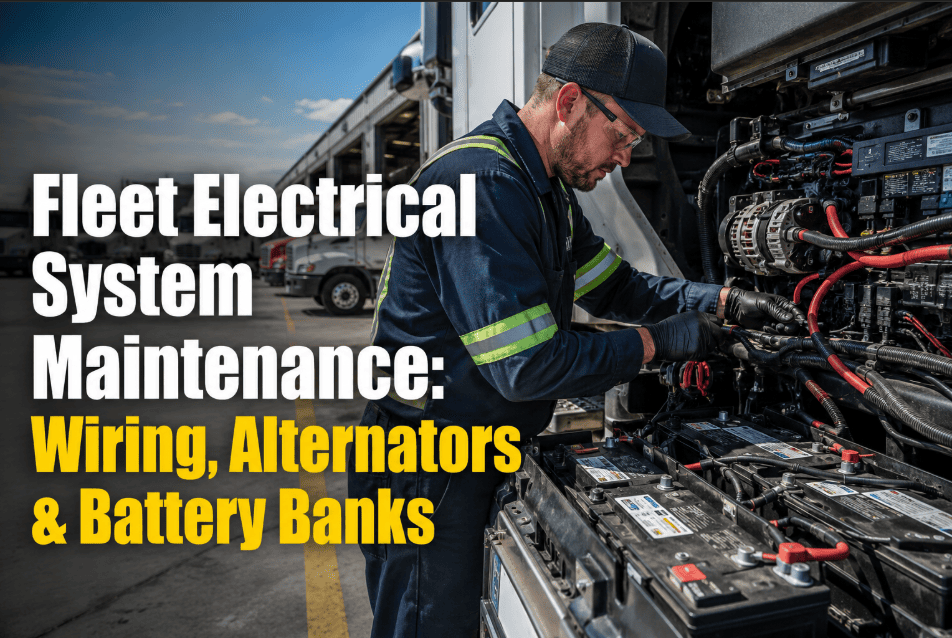
OBD-II telematics monitor battery voltage, charging system output, and parasitic drain in real time — generating CMMS alerts when voltage drops below threshold during overnight parking or when charging voltage deviates from normal during operation. AI Camera Vision at the depot identifies battery corrosion, wiring insulation damage, and loose terminal connections through overnight undercarriage and engine bay scanning — work orders generated before the driver conducts the pre-trip check. AI Digital Twin models per vehicle learn the battery's discharge and charge cycle pattern — predicting when state of health will drop below 60% CCA based on actual cycling data rather than age alone. SAP integrations automate battery and alternator procurement — parts arrive before the service window opens, not after the breakdown occurs. PLC integrations extend electrical monitoring to depot infrastructure: charging stations, workshop power systems, and vehicle lifts managed on the same CMMS platform.

OBD-II
Real-Time Monitoring
Voltage + drain alerts while parked
Battery voltage and charging output monitored continuously. CMMS alert fires before driver reports slow crank.
AI Camera Vision
Visual Inspection
Corrosion + wiring damage overnight
Terminal corrosion and wiring insulation damage detected in overnight depot scans. Work orders before next-day dispatch.
AI Digital Twin
Predictive SoH
CCA degradation curve per battery
Learns each battery's cycle pattern. Predicts when CCA will drop below 60% — schedules replacement before failure event.
SAP / PLC
Parts + Depot
Parts pre-ordered + depot power monitored
SAP auto-orders batteries before service windows open. PLC monitors depot charging stations and workshop electrical infrastructure.
"

We were averaging three battery-related no-starts per month across 46 vehicles — each one requiring a call-out, a jump start, and a vehicle-out-of-service event that cost us £340 on average. We deployed OxMaint with annual Midtronics conductance tests and OBD voltage monitoring. Battery no-starts: zero in the last 14 months. Annual battery replacement budget actually increased slightly — but we saved over £17,000 in breakdown call-outs.

Workshop Supervisor — Municipal fleet, 46 vehicles, Greater Manchester, UK

Frequently Asked Questions

How often should fleet batteries be tested?
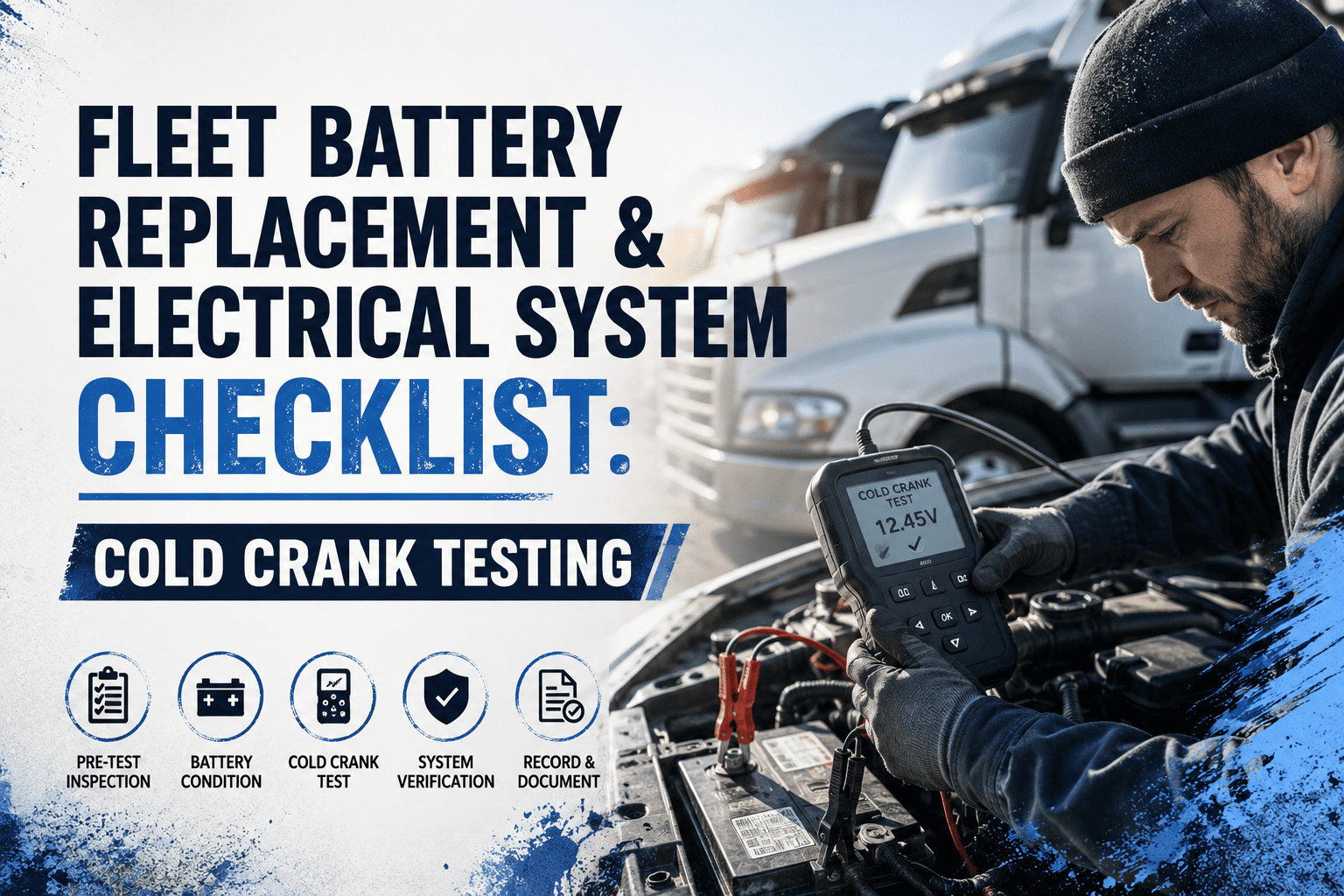
Annual conductance test (Midtronics or equivalent) for all batteries under 3 years old. Every 6 months for batteries over 3 years. OxMaint schedules battery tests per vehicle age automatically — no manual tracking required.
What OBD parameters indicate charging system problems?
Battery voltage below 12.4V at key-on, charging voltage outside 13.8–14.8V during operation, and load-drop voltage collapse during cranking. OBD codes P0562 (low voltage), P0563 (high voltage), and P0620 (alternator control) flag charging faults weeks before breakdown.
How does AI Digital Twin help with battery management?
Digital Twin models the charge/discharge cycle pattern for each battery per vehicle. Batteries in high-cycle-count operations (frequent short trips, extensive idling) degrade faster than mileage-based intervals suggest — Digital Twin adjusts replacement scheduling to match actual degradation rate.
Can SAP integration automate battery and alternator procurement?
Yes — CMMS work orders trigger SAP purchase orders for batteries, alternators, and starter motors automatically when test results fall into the replacement threshold. Parts arrive before the vehicle enters the service bay, eliminating parts-wait downtime that averages 3.8 hours per electrical repair event.

Stop Reacting to No-Starts. Test Every Battery Before It Fails.

OxMaint schedules battery tests, alternator checks, and wiring inspections per vehicle automatically. Free to start.

Share This Story, Choose Your Platform!